
Facial gua sha has surged in popularity over the past few years, emerging as a go-to ritual among skincare enthusiasts and wellness advocates alike. Originating from traditional Chinese medicine, this ancient technique involves gently scraping a smooth stone—typically jade or rose quartz—over the face to promote circulation, reduce puffiness, and support lymphatic drainage. With viral tutorials on social media and affordable tools widely available online, many are tempted to bring gua sha into their at-home routines. But is it truly effective when done independently, or does it require the precision of a trained professional?
The answer isn’t black and white. While facial gua sha can be safely and effectively practiced at home with proper knowledge, there are nuances in technique, tool selection, and skin condition that determine whether self-treatment delivers results—or causes harm. Understanding both the potential and pitfalls is essential before picking up a stone.
Understanding Facial Gua Sha: Origins and Purpose
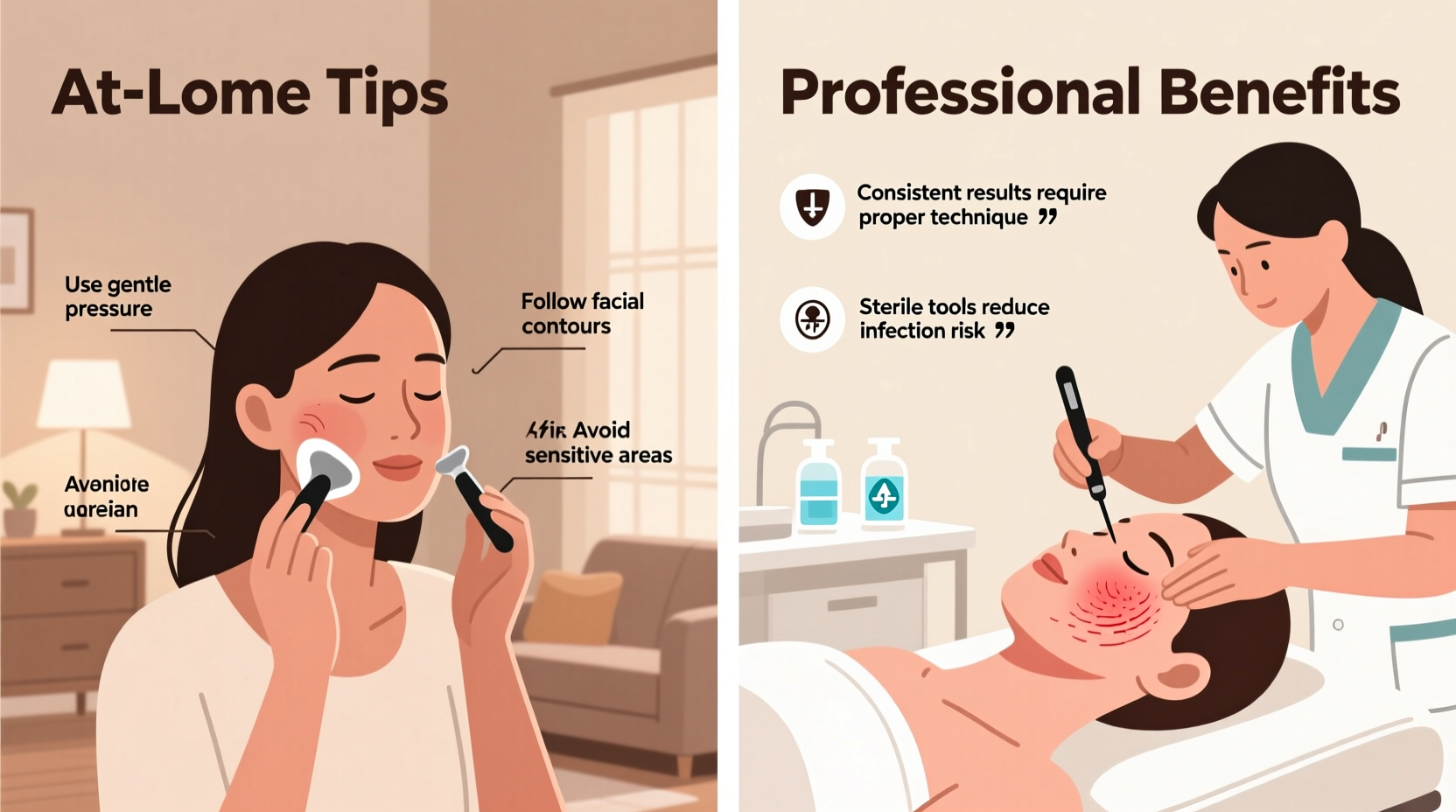
Gua sha, which translates to “scraping sand” in Chinese, traditionally involved using a rounded tool to scrape the skin, creating petechiae (small red spots) to release stagnation and improve energy flow. In modern Western adaptations, especially in facial applications, the practice is much gentler. The goal shifts from intense therapeutic scraping to subtle sculpting and relaxation.
When applied to the face, gua sha aims to:
- Stimulate blood circulation for a healthy glow
- Encourage lymphatic drainage to reduce under-eye puffiness and jawline swelling
- Relieve muscle tension, particularly in the jaw and forehead
- Enhance product absorption by prepping the skin’s surface
- Promote collagen production through micro-stimulation
These benefits are supported by anecdotal evidence and growing interest in holistic skincare. However, scientific research remains limited. A 2020 pilot study published in *Complementary Therapies in Clinical Practice* observed improved facial contour and elasticity after four weeks of regular gua sha use, though researchers noted the need for larger trials.
“Gua sha works best when integrated into a broader wellness routine. It’s not a miracle cure, but consistent, mindful application can yield visible improvements in tone and texture.” — Dr. Mei Lin Zhang, Licensed Acupuncturist and TCM Practitioner
At-Home Gua Sha: Benefits and Practical Advantages
Performing gua sha at home offers several compelling advantages. Chief among them is accessibility. With just a $20 tool and a few minutes each day, users can incorporate the practice into their morning or evening rituals without scheduling appointments or paying premium spa fees.
Another benefit is consistency. Like any wellness habit—meditation, stretching, or skincare—results compound over time. Daily five-minute sessions may produce more cumulative benefit than monthly professional treatments. Moreover, at-home use allows individuals to tailor pressure, pace, and focus areas to their unique needs.
Many users report immediate effects such as reduced puffiness upon waking, a lifted cheekbone appearance, and relief from clenching-related jaw tension. Over weeks, some notice improved skin clarity and firmness. These outcomes are often attributed not only to physical manipulation but also to the mindfulness aspect—taking time to touch the face with intention fosters a deeper mind-skin connection.
Risks and Common Mistakes in DIY Gua Sha
Despite its gentle reputation, improper at-home gua sha can lead to adverse effects. The most common mistake is applying too much pressure. Unlike body gua sha, which tolerates firmer strokes, facial skin is thin and delicate. Excessive force can cause capillary damage, irritation, or even broken blood vessels, especially around the eyes.
Other frequent errors include:
- Using the tool on dry skin, increasing friction and risk of micro-tears
- Skipping cleanser and oil, leading to clogged pores or ineffective gliding
- Following incorrect stroke patterns that work against natural lymph flow
- Overusing the tool—more than once daily is rarely necessary and may stress the skin
- Ignoring contraindications like active acne, rosacea flare-ups, or recent cosmetic procedures
In inexperienced hands, incorrect angles or rushed movements can also pull facial muscles in unnatural directions, potentially contributing to sagging over time. This is particularly concerning along the jawline and neck, where improper technique might stretch connective tissue instead of supporting it.
Who Should Avoid At-Home Gua Sha?
Certain conditions warrant caution or complete avoidance of self-administered gua sha:
- Active inflammatory acne: Pressure can spread bacteria and worsen breakouts.
- Rosacea or sensitive skin: Increased circulation may trigger flushing or irritation.
- Recent fillers or Botox: Wait at least two weeks post-injection; premature manipulation could displace product.
- Blood-thinning medications: Higher risk of bruising or petechiae.
- Skin infections or open wounds: Risk of spreading pathogens.
Professional Gua Sha: When Expertise Matters
Seeing a licensed esthetician, dermatologist, or certified TCM practitioner for facial gua sha introduces a level of precision and safety that’s difficult to replicate at home. Professionals assess skin type, medical history, and facial anatomy before customizing the treatment.
They understand anatomical landmarks—the location of major nerves, lymph nodes, and muscle insertions—and adjust pressure accordingly. For example, the area near the temporal artery or beneath the chin requires careful navigation. A trained hand knows how to glide along lymphatic pathways efficiently, maximizing decongestion without strain.
Additionally, professionals often combine gua sha with other modalities such as facial massage, LED therapy, or customized serums, enhancing overall efficacy. Some clinics offer thermal gua sha, where warmed stones are used to deepen muscle relaxation—a technique requiring strict temperature control to prevent burns.
“I’ve seen clients develop persistent redness from aggressive home use. A single session with me helps reset their technique and rebuild confidence.” — Lena Park, Master Esthetician and Facial Sculpting Specialist
Cost and Frequency Considerations
Professional facial gua sha treatments typically range from $80 to $200 per session, depending on location and provider expertise. Most recommend biweekly or monthly visits for maintenance. While effective, this cost and time commitment may not be sustainable for everyone.
In contrast, a high-quality gua sha tool costs between $15 and $50 and lasts for years with proper care. When combined with reliable instructional resources, this makes DIY an appealing long-term option—for those willing to learn correctly.
Step-by-Step Guide to Safe At-Home Gua Sha
If you choose to practice gua sha at home, following a structured method minimizes risk and maximizes benefit. Here’s a proven routine endorsed by skincare specialists:
- Cleanse your face: Start with a gentle cleanser to remove dirt and makeup.
- Apply facial oil or serum: Use a non-comedogenic product to allow smooth gliding. Rosehip, squalane, or jojoba oils work well.
- Warm the tool: Hold the stone in warm water for 30 seconds or use it at room temperature. Avoid heating excessively.
- Neck and jawline: Begin under the ear, gliding downward toward the collarbone in slow, repeated strokes (5–7 times per side). This clears lymphatic congestion first.
- Chin and jaw: Place the curved edge along the jawline, sweeping upward and backward from the chin to below the ear.
- Cheeks: Starting at the nose, glide outward toward the temples, following the curve of the cheekbone.
- Under-eyes: Use the smaller end of the tool. Gently sweep from the inner corner to the temple, avoiding direct pressure on the eyeball.
- Forehead: From the center of the brow, move upward and outward in zigzag motions to the hairline.
- Finish: Press palms gently over the face to seal in warmth and intention. Rinse the tool with mild soap and water after use.
DIY vs. Professional: A Comparative Overview
| Factor | At-Home Gua Sha | Professional Treatment |
|---|---|---|
| Cost | Low upfront investment ($15–$50) | High per-session cost ($80–$200) |
| Frequency | Daily or every other day | Monthly or biweekly |
| Safety | Depends on user knowledge; risk of misuse | Higher safety due to training and assessment |
| Customization | Limited to personal experience | Tailored to skin condition and goals |
| Results | Gradual, subtle improvements with consistency | Immediate lifting, deeper detoxification |
| Convenience | High—can be done anytime | Requires scheduling and travel |
Real Example: Sarah’s Journey with At-Home Gua Sha
Sarah, a 34-year-old graphic designer from Portland, began experiencing chronic jaw tension due to remote work and teeth grinding. After seeing influencers praise gua sha for facial slimming, she purchased a rose quartz tool online. Initially, she pressed too hard, causing redness and discomfort. Discouraged, she paused the practice for months.
Later, she attended a virtual workshop hosted by a licensed esthetician. There, she learned proper pressure, sequence, and pairing with facial oils. Restarting slowly, she committed to five minutes each night. Within three weeks, her morning jaw pain decreased significantly. After two months, colleagues commented on her “glow.” She now uses gua sha primarily for relaxation and circulation—not dramatic reshaping—but values its role in her self-care routine.
Sarah’s story highlights a crucial point: success with at-home gua sha often depends on education, not just effort.
Essential Checklist for Safe and Effective Gua Sha
Before starting your own practice, ensure you meet these criteria:
- ☑ Choose a smooth, high-quality stone (jade, rose quartz, or bian stone)
- ☑ Cleanse skin and apply a glide-friendly oil or serum
- ☑ Use light to moderate pressure—never drag or tug
- ☑ Follow correct directional strokes (always toward lymph nodes)
- ☑ Limit sessions to 5–10 minutes once or twice daily
- ☑ Sanitize your tool after each use
- ☑ Avoid use during active breakouts, sunburns, or post-procedure healing
- ☑ Consult a dermatologist if you have chronic skin conditions
Frequently Asked Questions
Can gua sha really change your face shape?
No, gua sha cannot permanently alter bone structure or drastically reshape the face. However, it may temporarily reduce puffiness and improve muscle tone, creating a more defined appearance. Any changes are subtle and rely on consistent use.
How long does it take to see results from facial gua sha?
Some users notice reduced puffiness immediately after the first session. Visible improvements in skin texture and firmness typically appear within 4 to 6 weeks of daily practice. Patience and consistency are key.
Should I use gua sha in the morning or at night?
Both times have benefits. Morning use helps drain overnight fluid retention and energizes the complexion. Evening use supports relaxation and enhances nighttime product absorption. Choose based on your goals—or do both on occasion.
Final Thoughts: Finding Your Balance
Facial gua sha doesn’t have to be an all-or-nothing choice between home and professional use. Many find value in combining both approaches. Begin with a consultation or treatment from a qualified practitioner to learn proper technique, then maintain progress at home with informed self-care.
The real worth of gua sha lies not in dramatic transformations, but in the ritual itself—slowing down, tuning into your body, and nurturing your skin with intention. Whether guided by expert hands or your own, the practice becomes meaningful when rooted in awareness and respect for your skin’s limits.




 浙公网安备
33010002000092号
浙公网安备
33010002000092号 浙B2-20120091-4
Comments
No comments yet. Why don't you start the discussion?