
In the age of connected living, wellness has evolved beyond morning yoga and balanced meals. It now includes digital tools that integrate seamlessly into our daily rituals. One such innovation gaining traction is the smart mirror—a sleek, full-length or vanity mirror embedded with sensors, cameras, voice assistants, and display technology. Marketed as both fitness companion and wellness hub, these devices promise to transform your morning and evening routines. But does the reality match the hype? For those considering an investment in a smart mirror, the answer depends on lifestyle needs, health goals, and long-term usability.
This article explores the tangible benefits, potential drawbacks, and real-world applications of smart mirrors in supporting a consistent wellness practice. From tracking biometrics to delivering personalized workouts, we’ll examine whether this high-tech addition earns its place in your home—or if simpler alternatives deliver equal value at a fraction of the cost.
What Is a Smart Mirror and How Does It Work?
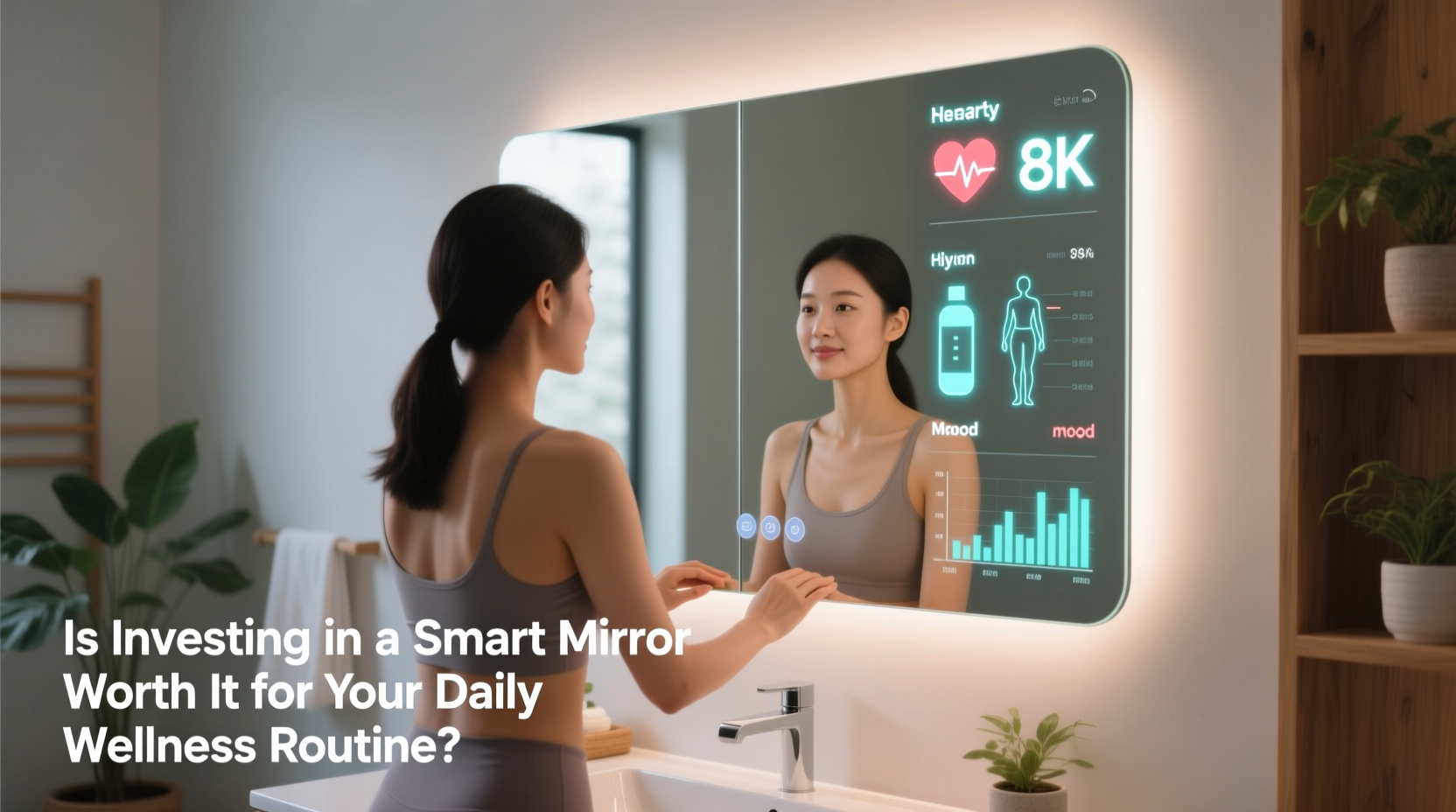
A smart mirror functions like a hybrid between a digital display and a reflective surface. Behind the glass lies a screen, motion sensors, microphones, and often a camera, all powered by AI-driven software. When inactive, it appears as a regular mirror. When engaged, it displays real-time data—such as weather, calendar events, heart rate, posture analysis, or guided workouts—without requiring you to pick up a phone or tablet.
Most models connect to Wi-Fi and sync with fitness trackers (like Fitbit or Apple Watch), health apps (MyFitnessPal, Strava), and smart home systems (Google Assistant, Amazon Alexa). Some advanced versions use computer vision to analyze body movements during exercise, offering instant feedback on form. Others measure skin hydration, sleep quality, or stress markers through facial recognition and ambient sensors.
The appeal lies in its passive integration. Unlike scrolling through a phone while brushing your teeth, a smart mirror delivers information contextually—right when and where you need it.
Key Wellness Benefits of a Smart Mirror
For individuals committed to holistic well-being, a smart mirror can serve as a central wellness dashboard. Here are several ways it may enhance your daily routine:
- Morning mental reset: Displays mindfulness prompts, breathing exercises, or gratitude journaling suggestions as you prepare for the day.
- Fitness guidance: Offers on-demand or live-streamed workouts with real-time form correction using pose estimation technology.
- Biometric tracking: Integrates with wearables to show resting heart rate, sleep score, or hydration levels upon waking.
- Skin and appearance monitoring: Uses AI to detect changes in skin tone, acne patterns, or hair thinning over time.
- Habit reinforcement: Shows progress toward wellness goals—hydration, meditation streaks, step count—creating visual accountability.
Unlike traditional mirrors, which offer no feedback, smart mirrors turn passive reflection into active self-assessment. Over time, this continuous feedback loop can support behavioral change, especially for users focused on consistency.
“Technology that integrates naturally into existing routines has a higher adherence rate than standalone apps or devices.” — Dr. Lena Patel, Behavioral Health Researcher at Stanford Medicine
Cost vs. Value: Is the Investment Justified?
Smart mirrors range from $500 for basic models to over $1,500 for premium versions with AI coaching and full-body tracking. This raises a critical question: Can a device in this price range deliver measurable returns on wellness outcomes?
To evaluate value, consider what you're replacing. If you currently pay for a gym membership, online fitness subscriptions (Peloton, Mirror, Apple Fitness+), skincare analysis services, or even personal training sessions, a smart mirror could consolidate these expenses. However, if your wellness routine relies on free resources—YouTube workouts, meditation apps, or journaling—a $1,200 mirror may be overkill.
Another factor is space and usage frequency. These mirrors are most effective when placed in high-traffic areas—bathrooms or dressing rooms—where you interact daily. A device used only occasionally won’t justify its cost, regardless of features.
Comparison: Smart Mirror vs. Alternative Wellness Tools
| Feature | Smart Mirror | Alternative (Phone/Tablet + Apps) |
|---|---|---|
| Hands-free interaction | Yes (voice, motion) | Limited (requires touch) |
| Real-time form feedback | Yes (AI-powered) | No (unless using third-party camera) |
| Biometric integration | High (syncs with wearables) | Moderate (manual input needed) |
| Cost (one-time) | $800–$1,500 | $0–$600 (device-dependent) |
| Daily engagement potential | High (built into routine) | Variable (easily ignored) |
| Aesthetic integration | Seamless (doubles as decor) | Intrusive (screen distractions) |
The table illustrates that while smartphones and tablets can replicate some functions, the smart mirror excels in passive engagement and environmental blending—key factors in habit sustainability.
Real-World Example: How One User Transformed Her Routine
Sarah, a 38-year-old project manager from Portland, struggled with inconsistent workouts and rising stress levels. She subscribed to multiple fitness apps but rarely followed through. After gifting herself a mid-tier smart mirror for her birthday, she began interacting with it during her morning skincare routine.
Within weeks, the mirror’s daily check-in feature prompted her to log energy levels, mood, and sleep quality. It suggested five-minute stretching videos when her wearable detected poor sleep. On weekends, it recommended outdoor runs based on local weather and her weekly activity trends.
“I wasn’t trying to ‘use’ the mirror,” Sarah said. “It just became part of my rhythm. I’d glance up while brushing my teeth and see a reminder to hydrate or breathe deeply. That subtle nudge made all the difference.”
After six months, Sarah reported a 40% increase in workout consistency and improved sleep hygiene. While not solely attributable to the mirror, she credits its seamless presence for reducing decision fatigue around wellness choices.
Step-by-Step Guide to Evaluating a Smart Mirror Purchase
Before committing, follow this practical timeline to determine if a smart mirror aligns with your wellness goals:
- Week 1: Audit Your Current Routine
Track how you spend your mornings and evenings. Note moments where wellness decisions are made (e.g., choosing a workout, checking the weather, reviewing sleep data). - Week 2: Identify Gaps
Ask: Where do you lose motivation? Do you forget to stretch? Skip hydration? Miss meditation? List three recurring friction points. - Week 3: Research Models
Filter options based on your gaps. Need posture feedback? Look for AI motion tracking. Want mental wellness support? Prioritize models with mindfulness integrations. - Week 4: Calculate ROI
Add up your monthly spending on fitness classes, apps, and wellness tech. Multiply by 12. Compare that number to the mirror’s price. - Final Step: Test Before You Buy
If possible, visit a retail partner or request a demo. Observe how natural the interface feels during a simulated morning routine.
This methodical approach prevents impulse buying and ensures the device serves a functional role rather than becoming a decorative gadget.
Common Pitfalls and Limitations
Despite their promise, smart mirrors aren’t without drawbacks:
- Privacy concerns: Cameras and microphones raise valid questions about data storage and third-party access. Always review the manufacturer’s privacy policy and opt for models with local processing when possible.
- Over-reliance on tech: Some users report feeling judged by constant performance metrics, leading to anxiety rather than empowerment.
- Limited adaptability: Most mirrors are designed for fitness and beauty tracking. They lack depth in nutritional planning, mental health therapy, or chronic condition management.
- High upfront cost: Even with long-term savings, the initial barrier remains steep for many households.
Additionally, software updates and platform longevity are uncertain. Several early smart mirror startups have shut down, leaving customers with non-functional devices. Choose brands with proven track records and clear support policies.
Wellness Checklist: Is a Smart Mirror Right for You?
Use this checklist to assess compatibility with your lifestyle:
- ✅ I already use a fitness tracker or health app regularly
- ✅ My wellness routine happens in front of a mirror (bathroom/dressing area)
- ✅ I struggle with consistency despite having good intentions
- ✅ I spend over $30/month on digital wellness services
- ✅ I value seamless, hands-free technology in my home
- ✅ I’m comfortable with AI analyzing my physical appearance or movements
If four or more apply, a smart mirror could meaningfully enhance your routine. If fewer resonate, consider lower-cost alternatives like wall-mounted tablets with voice control or dedicated wellness hubs.
Frequently Asked Questions
Can a smart mirror improve mental wellness?
Yes, but indirectly. While it cannot replace therapy or clinical treatment, many models include guided breathing, mood logging, and mindfulness reminders. These features help build emotional awareness and encourage daily reflection, which supports long-term mental resilience.
Do smart mirrors work without a subscription?
Most require a monthly or annual subscription to unlock core features like workouts, analytics, and AI coaching. Basic display functions (time, weather) may remain available, but the wellness value drops significantly without the service layer. Always confirm subscription costs before purchasing.
Are smart mirrors suitable for older adults?
They can be, provided the user is comfortable with technology. Larger text, voice commands, and fall-detection integrations (in advanced models) make them accessible. However, the learning curve and cost may outweigh benefits for less tech-savvy individuals.
Conclusion: Making the Decision That Serves Your Wellness Journey
A smart mirror isn’t a magic solution for better health—but for the right person, it can be a powerful catalyst. Its strength lies not in flashy tech, but in its ability to meet you where you already are: in front of the mirror, starting or ending your day. By turning passive moments into proactive wellness interactions, it reduces friction and reinforces positive habits.
Yet, technology should enhance—not dictate—your routine. If you thrive on simplicity, paper journals, and offline movement, a smart mirror may add complexity without meaningful return. But if you’re already immersed in the digital wellness ecosystem and seek deeper integration, this investment could streamline your efforts and sustain long-term progress.
The true measure of worth isn’t the price tag, but the consistency it helps you achieve. Evaluate your habits honestly, test the options mindfully, and choose a tool that empowers—not overwhelms—your journey toward well-being.




 浙公网安备
33010002000092号
浙公网安备
33010002000092号 浙B2-20120091-4
Comments
No comments yet. Why don't you start the discussion?