
In a world where we’re bombarded with notifications, emails, and endless streams of information, forgetting someone’s name moments after being introduced has become surprisingly common. You meet a colleague at a conference, exchange pleasantries, and by the time you refill your coffee, their name slips through the cracks of your memory. While this might feel embarrassing or worrying, it’s increasingly considered a normal response to the cognitive demands of modern life. The intersection of human memory and digital overload reveals a deeper truth: our brains are not failing—we’re simply operating under conditions they weren’t evolved for.
The rise of smartphones, social media, and multitasking culture has fundamentally reshaped how we process information. This constant influx contributes to what psychologists call \"cognitive load\"—the total amount of mental effort being used in working memory. When that load becomes excessive, even basic functions like remembering a name can falter. But is this truly normal? And more importantly, can we do anything about it?
The Science Behind Name Forgetting
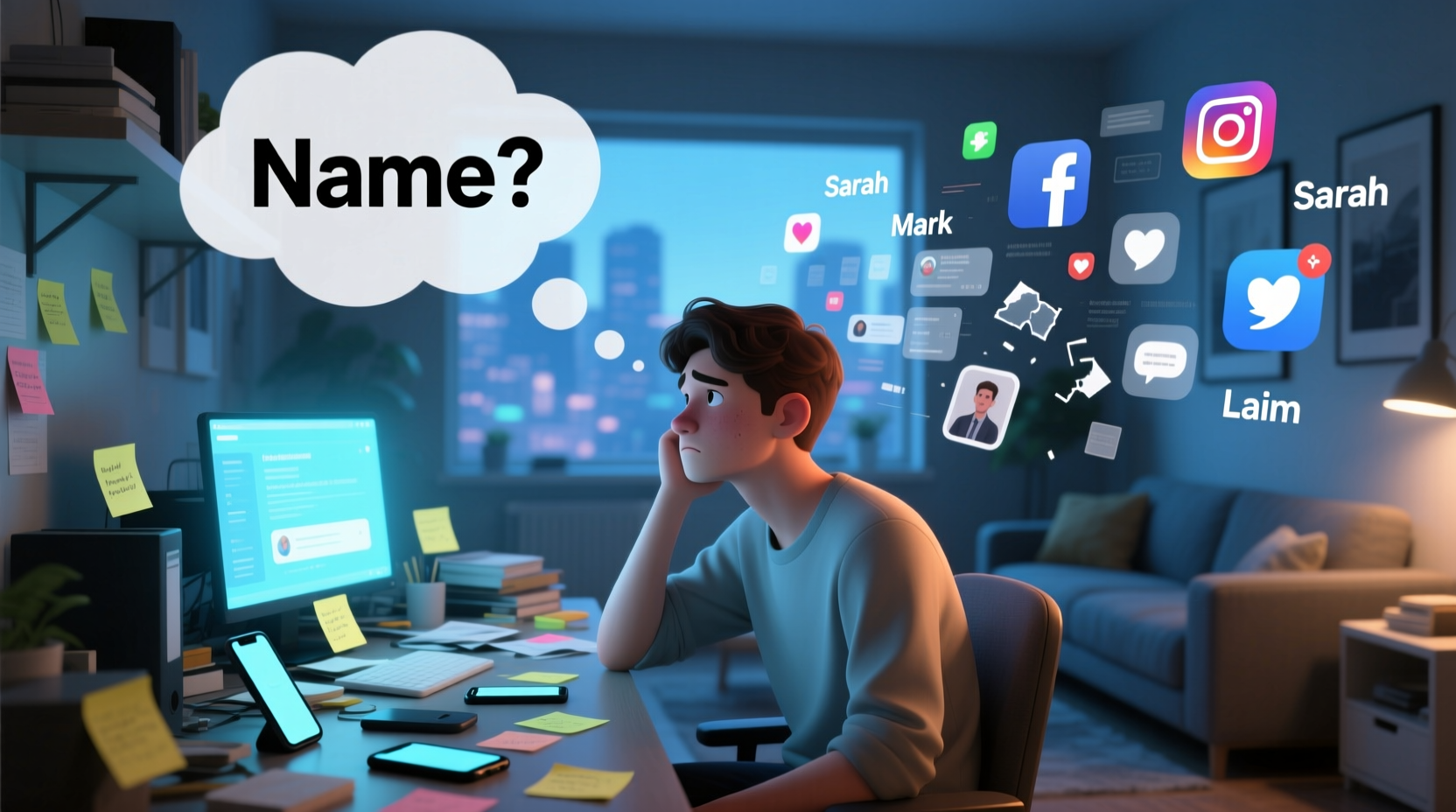
Names are among the most difficult pieces of information for the brain to retain. Unlike faces, which activate visual and emotional processing centers, names are arbitrary labels with little inherent meaning. A 2013 study published in the journal *Memory & Cognition* found that people are significantly worse at recalling names than occupations, hobbies, or even physical traits—despite remembering the face just fine.
This phenomenon, known as the “surname amnesia effect,” stems from how memory encoding works. To remember something effectively, the brain must engage in deep processing—linking new information to existing knowledge. Names, however, are often shallowly processed because they lack personal relevance at first encounter. Combine this with distractions (like checking your phone mid-conversation), and the likelihood of retention drops further.
“Names don’t come with built-in associations. Unless you actively link them to something meaningful, they float in and out of working memory without anchoring.” — Dr. Lisa Chen, Cognitive Psychologist, University of Toronto
Cognitive Load in the Digital Age
Cognitive load theory, developed by John Sweller in the 1980s, explains how our working memory has limited capacity. There are three types of cognitive load:
- Intrinsic load: The inherent difficulty of the task (e.g., learning a new language).
- Extraneous load: Unnecessary distractions that hinder learning (e.g., pop-up notifications during a meeting).
- Germane load: Effort devoted to creating long-term understanding (e.g., mentally rehearsing a name after an introduction).
In today’s environment, extraneous load dominates. The average person checks their smartphone 96 times a day, according to research by dscout. Each interruption forces the brain to switch contexts, consuming valuable cognitive resources. Even having a phone nearby—turned off—can reduce available attention, as shown in a 2017 study from the University of Texas.
When introduced to someone new, your brain should ideally focus on encoding their name, face, voice, and context. But if you're simultaneously thinking about an upcoming deadline, glancing at your screen, or mentally drafting a text, that encoding fails. The result? A forgotten name within seconds.
Digital Distraction vs. Memory Decline: What’s Really Happening?
Many worry that frequent name forgetting signals early cognitive decline. However, experts distinguish between true memory disorders and situational forgetfulness due to environmental stressors. Occasional lapses—especially under pressure or fatigue—are typically benign.
A 2020 meta-analysis in Neuropsychology Review concluded that while overall memory performance hasn't declined across generations, the *context* in which memory operates has changed dramatically. People today are expected to hold more transient information for shorter periods, reducing opportunities for consolidation into long-term memory.
Moreover, reliance on digital tools may be altering memory habits. Why memorize a phone number when it’s stored in your contacts? Why remember a colleague’s name when LinkedIn profiles are just a tap away? This \"digital outsourcing\" isn’t inherently bad—it frees up mental space—but it weakens the muscle of active recall.
Think of it like physical fitness: if you drive everywhere, your legs get weaker. Similarly, if you never practice remembering names, the skill deteriorates—not due to pathology, but disuse.
Strategies to Reduce Cognitive Load and Improve Recall
You can’t eliminate digital distractions entirely, but you can restructure your habits to support better memory function. Below are evidence-based techniques to enhance name retention despite high cognitive load.
1. Practice Mindful Introductions
When meeting someone, pause. Put your phone away. Make eye contact. Listen actively. These small acts reduce extraneous load and signal to your brain that this information matters.
2. Use Elaborative Encoding
Create a mental hook. If you meet someone named “Greg” who loves hiking, picture him scaling a mountain with a sign that says “GREG.” Associating the name with imagery, emotion, or prior knowledge strengthens neural connections.
3. Repeat and Rehearse
Say the name multiple times during conversation: “So Greg, what brought you to this event?” Repeating it later (“I’ll tell Greg you said hello”) reinforces memory traces before they fade.
4. Write It Down
If appropriate, jot down the name along with a distinguishing feature: “Maria – red scarf, works in UX design.” Writing engages motor memory and provides a reference point.
5. Limit Multitasking
Avoid checking messages or planning your next move during social interactions. Single-tasking improves focus and gives your brain the bandwidth needed for encoding.
| Strategy | Action | Expected Benefit |
|---|---|---|
| Mindful Attention | Pause, make eye contact, listen fully | Reduces distraction, increases focus |
| Elaborative Encoding | Link name to image, trait, or pun | Creates stronger memory association |
| Verbal Repetition | Use the name naturally in conversation | Reinforces auditory and semantic memory |
| Physical Note-Taking | Write name + detail on paper or app | Supports dual-coding (visual + motor) |
| Delayed Review | Recall names 1 hour later | Strengthens long-term retention |
Mini Case Study: From Forgetful to Remembering 90% of Names
Jamal, a 34-year-old project manager, struggled with remembering team members’ names during hybrid meetings. He’d often mispronounce names or blank out when introducing colleagues, which affected his confidence and perceived leadership.
After reading about cognitive load, he implemented two changes: First, he disabled all non-essential notifications during work hours. Second, he adopted a simple routine: after each introduction, he repeated the person’s name twice in the next five minutes and associated it with one visual detail (e.g., “Priya – glasses and purple blazer”).
Within three weeks, Jamal noticed a dramatic improvement. He recalled over 90% of new names and received positive feedback about his attentiveness. His success wasn’t due to enhanced intelligence—it came from reducing noise and applying deliberate memory techniques.
Checklist: Boost Your Name Recall in High-Distraction Environments
Use this checklist the next time you attend a networking event, meeting, or social gathering:
- ✅ Silence your phone or keep it out of sight
- ✅ Focus fully during introductions—pause other thoughts
- ✅ Repeat the person’s name aloud immediately
- ✅ Associate the name with a visual, sound, or shared interest
- ✅ Use the name at least once more in conversation
- ✅ Mentally review names 1 hour later
- ✅ Jot down notes if appropriate (e.g., post-event reflection)
FAQ
Is forgetting names a sign of dementia or Alzheimer’s?
No, occasional name forgetting—especially in social settings—is not a reliable indicator of dementia. True cognitive disorders involve progressive decline in multiple areas (memory, reasoning, daily functioning). If you’re concerned, consult a neurologist, but isolated lapses are usually stress- or load-related.
Why do I remember faces but not names?
Faces are processed in the fusiform gyrus, a specialized brain region for facial recognition. Names, however, require arbitrary verbal memory. Without active effort to encode them, names are more likely to be lost. This mismatch is common and normal.
Can brain training apps help me remember names better?
Some apps can improve working memory and attention, which indirectly supports name recall. However, real-world practice—such as using elaborative encoding during actual conversations—is more effective than isolated drills.
Conclusion: Embrace the Challenge, Strengthen the Skill
Forgetting names easily is not a personal failure—it’s a symptom of living in an era of unprecedented cognitive demand. The digital age rewards speed and volume over depth and retention, making it harder than ever to focus on simple human connections. But this doesn’t mean we have to accept forgetfulness as inevitable.
By understanding cognitive load and applying targeted strategies, you can reclaim your ability to remember names with confidence. It starts with small shifts: putting the phone down, listening deeply, and giving yourself permission to focus on one thing at a time. Memory isn’t just about storage—it’s about attention, intention, and care.




 浙公网安备
33010002000092号
浙公网安备
33010002000092号 浙B2-20120091-4
Comments
No comments yet. Why don't you start the discussion?