
Many people assume that because the sun isn’t blazing overhead on a cloudy day, UV protection is less important. This misconception often leads to risky behaviors—like using expired sunscreen or skipping sun protection altogether. But here’s the truth: ultraviolet (UV) radiation penetrates cloud cover, and expired sunscreen may no longer offer reliable defense. Understanding the real dangers of relying on outdated products, even under overcast skies, is essential for long-term skin health.
Sunscreen is not just a summer staple—it's a year-round necessity. Whether you're walking to work, driving, or spending time outdoors during a gray afternoon, up to 80% of UV rays can still reach your skin through clouds. When combined with an expired formula, the risk of sun damage increases significantly. This article explores the science behind sunscreen expiration, the specific risks of using it on cloudy days, and how to make smarter choices for lasting skin protection.
How Sunscreen Expires: The Science Behind Shelf Life
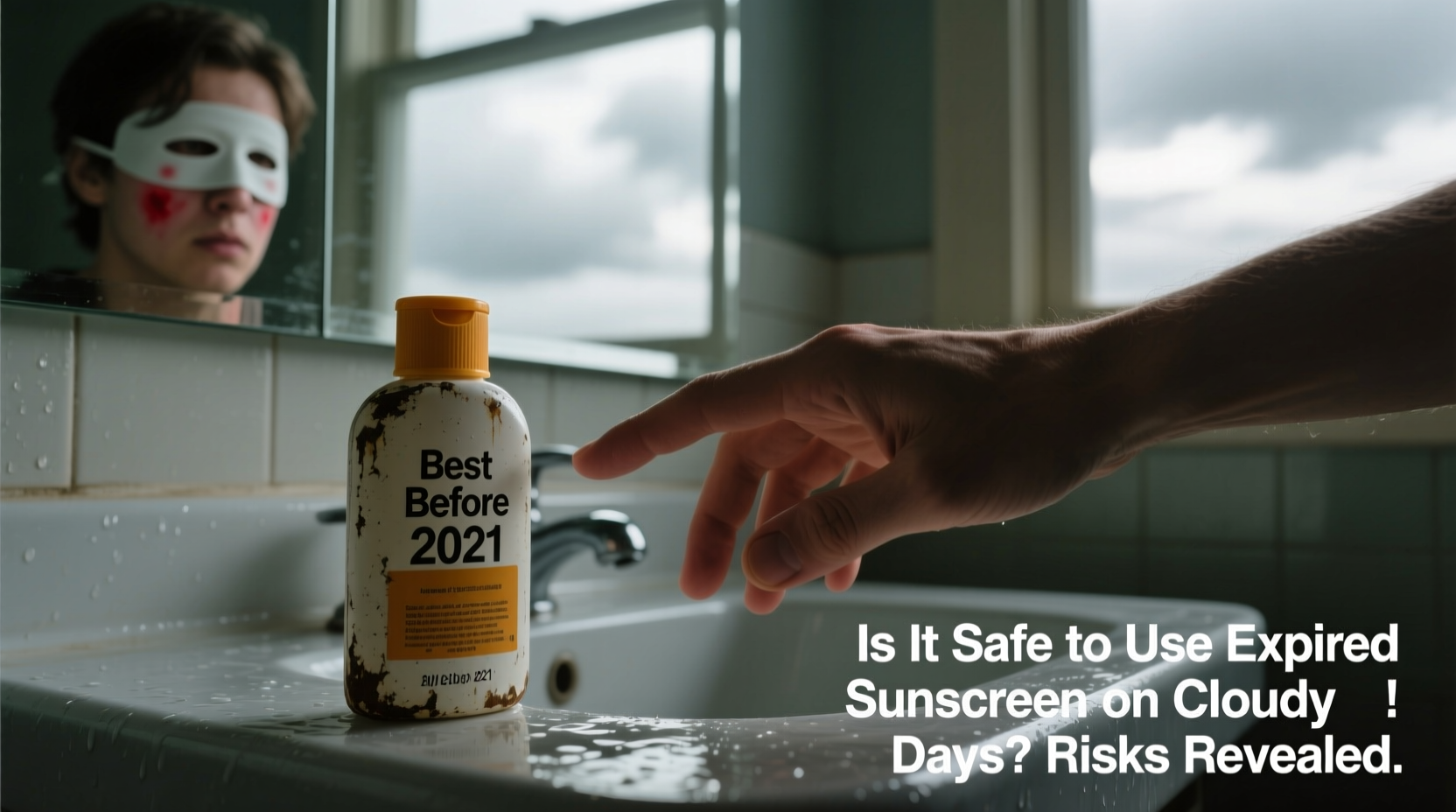
Sunscreen formulations are engineered to remain stable and effective for a specific period, typically three years from the manufacturing date. Over time, active ingredients like avobenzone, oxybenzone, zinc oxide, and titanium dioxide degrade due to exposure to heat, light, and air. Once these compounds break down, the product loses its ability to block or absorb UV radiation effectively.
The U.S. Food and Drug Administration (FDA) requires all sunscreens to either have an expiration date printed on the packaging or include data proving stability for at least three years. However, environmental factors can shorten this window. For example, leaving a bottle in a hot car or bathroom cabinet accelerates chemical breakdown, rendering the product ineffective well before the printed date.
Physical signs of degradation include changes in color, texture, or smell. If your sunscreen appears grainy, separates easily, or has an off odor, it’s likely compromised—even if it hasn’t technically expired.
Cloudy Days Are Not UV-Free: Debunking the Myth
A common misconception is that clouds block harmful UV rays. In reality, up to 80% of UV radiation passes through cloud cover. This means you can still get sunburned, develop DNA damage in skin cells, and increase your risk of premature aging and skin cancer—even on overcast days.
UVA rays, which penetrate deeper into the skin than UVB, are particularly persistent. They contribute to photoaging and are present with relatively equal intensity throughout daylight hours, regardless of weather. Unlike UVB rays, which cause sunburn and fluctuate with season and time of day, UVA rays maintain consistent strength year-round and can pass through glass and clouds.
Using expired sunscreen on such days creates a false sense of security. You might believe you’re protected when, in fact, the degraded formula offers minimal defense. This increases cumulative UV exposure over time—a key factor in developing melanoma and non-melanoma skin cancers.
“People underestimate cloud cover. UVA radiation remains high even when the sun isn’t visible. Relying on expired sunscreen defeats the purpose of daily protection.” — Dr. Lena Patel, Dermatologist and Skin Cancer Specialist
Risks of Using Expired Sunscreen: Beyond Reduced Protection
While reduced efficacy is the primary concern, expired sunscreen poses several other risks:
- Inconsistent UV filtering: Degraded chemicals fail to provide uniform coverage, leaving skin vulnerable to hotspots of damage.
- Increased skin irritation: Preservatives break down over time, raising the risk of bacterial growth and allergic reactions.
- False confidence: Users may stay outdoors longer, believing they’re shielded, leading to unintentional overexposure.
- Poor water resistance: Water-resistant claims diminish as emulsifiers degrade, making reapplication after sweating or swimming critical—and unreliable if the product is expired.
A study published in the *Journal of the American Academy of Dermatology* found that expired sunscreens showed up to a 50% reduction in SPF effectiveness. That means a product labeled SPF 30 could perform closer to SPF 15—or lower—after expiration, especially if stored improperly.
Real-World Scenario: A Weekend Hike Gone Wrong
Consider Sarah, a 34-year-old hiker who packed her old sunscreen for a weekend trail adventure. The forecast called for scattered clouds, so she assumed protection wasn’t urgent. She applied her SPF 50 bottle—purchased four summers ago and kept in her car’s glove compartment. By mid-afternoon, despite feeling no immediate burn, her shoulders and face were red and tender. Two days later, peeling skin confirmed a moderate sunburn.
Her dermatologist explained that both the expired formula and the misleading cloud cover contributed to the damage. “You didn’t feel the burn because UVB was partially blocked,” the doctor said, “but UVA penetrated deeply, and your expired sunscreen couldn’t defend against it.” This case highlights how multiple factors—expired product, poor storage, and weather myths—can combine to compromise skin safety.
Do’s and Don’ts of Sunscreen Use: A Practical Table
| Do’s | Don’ts |
|---|---|
| Check expiration dates before each use | Use sunscreen more than 3 years old |
| Store sunscreen in a cool, shaded place (e.g., inside a bag) | Leave sunscreen in hot cars or direct sunlight |
| Apply broad-spectrum SPF 30 or higher daily | Assume clouds eliminate UV risk |
| Reapply every two hours or after swimming/sweating | Use separated or discolored sunscreen |
| Replace sunscreen if stored in extreme conditions | Trust expired products for extended outdoor exposure |
Step-by-Step Guide: How to Evaluate and Replace Your Sunscreen
Follow this five-step process to ensure your sunscreen is effective and safe to use:
- Locate the expiration date: Check the bottom or side of the container. If there’s no date, assume a three-year shelf life from purchase.
- Inspect the product: Look for changes in consistency (graininess, clumping), color shifts, or unusual odor. If any are present, discard immediately.
- Review storage history: Was it exposed to high heat (e.g., car, beach bag)? Heat accelerates degradation, even within the expiration window.
- Test performance cautiously: If uncertain but no visible signs of spoilage, use only for limited indoor exposure—not for prolonged outdoor activity.
- Replace proactively: Buy a new bottle annually, especially before spring or summer, even if the old one seems usable.
Frequently Asked Questions
Can I use expired sunscreen in emergencies?
In a pinch, applying expired sunscreen is better than nothing—but don’t rely on it for full protection. It may offer partial UVB blocking but likely fails against UVA. Reapply frequently and seek shade whenever possible. Replace it as soon as you can.
Does mineral sunscreen expire faster than chemical sunscreen?
Mineral (physical) sunscreens like zinc oxide and titanium dioxide are generally more stable than chemical filters. However, the formulation—including emulsifiers and preservatives—still degrades over time. Separation is a common issue; if it doesn’t remix smoothly, the product is compromised.
What should I do with expired sunscreen?
Do not pour it down the drain or dispose of it in open trash where children or pets might access it. Seal the container and discard it in household waste. Some pharmacies or recycling centers accept expired personal care products—check local guidelines.
Expert Tips for Year-Round Sun Safety
Protection shouldn’t depend on the weather forecast. Here’s what dermatologists recommend for consistent, effective defense:
- Make sunscreen part of your morning routine: Apply it after moisturizer and before makeup, even on rainy or cloudy days.
- Choose broad-spectrum formulas: These protect against both UVA (aging) and UVB (burning) rays.
- Use enough product: Most adults need about one ounce (a shot glass full) to cover the entire body. For the face alone, use about 1/4 teaspoon.
- Layer protection: Combine sunscreen with wide-brimmed hats, UV-blocking sunglasses, and protective clothing for maximum defense.
- Monitor skin regularly: Perform monthly self-checks for new or changing moles and schedule annual skin exams with a dermatologist.
“Sun damage is cumulative. Every unprotected minute adds up. Using expired sunscreen is like locking your door with a broken key—it gives the illusion of safety without the real benefit.” — Dr. Marcus Tran, Board-Certified Dermatologist
Conclusion: Protect Your Skin Like It Matters—Because It Does
Using expired sunscreen on cloudy days isn’t just ineffective—it’s potentially dangerous. Clouds don’t cancel UV exposure, and expired formulas can’t deliver the protection you need. The consequences aren’t always immediate; they accumulate silently, increasing the risk of wrinkles, dark spots, and skin cancer over time.
Your skin deserves reliable defense every single day. Take inventory of your current sunscreen supply. Discard anything expired or improperly stored. Invest in fresh, broad-spectrum protection and make daily application a non-negotiable habit—regardless of the weather. Small, consistent actions today can prevent serious health issues tomorrow.




 浙公网安备
33010002000092号
浙公网安备
33010002000092号 浙B2-20120091-4
Comments
No comments yet. Why don't you start the discussion?