
Micellar water has earned a cult following for its simplicity, effectiveness, and no-rinse convenience. Touted as a gentle, all-in-one solution for removing makeup and cleansing the skin, it’s become a staple in many skincare routines—especially for those with sensitive skin or busy lifestyles. But while it works wonders in some cases, it isn’t always sufficient on its own. The real question isn’t whether micellar water is effective—it is—but whether it’s enough, particularly when faced with waterproof mascara, full-coverage foundation, or sunscreen buildup.
The rise of the double-cleansing method, popularized by Korean skincare regimens, has cast further doubt on single-step routines. This two-phase process uses an oil-based cleanser first to dissolve oil-soluble impurities like makeup and SPF, followed by a water-based cleanser to remove sweat, bacteria, and residue. So where does micellar water fit into this framework? Is it a complete replacement for traditional cleansing, or just the opening act?
To answer this, we need to understand how micellar water works, what types of products it can effectively remove, and which skin types and routines benefit most from layering additional steps.
How Micellar Water Works: Science Behind the Simplicity
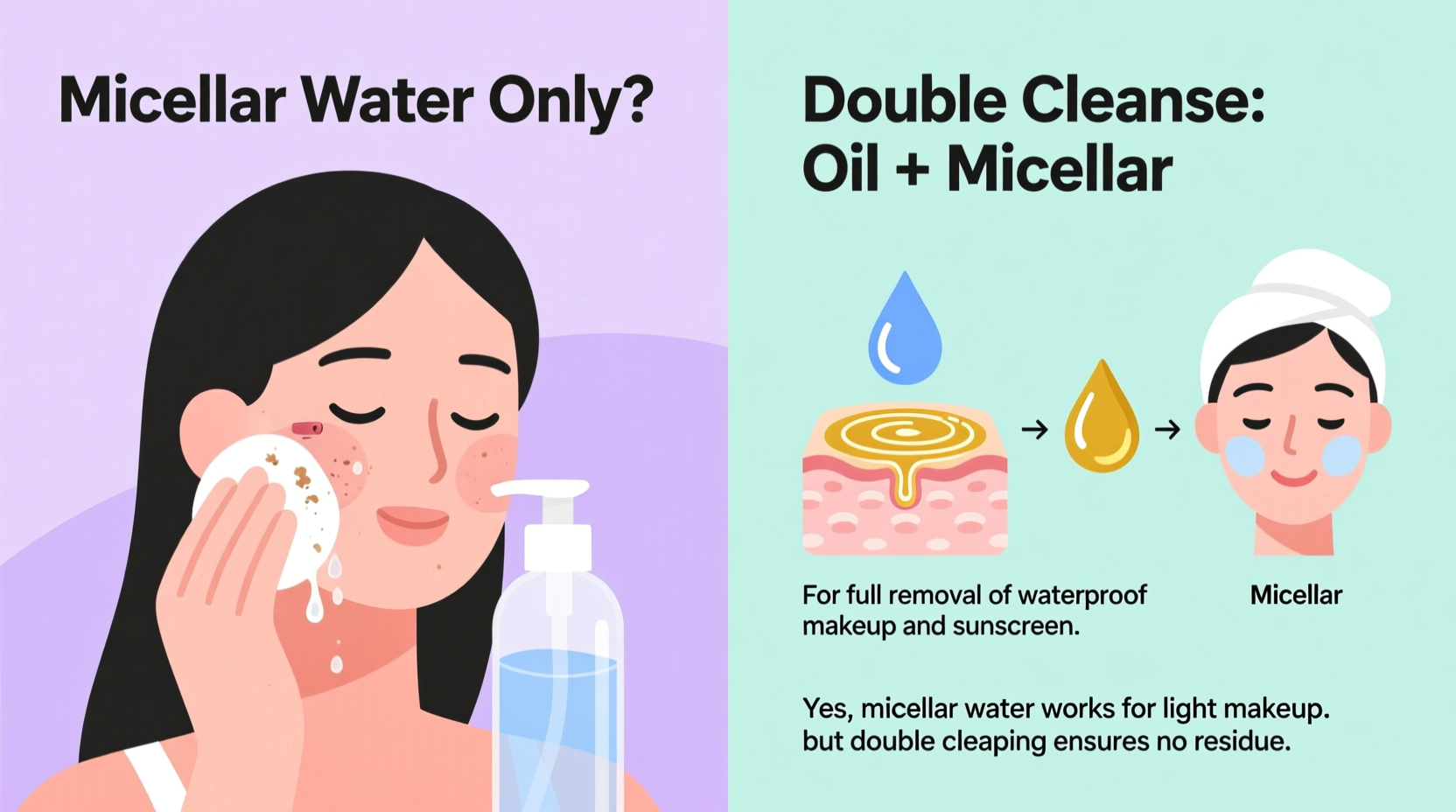
Micellar water contains tiny oil molecules called micelles suspended in soft water. These micelles act like magnets, attracting dirt, oil, and makeup without stripping the skin of moisture. Unlike foaming cleansers that rely on surfactants to lather and lift debris, micellar water works through solubilization—essentially dissolving oily residues on contact.
This makes it exceptionally mild and suitable for dry, reactive, or compromised skin barriers. It doesn’t require rinsing, which adds to its appeal for quick touch-ups or late-night removals. However, this same gentleness also limits its power. Because micellar water lacks physical agitation (like rubbing or rinsing) and strong surfactants, it may not fully penetrate layers of long-wear cosmetics or high-SPF sunscreens.
“Micellar water is excellent for light makeup and daily maintenance, but it shouldn’t be relied upon exclusively if you wear heavy or waterproof products.” — Dr. Lena Torres, Board-Certified Dermatologist
When Micellar Water Is Enough
For certain skin types and cosmetic routines, micellar water alone provides adequate cleansing. Here are the key scenarios where a single step suffices:
- Light daytime makeup: Tinted moisturizers, sheer foundations, or BB creams often contain lower pigment concentrations and minimal binders, making them easier to lift with micellar action.
- No-makeup days: If you’re only wearing sunscreen or going bare-faced, micellar water can effectively clear surface oils and environmental pollutants.
- Sensitive or reactive skin: Those prone to redness, rosacea, or eczema may find that traditional cleansers cause irritation. Micellar water offers a low-pH, fragrance-free alternative that removes grime without disruption.
- Quick refreshes: During travel, post-workout, or midday touch-ups, micellar water is ideal for rapid cleanup without water access.
When You Should Double Cleanse Instead
Double cleansing becomes necessary when your skin accumulates substances that resist micellar water’s mild formula. These include:
- Waterproof eye makeup
- Full-coverage, long-wear foundations
- Silicone-based primers
- Mineral or chemical sunscreens with high SPF
- Pollution particles and sebum buildup from urban environments
In these cases, relying solely on micellar water risks leaving behind residue that can clog pores, trigger breakouts, or interfere with subsequent skincare absorption. A proper double cleanse ensures deeper purification while maintaining skin integrity.
The Double Cleansing Process Explained
The first step involves using an oil-based or balm cleanser to break down oil-soluble components. These cleansers mix with makeup and SPF, emulsifying them so they can be easily rinsed away. The second phase uses a water-based cleanser—gel, foam, or cream—to target water-soluble impurities like sweat and dead skin cells.
Micellar water can play a role here, but typically only as a pre-cleanse substitute—not a replacement for both steps. For example, someone might use micellar water to wipe off initial makeup, then follow with a foaming cleanser. However, skipping the final rinseable cleanser defeats the purpose of thorough cleansing.
Comparative Effectiveness: Micellar Water vs. Double Cleansing
| Cleansing Method | Best For | Limits | Recommended Frequency |
|---|---|---|---|
| Micellar Water Only | Light makeup, sensitive skin, quick removal | Poor at removing waterproof formulas; leaves residue if not rinsed | Daily for low-makeup days |
| Oil Cleanser + Water-Based Cleanser | Heavy makeup, sunscreen, acne-prone skin | Time-consuming; may overdry very dry skin | Evening routine, especially after sun exposure |
| Micellar Water + Foaming Cleanser | Balanced approach for moderate makeup | Still requires two products and time | Most skin types, 4–7 times/week |
| Water-Based Cleanser Only | Oily or combination skin with minimal product use | Ineffective against oil-based residues | Can be used AM/PM depending on needs |
Real-World Example: A Week in Two Routines
Sophie, a 32-year-old office worker in Chicago, wears mineral sunscreen daily and applies medium-coverage foundation five days a week. She initially used only micellar water at night, believing it was “gentle enough” and saved time. After three weeks, she noticed increased congestion along her hairline and occasional small bumps under her cheeks.
Her dermatologist reviewed her routine and suggested switching to double cleansing four nights a week. Sophie began using a cleansing balm to melt her sunscreen and makeup, followed by a hydrating gel wash. Within ten days, her skin appeared clearer, and her morning serums absorbed more evenly.
On weekends, when she wore no makeup, she reverted to micellar water—proving that flexibility based on daily exposure yields better results than rigid adherence to one method.
Step-by-Step Guide: Choosing Your Nightly Routine
Follow this decision tree to determine whether micellar water alone is sufficient for your evening cleanse:
- Assess your day’s product load: Did you wear sunscreen? Makeup? Sweat heavily?
- Evaluate product type: Was it waterproof, silicone-based, or long-wearing?
- Check your skin condition: Are you prone to clogged pores, milia, or dullness?
- If yes to any of the above, proceed with double cleansing:
- Step 1: Apply oil or balm cleanser to dry face, massage for 60 seconds, emulsify with water, rinse.
- Step 2: Use a water-based cleanser, lather, and rinse thoroughly.
- If wearing minimal products and have sensitive skin, micellar water may suffice—follow with a damp cloth or rinse if possible to remove residual film.
- Always follow with toner, treatment, and moisturizer regardless of cleansing method.
Expert Insights: What Dermatologists Recommend
Dr. Arjun Patel, a cosmetic dermatologist in Los Angeles, emphasizes formulation awareness: “Many people don’t realize that modern sunscreens and makeup are designed to be water-resistant and transfer-proof. That means they’re built to withstand sweat and friction—which also makes them harder to remove. Micellar water simply wasn’t engineered for that level of durability.”
He recommends a hybrid approach: “Use micellar water during the day for blotting or refreshing, but reserve double cleansing for your evening routine—at least four times a week if you’re regularly exposed to UV filters or makeup.”
“The goal isn’t just clean skin—it’s clean, receptive skin ready to absorb your active ingredients.” — Dr. Arjun Patel, Cosmetic Dermatology Specialist
Frequently Asked Questions
Can I use micellar water every day?
Yes, micellar water is safe for daily use, especially for those with dry or sensitive skin. However, if you wear significant makeup or sunscreen, consider alternating with a rinse-off cleanser to prevent residue accumulation.
Does micellar water clog pores?
Not inherently, but leftover surfactants or undissolved makeup can contribute to congestion if not properly removed. Always follow up with a rinse or secondary cleanser when needed.
Is double cleansing necessary for oily skin?
Especially for oily skin, double cleansing helps manage sebum buildup and prevents pore blockage. Oil cleansers won’t increase oiliness—in fact, they help regulate it by thoroughly clearing excess sebum without over-stripping.
Action Plan: Building Your Ideal Cleansing Strategy
Your cleansing routine should adapt to your lifestyle, environment, and product usage—not remain static. Consider adopting a flexible system:
- Weekdays (makeup + sunscreen): Double cleanse in the evening.
- Weekends (no makeup): Use micellar water or a gentle water-based cleanser.
- Post-workout or pollution exposure: Rinse with water and follow with a lightweight cleanser—even if you didn’t wear makeup.
- Travel or fatigue nights: Micellar water is acceptable as a temporary measure, but resume full cleansing the next evening.
Checklist: Am I Cleansing Effectively?
- ✅ Skin feels clean but not tight or stripped after washing
- ✅ No visible residue on cotton pads after micellar use
- ✅ Fewer breakouts or clogged pores since adjusting routine
- ✅ Skincare products absorb smoothly without pilling
- ✅ I adjust my method based on daily product exposure
Final Verdict: Micellar Water Has Its Place—But Not Always Center Stage
Micellar water is a valuable tool in modern skincare, offering speed, gentleness, and accessibility. It excels as a first step, a travel companion, or a solution for minimal routines. However, it is not a universal replacement for deep cleansing—particularly when confronting resilient formulas like waterproof makeup or high-protection sunscreens.
Double cleansing remains the gold standard for complete impurity removal, ensuring your skin is truly prepped for treatment and repair overnight. The smartest approach combines both: leverage micellar water when appropriate, but don’t hesitate to upgrade to a two-step method when your skin demands it.
Ultimately, effective cleansing isn’t about following trends—it’s about understanding your skin’s daily needs and responding with precision. Whether you opt for simplicity or depth, consistency and awareness will always yield better results than rigidity.




 浙公网安备
33010002000092号
浙公网安备
33010002000092号 浙B2-20120091-4
Comments
No comments yet. Why don't you start the discussion?