
Nasal irrigation—commonly performed with devices like neti pots, squeeze bottles, or bulb syringes—has become a go-to remedy for people managing allergies, chronic sinusitis, or seasonal congestion. By flushing out mucus, allergens, and irritants from the nasal passages with a saline solution, this technique can provide fast relief and improve breathing. But as more individuals adopt it into their daily routines, a pressing question arises: Is it safe to perform nasal irrigation every day, or could frequent use do more harm than good over time?
The answer isn’t a simple yes or no. While many users report significant benefits from regular use, medical experts emphasize that safety depends on proper technique, solution composition, device hygiene, and individual health factors. When done correctly, daily nasal rinsing can be both safe and beneficial. However, improper use—even just once—can lead to complications ranging from mild irritation to serious infections.
How Nasal Irrigation Works
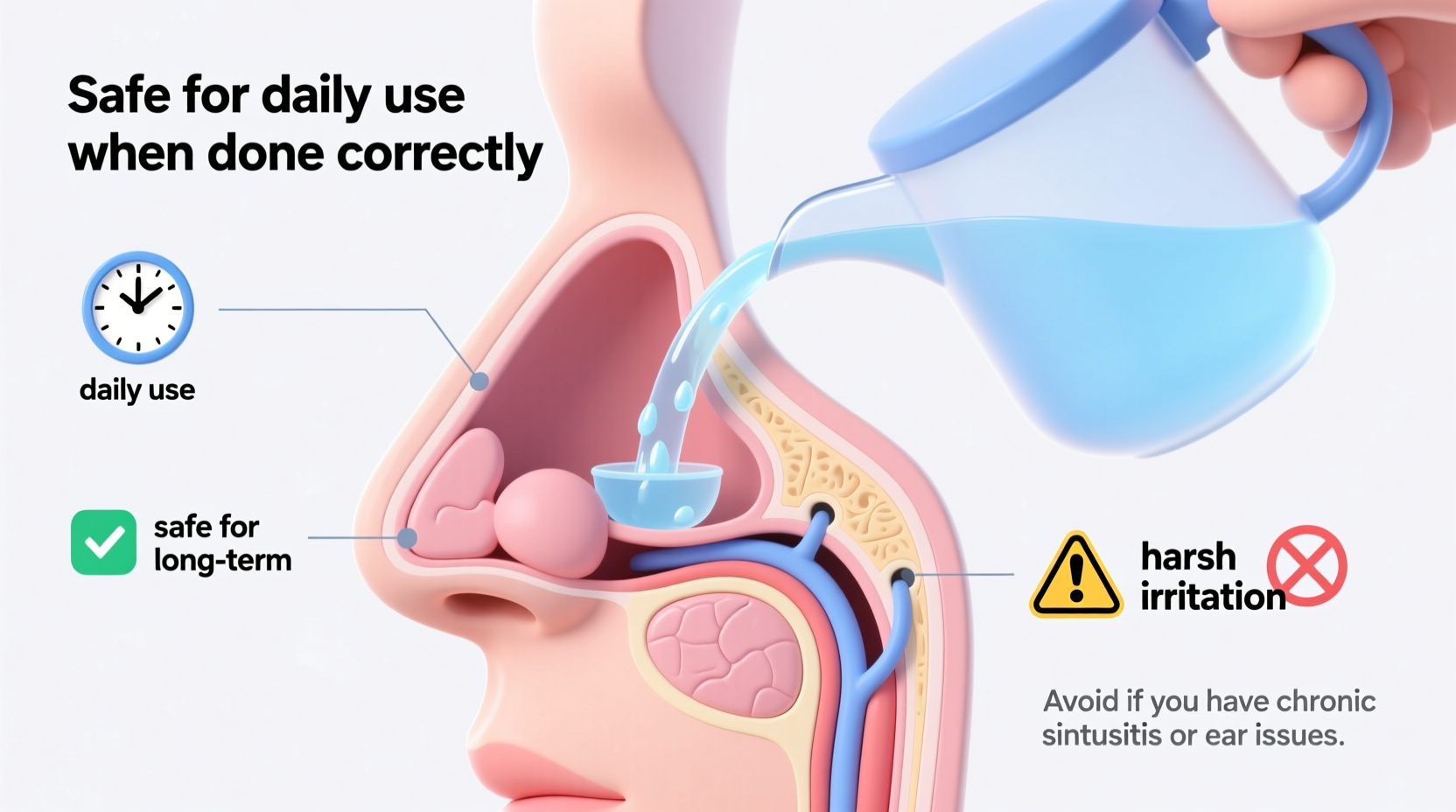
Nasal irrigation works by delivering a sterile saline solution through one nostril, allowing it to flow across the nasal cavity and exit through the other nostril (or the mouth). This process helps remove excess mucus, airborne particles, pollen, bacteria, and viruses trapped in the nasal lining. The saline also moisturizes dry membranes and reduces inflammation, promoting healthier sinus function.
The most common method uses a neti pot, though squeeze bottles with nasal tips (like NeilMed) are increasingly popular due to better pressure control. The saline used is typically isotonic (same salt concentration as body fluids) or slightly hypertonic (higher salt concentration), which may help draw fluid out of swollen tissues.
“Nasal irrigation is one of the most effective non-pharmacological tools we have for managing chronic rhinosinusitis and allergic rhinitis.” — Dr. David Stoddard, Otolaryngologist, Mayo Clinic
Benefits of Daily Nasal Rinsing
For individuals with persistent nasal symptoms, daily irrigation can offer several advantages:
- Improved breathing: Clears blockages caused by mucus buildup or inflammation.
- Allergen reduction: Removes pollen, dust, pet dander, and mold spores before they trigger immune responses.
- Fewer sinus infections: Regular flushing may reduce bacterial colonization and prevent recurrent sinusitis.
- Enhanced medication delivery: Cleansing the nasal passages before using sprays improves absorption and effectiveness.
- Reduced reliance on decongestants: Offers a drug-free alternative to oral or spray decongestants, which can cause rebound congestion if overused.
A 2020 review published in the Journal of Allergy and Clinical Immunology: In Practice found that patients who used daily saline irrigation reported significantly fewer sinus symptoms and required less medication over time compared to those who didn’t irrigate.
Potential Risks of Long-Term or Improper Use
Despite its benefits, daily nasal irrigation carries potential risks when not practiced carefully. These include:
Nasal Irritation and Dryness
Frequent rinsing, especially with hypertonic solutions, can strip natural protective mucus and oils from the nasal lining. Over time, this may lead to dryness, burning sensations, or even minor nosebleeds in sensitive individuals.
Microbial Contamination
Using contaminated water or unclean devices introduces harmful microbes into the nasal cavity. In rare but severe cases, this has led to life-threatening infections such as primary amebic meningoencephalitis (PAM), caused by Naegleria fowleri, a brain-eating amoeba found in untreated tap water.
Ear Pressure and Discomfort
Improper head positioning or excessive pressure during irrigation can force fluid into the Eustachian tubes, leading to ear fullness, discomfort, or middle ear irritation.
Disruption of Natural Defenses
The nasal mucosa contains cilia—tiny hair-like structures that move mucus and pathogens toward the throat for elimination. Excessive rinsing might temporarily impair ciliary function, potentially reducing the nose’s ability to self-cleanse.
Best Practices for Safe Daily Use
To maximize benefits while minimizing risks, follow these evidence-based guidelines:
- Use sterile water only: Always prepare your saline solution with distilled, sterile, or boiled (then cooled) water. Boiling tap water for at least 1 minute (3 minutes at high altitudes) kills pathogens.
- Clean your device after each use: Wash the neti pot or bottle thoroughly with soap and hot water, then allow it to air-dry completely on a clean towel. Replace plastic devices every 1–3 months.
- Follow recommended saline ratios: Use pre-measured packets or mix ½ teaspoon non-iodized salt and ½ teaspoon baking soda per 8 ounces of water to buffer pH and reduce stinging.
- Irrigate at a comfortable temperature: Warm the solution to body temperature (around 98°F or 37°C) to minimize discomfort and dizziness. <5> Position your head correctly: Tilt your head sideways over a sink, chin slightly down, so the liquid flows smoothly from one nostril to the other without entering the throat.
- Limit frequency based on need: While daily use is acceptable for some, others may benefit from every-other-day rinsing. Adjust based on symptoms and tolerance.
| Do’s | Don’ts |
|---|---|
| ✔ Use sterile or boiled water | ✘ Never use plain tap water |
| ✔ Clean device after every use | ✘ Don’t share devices between users |
| ✔ Use buffered saline (with baking soda) | ✘ Avoid iodized table salt (can irritate) |
| ✔ Store equipment dry and open to air | ✘ Don’t leave water sitting in the device |
| ✔ Start with isotonic solution | ✘ Don’t use excessively salty solutions daily |
Real-Life Example: Managing Chronic Sinusitis
Sarah, a 42-year-old teacher from Colorado, struggled with year-round sinus congestion due to dust and seasonal allergies. After multiple antibiotic courses failed to resolve her recurring infections, her ENT specialist recommended daily nasal irrigation using a squeeze bottle system.
Initially skeptical, Sarah began rinsing every morning with a sterile isotonic saline solution. Within two weeks, she noticed improved airflow and fewer headaches. After three months, she reduced her steroid spray usage by half and avoided antibiotics entirely during allergy season.
However, after six months, she developed occasional nasal dryness. Her doctor advised switching to alternate-day rinsing and adding a light nasal emollient at night. With this adjustment, Sarah maintained symptom control without irritation—proving that personalization is key to sustainable use.
Who Should Avoid Daily Nasal Irrigation?
While generally safe, nasal irrigation isn’t suitable for everyone. Consult your healthcare provider before starting daily rinses if you have:
- Recent nasal surgery or trauma
- Severe nasal obstruction (e.g., deviated septum or polyps blocking flow)
- Active ear infections or frequent Eustachian tube dysfunction
- Compromised immune system (increased infection risk)
- Children under age 2 (not recommended); older children should be supervised
In pediatric cases, studies suggest that older children (ages 6+) can safely use nasal irrigation under guidance, particularly for allergy management. However, younger kids often struggle with the sensation and technique, increasing the risk of aspiration or incorrect use.
Expert Recommendations on Frequency
There is no universal rule about how often to irrigate. Medical guidance varies based on condition severity and response:
- Allergy sufferers: Daily during peak seasons; taper off when symptoms subside.
- Chronic sinusitis patients: Often prescribed daily rinsing as part of long-term care.
- General wellness users: 2–3 times per week may suffice for maintenance.
“Daily saline irrigation is safe for most adults when done properly. Think of it like brushing your teeth—it’s preventive care for your sinuses.” — Dr. Sandra Lin, Professor of Otolaryngology, Johns Hopkins Medicine
Frequently Asked Questions
Can I use nasal irrigation twice a day?
Yes, short-term twice-daily use is acceptable during acute flare-ups (e.g., colds or heavy allergy exposure). However, prolonged multiple daily rinses may increase the risk of mucosal dryness. Stick to once daily for routine maintenance unless directed otherwise by a doctor.
Why does my nose burn when I rinse?
Burning usually results from improper solution balance. Using unbuffered salt (without baking soda), water that’s too hot or cold, or tap water with chlorine can irritate sensitive tissues. Try switching to distilled water, adding baking soda to buffer the pH, and warming the solution to body temperature.
Can nasal irrigation make things worse?
Rarely, but yes—if performed incorrectly. Using contaminated water, forcing too much pressure, or over-rinsing can worsen symptoms or introduce infection. If you experience increased congestion, pain, or fever after irrigation, stop immediately and consult a physician.
Step-by-Step Guide to Safe Daily Nasal Irrigation
- Gather supplies: Neti pot or squeeze bottle, non-iodized salt, baking soda, distilled/boiled water, clean towel.
- Prepare solution: Mix ½ tsp salt + ½ tsp baking soda in 8 oz lukewarm sterile water.
- Wash hands: Prevent contamination by cleaning your hands first.
- Position yourself: Lean over sink, tilt head sideways, chin slightly down.
- Insert tip gently: Place spout at upper nostril, creating a seal without forcing.
- Pour slowly: Let gravity feed the solution through one nostril and out the other.
- Breathe through mouth: Do not inhale during the process to avoid choking.
- Switch sides: Repeat on the opposite nostril. <9> Blow nose gently: Clear remaining fluid without excessive force.
- Clean equipment: Rinse device with hot soapy water, air-dry completely.
Conclusion: Finding Balance for Long-Term Safety
Daily nasal irrigation can be a safe and effective part of your respiratory health routine—if practiced responsibly. For millions dealing with allergies, sinus issues, or environmental irritants, it offers a natural way to breathe easier and reduce dependence on medications. But like any health practice, moderation and precision matter.
The key lies in using sterile materials, maintaining device hygiene, choosing the right saline formulation, and listening to your body. If your nasal passages feel raw, overly dry, or congested after rinsing, it may be time to scale back frequency or consult an ENT specialist.
Ultimately, nasal irrigation isn't inherently too harsh for long-term use—it's how you do it that determines safety. With informed habits, you can enjoy clearer breathing for years to come.




 浙公网安备
33010002000092号
浙公网安备
33010002000092号 浙B2-20120091-4
Comments
No comments yet. Why don't you start the discussion?