
Niacinamide has earned its reputation as one of the most versatile and well-tolerated ingredients in modern skincare. Known for its ability to regulate oil, minimize pores, improve texture, and strengthen the skin barrier, it’s a staple in countless routines. But despite its gentle image, many users report unexpected irritation when pairing niacinamide with other active serums. Redness, stinging, flaking — symptoms that seem contradictory to the ingredient’s soothing claims — are increasingly common. The truth is, it’s not always the niacinamide itself causing the issue. More often, it's the combination, concentration, pH levels, or application order that leads to conflict between ingredients.
Understanding why these clashes occur — and how to prevent them — is essential for anyone using multiple actives. This guide dives deep into the science of ingredient compatibility, real-world triggers of irritation, and practical strategies to keep your routine effective without compromising comfort.
Why Niacinamide Shouldn’t Cause Irritation (Alone)
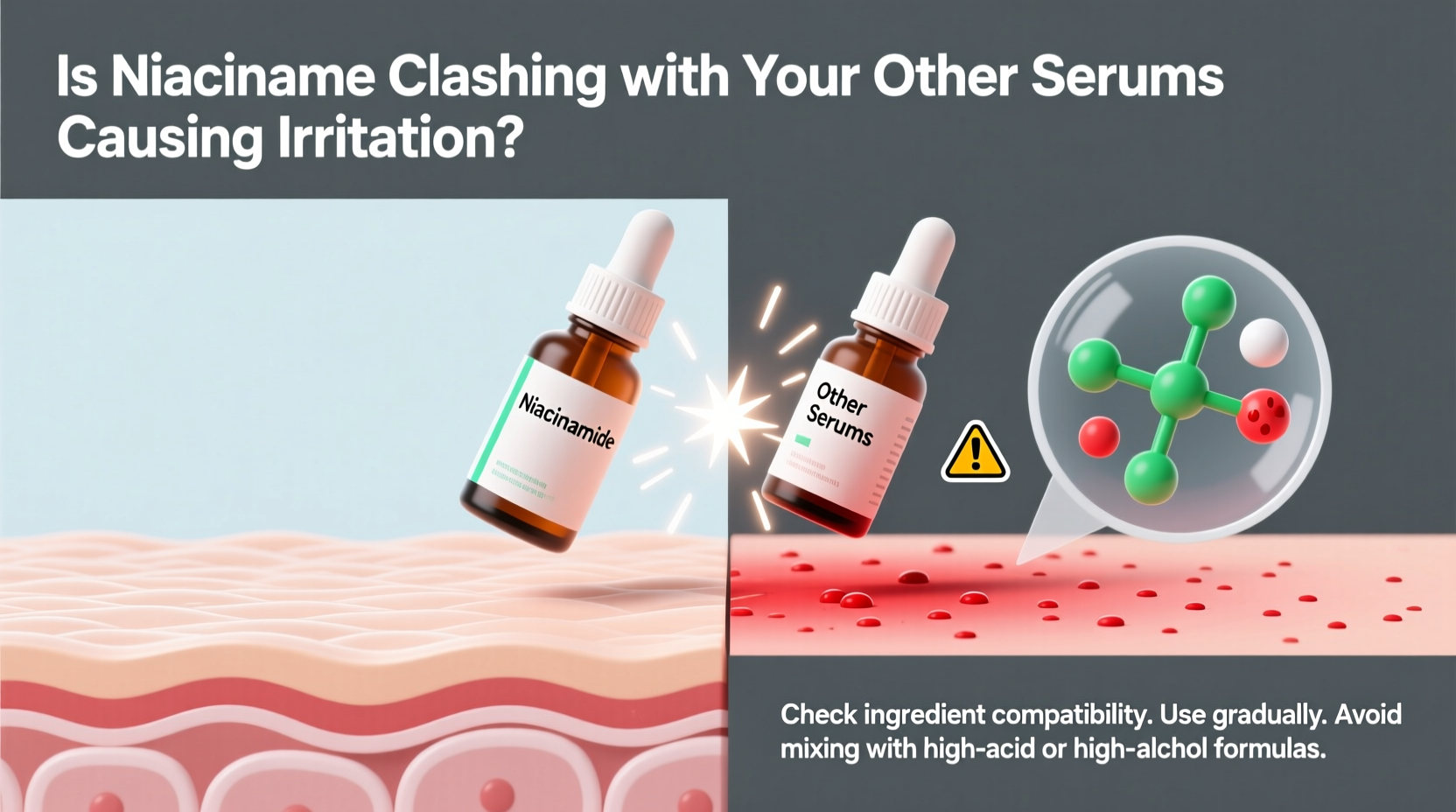
Pure niacinamide — vitamin B3 — is inherently non-irritating for most skin types, even sensitive ones. Studies show that concentrations up to 5% are generally well-tolerated, with minimal risk of adverse reactions when used correctly. It supports ceramide synthesis, reduces inflammation, and helps maintain hydration, making it a restorative agent rather than an exfoliant or disruptor.
The problem arises not from niacinamide itself, but from how it's formulated and combined. Many over-the-counter serums contain additional ingredients like preservatives, fragrance, alcohol, or high concentrations of other actives that can destabilize the formula or sensitize the skin. A product labeled “10% niacinamide” may also include ethanol or low-pH acids that amplify penetration — and irritation.
Common Serum Combinations That Clash with Niacinamide
Niacinamide interacts differently depending on the pH and chemical nature of the ingredients it’s paired with. Some combinations are stable and synergistic; others create instability or increase transepidermal water loss, leading to irritation.
Vitamin C (L-Ascorbic Acid)
L-ascorbic acid (pure vitamin C) works best in a highly acidic environment (pH 2.0–3.5). Niacinamide, on the other hand, is most stable at a near-neutral pH (5.0–7.0). When mixed directly, especially in high concentrations, they can theoretically convert into nicotinic acid — a form of niacin that causes flushing, redness, and discomfort.
While this reaction requires heat and time to occur significantly, combining unstable formulations or applying them simultaneously can still lead to irritation in practice, particularly for reactive skin types.
Alpha Hydroxy Acids (AHAs) and Beta Hydroxy Acids (BHAs)
Glycolic acid, lactic acid, and salicylic acid lower skin pH and accelerate cell turnover. When layered with niacinamide immediately, especially in high-strength formulas, they can compromise the skin barrier temporarily. While niacinamide helps repair the barrier over time, using it too soon after strong exfoliants may trap irritation or cause a burning sensation.
Retinoids (Retinol, Tretinoin)
Retinoids increase cellular turnover and thin the stratum corneum, making skin more permeable. Applying niacinamide right after can enhance absorption — sometimes too much. For beginners or those with compromised barriers, this combo can trigger dryness, peeling, and sensitivity, especially if both are used at high concentrations.
“Layering actives isn’t just about efficacy — it’s about respect for the skin’s tolerance. Even beneficial ingredients can become irritants when pushed too hard, too fast.” — Dr. Lena Park, Board-Certified Dermatologist
How to Use Niacinamide Safely with Other Serums
Avoiding irritation doesn't mean eliminating powerful combinations. With proper timing, formulation choices, and application techniques, you can enjoy the benefits of multiple actives without discomfort.
Step-by-Step Guide: Layering Without Conflict
- Start with clean, dry skin. This ensures even absorption and prevents dilution of active ingredients.
- Apply lowest pH product first. Acids (like vitamin C or AHAs/BHAs) should go on before niacinamide to maintain stability.
- Wait 15–20 minutes between layers. This allows pH to normalize and prevents interaction between incompatible ingredients.
- Follow with niacinamide. Once the acidic layer has absorbed, niacinamide can be applied safely.
- Finish with retinoids (if using at night). Apply retinol after niacinamide to reduce potential irritation and support barrier recovery.
- Always moisturize. Seal everything with a nourishing moisturizer to reinforce the skin barrier.
Do’s and Don’ts of Niacinamide Layering
| Do | Don’t |
|---|---|
| Use a 5% niacinamide serum — proven effective and less likely to irritate | Combine 10%+ niacinamide with high-strength vitamin C in the same routine |
| Pair niacinamide with hyaluronic acid or peptides for added hydration | Mix niacinamide with benzoyl peroxide — they can form inactive compounds |
| Alternate niacinamide and retinoids on different nights if irritation occurs | Apply multiple actives at full strength every day — give skin time to adapt |
| Perform a patch test behind the ear or on the jawline before full-face use | Ignore signs of barrier damage like tightness, redness, or persistent dryness |
| Use niacinamide in the morning to boost antioxidant defense | Store niacinamide in humid environments (e.g., bathrooms) — moisture degrades stability |
Real-World Example: Sarah’s Sensitive Skin Struggle
Sarah, 32, had been using a popular 10% niacinamide serum for two weeks when she began experiencing stinging and redness across her cheeks. She assumed she was allergic — until she reviewed her routine. Each morning, she applied a glycolic acid toner, followed immediately by the niacinamide, then a vitamin C serum. At night, she used retinol without buffering.
After consulting a dermatology nurse, she realized the issue wasn’t the niacinamide alone — it was the aggressive layering of low-pH acids and actives with no buffer periods. Her skin barrier was compromised from constant exposure to exfoliants and high-concentration actives.
She adjusted her routine: she stopped using the glycolic toner daily, switched to a gentler PHA toner every other day, waited 15 minutes after any acid before applying niacinamide, and introduced a ceramide moisturizer. Within ten days, the redness faded, and her skin regained its resilience.
Sarah’s case highlights a common mistake: assuming each product is safe in isolation means they’re safe together. Synergy matters — so does spacing.
Choosing the Right Niacinamide Formula
Not all niacinamide serums are created equal. Formulation plays a major role in how well your skin tolerates the product — especially when layering.
- Look for supporting ingredients: Ceramides, panthenol, and zinc can soothe and stabilize.
- Avoid drying alcohols: Ethanol, denatured alcohol, or isopropyl alcohol can strip lipids and worsen irritation.
- Check for fragrance and essential oils: These are common sensitizers, especially in combination routines.
- Opt for 5% concentration: Higher percentages don’t offer significantly better results and increase irritation risk.
- Stability matters: Choose airless pumps or opaque bottles to protect niacinamide from light and oxidation.
Some brands now formulate “multi-active” serums that combine niacinamide with compatible ingredients at balanced pH levels. These can simplify routines while reducing layering risks. However, they offer less control over individual actives — so they’re not ideal for everyone.
Frequently Asked Questions
Can I use niacinamide and vitamin C together?
Yes — but not necessarily at the same time. Use vitamin C in the morning on clean skin, wait 15–20 minutes, then apply niacinamide. Alternatively, use vitamin C in the AM and niacinamide in the PM. Stable derivatives like magnesium ascorbyl phosphate are less acidic and can be layered more safely with niacinamide.
Why does my face burn when I use niacinamide after exfoliating?
This is typically due to a compromised skin barrier. AHAs and BHAs remove dead cells and lower pH, increasing permeability. Applying another active like niacinamide too soon can cause stinging. Wait at least 20 minutes, or use niacinamide on non-exfoliation days until your barrier strengthens.
Is it safe to mix niacinamide with retinol?
Yes, and many dermatologists recommend it. Niacinamide can actually reduce retinol-induced irritation by reinforcing the skin barrier. However, introduce both slowly. Try applying niacinamide first, let it absorb, then follow with a pea-sized amount of retinol. Avoid high concentrations of both at once.
Checklist: Preventing Niacinamide-Related Irritation
- ✅ Patch test new niacinamide products for 3–5 days before full use
- ✅ Read labels — avoid formulas with alcohol, fragrance, or high pH disruptors
- ✅ Limit initial use to every other night to assess tolerance
- ✅ Wait 15–20 minutes between acidic products and niacinamide
- ✅ Use a simple moisturizer to support the skin barrier
- ✅ Avoid combining with benzoyl peroxide unless formulated together
- ✅ Discontinue use if persistent redness, itching, or swelling occurs
Conclusion: Harmony Over Hustle in Skincare
Skin health isn’t about how many actives you can pile on — it’s about balance, compatibility, and consistency. Niacinamide is a powerful ally, but its effectiveness depends on how thoughtfully it’s integrated into your routine. Clashes with other serums aren’t inevitable; they’re usually preventable with smarter layering, better formulations, and patience.
If you're experiencing irritation, don’t assume you need to eliminate niacinamide. Instead, audit your routine: examine pH levels, timing, concentrations, and additional sensitizing ingredients. Small adjustments often yield dramatic improvements in comfort and results.




 浙公网安备
33010002000092号
浙公网安备
33010002000092号 浙B2-20120091-4
Comments
No comments yet. Why don't you start the discussion?