
Open-plan offices were once hailed as the future of collaborative work. Today, they’re more often associated with a different kind of buzz: relentless background chatter. For many office workers, the constant hum of nearby conversations, phone calls, and keyboard clatter isn’t just distracting—it’s draining. In this environment, noise-cancelling headphones have emerged as a potential lifeline. But are they truly worth the investment? The answer depends on your work style, environment, and long-term goals for focus and mental clarity.
Unlike simple earbuds that block sound physically, active noise cancelling (ANC) uses microphones and anti-noise algorithms to neutralize ambient sounds—especially low-frequency noise like HVAC systems, traffic, or murmuring voices. While not perfect, modern ANC technology has advanced significantly, making it a compelling tool for knowledge workers who need sustained concentration. This article explores the real-world benefits, limitations, and strategic use of noise-cancelling headphones in typical office settings.
The Cognitive Cost of Constant Chatter
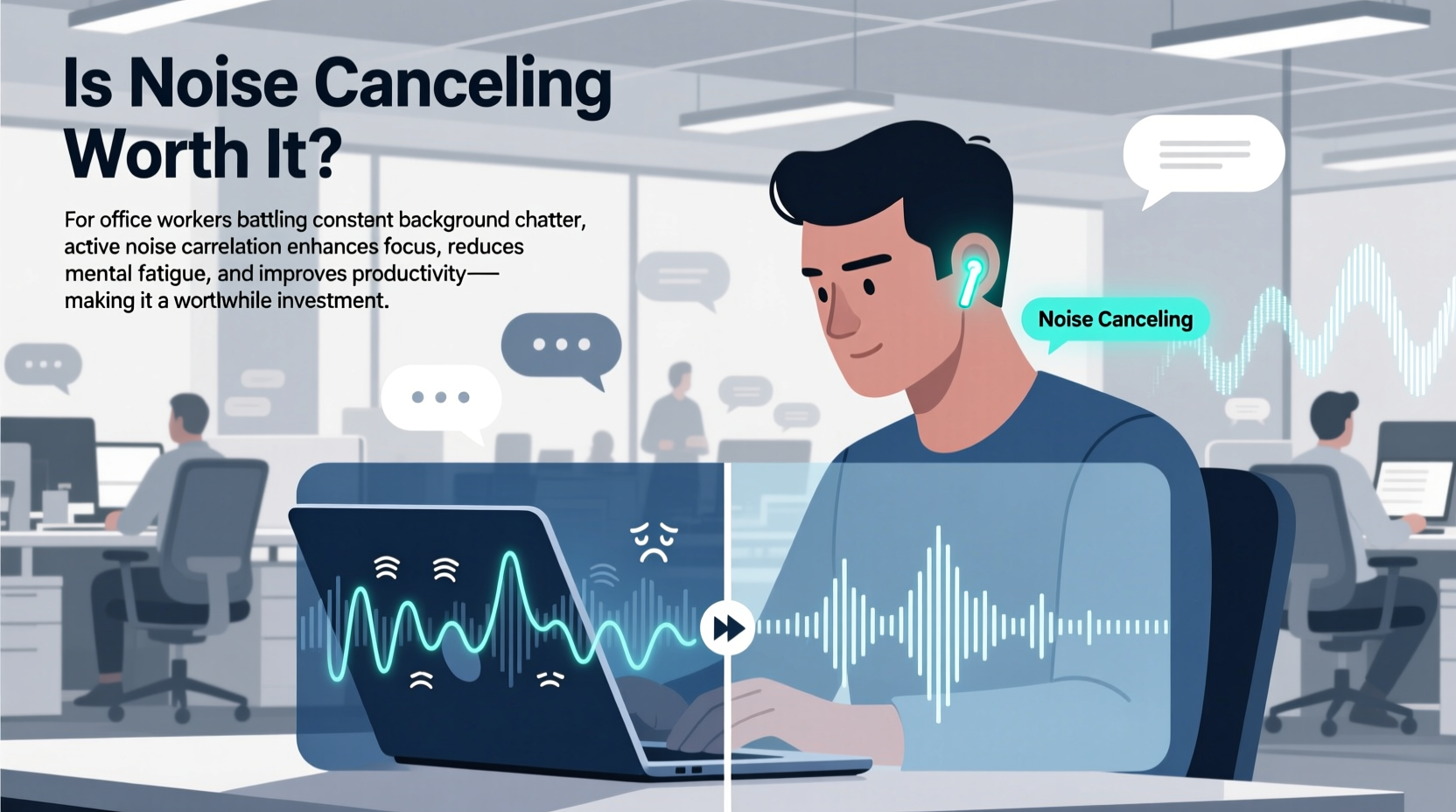
Human brains aren't designed to filter out speech efficiently. Unlike mechanical or environmental noise, human voices trigger automatic attention—even when we're not directly involved in the conversation. This phenomenon, known as the \"cocktail party effect,\" means our cognitive resources are constantly diverted by nearby dialogue, reducing working memory capacity and increasing mental fatigue.
A 2021 study published in the Journal of Environmental Psychology found that employees in open offices reported 37% lower concentration levels and took an average of 23 minutes to fully re-engage after an interruption. Much of this disruption stemmed from overheard conversations. Another report from Cornell University showed that prolonged exposure to unpredictable auditory stimuli leads to elevated cortisol levels, contributing to stress and burnout.
“Even low-level social noise activates regions of the brain associated with language processing. It's cognitively taxing because you're always subconsciously trying to make sense of what's being said.” — Dr. Lena Peterson, Cognitive Neuroscientist, MIT Human Performance Lab
This hidden tax on attention accumulates over time. What starts as mild annoyance becomes chronic distraction, undermining deep work and creative thinking. For roles requiring writing, coding, analysis, or problem-solving, even brief lapses in focus can derail progress.
How Noise Cancelling Works—and Where It Falls Short
Active noise cancelling relies on three core components: external microphones, digital signal processing, and speaker output. Microphones pick up ambient sound; the processor generates an inverted sound wave (anti-noise); and the speakers play both the original audio and the anti-noise simultaneously, effectively cancelling out the background frequencies.
Modern ANC excels at eliminating consistent, low-frequency sounds—like the drone of air conditioning, airplane engines, or distant traffic. These predictable waveforms are easier to reverse-engineer. However, higher-frequency noises—such as sudden laughter, sharp phone rings, or overlapping voices—are more challenging. While newer models use adaptive algorithms and AI-driven prediction to improve performance, no headphone completely erases human speech.
Passive noise isolation—the physical seal created by ear cushions or in-ear tips—plays a crucial role too. Over-ear designs with memory foam and tight seals can block up to 25–30 decibels of high-frequency sound. Combined with ANC, this creates a much quieter baseline than silence alone.
Real-World Impact: A Day in the Life of an Office Worker
Consider Sarah, a mid-level project manager at a marketing firm in downtown Chicago. Her team operates in a 40-person open workspace with glass walls, frequent client calls, and impromptu stand-ups. Before using noise-cancelling headphones, Sarah averaged four completed tasks per day, often worked late to catch up, and felt mentally exhausted by 3 p.m.
After investing in a pair of premium over-ear ANC headphones, she began structuring her day around focused blocks. From 9–11 a.m., she enabled full noise cancellation with instrumental music. During this window, interruptions dropped from 6–7 per hour to nearly zero. Colleagues learned that “headphones on” meant “do not disturb.” Her task completion rose to seven per day, and she left the office on time five days a week.
Sarah didn’t eliminate collaboration—she scheduled check-ins during designated times. She also used transparency mode when walking through the office or grabbing coffee, maintaining social presence without sacrificing peace. Within two months, her manager noted improved report quality and faster turnaround times.
Her experience reflects a broader trend: intentional use of noise control tools doesn’t isolate workers—it enables them to contribute more meaningfully when present.
Comparing Solutions: Headphones vs. Alternatives
While noise-cancelling headphones are popular, they’re not the only option. Below is a comparison of common strategies for managing office noise.
| Solution | Noise Reduction Effectiveness | Cost Range | Key Pros | Key Cons |
|---|---|---|---|---|
| Over-Ear ANC Headphones | High (low/mid frequencies), Moderate (speech) | $150–$400 | Portable, immediate effect, dual use (calls + music) | Battery-dependent, may feel isolating, requires upkeep |
| In-Ear Monitors (IEMs) with Passive Isolation | Moderate-High (depends on fit) | $50–$300 | Compact, no battery needed, good for gym-to-work use | Less comfort over long periods, limited ANC options |
| White Noise Machines / Desk Fans | Moderate (masks speech but adds sound) | $30–$120 | Stationary solution, continuous coverage | Limited mobility, may disturb neighbors |
| Office Partitions / Acoustic Panels | Moderate (structural dampening) | $100–$500+ | Permanent improvement, benefits entire team | Requires approval, installation effort, aesthetic trade-offs |
| Remote Work / Quiet Rooms | Very High (if available) | N/A or variable | Eliminates source, supports deep work culture | Not always feasible, equity issues across teams |
The data suggests that while structural changes offer the most sustainable fix, personal solutions like ANC headphones provide the fastest, most accessible relief—especially for individuals without authority to redesign office layouts.
Maximizing Value: A Step-by-Step Guide to Using ANC Effectively
Purchasing noise-cancelling headphones is only the first step. To get lasting value, follow this practical sequence:
- Assess Your Noise Profile: Spend one day noting when and why distractions occur. Is it morning team chatter? Midday phone calls? Identify peak interference times.
- Choose the Right Type: For all-day wear, prioritize comfort and breathability. Over-ear models suit colder offices; compact IEMs work better in warmer climates or if you move frequently.
- Test Before You Buy (If Possible): Visit electronics stores or borrow models. Try them with speech-like noise (e.g., a podcast playing nearby) to gauge real-world performance.
- Set Communication Norms: Inform your team that headphones = focus time. Use status indicators (Slack statuses, desk flags) to avoid misunderstandings.
- Create a Focus Schedule: Align headphone use with your natural energy peaks. Most people benefit from 90-minute blocks of deep work followed by short breaks.
- Maintain Balance with Transparency Mode: Use transparency or ambient mode during transitional periods (e.g., lunch, hallway walks) to stay socially connected.
- Care for Your Device: Clean ear pads monthly, store in a case, and update firmware to maintain optimal performance and longevity.
Used strategically, ANC becomes part of a larger productivity system—not just a gadget, but a behavioral cue that signals intentionality.
When Noise Cancelling Might Not Be Worth It
Despite their advantages, noise-cancelling headphones aren’t universally beneficial. They may be less effective or inappropriate in certain situations:
- Highly Collaborative Roles: If your job requires constant coordination—like scrum masters or customer support leads—wearing headphones full-time could hinder responsiveness.
- Small, Quiet Offices: In environments with minimal background noise, the return on investment diminishes. Simpler solutions like soft music or earplugs may suffice.
- Budget Constraints: Premium ANC models are expensive. If your employer won’t reimburse, consider mid-tier options or request them as a workplace accommodation.
- Hearing Sensitivity or Tinnitus: Some users report pressure or discomfort from ANC. Test carefully if you have preexisting auditory conditions.
Additionally, relying solely on headphones without addressing systemic noise issues can create inequity. Not everyone can afford $300 headphones, and expecting employees to self-solve environmental problems shifts responsibility unfairly.
Frequently Asked Questions
Can noise-cancelling headphones block out all office conversations?
No headphone can completely eliminate human speech, especially sudden or high-pitched voices. However, they significantly reduce the volume and clarity of background chatter, making it less intrusive. Combined with passive isolation and low-volume background music, the effect is often enough to restore focus.
Are there health risks associated with long-term use?
There are no proven long-term hearing risks from ANC itself. However, some users report a sensation of \"ear pressure,\" similar to ascending in an airplane. This usually subsides with adjustment or shorter usage sessions. Avoid cranking up volume to compensate—keep audio below 60% maximum.
Will my employer pay for noise-cancelling headphones?
Many companies do, especially if framed as an ergonomic or accessibility need. Submit a request citing reduced distractions, improved concentration, and alignment with wellness initiatives. Include product comparisons and expected ROI in productivity gains.
Action Plan: Making the Decision
Still unsure whether noise cancelling is right for you? Use this checklist to evaluate your situation:
- ✅ Say yes if:
- You regularly struggle to concentrate due to nearby talking.
- Your role involves deep cognitive work (writing, coding, design).
- You already use headphones occasionally for focus or calls.
- Your office lacks quiet zones or sound-absorbing materials.
- ❌ Reconsider if:
- You’re constantly in meetings or team huddles.
- You’re sensitive to ear pressure or wear glasses (can affect seal).
- You work in a very small, naturally quiet space.
- You expect complete silence—they reduce noise, not eliminate it.
If you meet most of the \"yes\" criteria, the investment is likely justified. Start with a reputable mid-range model (e.g., Sony WH-1000XM5, Bose QuietComfort Ultra, or Apple AirPods Pro) and track changes in your daily output and energy levels over three weeks.
Final Thoughts: Silence as a Productivity Tool
In a world where attention is the scarcest resource, protecting your focus isn’t indulgence—it’s strategy. For office workers drowning in background chatter, noise-cancelling headphones aren’t just a convenience; they’re a tool for reclaiming mental bandwidth. When used wisely, they enable deeper work, reduce stress, and support sustainable performance.
The goal isn’t total isolation, but controlled engagement. By defining when you listen and when you tune out, you take back agency over your environment. And in doing so, you set a precedent: that focus matters, and silence deserves space.




 浙公网安备
33010002000092号
浙公网安备
33010002000092号 浙B2-20120091-4
Comments
No comments yet. Why don't you start the discussion?