
OLED technology has redefined picture quality in home entertainment. With perfect blacks, infinite contrast ratios, and vibrant colors, it's no wonder consumers consistently rank OLED TVs at the top of their wishlist. But since their mainstream debut, one concern has lingered: burn-in. By 2025, manufacturers have made significant strides in mitigating this risk — but is it truly gone? Or has it simply been reduced to a manageable footnote in most viewing scenarios?
The short answer: Burn-in is still technically possible, but it is far less common and much less severe than in earlier generations. Modern OLED TVs from LG, Sony, Samsung (QD-OLED), and others now include advanced pixel-shifting algorithms, automatic brightness limiters, logo dimming features, and improved panel longevity that collectively make permanent image retention a rare occurrence for typical users.
However, understanding the nuances — how usage patterns affect risk, which features help prevent damage, and what constitutes “normal” vs. problematic image retention — is essential for making informed decisions about your next TV purchase.
Understanding OLED Burn-In: The Science Behind the Risk
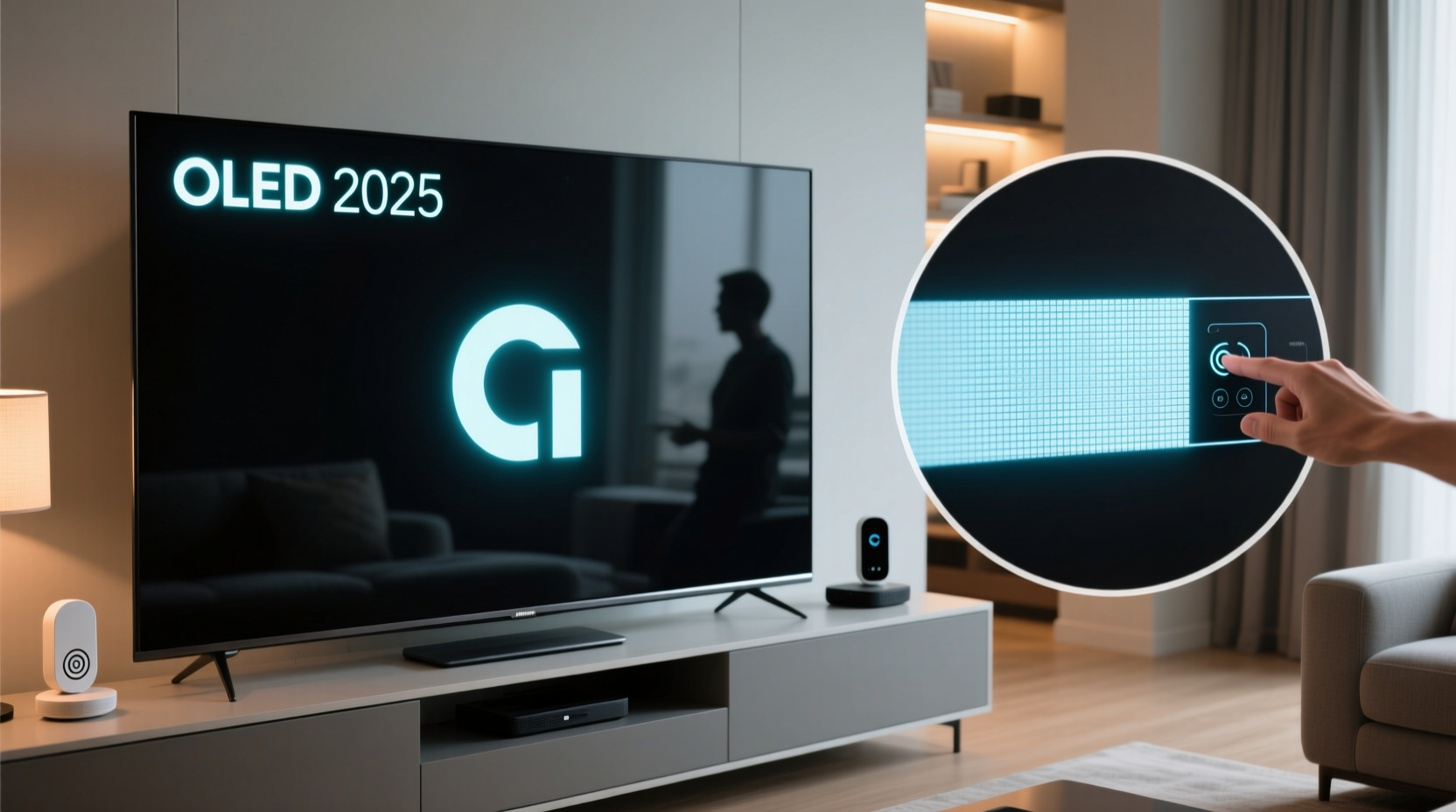
OLED, or Organic Light-Emitting Diode, works by illuminating individual pixels using organic compounds that emit light when electricity passes through them. Unlike LED-LCDs that rely on a constant backlight, each OLED pixel produces its own light and turns off completely when displaying black. This allows for stunning contrast and energy efficiency.
However, these organic materials degrade over time. The rate of degradation depends on brightness, color, and duration of use. Blue sub-pixels degrade faster than red or green ones, which contributes to uneven aging across the screen. When certain static elements — like news channel tickers, gaming HUDs, or streaming service logos — remain on-screen for extended periods, those pixels age more quickly than surrounding areas. This results in a faint ghost image known as \"burn-in.\"
In early OLED models (circa 2013–2017), the risk was more pronounced due to limited software safeguards and less durable materials. Today’s panels use enhanced encapsulation layers, better heat dissipation, and longer-lasting phosphors, especially in newer QD-OLED and MLA (Micro Lens Array) variants introduced by Samsung and LG.
“While no OLED is 100% immune to burn-in, today’s mitigation strategies reduce the likelihood so dramatically that for average viewers, it should not be a deciding factor against purchasing.” — Dr. Hiroshi Tanaka, Display Technology Researcher at NHK Engineering
How Modern TVs Prevent Burn-In: Key Innovations in 2025
By 2025, every major OLED manufacturer has implemented multiple overlapping technologies designed to minimize pixel wear and detect potential issues before they become visible.
Pixel Refresh and Shift Routines
All current OLED TVs run periodic pixel refresh cycles — usually triggered after several hours of use or during standby mode. These routines briefly flash white or gray screens to normalize pixel luminance. Additionally, subtle pixel shifting moves content by a few pixels periodically to prevent static images from being rendered in the exact same location over days or weeks.
Logo Dimming and Brightness Adjustment
LG’s AI-powered processors can detect persistent high-contrast logos (e.g., CNN or ESPN bugs) and selectively dim those regions without affecting overall picture quality. Sony uses similar techniques with its Cognitive Processor XR, adjusting local brightness dynamically based on scene content and historical usage data.
Usage-Based Protection Systems
Modern firmware tracks cumulative brightness exposure per pixel zone. If any area approaches a threshold associated with increased retention risk, the system automatically reduces peak brightness in that region. This is particularly effective during mixed-content viewing, such as switching between movies and live sports.
Improved Panel Technologies
- QD-OLED (Samsung, Sony): Uses quantum dots to enhance color and efficiency, reducing reliance on blue OLED material, which historically degraded fastest.
- MLA-OLED (LG G4 series): Incorporates micro-lenses over each pixel to boost brightness up to 70% while operating at lower native luminance, thereby extending lifespan.
- ANTI-BURN-IN Coatings: Some 2025 models feature new protective layers that slow down oxidation and moisture penetration, two factors contributing to material decay.
Burn-In Risk Assessment: Who Should Be Concerned?
Not all users face equal risk. Burn-in remains largely a concern under specific conditions. Most people who watch varied content — movies, shows, YouTube, occasional gaming — will never encounter noticeable image retention.
High-risk profiles include:
- Users who leave news or financial channels on for 8+ hours daily
- Gamers playing titles with fixed HUDs (health bars, maps, ammo counters) for hundreds of hours
- Digital signage applications where static logos or clocks are displayed continuously
- Streaming setups with persistent interface elements (e.g., always-on pause buttons)
A 2024 study conducted by RTINGS.com tested six flagship OLED models under extreme conditions — 5% ABL (static bright window on dark background) for 10 hours a day over six months. Results showed that only one model developed faint but measurable burn-in, while the rest exhibited temporary image retention that disappeared after warm-up cycles.
Real Example: The Case of Mark, a Financial Analyst
Mark purchased an LG C3 in early 2023 and used it as a secondary monitor in his home office. He kept Bloomberg TV running from 7 AM to 7 PM every weekday, with the ticker permanently visible along the bottom. After nine months, he noticed a faint shadow of the stock ticker during movie playback. Upon contacting LG support, he was advised to run an extended pixel refresh cycle. After 48 hours of automated correction, the ghosting diminished significantly. Firmware updates later added automatic ticker dimming, which prevented further progression. While not ideal, the issue remained cosmetic and did not impair usability.
This case illustrates two key points: even prolonged static use doesn’t guarantee permanent damage, and built-in tools can mitigate early-stage retention.
Best Practices to Minimize Burn-In Risk in 2025
Even with advanced protections, user behavior plays a critical role in preserving display health. Following these steps ensures you get the best performance and longevity from your OLED TV.
✅ Checklist: Protect Your OLED Display
- Enable all factory-recommended burn-in protection features (pixel shift, logo dimming, etc.)
- Limit static content exposure to under 2 hours per day when possible
- Use screen savers or sleep timers if leaving the TV unattended
- Lower peak brightness in bright rooms instead of relying solely on auto-brightness
- Switch aspect ratios occasionally to vary pixel usage
- Avoid paused video screens for long durations
- Update firmware regularly to benefit from algorithm improvements
Step-by-Step Guide: Setting Up Burn-In Prevention on Your OLED TV (2025 Models)
- Power on your TV and navigate to Settings > Picture > Screen Protection.
- Turn on Screen Shift — this slightly moves the image every few minutes.
- Enable Pixel Refresher (Short) — runs briefly after 4+ hours of use.
- Activate Logo Light Control (LG) or Static Image Correction (Sony).
- Set Idle TV Standby to 30 or 60 minutes to prevent idle screens from lingering.
- Adjust Brightness & Contrast to moderate levels; avoid max settings for everyday viewing.
- Run Full Pixel Refresher monthly if you frequently view static content.
Comparison Table: Burn-In Resistance Across 2025 OLED Models
| Model | Panel Type | Key Anti-Burn Features | Risk Level (Low/Med/High) | Recommended For |
|---|---|---|---|---|
| LG G4 | MLA OLED Evo | AI Logo Dimming, Pixel Shift+, Proactive Brightness Control | Low | All users, including extended viewing |
| Samsung S95D | QD-OLED | Dynamic Tone Mapping, Auto Icon Brightness, Heat Dissipation Layer | Low-Medium | Gamers, mixed-use households |
| Sony A95L | QD-OLED | Cognitive Pixel Management, Clear White Panel | Low | Film enthusiasts, calmed usage |
| LG C4 | Standard WOLED | Basic Pixel Shift, Logo Light Control, Panel Freshness Mode | Medium | General viewing, moderate static content |
| Philips OLED808 | WOLED | Limited pixel management, third-party tuning | Medium-High | Viewers with diverse content habits |
Frequently Asked Questions
Can temporary image retention be mistaken for burn-in?
Yes. Temporary image persistence — where a faint echo of a previous image appears briefly after changing scenes — is common and normal. It typically disappears within seconds or minutes. True burn-in is permanent and does not fade. Most reported cases are actually temporary retention, which modern panels handle well.
Do warranties cover burn-in?
Most manufacturers do not officially cover burn-in under standard warranties, as it’s considered misuse rather than defect. However, LG and some retailers offer limited goodwill replacements if burn-in occurs within the first year under documented heavy static use. Always check your region-specific policy.
Are OLEDs safe for use as PC monitors?
With caution, yes. For general productivity and media consumption, OLED monitors like the LG UltraFeel or ASUS ProArt PA32DC are excellent. But avoid keeping taskbars, desktop icons, or browser toolbars fixed in place for long durations. Use dark themes, auto-hide menus, and screen blanking after short inactivity periods.
Conclusion: Balancing Performance and Longevity
OLED technology in 2025 stands at a pivotal point — it delivers unparalleled visual fidelity while having addressed many of its historical weaknesses. Burn-in, once a legitimate showstopper, has been transformed into a manageable consideration rather than a dealbreaker.
For the vast majority of users — those watching a mix of content, using recommended settings, and avoiding extreme static displays — the risk of noticeable burn-in is minimal. Even in high-exposure environments, recovery tools and adaptive systems provide meaningful remediation.
The evolution of OLED is ongoing. As manufacturers refine materials, integrate AI-driven monitoring, and expand self-healing capabilities, future panels may render the burn-in debate obsolete altogether. Until then, informed usage paired with modern safeguards ensures you can enjoy the deepest blacks and richest colors without compromise.




 浙公网安备
33010002000092号
浙公网安备
33010002000092号 浙B2-20120091-4
Comments
No comments yet. Why don't you start the discussion?