
In 2025, the average U.S. household subscribes to four streaming services, spending over $130 per month on digital entertainment. This figure has nearly doubled since 2020. With rising subscription costs, fragmented content libraries, and increasing ad integration, many consumers are questioning whether maintaining access to multiple platforms still makes financial sense. The answer isn’t a simple yes or no—it depends on usage patterns, content preferences, and financial priorities. As the streaming landscape matures, cost-effectiveness is no longer just about price per service, but about value derived per dollar spent.
The Rising Cost of Streaming Subscriptions
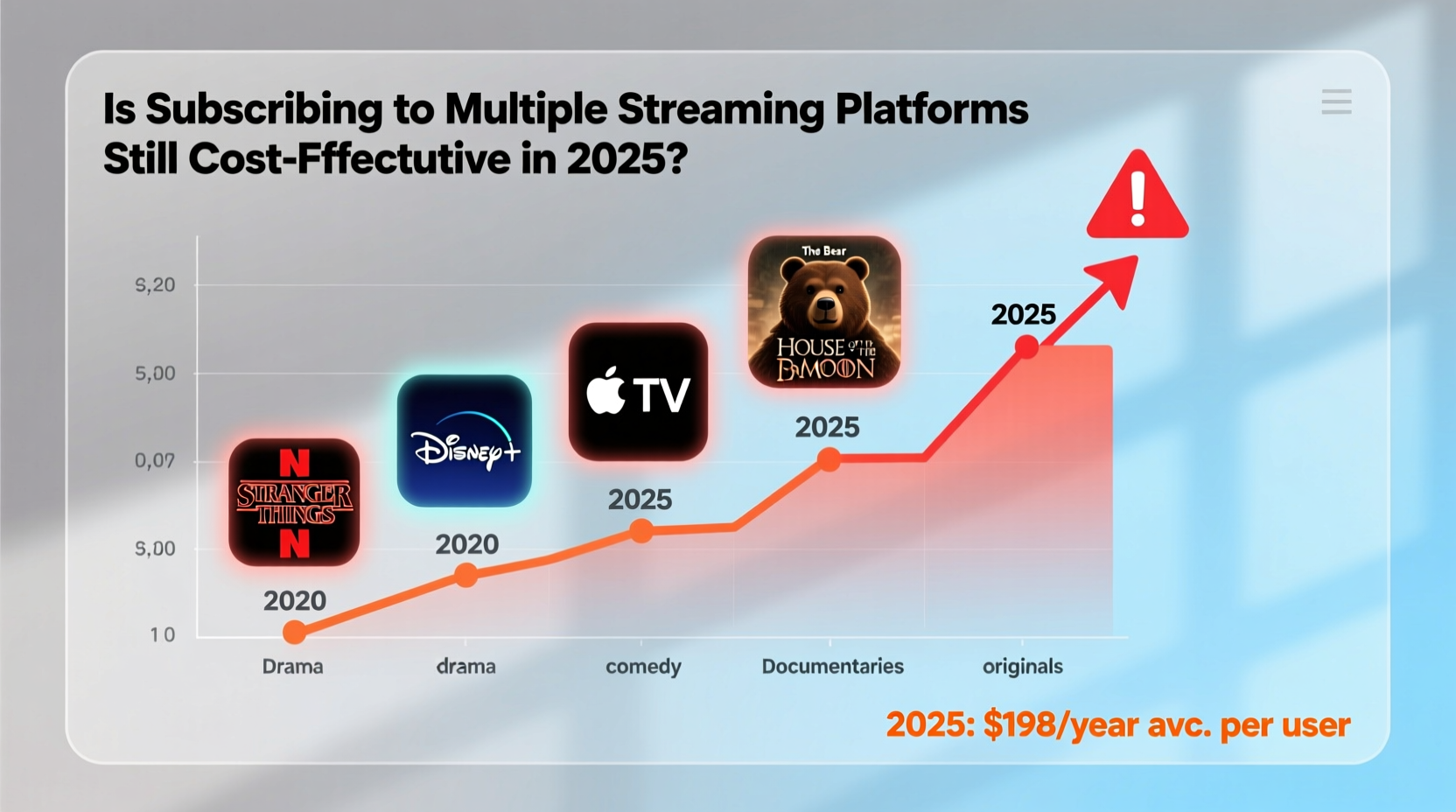
What once began as an affordable alternative to cable TV has evolved into a complex ecosystem of competing platforms, each vying for dominance with exclusive content and tiered pricing. In 2025, major services like Netflix, Disney+, Hulu, Max, and Amazon Prime Video have all increased base prices by 20–40% over the past three years. Premium tiers with 4K, Dolby Atmos, and multiple simultaneous streams now regularly exceed $15–$20 per month per service.
Consider this: a household subscribing to just four major platforms could easily spend $60–$80 monthly before factoring in add-ons like live sports, premium channels (e.g., Showtime on Paramount+), or ad-free upgrades. When bundled with internet and mobile plans, entertainment costs are creeping back toward traditional cable-era levels—without the same breadth of live programming.
Content Fragmentation: Why More Subscriptions Are Often Necessary
The primary driver behind multi-platform subscriptions is content fragmentation. Exclusive rights to popular shows, movies, and live events are now tightly controlled by individual platforms. For example:
- Netflix holds global rights to hits like *Stranger Things* and *Squid Game*, but lacks most classic sitcoms.
- HBO/Max remains the home of prestige series like *Succession* and *The Last of Us*, unavailable elsewhere.
- Disney+ controls Marvel, Star Wars, Pixar, and National Geographic—but little else outside family-friendly fare.
- Apple TV+ offers critically acclaimed originals (*Ted Lasso*, *Severance*) but a relatively small library.
- Paramount+ includes live CBS broadcasts and NFL games, appealing to sports fans.
This siloed model forces viewers to subscribe to multiple services to access their favorite content. A 2024 Nielsen report found that 68% of streamers feel they “need” at least three platforms to watch everything they want. However, only 41% reported watching content from all their subscribed services weekly.
“Consumers are paying for access, not utilization. The real cost isn’t the monthly fee—it’s the unused potential.” — Dr. Lena Patel, Media Economist, University of Southern California
Cost Comparison: Single vs. Multiple Subscriptions in 2025
To assess cost effectiveness, consider both total expense and per-hour-of-viewing value. The table below compares typical scenarios for a single viewer.
| Subscription Model | Monthly Cost | Avg. Hours Watched/Month | Cost Per Hour Watched | Notes |
|---|---|---|---|---|
| One platform (e.g., Netflix Standard) | $15.99 | 25 | $0.64 | High engagement; main entertainment source |
| Two platforms (e.g., Netflix + Max) | $30.98 | 40 | $0.77 | Moderate overlap; some underused content |
| Three platforms (e.g., Netflix + Max + Disney+) | $45.97 | 48 | $0.96 | Diminishing returns; low use of one service |
| Four+ platforms (full bundle) | $65+ | 50 | $1.30+ | Significant idle subscriptions; high waste |
The data reveals a critical trend: as the number of subscriptions increases, the cost per hour of watched content rises. This indicates declining marginal utility—the more platforms you pay for, the less value you extract from each additional dollar spent.
Smart Strategies to Maintain Value in 2025
Staying cost-effective doesn’t require abandoning multiple platforms entirely. Instead, adopt a strategic approach that aligns spending with actual viewing behavior. Here are actionable steps to optimize your streaming budget:
- Rotate subscriptions based on content drops. Subscribe to a service only when a highly anticipated show or movie is released, then cancel after viewing.
- Use free trials wisely. Time new trials to coincide with major releases. Avoid automatic renewal unless you’re certain you’ll continue using the service.
- Leverage bundle deals. Services like Hulu, Disney+, and Max offer discounted bundles. Similarly, some internet providers include free or reduced-cost subscriptions.
- Share accounts responsibly. Most platforms allow household sharing or paid extra-member options. Splitting costs with trusted family or friends can reduce individual burden.
- Track usage with built-in tools. Platforms like Netflix and Apple TV+ provide viewing time summaries. Use these to identify underused services.
Mini Case Study: The Johnson Family’s Streaming Overhaul
The Johnsons, a family of four in Austin, Texas, were spending $98 monthly on five streaming services in early 2024: Netflix, Hulu, Max, Disney+, and YouTube Premium. After reviewing their viewing habits, they discovered that Max had been used only twice in six months—both times to watch a single HBO documentary.
They implemented a rotation strategy: keeping Netflix, Disney+, and Hulu year-round, while resubscribing to Max only during premiere seasons of shows like *House of the Dragon*. They also started using the free, ad-supported version of Hulu for casual viewing. By mid-2025, their average monthly cost dropped to $62—a 37% reduction—without sacrificing access to desired content.
“We realized we weren’t watching more just because we had more,” said Mark Johnson. “Cutting down actually made us more intentional about what we watched.”
Ad-Supported Tiers: A Viable Cost-Saving Option?
In response to subscriber churn, nearly all major platforms now offer lower-priced, ad-supported tiers. In 2025, Netflix’s ad tier saves $5/month, Disney+ offers a $3 discount, and Max’s basic plan is $10 cheaper than the ad-free version. But are these savings worth the trade-off?
For light viewers or background watchers (e.g., during meals or workouts), ads may be tolerable. However, heavy users report frustration with frequent interruptions—some platforms insert ads every 7–10 minutes. A study by Consumer Reports found that viewers on ad-supported plans spend 18% more time watching commercials than actual content during peak hours.
Still, for budget-conscious households, ad-supported tiers can be part of a hybrid strategy. Using them for secondary platforms while maintaining ad-free access on primary services balances cost and experience.
Checklist: How to Optimize Your Streaming Spending in 2025
- ✅ List all current subscriptions and their monthly costs
- ✅ Review your viewing history on each platform (available in account settings)
- ✅ Identify which services you’ve used in the past 30 days
- ✅ Cancel at least one underused subscription immediately
- ✅ Switch one service to an ad-supported tier if available
- ✅ Schedule the next subscription review for 90 days from now
- ✅ Explore bundling options or family sharing to reduce costs
Future Trends That May Change the Equation
The streaming market is entering a consolidation phase. In 2025, mergers between content providers and telecom companies are accelerating. For instance, Comcast (owner of Peacock) has expanded partnerships with Xfinity internet customers, offering deeper discounts and integrated billing. Meanwhile, rumors persist about a potential joint venture between Warner Bros. Discovery and a major telecom to create a super-bundle combining broadband, mobile, and streaming.
Additionally, AI-driven recommendation engines are improving. Platforms are getting better at surfacing relevant content, reducing decision fatigue and increasing perceived value. Some analysts predict that by 2026, personalized curation could increase user retention without requiring additional content spending.
However, regulatory scrutiny is growing. The FCC and FTC are investigating whether exclusive licensing agreements harm consumer choice. If regulations force greater content sharing between platforms, the need for multiple subscriptions could diminish significantly.
Frequently Asked Questions
Isn’t streaming still cheaper than cable?
Not necessarily. While basic cable packages have declined, premium cable bundles averaged $110/month in 2024. However, many streaming households now spend $100+ when combining multiple services, cloud DVR, and live TV add-ons. The gap has narrowed, and for some, streaming is now more expensive.
Can I legally share my streaming account with others?
Policies vary. Netflix and Disney+ allow household sharing (typically 2–4 devices). Netflix also offers a paid “extra member” option for $7.99/month per person. Unauthorized sharing (e.g., selling login details) violates terms of service and may result in account suspension.
Are there truly free alternatives worth using?
Yes. Platforms like Tubi, Pluto TV, and Freevee offer extensive libraries of movies and TV shows at no cost, supported by ads. While they lack the latest blockbusters, they feature thousands of titles—including classics and niche genres. For casual viewers, these can replace one or more paid subscriptions.
Conclusion: Reclaim Control Over Your Streaming Spend
Subscribing to multiple streaming platforms in 2025 can still be cost effective—but only with intentionality. Blindly stacking subscriptions leads to wasted spending and decision fatigue. The most financially savvy consumers treat streaming like any other utility: monitored, optimized, and adjusted regularly.
Start by auditing your current lineup. Ask yourself: Am I watching enough to justify each fee? Could I rotate, downgrade, or replace any service? Small changes—like switching to an ad-supported tier or sharing a login—can save hundreds per year. In an era of rising digital costs, being proactive isn’t just smart; it’s essential.




 浙公网安备
33010002000092号
浙公网安备
33010002000092号 浙B2-20120091-4
Comments
No comments yet. Why don't you start the discussion?