
When a pet goes missing, every second counts. In today’s connected world, many pet owners turn to technology for peace of mind—Apple’s AirTag being one of the most talked-about devices. Marketed as a simple way to locate lost items, AirTags have gained popularity among pet owners looking to track their dogs, cats, and even small animals. But is this consumer-focused tracker truly effective for pets, or are there more reliable alternatives designed specifically for animal safety?
The answer isn’t straightforward. While AirTags offer convenience and integration with Apple’s vast Find My network, they come with significant limitations when used beyond their intended purpose. Understanding these constraints—and knowing what specialized pet trackers offer—can help you make an informed decision that could one day bring your furry friend home safely.
How Apple AirTags Work: A Quick Overview
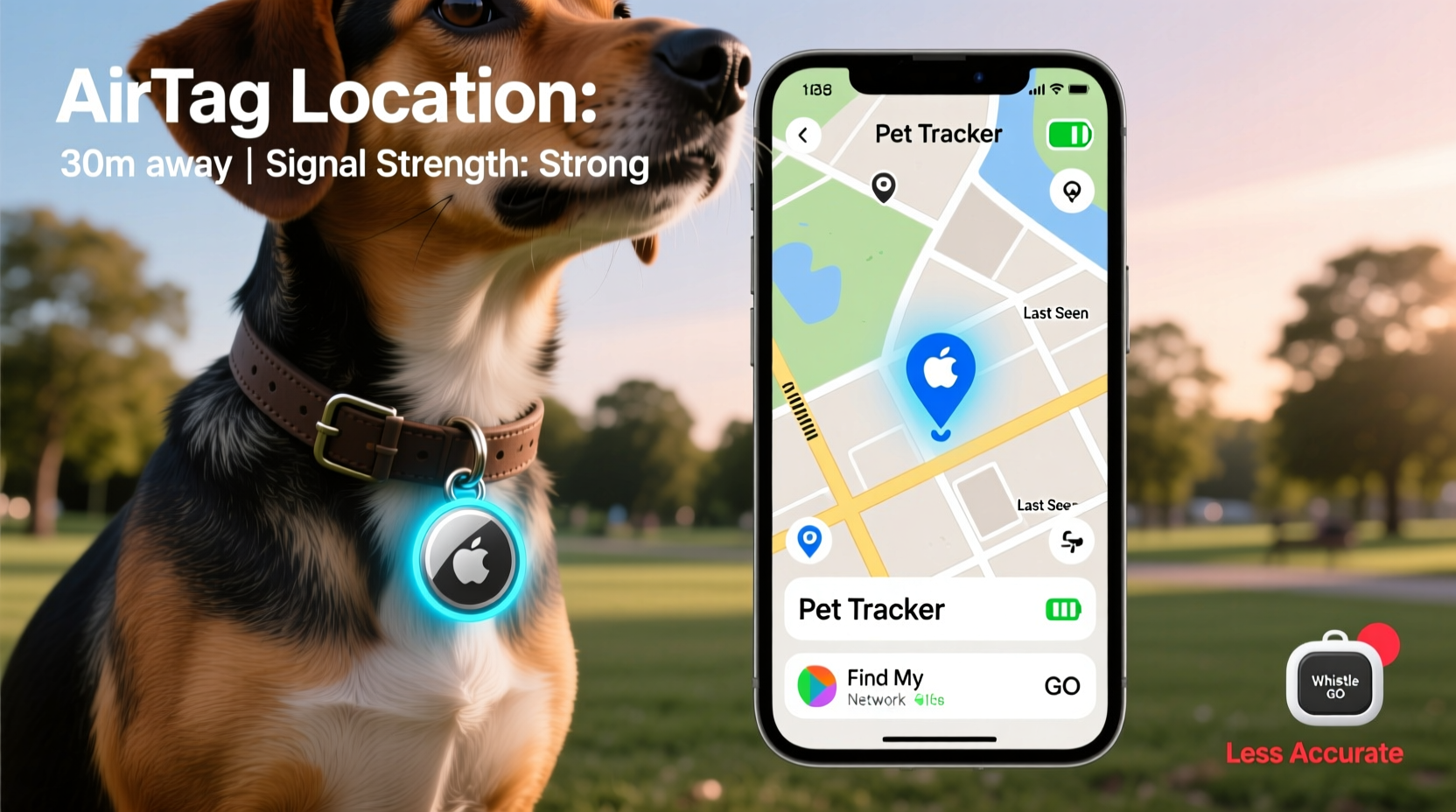
Apple AirTags use Bluetooth and ultra-wideband (UWB) technology to provide precise location data through the Find My app. When attached to an item like keys or a backpack, the AirTag broadcasts a secure Bluetooth signal detectable by nearby Apple devices. These devices then relay the tag’s location anonymously and securely to iCloud, allowing the owner to view its position on a map.
If the AirTag is within Bluetooth range (typically 30–50 feet), users can trigger a sound to help locate it. For out-of-range tags, the Find My network leverages hundreds of millions of Apple devices worldwide to detect and report locations in the background—without compromising user privacy.
This system works exceptionally well for static or slowly moving objects in populated areas. However, applying this tech to pets introduces complications that reduce reliability.
Why AirTags Fall Short for Pet Tracking
Despite their sleek design and seamless integration with iPhones, AirTags were not built with live animal tracking in mind. Using them on pets presents several key drawbacks:
- No real-time GPS: AirTags do not contain GPS chips. They rely on proximity to other Apple devices to update location, meaning if your pet wanders into a rural area or somewhere with few Apple users, the tag may go dark for hours—or indefinitely.
- No movement alerts: Unlike dedicated pet trackers, AirTags don’t notify you when your pet leaves a designated safe zone (geofencing).
- Battery life unpredictability: While Apple claims up to one year of battery life, constant motion and frequent signal transmission from a roaming pet can drain power faster.
- Lack of durability: AirTags aren’t waterproof or rugged. Exposure to rain, mud, chewing, or rough play can damage them quickly.
- Attachment issues: There’s no official pet collar mount, so third-party accessories vary widely in security and comfort.
“AirTags are excellent for finding misplaced items, but they’re not a substitute for true pet tracking systems with GPS, cellular connectivity, and behavioral monitoring.” — Dr. Lena Patel, Veterinary Technology Advisor
Better Alternatives: Dedicated Pet Trackers That Deliver Results
Specialized pet tracking devices address the shortcomings of AirTags with features tailored to animal behavior and safety. Most operate via GPS and connect through cellular networks, enabling real-time location updates regardless of nearby smartphones.
These trackers typically offer:
- Live GPS tracking with mobile app access
- Geofencing alerts (notify when pet exits a set boundary)
- Activity monitoring and health insights
- Longer-lasting, rechargeable batteries
- Waterproof and chew-resistant designs
- Durable attachments designed for collars
Brands like Whistle, Tractive, and Fi have become leaders in the space, combining accuracy, reliability, and user-friendly interfaces. Their subscription-based models support continuous data transmission and cloud services essential for real-time tracking.
Comparison: AirTag vs. Top Pet Trackers
| Feature | Apple AirTag | Tractive GPS Dog LTE | Whistle GO Explore |
|---|---|---|---|
| GPS Tracking | No (Bluetooth only) | Yes – Real-time | Yes – On-demand |
| Network Type | Find My (crowdsourced) | Cellular (LTE-M) | Wi-Fi + Cellular |
| Real-Time Location | No | Yes | Limited |
| Geofencing Alerts | No | Yes | Yes |
| Battery Life | ~1 year (non-rechargeable) | Up to 5 days (rechargeable) | Up to 20 days (rechargeable) |
| Water Resistance | IP67 (dust/water resistant) | IPX7 (fully waterproof) | Water-resistant |
| Subscription Required | No | Yes (~$15–25/month) | Yes (~$10–15/month) |
| Pet Activity Monitoring | No | Yes | Yes |
As shown, while AirTags avoid monthly fees, they lack critical functionality needed during emergencies. In contrast, dedicated trackers provide actionable data when it matters most.
Real-World Example: What Happens When a Pet Goes Missing?
Consider the case of Max, a 3-year-old Labrador mix living in suburban Colorado. One evening, he slipped out through an open gate. His owner had attached an AirTag to his collar “just in case,” but hadn’t invested in a GPS tracker due to cost concerns.
Over the next 12 hours, the AirTag showed no location updates—Max had traveled over two miles into a wooded area with minimal iPhone traffic. The owner searched frantically, relying on flyers and word of mouth. It wasn’t until a neighbor walking her dog passed near Max that their iPhone detected the AirTag, triggering a location update in the Find My app.
While Max was eventually found unharmed, the delay caused immense stress. A GPS tracker would have provided live coordinates throughout the night, potentially cutting recovery time by hours.
In contrast, another family in Austin, Texas used a Tractive GPS device when their cat escaped during a thunderstorm. Within minutes, the app alerted them that Luna had left the geofenced yard. Using real-time tracking, they followed her movements across three backyards and recovered her before she reached a busy road.
These examples highlight a crucial truth: timing and precision matter when pets are lost. Passive tracking often fails under pressure; active systems save time and lives.
Step-by-Step Guide to Choosing the Right Pet Tracker
Selecting the best option depends on your lifestyle, budget, and pet’s habits. Follow this process to make a confident choice:
- Assess your pet’s risk level: Does your pet tend to wander? Are you near roads, forests, or water? High-risk pets benefit most from real-time GPS.
- Determine your tracking needs: Do you want basic location checks or continuous monitoring? Consider how quickly you’d need to act if your pet disappeared.
- Evaluate coverage and network: Check which carriers the device uses and whether service is reliable in your region. Rural users should prioritize strong LTE coverage.
- Test collar compatibility: Ensure the tracker fits securely without discomfort. Some collars require specific attachment styles or weight limits.
- Factor in ongoing costs: Subscription fees range from $10–25/month. Include this in your long-term budget.
- Try a trial period: Many brands offer 30-day money-back guarantees. Use this window to test responsiveness, battery life, and app usability.
Tips for Maximizing Any Pet Tracking Solution
- Update contact info immediately if you move or change numbers.
- Charge or replace batteries proactively—don’t wait until the device dies.
- Perform monthly tests: simulate a search to ensure the app responds correctly.
- Register your pet in local lost-and-found databases and microchip registries.
- Avoid placing trackers under thick fur where signals may be blocked.
Frequently Asked Questions
Can I use an AirTag instead of microchipping my pet?
No. Microchips are permanent, implanted identifiers scanned by shelters and vets nationwide. An AirTag can fall off, die, or go undetected. Both can complement each other, but microchipping remains the gold standard for identification.
Are there any pet trackers without a monthly fee?
Most GPS-based trackers require subscriptions due to cellular data usage. Some Bluetooth-only options (like cheaper generic tags) avoid fees but suffer similar limitations to AirTags—limited range and no real-time tracking. True independence from fees usually means sacrificing reliability.
Do pet trackers work internationally?
It depends on the model. Devices like Tractive offer global coverage in over 175 countries. Others are limited to specific regions (e.g., North America only). Always verify roaming capabilities before traveling.
Final Verdict: Should You Use an AirTag on Your Pet?
An Apple AirTag can serve as a supplementary tool—especially in dense urban environments where the Find My network is robust. If your cat slips out briefly and stays nearby, an AirTag might help locate them faster than searching alone. However, it should never be your primary method of pet recovery.
For dependable, real-time tracking that works day or night, in cities or remote areas, dedicated GPS pet trackers are far superior. They offer proactive alerts, continuous monitoring, and greater resilience to environmental challenges. Yes, they come with recurring costs, but consider the value of being able to follow your pet’s exact path during a crisis.
Think of it this way: an AirTag is like leaving breadcrumbs hoping someone picks them up. A GPS tracker gives you a live video feed of the journey. When your pet’s safety is at stake, which would you trust?
“The best pet tracker isn’t the cheapest or most popular—it’s the one that gets your companion home fast, every time.” — Sarah Kim, Founder of SafePaws Animal Recovery Network
Take Action Today to Protect Your Pet Tomorrow
Your pet doesn’t need the latest gadget—they need a reliable lifeline. Whether you choose a high-end GPS collar or combine an AirTag with a microchip and ID tag, the goal is preparedness. Don’t wait until your dog bolts after a squirrel or your cat darts out the front door.
Review your current setup. Test what you have. Upgrade where it counts. And remember: technology supports love and vigilance—it doesn’t replace it. Stay alert, stay equipped, and give your pet the best chance of returning safely, no matter where their curiosity takes them.




 浙公网安备
33010002000092号
浙公网安备
33010002000092号 浙B2-20120091-4
Comments
No comments yet. Why don't you start the discussion?