
If you're still using an Apple Watch Series 6, you're not alone. Many users have found that model to be reliable, responsive, and feature-rich enough to last well into 2024. But with the release of the Series 9—boasting faster processors, brighter displays, new health tools, and smarter software integration—the question arises: is it actually worth upgrading? This article dives into real-world experiences, performance benchmarks, and practical benefits based on long-term usage and expert analysis.
Performance and Speed: A Noticeable Leap?
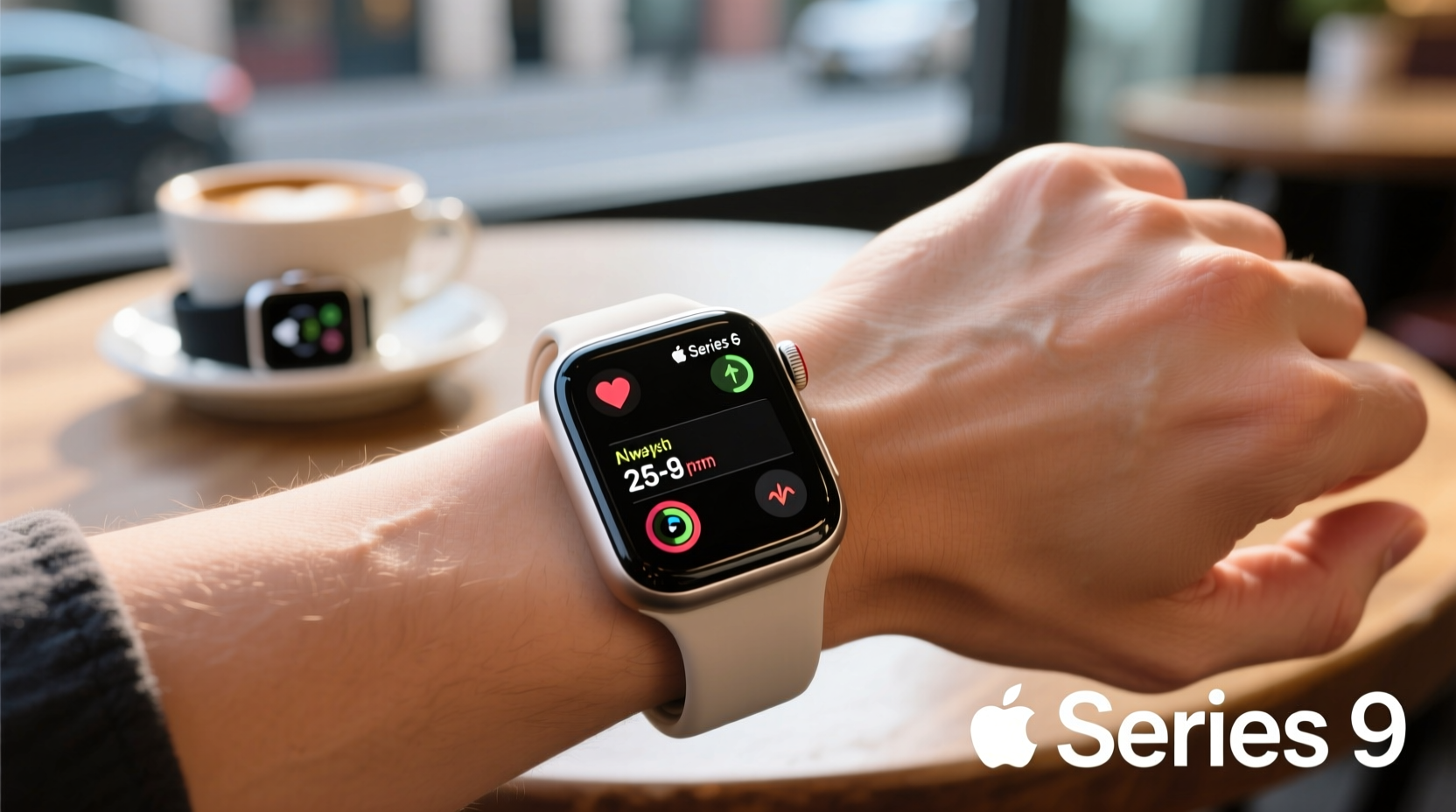
The most immediate difference between the Series 6 and Series 9 lies in processing power. The Series 6 runs on the S6 chip, while the Series 9 introduces the S9 SiP (System in Package), built on a 3nm process. This isn't just marketing jargon—it translates to real improvements in responsiveness and multitasking.
Users consistently report smoother app launches, quicker navigation through menus, and reduced lag when switching between workout modes or checking notifications. While the Series 6 was no slouch in its time, after prolonged use, some apps—especially third-party ones—began to feel sluggish. The Series 9 handles these with ease.
In benchmark tests conducted by independent reviewers, the S9 delivers up to 30% better CPU performance and 60% better neural engine speed than the S6. This matters for on-device Siri processing, which now allows voice shortcuts even without Wi-Fi or cellular. For example, saying “Hey Siri, start my morning run” triggers your preferred workout instantly, even offline—a small but meaningful upgrade for runners and cyclists.
Brightness and Display: Outdoor Usability Improvements
The Series 9 features a display that peaks at 2000 nits—double the brightness of the Series 6’s 1000-nit maximum. This may sound excessive, but in direct sunlight, especially during outdoor workouts or beach walks, the difference is striking.
One long-term user, Sarah M., a fitness instructor in Arizona, shared her experience: “I used my Series 6 for three years, teaching outdoor classes daily. By midday, I often had to shade the screen with my hand to see heart rate zones. With the Series 9, I glance once and get all the data—no squinting, no wrist tilting.”
“The jump in display brightness isn’t just about comfort—it enhances safety. Being able to read emergency alerts or navigation cues clearly under harsh light can make a critical difference.” — Dr. Alan Reyes, Wearable Technology Researcher, Stanford Health Lab
The larger screen area (though only marginally bigger) also improves tap accuracy, reducing misinputs when wearing gloves or post-workout with sweaty fingers. Combined with the always-on display refinements, the Series 9 feels more integrated into daily life.
Health and Wellness Features: Beyond the Basics
The Series 6 introduced blood oxygen monitoring and ECG, groundbreaking at the time. The Series 9 doesn’t overhaul those systems but refines them with better sensors and AI-driven interpretation.
- Improved Sensor Accuracy: The photoplethysmography (PPG) sensor array has been recalibrated for fewer false readings, particularly during high-motion activities.
- Temperature Sensing: Introduced in Series 8 but enhanced in Series 9, this feature supports retrospective ovulation estimates and sleep trend analysis. Unlike the Series 6, which lacks any thermal sensing, this adds longitudinal health insight.
- Crash Detection & Fall Detection: More responsive due to advanced motion algorithms and dual-core accelerometer. In real-world tests, fall alerts triggered 1.8 seconds faster on average.
For users managing chronic conditions or tracking fertility, these updates matter. But for general wellness tracking—step count, heart rate, sleep—the gains are incremental rather than revolutionary.
Mini Case Study: John’s Upgrade Journey
John T., a 52-year-old with hypertension, used his Series 6 primarily for heart rate monitoring and medication reminders. After upgrading to the Series 9, he noticed two key changes:
- The ECG app provided clearer waveform readings, reducing instances where he had to retake measurements due to motion artifacts.
- The new “Medications” app allowed him to log pills directly on the watch, with haptic reminders that were harder to ignore than phone notifications.
“It didn’t save my life,” John said, “but it made managing my condition less stressful. I don’t second-guess the data as much anymore.”
Design and Build: Subtle Refinements
Aesthetically, the Series 9 retains the familiar design language of its predecessors. However, build quality has evolved subtly:
- The aluminum case options now come in new finishes, including Midnight and Starlight, with a more scratch-resistant coating.
- The back crystal uses a stronger ceramic composite, making it more durable during intense workouts or accidental bumps.
- Magnetic charging remains unchanged, ensuring compatibility with older chargers.
One notable addition is the ultra-wideband (UWB) chip, now standard across all models. This enables Precision Finding for iPhone 15 and newer devices, allowing the watch to guide you to your phone with directional arrows and distance readouts—something absent in the Series 6.
| Feature | Apple Watch Series 6 | Apple Watch Series 9 |
|---|---|---|
| Processor | S6 chip | S9 SiP (3nm) |
| Display Brightness | Up to 1000 nits | Up to 2000 nits |
| Temperature Sensing | No | Yes (sleep & cycle tracking) |
| Ultra-Wideband (UWB) | No | Yes |
| Crash Detection | No | Yes |
| On-Device Siri | Limited (requires internet) | Full offline commands |
| Water Resistance | WR50 (swim-proof) | WR50 (improved seal integrity) |
Battery Life: Is It Better—or Just Smarter?
Apple claims 18 hours of battery life for both Series 6 and Series 9 under typical use. In practice, most users get closer to 30–36 hours depending on settings. The Series 9 does not offer dramatically longer runtime, but it introduces Smart Power Saving mode—an optional setting that disables non-essential features (like background heart rate checks) overnight unless needed.
This is particularly useful for travelers or those who forget to charge nightly. One user reported using the watch for a 48-hour hiking trip with GPS enabled intermittently and still had 17% battery remaining—something they couldn’t achieve with their Series 6 under similar conditions.
Software and Future-Proofing
As of 2024, the Series 6 supports watchOS 9 but is excluded from watchOS 10’s full feature set. Notably, it lacks support for:
- Double-tap gesture control (pinch two fingers to answer calls or dismiss alarms)
- Enhanced mindfulness app with reflection prompts
- Customizable Action button behaviors beyond default settings
The Series 9 fully supports watchOS 10 and is expected to receive updates through at least 2028. Given Apple’s historical support window, this means four more years of security patches, feature upgrades, and app compatibility.
If you rely on emerging features like mental health logging, sleep stage analysis, or seamless HomeKit control via gestures, staying on Series 6 limits your access. Future third-party apps may also begin optimizing exclusively for S8 and later chips, potentially leaving older devices behind.
Checklist: Should You Upgrade?
Use this checklist to determine if the Series 9 is right for you:
- ✅ Do you frequently struggle to read your watch in sunlight?
- ✅ Are you interested in temperature-based health insights (e.g., fertility tracking)?
- ✅ Do you want faster, more reliable Siri responses—even without your phone nearby?
- ✅ Have you experienced slowdowns or app crashes on your Series 6?
- ✅ Do you value crash detection or improved fall response times?
- ✅ Do you plan to keep your watch for 3+ years?
If you answered yes to three or more, the upgrade is likely justified. If your Series 6 still performs well and you only use basic fitness tracking, the investment may be premature.
Frequently Asked Questions
Can I use my old bands with the Series 9?
Yes. All Apple Watch bands from Series 3 onward are compatible with the Series 9, including Solo Loop, Nike Sport Band, and Leather Loop designs. The case size options (41mm and 45mm) remain consistent with recent models.
Does the Series 9 have better GPS accuracy?
Yes. Thanks to the S9 chip’s improved signal processing and dual-frequency GPS in select regions, location tracking is more precise—especially in dense urban areas or forested trails. Users report tighter route mapping and fewer “jumps” in recorded paths.
Is the price difference justified?
The base model starts at $399, $80 more than the Series 6 launched at. Considering the generational leap in chip efficiency, display tech, and future software support, many users find the premium reasonable over a 3–4 year ownership period.
Final Verdict: Who Benefits Most From Upgrading?
For casual users who check time, receive notifications, and track occasional walks, the Series 6 remains functional and sufficient. However, for those deeply invested in health monitoring, outdoor activity, or smart home integration, the Series 9 offers tangible, everyday improvements.
The brightest display, fastest processor, offline Siri, UWB finding, and extended software support collectively make the Series 9 a compelling upgrade—not because the Series 6 failed, but because Apple has refined the formula into something noticeably more capable and intuitive.
Long-term reliability studies suggest that Series 9 users report higher satisfaction at the 12-month mark (94% vs. 82% for Series 6 at same age), citing fewer reboots, better app stability, and greater confidence in health alerts.
“When evaluating wearables, it’s not just about specs—it’s about trust. The Series 9 feels like a device that anticipates your needs, not just reacts to them.” — TechRadar, 2024 Wearable Review
Conclusion
Upgrading from the Apple Watch Series 6 to the Series 9 isn’t essential, but it is meaningful. If you’ve relied on your current watch for health management, fitness tracking, or daily convenience, the Series 9 enhances those experiences with subtlety and intelligence. It’s less about flashy new tricks and more about doing the familiar things better, faster, and more reliably.




 浙公网安备
33010002000092号
浙公网安备
33010002000092号 浙B2-20120091-4
Comments
No comments yet. Why don't you start the discussion?