
The Apple Watch Ultra 2 is a beast of a smartwatch—packed with titanium durability, an always-on sapphire display, advanced GPS, dive ratings, and fitness tracking that rivals dedicated sports devices. But here’s the real question: if you’re not climbing Everest or racing triathlons, does this level of capability go completely unused in daily life? For most people navigating office commutes, gym sessions, and weekend hikes, the Ultra 2 might seem like bringing a tank to a bicycle race.
Apple markets the Ultra line as a tool for adventurers, athletes, and professionals who need precision under pressure. But with its $799 starting price, it’s also targeting consumers who want the “best” Apple has to offer—regardless of necessity. So, is it overkill for everyday use? Let’s cut through the marketing and examine what actually matters when wearing this watch from morning coffee to midnight scroll.
The Core Differences: Ultra 2 vs. Standard Series 9
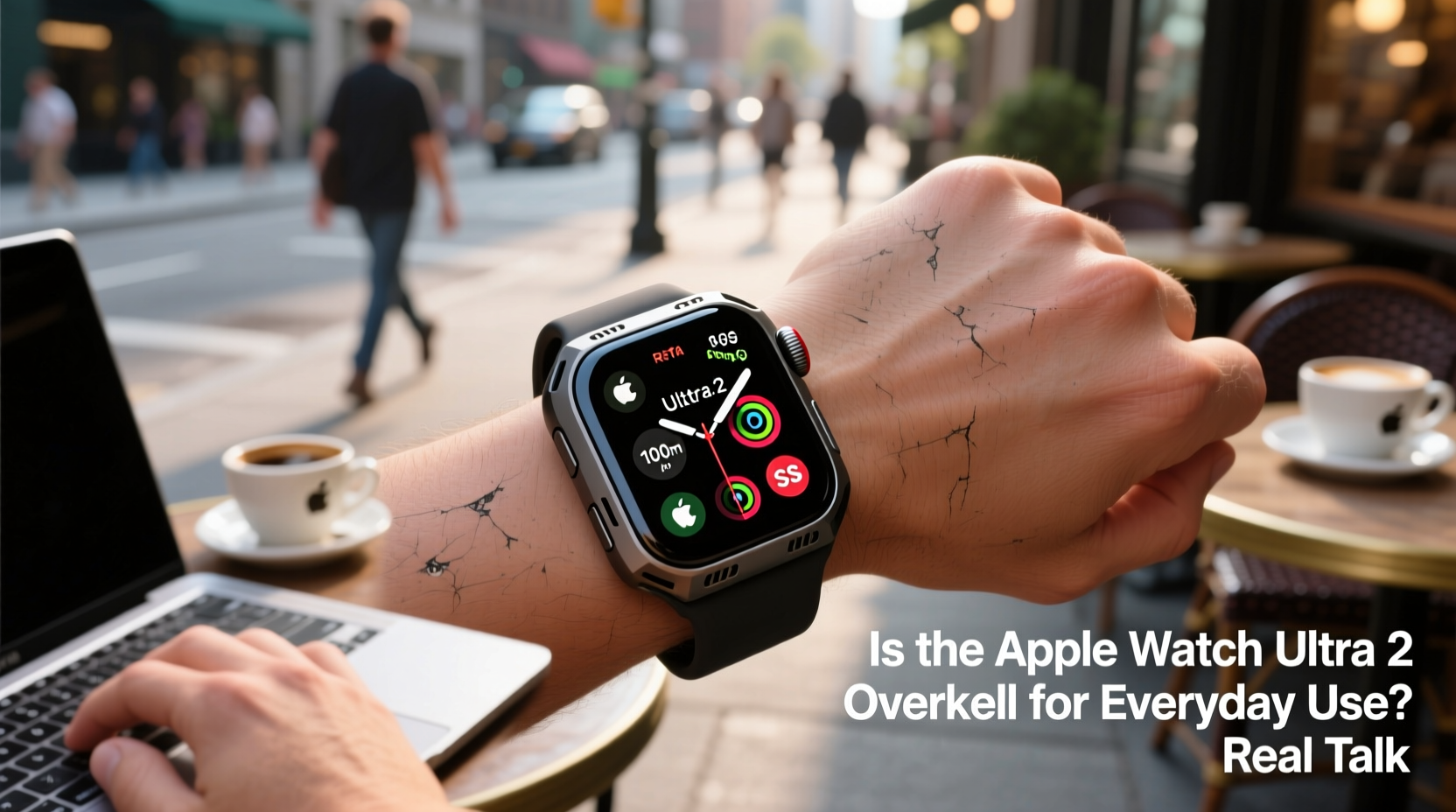
To understand whether the Ultra 2 is excessive, compare it directly to the more common Apple Watch Series 9. Both run the same operating system, support the same apps, deliver notifications, track health metrics like heart rate and sleep, and integrate seamlessly with the iPhone ecosystem. The key differences lie in build quality, battery life, and specialized sensors.
| Feature | Apple Watch Ultra 2 | Apple Watch Series 9 |
|---|---|---|
| Price (starting) | $799 | $399 |
| Battery Life | Up to 36 hours (up to 72 in Low Power Mode) | Up to 18 hours |
| Case Material | Titanium | Aluminum or stainless steel |
| Display | 49mm sapphire front, brighter (3,000 nits) | 41mm/45mm OLED (1,000 nits) |
| Water Resistance | WR100 (dive-ready up to 40m) | WR50 (swim-proof only) |
| GPS Accuracy | Dual-frequency GPS + Compass Waypoint | Standard GPS |
| Fitness Features | Ocean swim tracking, Depth & Water Temp sensors | Basic swim tracking |
| Weight | ~61.3g | ~33.8g (aluminum) |
The Ultra 2 isn’t just an upgrade—it’s a reimagining of what an Apple Watch can do in extreme conditions. But for someone checking messages, tracking steps, monitoring sleep, and doing occasional HIIT workouts, many of these specs sit dormant 95% of the time.
When the Ultra 2 Shines: Scenarios That Justify the Power
Despite seeming excessive, the Ultra 2 delivers tangible benefits in specific real-world situations. These aren’t hypotheticals—they reflect actual user needs where the extra hardware pays off.
- Outdoor Adventurers: Hikers and trail runners benefit from the built-in compass, waypoint navigation, and dual-frequency GPS. Unlike the Series 9, the Ultra 2 can guide you back to your start point even without phone connectivity.
- Swimmers & Divers: With water temperature sensing and depth tracking, swimmers get data beyond lap counting. Freedivers and snorkelers appreciate automatic log creation based on immersion.
- Shift Workers & Travelers: The 36-hour battery (extendable to three days) means fewer charges. Nurses on 12-hour shifts or travelers crossing time zones avoid midday anxiety about dying batteries.
- Emergency Preparedness: The crash detection and SOS features are more sensitive due to enhanced accelerometers. In remote areas, satellite connectivity during emergencies adds peace of mind.
“Having accurate GPS and long battery life changed how I approach solo backpacking. I no longer carry a separate Garmin.” — Ryan Tran, Outdoor Guide & Gear Reviewer
The Everyday Reality: What Most Users Actually Need
For the average professional, parent, student, or casual gym-goer, the Ultra 2’s premium features rarely come into play. Consider a typical weekday:
- Wake up, check sleep score and heart rate.
- Get alerts for calendar events and texts during work.
- Lunchtime walk tracked via step count.
- Evening workout: 30-minute indoor cycling class.
- Nighttime wind-down with mindfulness breathing.
In this routine, every function is fully supported by the Series 9. The Ultra 2 doesn’t improve accuracy, speed, or usability—it just does the same things with more robust hardware. And while the larger screen improves readability, some find it too bulky under shirt cuffs or uncomfortable during sleep tracking.
Additionally, the higher price extends beyond initial purchase. Ultra-specific bands (like the Alpine or Ocean straps) are more expensive, and replacement screens, though sapphire, still require costly service if cracked.
Mini Case Study: Sarah, Marketing Manager & Casual Runner
Sarah bought the Ultra 2 because she admired its rugged look and assumed “more features” meant better value. She runs 3–4 times a week, mostly on treadmills or paved trails. After six months, she realized she never used the depth sensor, waypoints, or action button. Her biggest complaint? The size made it hard to type on her phone one-handed, and she had to charge it every night despite low usage.
She eventually switched back to a Series 8, citing comfort and simplicity. “I liked feeling tough,” she said, “but I didn’t need to.”
So, Is It Overkill? A Balanced Verdict
Yes—the Apple Watch Ultra 2 is overkill for most people’s everyday routines. Not because it’s poorly designed, but because its strengths address edge cases rather than common ones. Think of it like owning a pickup truck solely for grocery runs. It’ll work, maybe even impress at the curb, but you’re paying for payload capacity and four-wheel drive you never use.
That said, “overkill” doesn’t mean “bad.” Some users enjoy having top-tier tools on hand, even if they’re rarely needed. There’s psychological value in knowing your device can survive a fall, last two full days unplugged, or guide you home if lost. And for those whose lifestyles blend urban living with outdoor pursuits, the Ultra 2 bridges both worlds.
The true issue is cost-effectiveness. At $400 more than the base Series 9, you must actively use the differentiating features to justify the investment. Otherwise, you’re essentially paying a luxury tax for industrial-grade resilience.
Checklist: Should You Buy the Ultra 2?
Answer yes to two or more of these to make the Ultra 2 a worthwhile buy:
- Do you frequently hike, trail run, or bike off-grid?
- Are you a swimmer, diver, or spend extended time in open water?
- Do you work long shifts (12+ hours) without reliable charging access?
- Have you worn out previous watches due to rough handling?
- Do you rely on precise GPS for navigation or performance analysis?
- Do you travel to remote areas where emergency SOS could be critical?
If most answers are no, the Series 9—or even a refurbished Series 8—will serve you just as well.
FAQ: Common Questions About the Ultra 2 for Daily Use
Can I wear the Ultra 2 casually, like with a suit or dress?
You can, but it’s noticeably bulkier than other models. At 49mm, it dominates smaller wrists and may peek out awkwardly under dress sleeves. While Apple offers Milanese and leather bands to dress it up, the overall aesthetic remains sport-forward.
Does the Ultra 2 last longer than two days on a charge?
Only in Low Power Mode, which disables features like background heart rate and wrist raise. Under normal use, expect one to one-and-a-half days. Heavy GPS use drains it faster. Still, this beats the Series 9’s single-day limit for power users.
Is the screen really easier to read outdoors?
Absolutely. The 3,000-nit brightness makes it visible in direct sunlight—something the Series 9 struggles with. If you spend a lot of time outside, especially skiing or boating, this is a meaningful upgrade.
Final Thoughts: Value Beyond Specs
The Apple Watch Ultra 2 isn’t just a gadget; it’s a statement. It signals preparedness, ambition, and a readiness to push limits. For some, that symbolism alone is worth the premium. Others appreciate simply having the most capable wearable Apple makes—like driving a Porsche even if you never hit top speed.
But practicality demands honesty: unless your lifestyle includes intense physical activity, frequent outdoor exposure, or high-stakes job requirements, the Ultra 2’s advantages remain largely untapped. You’re not getting smarter notifications, better Siri responses, or deeper iPhone integration—just tougher construction and niche tools.
There’s no shame in choosing capability over necessity. But if your goal is seamless daily utility without overspending, the Ultra 2 likely delivers more than you need.




 浙公网安备
33010002000092号
浙公网安备
33010002000092号 浙B2-20120091-4
Comments
No comments yet. Why don't you start the discussion?