
In 2024, few would consider either the HTC One Mini or the Samsung Galaxy S4 Active as viable daily drivers. Both devices launched over a decade ago—2013 to be exact—and while they were once praised for design and ruggedness respectively, their relevance in today’s smartphone landscape is minimal. Yet, among collectors, retro tech enthusiasts, or those on an extreme budget, the question persists: which of these two legacy devices offers more value now?
The answer isn’t simply about specs or nostalgia. It hinges on use case, availability, software support, and practical functionality in a world dominated by 5G, AI-powered cameras, and app ecosystems that demand modern hardware. This article examines both phones not through the lens of their original release but through what they can realistically offer today.
Performance and Hardware: A Reality Check
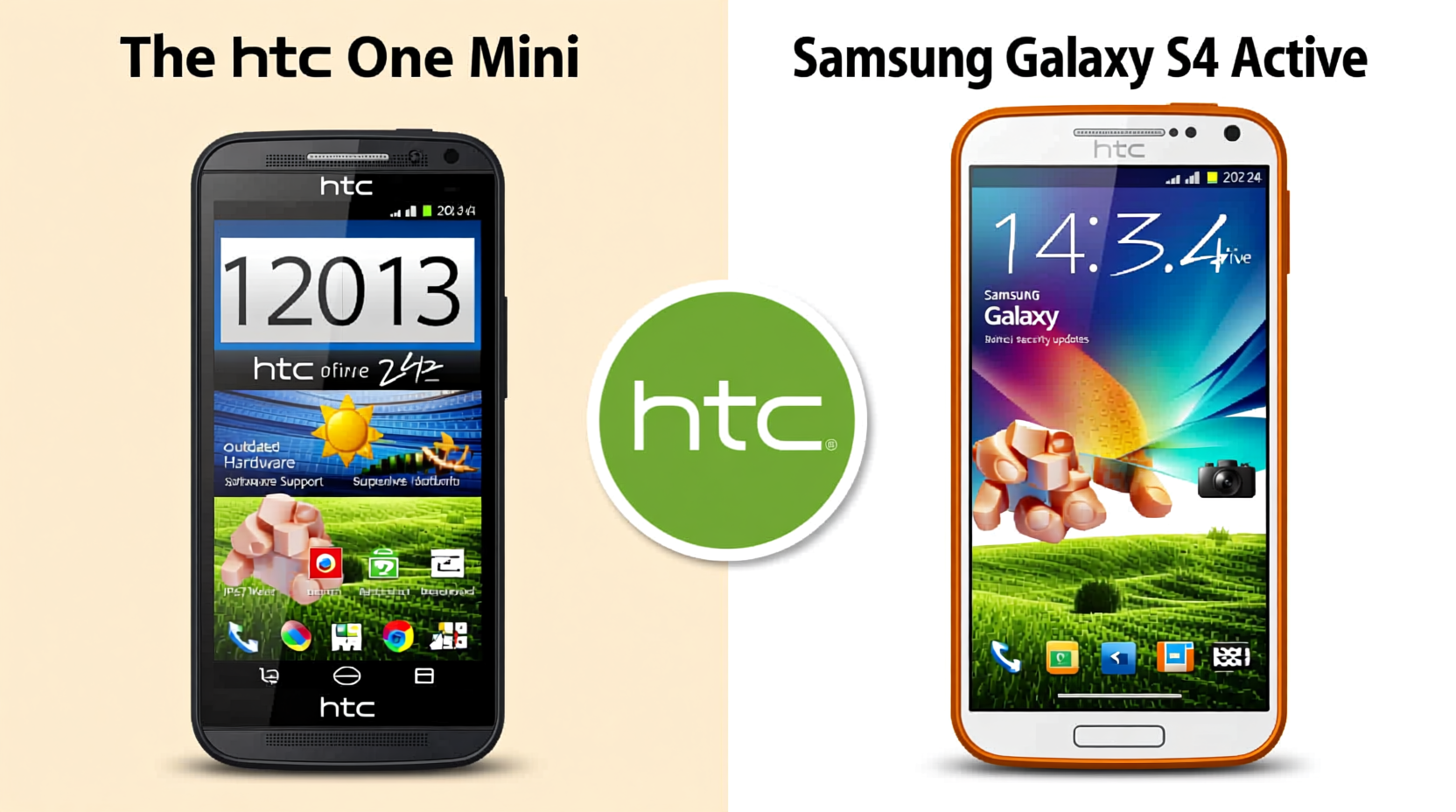
The HTC One Mini ran on a dual-core Qualcomm Snapdragon S4 Pro processor with 1GB of RAM and 16GB of storage. The Galaxy S4 Active, despite being part of the S4 family, used a slightly different chipset—a quad-core Exynos 5250 or Snapdragon 600 depending on region—with 2GB of RAM and similar storage. On paper, the S4 Active had the edge even back then.
Fast forward to 2024, and neither device can reliably run modern Android apps. Google Play Services stopped supporting Android versions below 5.0 (Lollipop) years ago, and both phones maxed out at Android 4.4.4 (KitKat). Even lightweight apps like WhatsApp ended support for KitKat in 2020. Basic functions such as web browsing are painfully slow due to outdated browsers and lack of security updates.
Design and Build Quality Compared
The HTC One Mini stood out for its premium aluminum unibody design, echoing the flagship One M7. It felt solid, compact, and luxurious in hand—rare for a mid-tier device at the time. However, it lacked water resistance and was relatively fragile if dropped.
In contrast, the Galaxy S4 Active was built for durability. With an IP67 rating, it could survive dust immersion and short submersion in water. Its textured rubberized back and reinforced ports made it suitable for outdoor use, construction sites, or beach environments. It also featured a dedicated physical key for quick camera access—ideal for spontaneous shots in tough conditions.
“Durability isn’t just about toughness—it’s about consistency under stress. The S4 Active wasn’t the fastest, but it worked when others failed.” — David Lin, Mobile Device Historian & Tech Archivist
Today, the S4 Active’s rugged build gives it a slight advantage if used as a backup phone in harsh conditions. The HTC One Mini, while elegant, shows wear easily and lacks any environmental protection.
Detailed Comparison Table
| Feature | HTC One Mini | Samsung Galaxy S4 Active |
|---|---|---|
| Release Year | 2013 | 2013 |
| OS (Max) | Android 4.4.4 (KitKat) | Android 4.4.2/4.4.4 (KitKat) |
| CPU | Dual-core 1.4 GHz Snapdragon S4 Pro | Quad-core 1.9 GHz Snapdragon 600 / Exynos 5250 |
| RAM | 1 GB | 2 GB |
| Storage | 16 GB (no expandable slot) | 8/16 GB + microSD up to 64 GB |
| Display | 4.3” 720p LCD | 4.99” 720p LCD (Toughened Glass) |
| Battery | 1800 mAh (non-removable) | 2600 mAh (removable) |
| Water Resistance | No | IP67 Rated |
| Rear Camera | 4 MP UltraPixel | 8 MP with LED flash |
| Current App Compatibility | Very Low (no modern app support) | Very Low (limited to legacy APKs) |
Real-World Use Case: A Weekend Hiker's Backup Phone
Consider Mark, an avid hiker who wanted a cheap, durable secondary phone for trail emergencies. He found both phones listed online for under $30. After testing, he chose the Galaxy S4 Active. Why?
It booted faster, had twice the RAM, and most importantly, held a charge longer. During a weekend trip, heavy rain soaked his backpack. The S4 Active survived a brief dunk in a stream, while his old plastic-cased phone shorted out. Though he couldn’t use GPS navigation effectively (Google Maps crashed repeatedly), he managed to dial emergency services using cached location data.
The HTC One Mini, though sleeker, wouldn’t have survived the same conditions. Mark noted: “It’s not about having the best phone. It’s about having one that works when everything else fails.”
Software Support and Security Risks
This is where both devices fail dramatically. Android 4.4.4 has known vulnerabilities with no patches available since 2014. Using either phone to access email, social media, or banking apps poses serious security risks. Malware targeting outdated Android versions remains widespread.
Even installing third-party launchers or custom ROMs offers limited relief. While some developers created unofficial LineageOS builds for the S4 Active, none are actively maintained. The HTC One Mini has even less community support due to its smaller market share and non-standard bootloader.
Practical Checklist: Should You Buy Either in 2024?
- ✅ Need a waterproof backup phone for emergencies? → S4 Active
- ✅ Looking for retro design appeal or collector’s item? → HTC One Mini
- ✅ Want reliable app performance or daily driver capability? → Neither
- ✅ Planning to use GPS, messaging, or internet regularly? → Avoid both
- ✅ Willing to accept high security risks? → Only if used offline
- ✅ Budget allows for $50+? → Consider a modern KaiOS or entry-level Android Go phone instead
Frequently Asked Questions
Can I still get apps on the HTC One Mini or Galaxy S4 Active?
No—not reliably. Most major apps (WhatsApp, Instagram, Facebook, Google Maps) require Android 5.0 or higher. Some older APK versions may install but will crash frequently or lack critical features.
Which phone lasts longer on battery today?
The Galaxy S4 Active generally performs better due to its larger 2600 mAh battery and removable design (allowing easy replacement). The HTC One Mini’s 1800 mAh battery degrades faster and cannot be swapped without tools.
Are these phones usable on modern networks?
Possibly, but not guaranteed. Many carriers have shut down 3G networks, and neither phone supports 4G LTE Advanced or VoLTE natively. Voice calls may fail on newer networks unless your carrier maintains legacy 2G/3G service.
Conclusion: Neither Is a Smart Buy—Here’s What to Do Instead
The truth is, neither the HTC One Mini nor the Samsung Galaxy S4 Active should be considered “better buys” in 2024. They are relics of a bygone era—interesting for historians, nostalgic for former owners, but functionally obsolete.
If you need a low-cost, functional smartphone, options like the Nokia 1 Plus (with Android Go), Doro 7070, or even refurbished iPhone SE (1st gen) running iOS 12 offer far superior performance, security, and compatibility. For rugged needs, modern alternatives like the Ulefone Armor series or Cat S22 Flip provide IP68 ratings, 4G connectivity, and ongoing software support—all under $150.
Technology evolves rapidly, and clinging to past favorites can compromise safety, productivity, and peace of mind. While it’s tempting to romanticize older devices, practicality must prevail.




 浙公网安备
33010002000092号
浙公网安备
33010002000092号 浙B2-20120091-4
Comments
No comments yet. Why don't you start the discussion?