
The iPad Air has long occupied a sweet spot between affordability and performance in Apple’s tablet lineup. As we move into 2025, consumers are faced with a critical decision: is now the right time to buy the current-generation iPad Air, or should they hold off for an expected update? With rumors swirling about potential upgrades—including an M2 chip, OLED display, and USB-C 3.0—this question carries real weight for students, creatives, and professionals alike.
Unlike the more budget-focused iPad or the powerhouse iPad Pro, the iPad Air balances portability, power, and price. But in a tech landscape where new models emerge annually and innovation accelerates, timing your purchase can mean the difference between getting great value and feeling buyer’s remorse within months.
Current iPad Air (5th Gen) – What You’re Getting in 2025
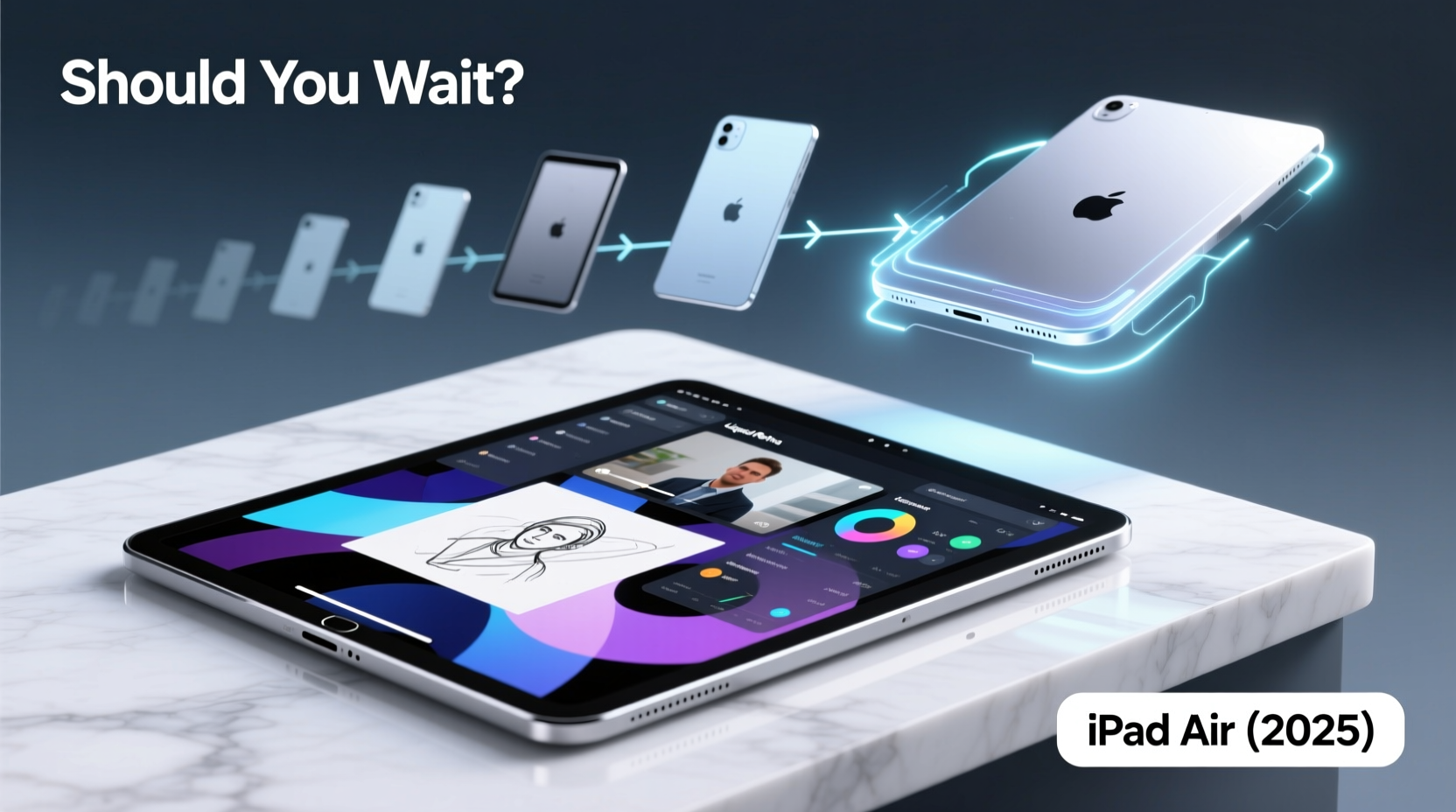
As of early 2025, the latest iPad Air available is the fifth generation, released in March 2022. It runs on the Apple M1 chip—the same processor found in several Macs and the iPad Pro at the time—making it significantly more powerful than its predecessors. It supports the second-generation Apple Pencil, Magic Keyboard Folio, and offers a 10.9-inch Liquid Retina display with True Tone and P3 wide color.
Despite its age, the M1 chip remains highly capable. It handles multitasking, video editing, graphic design apps like Procreate and Adobe Fresco, and even light coding environments with ease. For most users, performance will not be a bottleneck until at least 2027.
However, some limitations persist. The iPad Air still uses Touch ID embedded in the top button rather than Face ID. It lacks support for the ProMotion 120Hz refresh rate, which means smoother scrolling and drawing responsiveness remain exclusive to the Pro line. Additionally, while it features USB-C, it's limited to USB 2.0 speeds, which can slow file transfers when working with large media files.
When Will the Next iPad Air Arrive?
Apple typically refreshes the iPad Air every two years. Given that the last model launched in March 2022, a new version was due in 2024—but it didn’t arrive. This delay suggests either supply chain adjustments, strategic product planning, or a shift toward aligning releases with other events like September’s iPhone launch.
Rumors from reliable analysts such as Ming-Chi Kuo and sources at Bloomberg point to a potential Q3 2025 release—possibly September—for a redesigned iPad Air featuring the M2 chip, improved front camera placement (centered for better video calls), and faster USB-C 3.0 connectivity. There are also whispers of a possible slim bezel redesign similar to the iPad Pro, though this may be reserved for higher-end models.
Importantly, Apple has been moving toward consolidating internal components across devices. The inclusion of the M2 would future-proof the device for intensive tasks and extend software support well into the 2030s, following Apple’s typical 5–6 year iOS update cycle.
“Even without flashy marketing, the iPad Air continues to be Apple’s most underrated productivity tool. In education and remote work, its balance of cost and capability is unmatched.” — David Liu, Tech Analyst at GadgetInsider
Performance Comparison: M1 vs. Expected M2 Upgrade
To assess whether waiting makes sense, consider how much performance matters to your use case. Below is a comparison of key specs between the current iPad Air (M1) and projected estimates for the 2025 model (M2).
| Feature | Current iPad Air (2022) | Expected iPad Air (2025) |
|---|---|---|
| Chipset | Apple M1 | Apple M2 (expected) |
| Display Refresh Rate | 60Hz | 60Hz (ProMotion unlikely) |
| USB Port | USB-C 2.0 | USB-C 3.0 (expected) |
| Front Camera | 12MP Ultra Wide (top edge) | Center Stage with improved low-light (rumored) |
| Storage Options | 64GB / 256GB | 128GB base likely; up to 512GB possible |
| Pencil Support | 2nd Gen | 2nd Gen (likely); no indication of Pencil Pro support |
| Price (Starting) | $599 | $649–$699 (estimated) |
The M2 brings tangible improvements: roughly 18% faster CPU performance, 35% faster GPU, and enhanced neural engine capabilities beneficial for AI-powered apps and machine learning tasks. However, for everyday activities—web browsing, note-taking, streaming, email, and even moderate photo editing—the M1 remains more than sufficient.
Who Should Buy Now vs. Wait?
The answer depends heavily on your needs, timeline, and sensitivity to incremental upgrades.
Buy the Current iPad Air If:
- You need a tablet immediately for school, work, or creative projects.
- Your current device is outdated (iPad 7th gen or older).
- You prioritize value over cutting-edge features.
- You don’t plan to upgrade again before 2028.
- Budget is a concern—refurbished or open-box M1 iPad Airs are widely available under $500.
Wait for the 2025 Model If:
- You frequently transfer large files (e.g., 4K video) and would benefit from USB 3.0 speeds.
- You want longer-term performance headroom and resale value.
- You're investing in accessories like the Magic Keyboard and want them to stay relevant for 5+ years.
- You participate in video conferencing often and would appreciate a centered front camera with Center Stage.
- You're willing to pay a premium (~$100 more) for modest but meaningful upgrades.
Real-World Use Case: A College Student’s Dilemma
Sophia, a sophomore studying digital journalism, needed a reliable device for taking notes, editing short videos, and reading textbooks. Her old iPad 6th gen struggled with app switching and wouldn’t support the latest Apple Pencil.
Faced with the choice of buying now or waiting, she evaluated her deadlines. With midterms approaching and field reporting assignments due in three weeks, delaying wasn’t practical. She purchased a refurbished iPad Air (M1) for $479 and paired it with a used 2nd-gen Apple Pencil.
Result? She gained instant access to smooth handwriting recognition in GoodNotes, fast rendering in LumaFusion for video edits, and seamless iCloud sync across her MacBook. By acting early, she avoided last-minute stress and maximized her academic output.
Had she waited, she might have missed key opportunities—even if a slightly faster model arrived later.
Step-by-Step: How to Decide Whether to Buy or Wait
- Assess Your Immediate Needs: Are you replacing a broken or obsolete device? Do you have upcoming projects that require better hardware?
- Set a Budget Range: Determine how much you’re willing to spend. Consider total cost including Pencil, keyboard, and cases.
- Research Release Cycles: Check historical Apple release patterns. Delays happen, but trends offer clues.
- Evaluate Upgrade Magnitude: Ask yourself: Is the rumored M2 upgrade transformative or marginal for your use?
- Monitor Retailer Deals: Back-to-school season (July–September) often brings discounts on current models just before new ones launch.
- Decide Based on Timeline: If you can function six more months without a new tablet, waiting reduces risk. If not, act now.
Long-Term Value and Software Support
One often overlooked factor is software longevity. Apple typically supports iPads with OS updates for five to six years. That means an iPad Air bought in 2025—whether M1 or M2—should receive updates through 2030 or beyond.
However, newer chips handle future iOS versions more efficiently. The M2, with its architectural advantages and increased memory bandwidth, will likely run iOS 19, 20, and 21 more smoothly than the M1, especially as augmented reality, on-device AI, and multitasking features evolve.
If you plan to keep your iPad past 2028, the M2 model offers better long-term viability. But if your usage pattern involves upgrading every four years, the current M1 model delivers excellent return on investment.
Frequently Asked Questions
Will the 2025 iPad Air get Face ID?
Unlikely. Face ID requires a notch or Dynamic Island cutout, which would necessitate a complete redesign. Given Apple’s segmentation strategy, Face ID will probably remain exclusive to iPad Pro models to maintain differentiation.
Can I use the same accessories with a new iPad Air?
Yes, the 2nd-generation Apple Pencil and Magic Keyboard Folio are designed to fit the current 10.9-inch form factor. Unless Apple changes the size or port layout, existing accessories should remain compatible. However, confirm dimensions post-launch.
Is the M1 iPad Air future-proof?
For most users, yes. The M1 chip outperforms many laptops from just a few years ago. Even in 2025, it handles modern apps efficiently. Only those pushing the limits of video editing, 3D modeling, or coding will feel constrained by its lack of ProMotion or slower USB speeds.
Final Verdict: To Buy or Not to Buy?
The iPad Air remains one of Apple’s most compelling devices—not because it’s the fastest or flashiest, but because it strikes a rare balance. In 2025, the current M1 model is neither obsolete nor overpriced. It continues to deliver exceptional performance for students, remote workers, artists, and casual users.
If you need a tablet now, there’s no shame in buying today. The M1-powered iPad Air will serve you well for years. Waiting makes sense only if you can afford the delay and place high value on rumored upgrades like USB 3.0 and a centered camera.
Ultimately, technology waits for no one—but neither should you let perfection become the enemy of progress. The best iPad is the one that helps you create, learn, and stay productive today.




 浙公网安备
33010002000092号
浙公网安备
33010002000092号 浙B2-20120091-4
Comments
No comments yet. Why don't you start the discussion?