
If you're upgrading from an iPhone XR to the iPhone 13 Pro, one of the first things you’ll likely wonder is whether the newer model feels significantly larger in hand. On paper, the differences may seem subtle, but when held side by side, the changes become more apparent—especially in how the phone fits in your pocket, how comfortably it rests in one hand, and how immersive the display feels. The transition isn’t just about dimensions; it’s about modern design language, materials, screen technology, and user experience evolution.
The iPhone XR, released in 2018, was Apple’s affordable flagship with a bold color palette and a single-lens camera system. The iPhone 13 Pro, launched in 2021, belongs to the premium tier, boasting advanced cameras, ProMotion display tech, and a refined stainless steel build. While both are iPhones, they represent different eras in Apple’s design philosophy. So yes—the 13 Pro is bigger, but more importantly, it *feels* different.
Physical Dimensions: A Clear Step Up
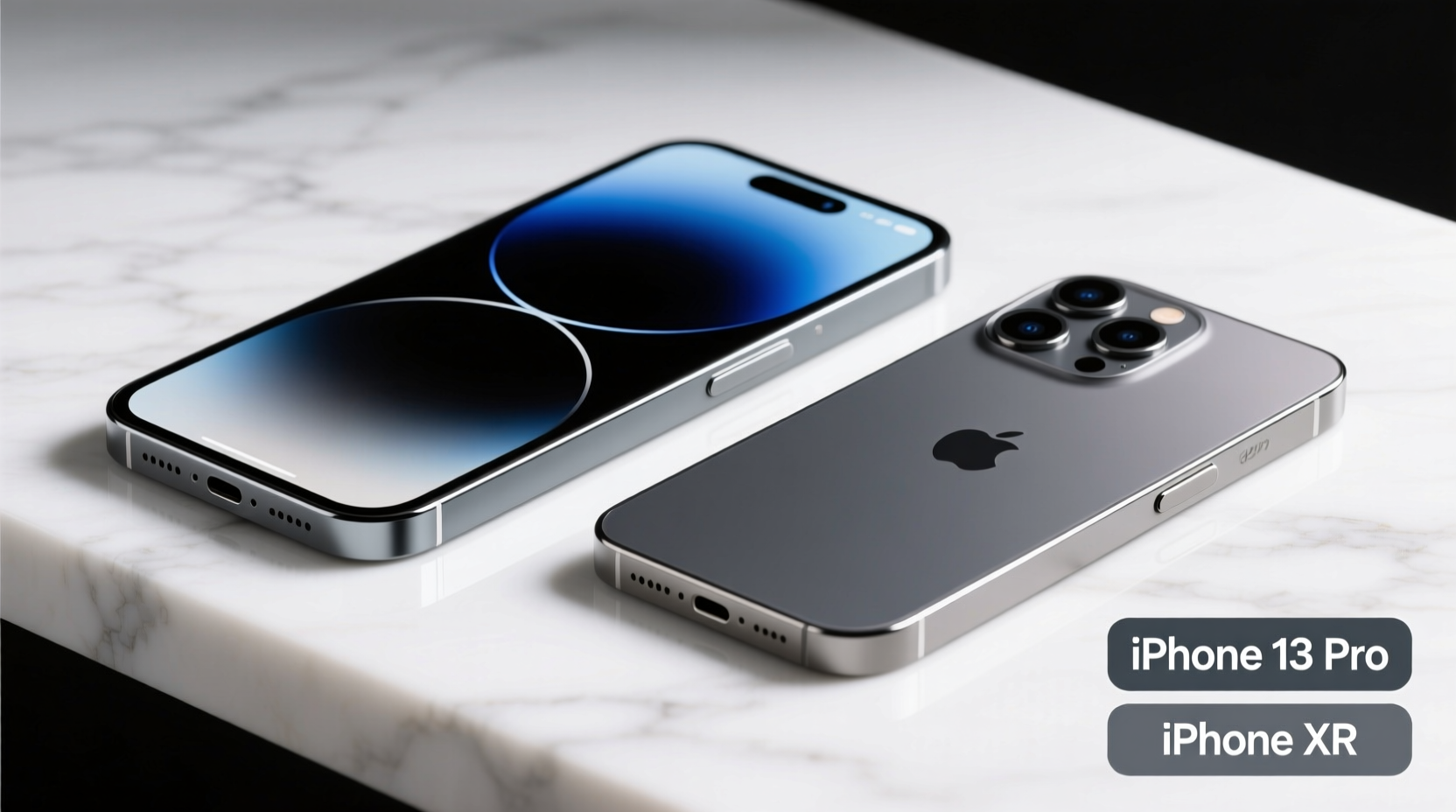
At first glance, the numbers tell part of the story. The iPhone 13 Pro is taller, slightly wider, and notably thicker than the XR. But even more impactful is the change in aspect ratio and bezel design. The XR has thick top and bottom bezels compared to the 13 Pro’s minimized borders, which makes the newer phone feel more compact despite its larger footprint.
“Smartphone ergonomics have shifted dramatically since 2018. Even small increases in screen size, paired with reduced bezels, create a perception of slimmer, sleeker devices—even when actual dimensions grow.” — David Lin, Mobile Device Analyst at TechForm Insights
| Feature | iPhone XR | iPhone 13 Pro |
|---|---|---|
| Height | 150.9 mm (5.94 in) | 146.7 mm (5.78 in) |
| Width | 75.7 mm (2.98 in) | 71.5 mm (2.82 in) |
| Thickness | 8.3 mm (0.33 in) | 7.65 mm (0.30 in) |
| Weight | 194 g (6.84 oz) | 204 g (7.19 oz) |
| Screen Size | 6.1 inches (LCD) | 6.1 inches (OLED, ProMotion) |
| Bezel Size | Large top/bottom bezels | Narrow all-around |
Interestingly, while the 13 Pro is shorter in height, it’s actually heavier due to its denser materials—stainless steel frame versus the XR’s aluminum body. This adds to the impression of premium solidity, though some users find the extra 10 grams noticeable over long use.
Display Quality and Bezel Impact
Even though both phones share a 6.1-inch diagonal measurement, the visual experience differs drastically. The XR uses an LCD panel with a lower contrast ratio and no support for HDR. The 13 Pro features a Super Retina XDR OLED display with up to 120Hz adaptive refresh rate (ProMotion), deeper blacks, and better color accuracy.
But beyond specs, the bezel reduction plays a major role. When placed side by side, the XR looks dated because its screen appears “boxed in” by large plastic borders. The 13 Pro’s near-edge-to-edge display gives the illusion of a larger screen in a smaller chassis. This design shift makes the 13 Pro feel more modern and immersive, especially when watching videos or scrolling through social media.
- The 13 Pro’s OLED allows true blacks and dynamic lighting effects.
- ProMotion reduces motion blur and makes interactions smoother.
- Smaller bezels improve screen-to-body ratio from ~79% (XR) to ~87% (13 Pro).
Real-World Handling: What You Actually Notice
In everyday use, the most immediate difference isn’t just size—it’s balance and grip. The XR’s flat aluminum sides and glossy glass back can feel slippery, especially without a case. The 13 Pro’s textured matte glass back and polished stainless steel edges offer better tactile feedback and improved drop resistance (though still fragile).
A mini case study illustrates this well: Sarah, a longtime XR user, upgraded to the 13 Pro after three years. She expected the size jump to be jarring. Instead, she found the 13 Pro easier to hold—one-handed typing improved thanks to the narrower width and curved screen edges. However, she did note that the added weight made fatigue set in faster during extended reading sessions.
Another factor is button placement. The 13 Pro’s volume buttons are slightly stiffer and more tactile. The power button doubles as Touch ID’s replacement—Face ID—which works faster and more reliably in low light, thanks to a larger TrueDepth camera array hidden under the notch.
Camera Bump and Back Design
One of the most obvious physical differences when viewing the phones side by side is the camera module. The XR has a single circular lens centered on the back, flush with the surface. The 13 Pro features a prominent square bump housing three lenses and a LiDAR scanner, raised about 0.5mm above the back glass.
This affects stability—when laid flat on a table, the 13 Pro wobbles slightly unless placed carefully. It also influences pocket comfort; some users report feeling the bump against their leg, especially in tight jeans. However, the trade-off is superior photography: macro mode, Night mode across all lenses, and ProRAW shooting are impossible on the XR.
Checklist: What to Evaluate Before Upgrading
Before switching from the XR to the 13 Pro, consider these factors based on physical and functional changes:
- Ergonomics: Can you comfortably reach across the screen with your thumb?
- Pocket Fit: Does the 13 Pro fit securely in your front pants or jacket pocket?
- Weight Sensitivity: Do you prefer lightweight phones for prolonged use?
- Display Preference: Do you value smooth scrolling and high brightness outdoors?
- Camera Needs: Will you use telephoto zoom, macro, or low-light enhancements?
- Battery Life: The 13 Pro lasts longer, but charging habits may need adjustment (MagSafe compatibility).
Frequently Asked Questions
Does the iPhone 13 Pro feel bulky compared to the XR?
Not necessarily bulkier, but denser. The 13 Pro is shorter and narrower, which helps with handling, but the stainless steel frame and glass back add perceived heft. Most users adapt within a few days.
Can I use my XR case on the 13 Pro?
No. Despite both being 6.1 inches, the button placement, camera cutout, and overall shape differ too much. Cases are not interchangeable between these models.
Is the screen really better if the size is the same?
Yes. The OLED panel on the 13 Pro offers higher peak brightness (up to 1000 nits vs. 625 on XR), better contrast, and ProMotion for fluid animations. These improvements make content more vivid and responsive.
Final Thoughts: More Than Just Size
The iPhone 13 Pro isn’t dramatically larger than the XR—but it *is* meaningfully different. The combination of refined dimensions, superior materials, advanced display tech, and enhanced functionality creates a noticeably upgraded experience. Holding them side by side, the XR starts to look like a relic: thicker, less refined, and limited by older hardware.
What you notice isn’t just size—it’s the evolution of smartphone design. The 13 Pro feels more intentional, more capable, and more immersive. For users clinging to the XR for its simplicity or color options, the leap may feel steep. But for those seeking performance, longevity, and photographic versatility, the upgrade justifies both the cost and the slight increase in weight.




 浙公网安备
33010002000092号
浙公网安备
33010002000092号 浙B2-20120091-4
Comments
No comments yet. Why don't you start the discussion?