
Every year, Apple fans face the same question: should I upgrade? With the iPhone 17 expected to launch in late 2025, many current iPhone 16 owners are already weighing whether the jump is justified. Unlike major redesign years, incremental updates can be subtle—sometimes more marketing than material improvement. But beneath the surface, there are meaningful shifts in performance, AI integration, thermal management, and camera systems that could influence your decision. The real question isn’t just what’s new—it’s what’s useful.
Understanding Apple’s Upgrade Cycle
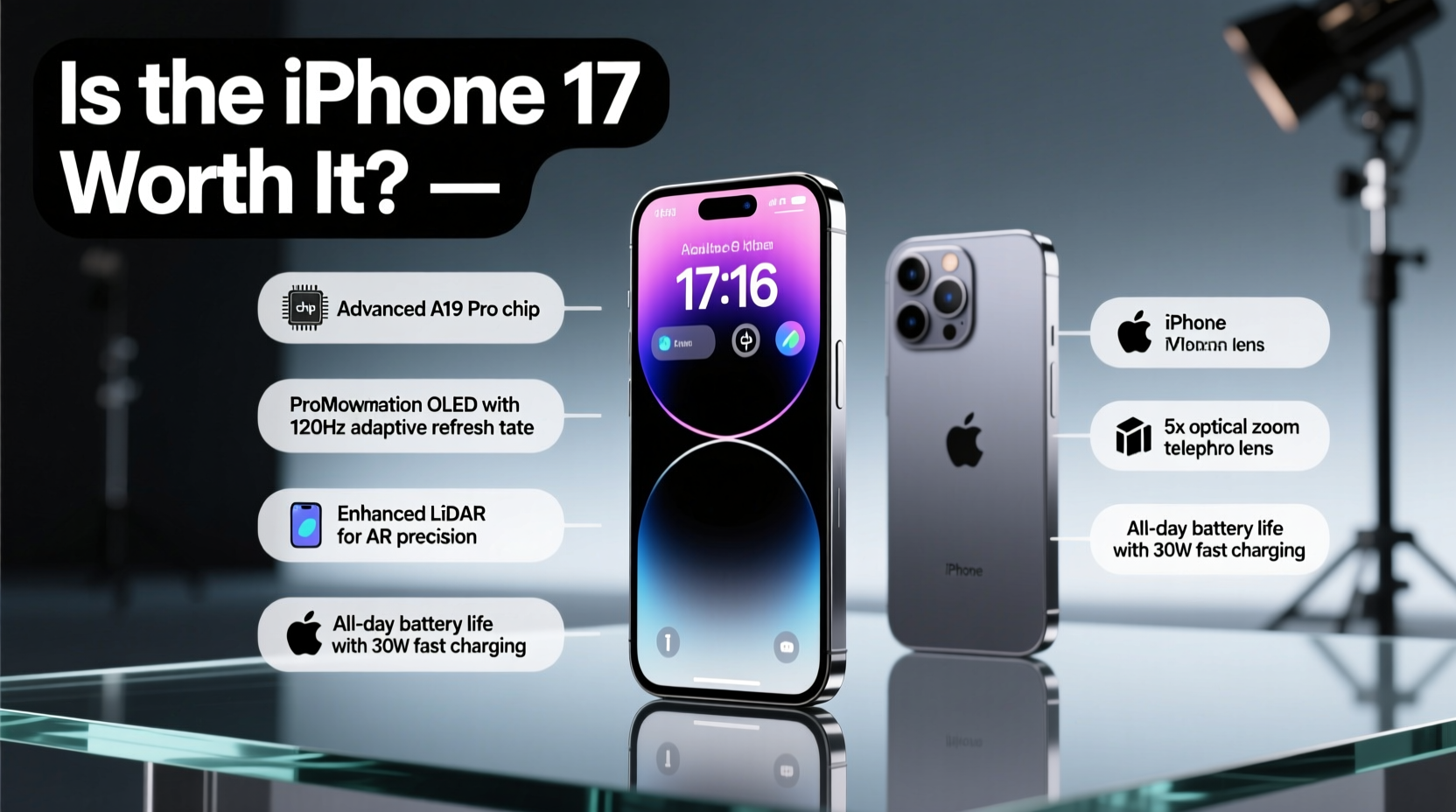
Apple has settled into a predictable rhythm: one groundbreaking release every few years, followed by iterative refinements. The iPhone 16 brought tangible improvements over the 15 series—especially with enhanced AI-powered photography and better battery efficiency. The iPhone 17, based on early analyst reports and supply chain leaks, appears to follow this pattern but with a stronger emphasis on internal optimization rather than external change.
For users who prioritize longevity, software support, and future-proofing, even small upgrades can compound over time. However, if you’re already on the iPhone 16, the marginal benefits need to outweigh the cost—both financial and environmental—of replacing a perfectly functional device.
Performance Gains: A18 vs. A17 Pro
The iPhone 17 is expected to feature the A18 chip, built on an improved 3nm+ process (N3E or potentially N3P). While the A17 Pro in the iPhone 16 already delivers excellent performance for gaming, multitasking, and machine learning tasks, the A18 promises up to 15% faster CPU speeds and 20% better GPU efficiency under load.
More importantly, Apple is reportedly enhancing the Neural Engine to handle on-device AI processing more efficiently. This means faster photo editing suggestions, real-time language translation in apps, and smarter Siri interactions—all without relying on cloud processing. For professionals using AI-driven creative tools, this could be a deciding factor.
Camera System Evolution: Beyond Megapixels
The iPhone 16 already set a high bar with its tetraprism telephoto lens and computational depth mapping. The iPhone 17 may introduce a next-generation sensor fusion system, combining data from multiple lenses simultaneously to produce sharper low-light photos and smoother digital zoom.
Rumors suggest Apple is working with Sony on a new 48MP ultrawide sensor with larger pixels (1.2µm vs. 0.8µm), which would dramatically improve dynamic range and reduce noise in dim environments. Additionally, the front-facing camera might finally get autofocus—a long-overdue upgrade for vloggers and FaceTime enthusiasts.
One often-overlooked benefit: improved thermal throttling during extended video recording. The iPhone 16 occasionally shuts down 4K60 recording after 30 minutes due to heat buildup. Early prototypes of the iPhone 17 show redesigned internal cooling, possibly allowing uninterrupted 1-hour sessions at high resolutions.
“Thermal design is becoming as critical as raw specs. Without proper heat dissipation, even the fastest chip will slow down mid-task.” — Dr. Lena Park, Mobile Hardware Analyst at TechInsight Group
Battery Life and Charging: Real-World Impact
Battery capacity increases have plateaued across flagship smartphones, but efficiency remains key. The A18 chip’s improved power efficiency, combined with iOS 19’s deeper background app optimization, could yield an extra 60–90 minutes of screen-on time compared to the iPhone 16.
More notably, Apple is rumored to be testing a new lithium-metal battery formulation in select iPhone 17 models (likely the Pro Max variant). If implemented, this could increase energy density by up to 25%, paving the way for slimmer designs or longer usage without increasing size.
On the charging front, while full USB-C fast charging (up to 35W) was introduced in the iPhone 16, adoption was limited by cable compatibility. The iPhone 17 may standardize faster charging across all models and include optimized power delivery negotiation, reducing charge time from 20% to 80% to under 30 minutes with compatible chargers.
What You Actually Gain: A Comparative Overview
| Feature | iPhone 16 | Expected iPhone 17 | Real-World Benefit |
|---|---|---|---|
| Chipset | A17 Pro | A18 (3nm+) | Slightly faster AI tasks, better sustained performance |
| Rear Cameras | 48MP main, 12MP ultra, 12MP telephoto (5x) | Same resolution, improved sensors & fusion | Better low-light shots, smoother zoom transitions |
| Front Camera | 12MP, fixed focus | 12MP, autofocus | Sharper selfies and video calls |
| Battery Life (Video Playback) | Up to 27 hours | Up to 30 hours (est.) | Extra hour of streaming or navigation |
| Charging Speed | Up to 35W (with compatible cable) | Optimized 35W+, better heat management | Faster recharge with fewer interruptions |
| AI Capabilities | On-device photo enhancement, Live Voicemail | Advanced on-device LLMs, real-time translation | Smarter personal assistant, offline functionality |
Mini Case Study: Sarah, Travel Photographer
Sarah upgraded from an iPhone 13 Pro to the iPhone 16 last year, drawn by the 5x optical zoom and improved Night mode. She shoots landscapes and street scenes daily, often in challenging light. When asked if she’ll upgrade to the iPhone 17, her answer was nuanced.
\"The autofocus on the front camera alone makes me consider it—I do solo vlogs now, and right now, my face blurs when I move. And if they’ve truly solved the overheating issue, that’s huge. I lost footage in Morocco because my phone shut down mid-recording. But if the price jumps over $1,200 again? I’ll wait. The 16 still feels fresh.\"
Her hesitation reflects a broader trend: users are no longer swayed by minor spec bumps. They want reliability, durability, and features that solve actual problems.
When the Upgrade Makes Sense: A Checklist
Before committing to the iPhone 17, ask yourself the following. Check off each item that applies:
- ✅ I regularly record 4K video for more than 30 minutes and have experienced overheating
- ✅ I rely heavily on Siri or plan to use on-device AI features like summarization or translation
- ✅ I notice lag when editing photos or videos directly on my iPhone 16
- ✅ I want better low-light performance from my ultrawide lens
- ✅ I value autofocus in selfie mode for video calls or content creation
- ✅ My current battery barely lasts a full workday with moderate use
If three or more apply, the iPhone 17 could offer tangible improvements. If not, your money might be better spent on accessories, a second device, or simply saving for the iPhone 18, which could bring a more significant redesign.
FAQ: Common Questions About the iPhone 17 Upgrade
Will the iPhone 17 have a portless design?
Unlikely. Despite rumors, Apple has not secured reliable enough wireless charging infrastructure for mainstream adoption. The iPhone 17 will almost certainly retain a USB-C port, possibly with improved water resistance around the port area.
How much will the iPhone 17 cost?
Based on recent trends, expect starting prices at $799 for the base model, $999 for the Pro, and $1,199 for the Pro Max. Prices have remained stable since the switch to USB-C, suggesting Apple aims to maintain accessibility despite rising component costs.
Will iOS 19 run better on the iPhone 17?
Yes—but not exclusively. iOS 19 will be compatible with iPhone 15 and later models. However, advanced AI features like on-device large language models and predictive app behavior may require the A18 chip’s Neural Engine, making them unavailable or limited on older devices.
Conclusion: Weighing Value Over Novelty
The iPhone 17 won’t revolutionize your pocket experience. It won’t fold, float, or replace your laptop. But for specific users—creators, travelers, professionals dependent on mobile workflows—it may deliver meaningful quality-of-life upgrades. The difference lies not in headline specs, but in consistency, reliability, and smarter software integration.
If your iPhone 16 meets your needs today, there’s no urgent reason to upgrade tomorrow. But if you’ve hit limits with overheating, slow processing, or subpar ultrawide shots, the iPhone 17 could remove those friction points. Technology should serve you quietly—not demand attention with flashy changes, but earn appreciation through seamless performance.




 浙公网安备
33010002000092号
浙公网安备
33010002000092号 浙B2-20120091-4
Comments
No comments yet. Why don't you start the discussion?