
The original iPhone, released in 2007, changed mobile technology forever. It introduced the world to a touchscreen-centric smartphone experience, eliminating physical keyboards and redefining how we interact with devices. Over a decade later, the iPhone X (pronounced \"iPhone Ten\") arrived in 2017 as Apple’s bold leap into the future—marking the 10th anniversary of the iPhone with radical redesigns and cutting-edge features. But is the iPhone X truly that much better than the original iPhone? And more importantly, what do users actually notice when comparing them?
The answer isn’t just about specs—it’s about real-world impact. From screen quality to processing power, biometrics to app ecosystems, the evolution between these two devices reflects not just technological progress, but a complete transformation in how we live with smartphones.
Design and Build: A Revolution in Form
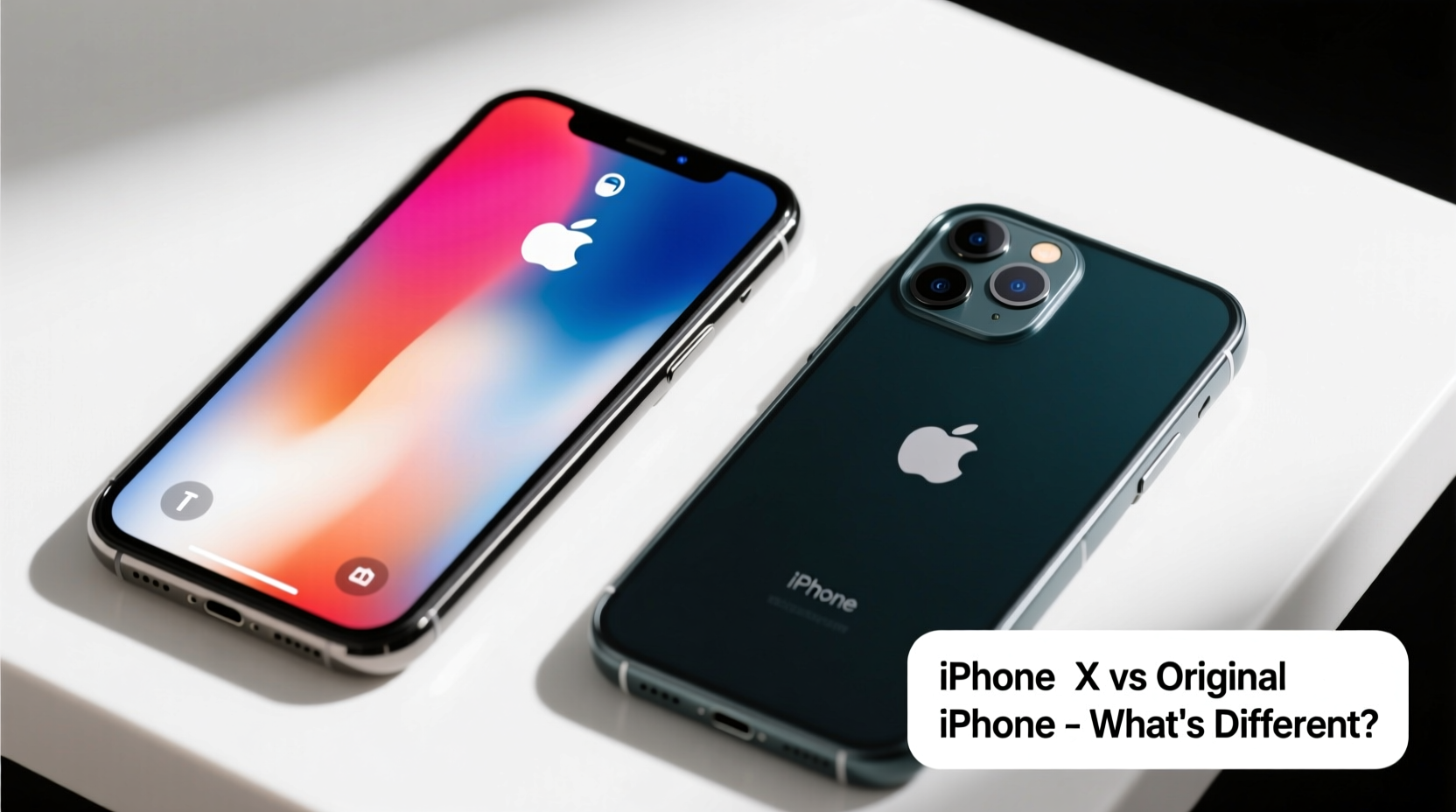
The most immediate difference between the original iPhone and the iPhone X is their physical design. The 2007 iPhone featured a 3.5-inch screen with thick bezels, a prominent home button, and a plastic back. In contrast, the iPhone X introduced a 5.8-inch OLED display that stretches edge-to-edge, eliminating the home button entirely in favor of Face ID and gesture-based navigation.
This shift wasn’t just cosmetic. The iPhone X’s near-full-front display offers significantly more screen real estate, allowing for richer media consumption, better multitasking, and immersive gaming. Its glass-and-stainless-steel construction feels premium and supports wireless charging—a feature unimaginable in 2007.
Performance and Speed: Night and Day Difference
Under the hood, the gap in performance is staggering. The original iPhone ran on a 412 MHz ARM11 processor with 128 MB of RAM. By today’s standards, it couldn’t even handle basic web browsing efficiently. The iPhone X, meanwhile, launched with Apple’s A11 Bionic chip—an industry-leading 6-core CPU with neural engine capabilities and 3 GB of RAM.
What does this mean in practice? Apps launch instantly. Multitasking is seamless. Augmented reality experiences run smoothly. Even today, the A11 remains capable of handling modern iOS versions and demanding applications. The original iPhone, by comparison, struggled with loading YouTube videos and couldn’t run third-party apps at all until the App Store launched in 2008.
In real-world use, the speed difference is immediately noticeable. Scrolling through photos, switching between apps, or loading websites on the iPhone X feels fluid and intuitive. On the original iPhone, every action involves waiting—sometimes several seconds—for the device to catch up.
Camera Quality: From Basic Snaps to Professional-Grade Photos
The camera advancements are perhaps the most striking upgrade. The original iPhone had a 2-megapixel rear camera with no flash, no autofocus, and no front-facing camera. It was barely suitable for casual snapshots under ideal lighting.
The iPhone X brought dual 12MP rear cameras—one wide-angle, one telephoto—with optical image stabilization, portrait mode, depth control, and 4K video recording. The front-facing TrueDepth camera enabled 7MP selfies and powered Face ID, Animoji, and advanced facial recognition.
Users upgrading from the original iPhone to the iPhone X would instantly notice the leap in photo clarity, dynamic range, low-light performance, and creative tools. Where the original iPhone captured memories in grainy stills, the iPhone X turns everyday moments into shareable, high-quality content.
“Smartphone photography has evolved from documentation to storytelling—and the iPhone X marked a turning point in that journey.” — David Lin, Mobile Photography Instructor
Software and Ecosystem: Beyond the Hardware
It’s not just hardware that sets the iPhone X apart—it’s the entire software ecosystem. The original iPhone shipped with iPhone OS 1.0, which lacked an App Store, copy-paste functionality, and even MMS support. Third-party apps didn’t exist. Most tasks required syncing with a Mac or PC.
By the time the iPhone X launched, iOS 11 offered millions of apps, deep cloud integration, Siri intelligence, ARKit support, and a mature suite of productivity and entertainment tools. iCloud syncs data across devices. Messages supports rich media, payments, and animations. Safari renders modern websites without issue.
For someone used to the original iPhone, using the iPhone X feels like moving from a typewriter to a full-featured computer. The breadth of what’s possible—from banking to video editing to fitness tracking—is incomparable.
Real-World Example: Sarah’s Upgrade Journey
Sarah held onto her original iPhone for nostalgia, using it occasionally to show her kids “how things used to be.” When she finally upgraded to an iPhone X, the experience shocked her. “I forgot how long I used to wait for pages to load,” she said. “Now, I can see my daughter’s school updates, pay bills, and order groceries—all before my coffee cools.”
She also noticed how intuitive the interface felt despite the lack of a home button. “After two days, swiping up became natural. I didn’t think I’d miss the old way.”
Feature Comparison: Original iPhone vs. iPhone X
| Feature | Original iPhone (2007) | iPhone X (2017) |
|---|---|---|
| Display | 3.5\", 320x480 LCD, 163 PPI | 5.8\", 1125x2436 OLED, 458 PPI |
| Processor | 412 MHz ARM11 | A11 Bionic (2.39 GHz hexa-core) |
| RAM | 128 MB | 3 GB |
| Rear Camera | 2 MP, no flash, no video | Dual 12 MP, 4K video, portrait mode |
| Front Camera | None | 7 MP TrueDepth with Face ID |
| Biometrics | None | Face ID (facial recognition) |
| Storage | 4GB / 8GB / 16GB (no expandable) | 64GB / 256GB |
| Connectivity | Wi-Fi, EDGE (no 3G at launch) | Wi-Fi 5, LTE Advanced, Bluetooth 5.0 |
| Battery Life | ~5 hours talk time | ~13 hours video playback |
| Operating System | iPhone OS 1.0 | iOS 11 (upgradable to iOS 16) |
Frequently Asked Questions
Can the iPhone X still run modern apps in 2024?
Yes, the iPhone X supports iOS 16, the last version compatible with its A11 chip. While it may not receive future iOS updates, it remains capable of running current versions of major apps like Instagram, WhatsApp, Google Maps, and banking platforms.
Is it worth upgrading from the original iPhone to the iPhone X today?
If you're still using an original iPhone, the upgrade is less about value and more about necessity. The iPhone X connects to modern networks, supports secure authentication, runs current apps, and offers essential features like GPS navigation and high-speed internet. For daily use, it’s not just better—it’s functional in ways the original iPhone never was.
Why did Apple remove the home button on the iPhone X?
The home button was removed to maximize screen space and enable Face ID. Apple replaced it with gesture-based navigation—swipe up to return home, swipe up and hold for multitasking. This change paved the way for future iPhone designs and enhanced security through facial recognition.
Action Checklist: What to Expect When Upgrading
- Adapt to gestures: Learn swipe-up motions instead of pressing a button.
- Set up Face ID: Enroll your face in Settings > Face ID & Passcode.
- Migrate data: Use iCloud or Quick Start to transfer contacts, photos, and apps.
- Explore camera modes: Try Portrait mode and Animoji for fun, expressive content.
- Update apps regularly: Ensure compatibility and security with the latest versions.
Conclusion: More Than Just Better—It’s a New Era
The iPhone X isn’t just “better” than the original iPhone—it represents a completely different class of device. The improvements aren’t incremental; they’re transformative. From screen clarity and processing power to camera quality and ecosystem integration, every aspect of the user experience is elevated beyond recognition.
What you actually notice isn’t just faster performance or sharper photos—it’s the absence of limitations. No more waiting. No more compromises. No more dependency on computers. The iPhone X delivers a self-contained digital lifestyle that the original iPhone could only hint at.




 浙公网安备
33010002000092号
浙公网安备
33010002000092号 浙B2-20120091-4
Comments
No comments yet. Why don't you start the discussion?