
For many users, the iPad Air strikes the perfect balance between power, portability, and price. Apple’s mid-tier tablet has evolved significantly over the years, with each new generation introducing meaningful upgrades. But if you’re already using an older iPad Air—say from 2020 or even earlier—the question isn’t just about what’s new, but whether those changes justify the cost of an upgrade.
The latest iPad Air, powered by the M2 chip and featuring a refined design with support for advanced accessories, brings tangible improvements. Yet, for someone whose current device still functions well, the decision requires weighing real-world benefits against financial investment. This article examines key upgrades, user scenarios, and long-term value to help you determine if the newest iPad Air is truly worth it for you.
Key Upgrades in the Latest iPad Air
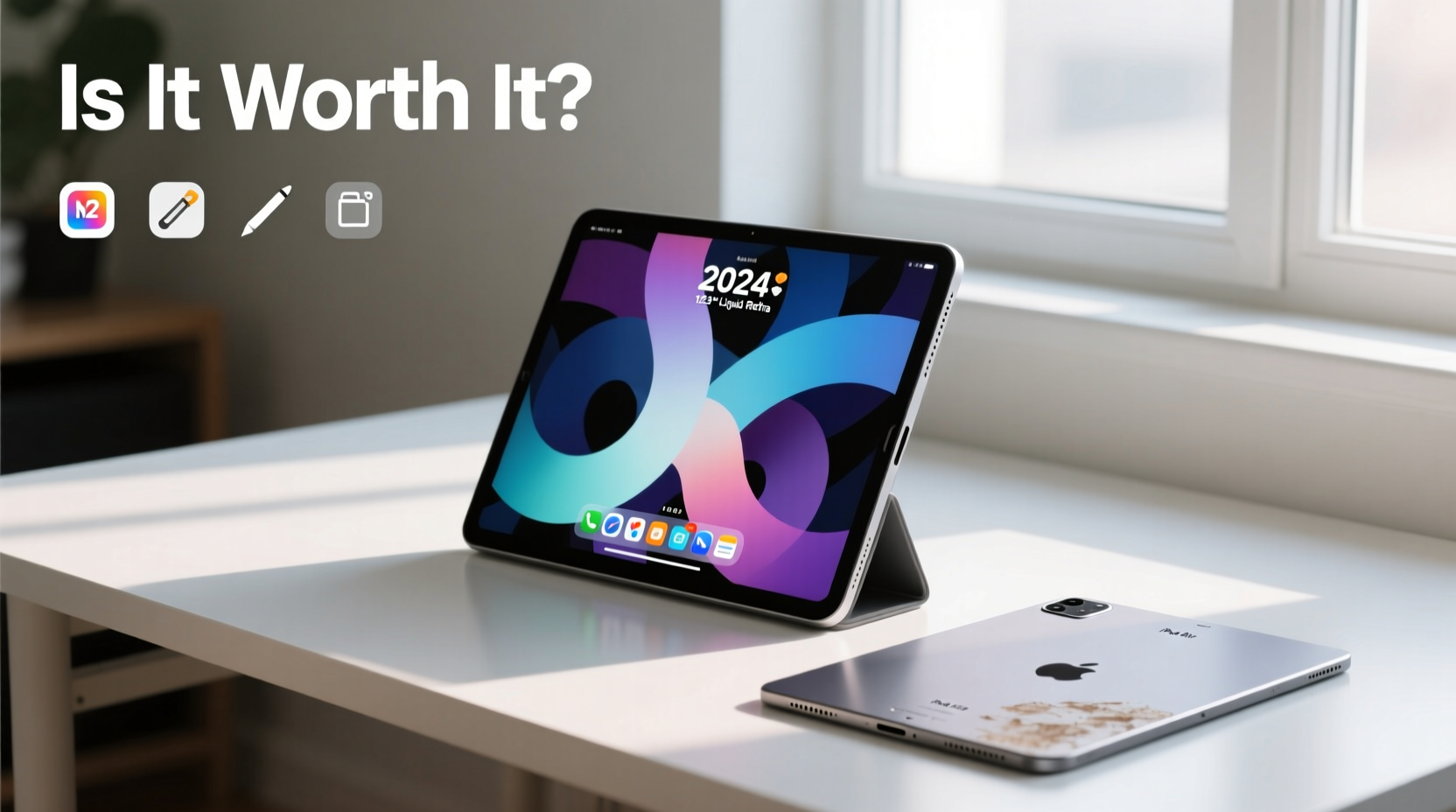
The most recent iPad Air (5th generation, released in 2024) builds on its predecessor with several notable enhancements. While outwardly similar to the 2022 model, the internal and peripheral improvements are significant enough to impact daily use.
- M2 Chip: Replacing the M1, the M2 offers up to 18% faster CPU performance and 35% faster GPU speeds. More importantly, it improves machine learning tasks and efficiency under sustained workloads.
- Wi-Fi 6E and Bluetooth 5.3: Enables faster wireless transfers and lower latency when connecting to headphones, keyboards, and other peripherals.
- Support for Second-Generation Apple Pencil with Hover: Creators benefit from predictive stroke rendering, giving a near-paper-like writing experience before the stylus touches the screen.
- Improved Front Camera Placement: Now centered on the long edge when held in landscape, making video calls more natural—a small but impactful change for remote workers.
- USB-C Port with USB 3 Speeds (on select models): Only available with 256GB or higher storage, this allows for faster data transfer when connecting external drives or cameras.
These upgrades aren’t flashy, but they accumulate into a noticeably smoother experience—especially for multitaskers, students, and creative professionals.
Performance Comparison: Old vs. New
To assess whether the upgrade matters, consider how your current iPad Air performs today. The following table compares key specs across three recent generations:
| Feature | iPad Air (2020) | iPad Air (2022) | iPad Air (2024) |
|---|---|---|---|
| Chip | A14 Bionic | M1 | M2 |
| RAM | 4GB | 8GB | 8GB |
| Display | 10.9” Liquid Retina (LCD) | 10.9” Liquid Retina (LCD) | 10.9” Liquid Retina (LCD) |
| Apple Pencil Support | 2nd gen (no hover) | 2nd gen (no hover) | 2nd gen with hover detection |
| Front Camera | 7MP, top edge | 12MP, top edge | 12MP, landscape center |
| USB-C Speed | USB 2 | USB 3 (256GB+ only) | USB 3 (252GB+ only) |
| Wireless | Wi-Fi 6, Bluetooth 5.0 | Wi-Fi 6, Bluetooth 5.2 | Wi-Fi 6E, Bluetooth 5.3 |
The jump from A14 to M1 was substantial—bringing desktop-class architecture and doubling RAM. The move from M1 to M2 is more evolutionary, but still relevant for intensive applications like video editing, 3D modeling, or running multiple virtual desktops via Stage Manager.
“We’re seeing longer retention cycles for tablets now. If your iPad Air from 2020 still handles schoolwork and streaming, upgrading may not be urgent—but for creators, the M2’s efficiency and hover tech are game-changers.” — Lena Park, Senior Analyst at TechTrend Insights
Real-World Scenarios: Who Benefits Most?
Not all users will gain equal value from upgrading. The answer depends heavily on how you use your iPad. Consider these common profiles:
Student Using iPad for Notes and Research
If you're taking notes with Apple Pencil, reading PDFs, and joining Zoom lectures, your 2020 or 2022 iPad Air likely still performs admirably. The newer front camera helps during group calls, and hover detection makes handwriting feel more responsive, but these are refinements rather than necessities.
Creative Professional Editing Video or Illustrating
This is where the 2024 iPad Air shines. The M2 chip handles 4K video timelines in apps like LumaFusion with less lag. Combined with USB 3 speeds, offloading footage from SD cards becomes dramatically faster. Artists appreciate hover preview, which improves precision in Procreate and Adobe Fresco.
Remote Worker Using iPad as a Laptop Replacement
With Stage Manager, external display support, and fast Wi-Fi 6E, the latest iPad Air functions more like a full computer. If you rely on multitasking across apps, connect to docks, or use cloud storage extensively, the improved responsiveness and connectivity make a noticeable difference.
Everyday User Streaming and Browsing
For casual use, there's minimal benefit. Your older iPad Air already delivers smooth web browsing, app navigation, and media playback. Unless you’ve experienced slowdowns or storage issues, upgrading would be more about desire than need.
Cost-Benefit Analysis: Is It Worth the Investment?
The base model iPad Air starts at $599, rising to $799 with 256GB and cellular. That’s a significant outlay, especially if your current device works fine. To evaluate whether it’s justified, consider these factors:
- Remaining Lifespan of Current Device: If your iPad Air still receives iOS updates and runs apps without lag, it likely has 2–3 years of useful life left.
- Future-Proofing: The M2 chip ensures compatibility with upcoming software features and AI-powered tools expected in future iPadOS versions.
- Accessory Compatibility: The Magic Keyboard and Apple Pencil (2nd gen) are fully compatible across 2020–2024 models, so you won’t need to repurchase them.
- Resale Value: Older iPad Air units retain decent value. A 2022 model in good condition can fetch $300–$400, reducing the net cost of upgrading.
In practical terms, the upgrade makes the most sense if:
- You regularly push your iPad beyond basic tasks.
- You plan to keep the device for 4+ years.
- You rely on low-latency input (e.g., digital art or note-taking).
- Your current iPad shows signs of wear or performance decline.
Mini Case Study: Maria, Freelance Illustrator
Maria used her 2020 iPad Air for client illustrations and social media content. By late 2023, she noticed delays when zooming into high-resolution canvases in Procreate. Export times increased, and occasional crashes occurred during complex layer edits. She upgraded to the 2024 iPad Air with 512GB storage and immediately noticed smoother brush response, thanks to hover detection. Video exports in CapCut dropped from 8 minutes to under 5. For her workflow, the upgrade paid off within six months by reducing revision time and improving client turnaround.
Step-by-Step: How to Decide If You Should Upgrade
Follow this logical process to determine if the latest iPad Air is right for you:
- Assess Current Performance: Open your most demanding apps. Do they load slowly? Does multitasking cause lag or app reloads?
- Evaluate Usage Patterns: Track how often you use your iPad for productivity versus entertainment. More than 5 hours/week of active work increases upgrade justification.
- Check Storage Levels: If you’re below 10% free space, consider whether a higher-capacity model would help—or if cloud solutions suffice.
- Review Accessory Investments: If you already own the Magic Keyboard or Apple Pencil, factor in their reuse to offset costs.
- Estimate Resale Value: Use trade-in sites like Apple, Gazelle, or eBay to estimate what your current iPad is worth.
- Project Future Needs: Will your work or studies demand more powerful tools in the next two years? Anticipating needs beats reacting to obsolescence.
- Test the Device (if possible): Visit an Apple Store and try the latest iPad Air with your preferred apps. Feel the difference in responsiveness and pen accuracy.
Frequently Asked Questions
Can I use my old Apple Pencil with the new iPad Air?
Yes. The second-generation Apple Pencil is fully compatible with all iPad Air models from 2020 onward. You’ll get all new features like hover detection on the 2024 model, even if you already own the Pencil.
Will the iPad Air replace my laptop?
For many users, yes—especially with iPadOS 17 and later. With Stage Manager, external monitor support, and robust apps like Microsoft Office, Affinity Designer, and Obsidian, the iPad Air can handle most productivity tasks. However, heavy file management, specialized software (like CAD or full IDEs), or frequent USB device use may still require a traditional laptop.
How long will the latest iPad Air receive updates?
Apple typically supports iPads for 5–6 years of major OS updates. Given its M2 chip and modern architecture, the 2024 iPad Air is expected to receive updates until at least 2029, possibly longer.
Final Verdict: When to Upgrade (and When to Wait)
The latest iPad Air is an excellent device—refined, powerful, and versatile. But excellence doesn’t always mean necessity. If you own a 2022 or 2020 model and use your iPad casually, the upgrade offers comfort and minor conveniences rather than transformative gains.
However, for power users—students managing heavy workloads, creatives pushing app limits, or professionals relying on seamless multitasking—the 2024 iPad Air delivers measurable improvements in speed, responsiveness, and future readiness. The combination of M2 performance, center-stage camera, and hover-enabled Pencil support adds up to a more capable tool, not just a newer one.
Ultimately, the decision hinges on your usage intensity and timeline. If your current iPad meets your needs without frustration, hold on. But if you’re hitting performance ceilings or planning to rely more on your iPad in the coming years, investing in the latest model is a smart, forward-looking choice.




 浙公网安备
33010002000092号
浙公网安备
33010002000092号 浙B2-20120091-4
Comments
No comments yet. Why don't you start the discussion?