
The original Nintendo Switch redefined portable gaming when it launched in 2017, blending console power with handheld flexibility. Over the years, hardware iterations have refined the experience—none more noticeably than the Nintendo Switch OLED model, released in 2021. While it maintains the same internal specs as the standard Switch, its upgrades are concentrated where many players spend most of their time: handheld mode. For fans who primarily game on the go, the question isn't whether the OLED exists—it's whether the changes justify an upgrade.
This article dissects the tangible benefits of the Switch OLED specifically for handheld use, evaluating display quality, build design, audio enhancements, and overall usability. If you're weighing whether to make the jump from the original or Lite model, the answer lies not in raw performance but in daily comfort, immersion, and long-term enjoyment.
Display Upgrades: A New Visual Experience
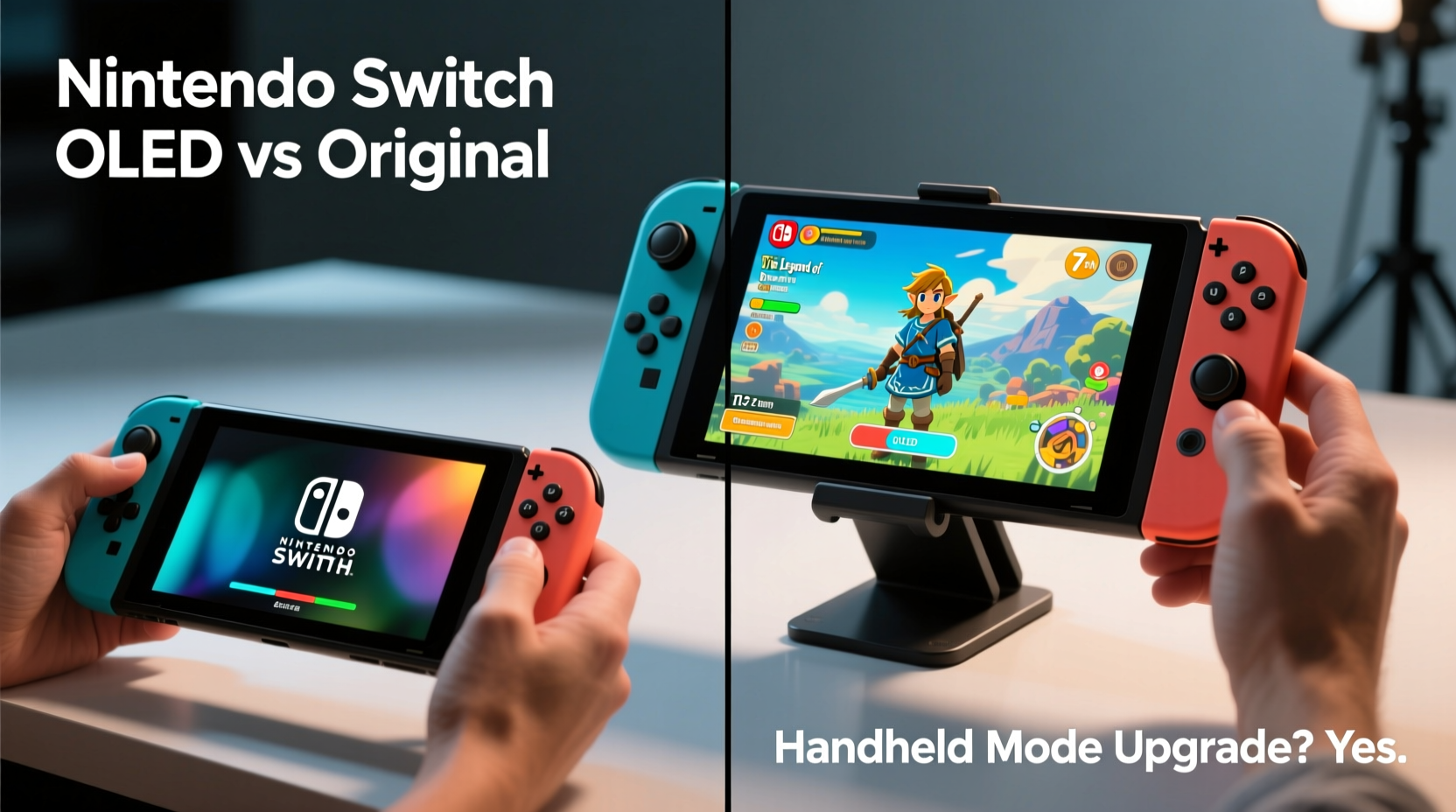
The most significant change in the OLED model is, unsurprisingly, the screen. The 7-inch organic light-emitting diode (OLED) display replaces the original’s 6.2-inch LCD panel. This shift delivers deeper blacks, higher contrast ratios, and richer color saturation. In practical terms, games like The Legend of Zelda: Breath of the Wild or Hollow Knight: Silksong benefit from enhanced visual depth, making environments feel more alive even at a glance.
OLED technology excels in dark scenes. Shadows appear truly black rather than grayish, which improves readability during nighttime sequences or dungeon crawls. Colors pop without appearing oversaturated, preserving artistic intent across titles. For users who play in varied lighting—on subways, in bed, or near windows—the improved brightness and anti-glare coating offer better visibility than the older model.
Real-World Viewing Differences
While resolution remains capped at 720p in handheld mode across all non-Lite models, the larger screen area means pixels are slightly less dense. However, due to superior contrast and color accuracy, most users perceive sharper visuals on the OLED. Text in RPGs and UI elements in strategy games are easier to read. Side-by-side comparisons show that the OLED screen reduces eye strain during extended sessions, especially in low-light conditions.
“Display quality directly impacts immersion. A better screen doesn’t just look nicer—it makes you want to keep playing.” — Alex Rivera, Senior Hardware Analyst at GameTech Weekly
Build Quality and Ergonomics
Beyond the screen, the physical redesign enhances handheld comfort. The OLED model features a wider, more stable kickstand with adjustable angles—a massive improvement over the flimsy, single-position stand on earlier versions. Though this matters most in tabletop mode, it indirectly supports handheld use by allowing flexible viewing positions when propped against a backpack or armrest.
The body itself uses a matte finish on the back and sides, reducing fingerprint smudges and improving grip. The bezels are thinner around the top and sides, giving the illusion of a more modern, edge-to-edge display despite the screen size increase. Holding the device feels more balanced, with weight distributed evenly between hands thanks to the slightly elongated form factor.
| Feature | Original Switch | Switch OLED |
|---|---|---|
| Screen Size | 6.2 inches | 7.0 inches |
| Display Type | LCD | OLED |
| Contrast Ratio | Moderate | High (true blacks) |
| Kickstand | Rigid, single angle | Adjustable, wide range |
| Audio Quality | Average stereo | Enhanced clarity & bass |
| Internal Storage | 32GB | 64GB |
| Battery Life | 4.5–9 hours | 4.5–9 hours |
Audio Enhancements: More Than Just Louder
Nintendo quietly upgraded the speakers in the OLED model. They’re now positioned along the bottom edges, angled outward for clearer projection. The result is fuller sound with noticeable improvements in midrange and bass response. Dialogue in narrative-driven games like Fire Emblem: Engage or ambient tracks in Animal Crossing: New Horizons gain emotional weight when heard through the built-in speakers.
This may seem minor, but for players who rely on handheld audio without headphones—during short commutes or quick breaks—the enhancement adds a layer of engagement. It’s not studio quality, but it’s a meaningful step up from the tinny output of the original.
When Headphones Are Still Essential
Despite the speaker upgrade, serious gamers will still prefer wired or Bluetooth headsets for immersive experiences. The OLED does not support advanced audio codecs like aptX or LDAC, limiting wireless fidelity. However, the improved onboard audio makes casual play more enjoyable when headphones aren’t convenient.
Storage and Usability Gains
One often-overlooked upgrade is the doubling of internal storage from 32GB to 64GB. Given that many AAA titles now exceed 15GB each, this extra space allows users to keep more games installed without immediate reliance on microSD cards. For those who frequently switch between titles—say, jumping from Metroid Dread to Super Mario Party—this reduces load times associated with redownloading or swapping files.
The LAN port embedded in the dock remains absent on the device itself, so wired internet while mobile isn’t possible. But the OLED’s faster Wi-Fi 5 (802.11ac) ensures smoother downloads and updates when connected to strong networks, cutting down wait times for large patches.
Portability Trade-offs
The OLED model is slightly heavier (approx. 420g vs. 398g) and taller than the original, which might affect pocketability. Some users report it no longer fits in certain third-party cases designed for the base model. That said, the added heft contributes to a sturdier feel, reducing hand fatigue during hour-long sessions.
“I upgraded purely for the screen. After six months of daily handheld use, my eyes feel less strained, and I’ve stopped reaching for my phone during downtime because the Switch is just more pleasant to pick up.” — Lena Park, frequent commuter and indie game enthusiast
Is the Upgrade Worth It? A Decision Framework
Whether the OLED model is worth the investment depends on how—and where—you play. Consider these scenarios:
- If you primarily use your Switch docked to a TV, the OLED offers no advantage in performance or output quality.
- If you own the Switch Lite and value a hybrid experience, the OLED provides versatility the Lite lacks.
- If you play mostly in handheld mode, especially in varied environments, the OLED’s screen, speakers, and build refinements deliver measurable quality-of-life gains.
Checklist: Should You Upgrade?
Answer yes to two or more of the following to consider upgrading:
- Do you play more than 60% of your games in handheld mode?
- Have you experienced eye strain or difficulty seeing details on the original screen?
- Do you frequently carry your Switch outside the home?
- Are you frustrated by limited internal storage?
- Do you value improved audio without needing headphones?
If most answers are “yes,” the OLED model aligns closely with your usage pattern. The upgrade isn’t revolutionary, but it refines the core handheld experience in ways that accumulate over time.
Frequently Asked Questions
Does the OLED model have better battery life?
No significant difference. Both the original revised Switch (2019) and the OLED model offer 4.5 to 9 hours of battery life depending on the game. Power efficiency comes from software optimization, not hardware changes in the OLED.
Can I use my old accessories with the OLED model?
Most accessories are compatible, including Joy-Cons, charging docks, and carrying cases. However, some snug-fitting hard shell cases may not accommodate the slightly larger dimensions. Always verify case compatibility before purchasing.
Is the OLED screen prone to burn-in?
Potential exists, as with all OLED displays, but Nintendo has implemented protective measures such as pixel refresh cycles and automatic brightness adjustments. No widespread reports of burn-in have emerged since launch. Avoid leaving static menus open for days, and enable sleep mode after 1–5 minutes for best results.
Final Verdict: Refinement Over Revolution
The Nintendo Switch OLED isn’t a generational leap. It doesn’t run games faster, render at higher resolutions, or support new features like ray tracing. What it does offer is a thoughtfully polished handheld experience—one that prioritizes sensory comfort, durability, and everyday usability.
For players whose relationship with the Switch is intimate and mobile—those who tuck it into bags, play during lunch breaks, or wind down with it before bed—the OLED model feels like a natural evolution. The screen alone transforms mundane moments into visually satisfying ones. Add in better speakers, smarter storage, and a more reliable kickstand, and the package becomes compelling, even if incremental.
Ultimately, the decision hinges on your priorities. If you seek raw power or exclusive content, look elsewhere. But if you value how a device feels in your hands, how it looks in sunlight, and how effortlessly it integrates into daily life, the Switch OLED earns its place as the definitive handheld version of Nintendo’s hybrid console.




 浙公网安备
33010002000092号
浙公网安备
33010002000092号 浙B2-20120091-4
Comments
No comments yet. Why don't you start the discussion?