
Thrifting has evolved from a budget-friendly pastime into a full-blown cultural movement. With sustainability in fashion gaining momentum, more people are turning to secondhand shopping for unique finds — including designer accessories like sunglasses. But when it comes to high-end eyewear from brands like Ray-Ban, Gucci, Prada, or Tom Ford, a critical question arises: Is it safe to buy these items secondhand, or are counterfeit versions so widespread that the risk outweighs the reward?
The truth is nuanced. While you can absolutely find authentic, gently used designer sunglasses at thrift stores, estate sales, and consignment shops, the market is also flooded with convincing fakes. The key isn’t avoiding thrifting altogether — it’s learning how to navigate it wisely.
Why Designer Sunglasses Are Popular Thrift Targets
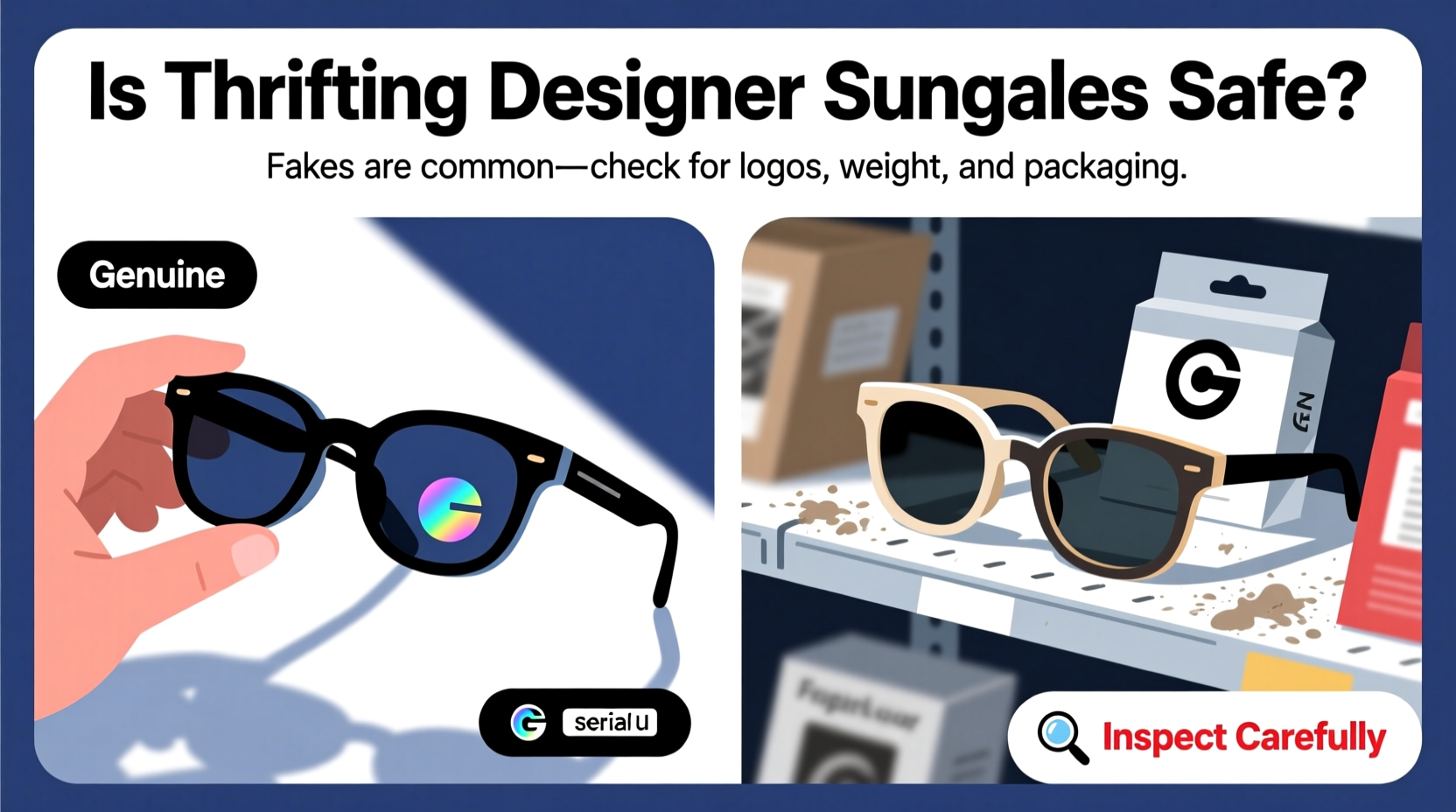
Designer sunglasses are among the most sought-after items in thrift circles. A pair that retails for $300–$600 new might be priced at $20–$50 in a secondhand shop. For style-conscious shoppers, this represents significant savings. Additionally, vintage frames from the '70s, '80s, and '90s have made a comeback, making older models particularly desirable.
But popularity breeds opportunity — not just for savvy buyers, but also for counterfeiters. Fake designer sunglasses are cheap to produce and easy to distribute. Many end up in donation bins, circulate through resale platforms, or get passed off as genuine in thrift environments where staff lack the expertise to authenticate them.
How Common Are Fake Designer Sunglasses in Thrift Stores?
The prevalence of counterfeit sunglasses varies by location and source. In urban areas with high volumes of donated goods — especially near affluent neighborhoods — the chances of encountering real designer pieces increase. However, so does exposure to fakes, since many donors unknowingly give away imitation goods they purchased online or during travel.
A 2022 study by the International Chamber of Commerce estimated that counterfeit apparel and accessories make up nearly 3% of global trade, with eyewear being one of the most frequently forged categories. Brands like Ray-Ban Wayfarers and Aviators are replicated so extensively that some experts estimate up to 80% of “designer” sunglasses sold online (and by extension, donated) are fake.
In physical thrift settings, the rate is lower but still concerning. Staff at most nonprofit thrift stores aren’t trained in luxury authentication, meaning counterfeits often slip through. One survey of U.S. consignment store managers found that over 60% had accepted fake sunglasses in the past year without realizing it until later.
Real Example: A Missed Opportunity Turned Lesson
Sophia, a vintage fashion enthusiast from Portland, once found a pair of seemingly pristine Gucci GG0375S sunglasses at a local Goodwill. Priced at $18, they appeared identical to the current model selling for $420. Excited, she bought them immediately — only to discover discrepancies upon closer inspection at home. The logo alignment was slightly off, the hinge screws were uneven, and the lenses lacked UV protection labeling. After consulting an optician and comparing them to official product images, she confirmed they were counterfeit.
“I learned the hard way,” she said. “Just because something looks right doesn’t mean it *is* right. Now I bring a checklist every time I go thrift hunting.”
How to Spot Fake Designer Sunglasses: A Step-by-Step Guide
Authenticating secondhand sunglasses requires attention to detail. Here’s a reliable process to follow when evaluating a potential find:
- Inspect the Branding and Logos
Check for correct spelling, font style, and placement. Misaligned logos, blurry engravings, or inconsistent letter spacing are red flags. For example, authentic Ray-Bans have crisp, laser-etched logos on the corner of the left lens. - Examine the Hinges and Frame Construction
Genuine designer frames use high-quality metals and acetate. They feel substantial, not flimsy. Hinges should move smoothly and click securely. Fakes often have loose joints or overly tight mechanisms. - Look for Model and Serial Numbers
Most designer sunglasses include a model number etched inside the temple arm. Cross-reference this number with the brand’s official website or database. If no number exists, or if it doesn’t match known models, it’s likely fake. - Test the Lenses
Hold the glasses at eye level and look through each lens at a straight line (like a doorframe). Rotate the glasses slowly. On authentic polarized lenses, the line should darken as you turn them. Counterfeit lenses rarely offer true polarization or UV protection. - Check Packaging and Documentation
If the sunglasses come with a case, cleaning cloth, or papers, verify their authenticity too. Real designer cases have consistent stitching, correct branding, and model-specific details. Generic black pouches or mismatched cloths suggest a repackaged fake.
“Counterfeit sunglasses don’t just cheat consumers financially — they can compromise eye health. Poor lens quality increases glare and fails to block harmful UV rays.” — Dr. Alan Zhou, Optometrist and Vision Safety Advocate
Do’s and Don’ts When Buying Designer Shades Secondhand
| Do | Don't |
|---|---|
| Bring a magnifying glass or use your phone’s zoom to inspect fine details | Rely solely on price — low cost doesn’t always mean fake, nor does high price guarantee authenticity |
| Cross-check model numbers online before purchasing | Assume all vintage-labeled items are authentic — vintage styles are commonly copied |
| Visit reputable consignment stores with authentication policies | Buy sunglasses stored in open bins where mixing and damage are common |
| Try them on to assess fit and comfort — genuine frames balance well on the face | Ignore missing parts like nose pads or screws; replacements may indicate tampering |
| Ask staff about return policies in case you discover a fake later | Feel pressured to buy quickly — walk away if unsure |
Where to Thrift Safely: Choosing the Right Venues
Not all thrift stores carry the same risks. Your odds of finding authentic designer sunglasses improve dramatically depending on where you shop.
- Consignment Shops: These businesses typically authenticate higher-value items before accepting them. Stores like The RealReal, Vestiaire Collective (in-store events), or local boutiques such as Buffalo Exchange often have stricter curation standards.
- Estate Sales: High-net-worth estates frequently include luxury accessories. Because items come directly from personal collections, provenance is clearer. Estate sale organizers sometimes work with appraisers who flag valuable pieces.
- Thrift Stores in Affluent Areas: Locations near upscale neighborhoods tend to receive better-quality donations, including genuine designer goods. Examples include Value Village in Beverly Hills or Salvation Army stores in Seattle’s Capitol Hill.
- Flea Markets & Pop-Ups: Exercise caution here. While some vendors specialize in authentic vintage, others deal in mass-produced knockoffs. Always inspect thoroughly and negotiate based on confidence in authenticity.
Can You Get Them Repaired or Verified After Purchase?
Yes — and doing so adds a layer of safety to thrifting. Many optical shops offer verification services for a small fee. An experienced optician can examine lens quality, frame materials, and construction techniques to determine authenticity.
Additionally, some brands provide authentication support. For instance, Luxottica-owned brands (Ray-Ban, Oakley, Persol) maintain databases of model numbers and production years. Sending clear photos of the frame, logo, and serial number to customer service may yield confirmation.
If the sunglasses are real but need repairs — such as replacing scratched lenses or adjusting bent temples — most independent opticians can help. Custom lens replacement with UV-protected, polarized glass ensures both style and safety. This also eliminates concerns about poor optics in original counterfeit lenses.
Checklist: Before You Buy Secondhand Designer Sunglasses
- ✅ Verify the model number matches official listings
- ✅ Inspect logo engraving quality and alignment
- ✅ Check for symmetrical hinges and smooth movement
- ✅ Look for UV protection labeling on lenses
- ✅ Assess overall weight and material feel — real acetate is dense and warm to the touch
- ✅ Confirm packaging authenticity if included
- ✅ Take photos for later comparison or professional review
- ✅ Know the store’s return policy
FAQ: Common Questions About Thrifting Designer Sunglasses
Can fake sunglasses damage my eyes?
Yes. Counterfeit lenses often lack proper UV filtering. Wearing them can lead to increased exposure to UVA and UVB rays, raising the risk of cataracts, macular degeneration, and photokeratitis (sunburn of the cornea). Always ensure lenses are labeled UV400 or offer 100% UV protection.
Are vintage designer sunglasses more likely to be authentic?
Not necessarily. While older frames from the 1970s–1990s can be genuine, there’s also a booming market for replica \"vintage-style\" sunglasses. Authentic vintage pieces will show signs of aging consistent with their era — such as patina on metal parts or specific hinge designs — but require expert knowledge to confirm.
Is it worth buying non-designer sunglasses instead?
For pure functionality, yes. Brands like Randolph Engineering, Smith Optics, or even well-reviewed Amazon brands offer excellent sun protection at reasonable prices. However, if you're after iconic design, collectible value, or fashion statement pieces, authentic designer sunglasses remain desirable — provided they’re verified.
Conclusion: Smart Thrifting Beats Fear
Thrifting designer sunglasses isn’t inherently unsafe — it simply demands informed caution. With counterfeit eyewear prevalent in both new and secondhand markets, vigilance matters more than the purchase channel. By learning what to look for, knowing where to shop, and using verification tools post-purchase, you can confidently score authentic luxury shades at a fraction of retail cost.
The rewards go beyond savings. You reduce waste, support circular fashion, and often uncover timeless pieces unavailable in mainstream stores. When done right, thrifting designer sunglasses becomes not just safe, but smart.




 浙公网安备
33010002000092号
浙公网安备
33010002000092号 浙B2-20120091-4
Comments
No comments yet. Why don't you start the discussion?