
In recent years, the lines between dine-in service and takeout have blurred. With more people ordering food to go—whether through curbside pickup, app-based collection, or direct counter service—the question of whether to tip has become increasingly complex. While traditional etiquette once reserved tipping for table service, evolving labor dynamics, restaurant economics, and customer expectations have reshaped norms. As we move into 2025, a new consensus is emerging: tipping for takeout isn’t just polite—it’s often expected, especially under certain conditions.
This shift reflects broader changes in the hospitality industry, including rising operational costs, tighter staffing, and growing awareness of service worker wages. Understanding the updated etiquette around tipping for takeout ensures you support fair compensation while navigating social expectations with confidence.
Why Tipping Culture Is Changing for Takeout
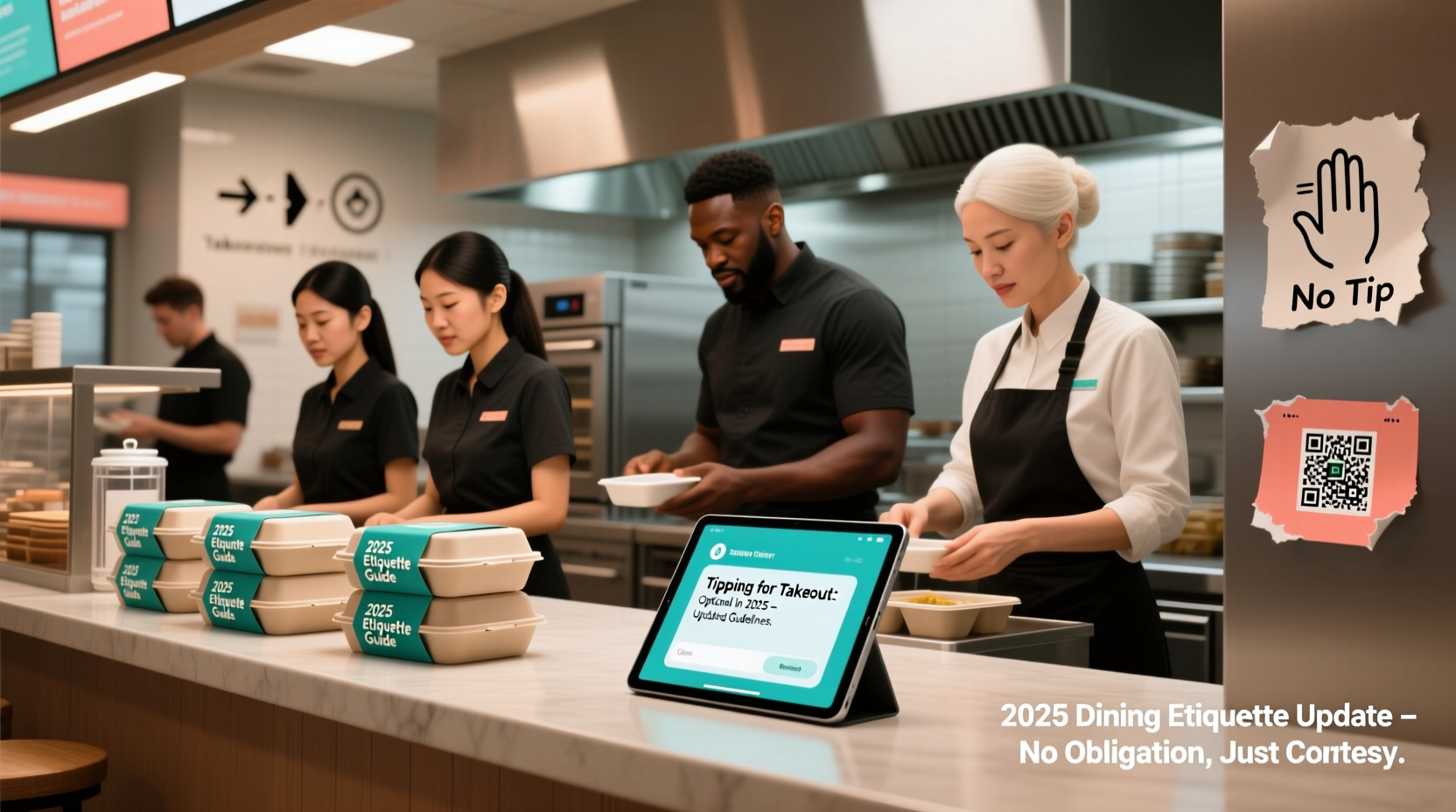
The idea that \"no table service = no tip\" is outdated. In 2025, many restaurants operate hybrid models where kitchen staff, runners, packers, and even hosts are involved in fulfilling takeout orders. These employees often rely on tips as part of their income, particularly in states where tipped workers earn below minimum wage.
Additionally, the pandemic normalized digital ordering and off-premise dining. What began as a temporary adaptation has become permanent infrastructure. Restaurants now invest heavily in online platforms, packaging, labeling, and dedicated pickup zones—all managed by staff who may not receive base pay sufficient to live on without supplemental tips.
A 2024 National Restaurant Association survey found that 68% of full-service establishments include a suggested tip line during digital takeout checkout, and 43% of customers now report routinely tipping on pickup orders—up from just 27% in 2020.
“Tipping isn’t just about service delivery anymore—it’s about recognizing the labor behind the meal, regardless of how it reaches the customer.” — Lila Torres, Hospitality Labor Analyst at Cornell University’s School of Hotel Administration
When You Should Tip for Takeout (And When You Might Not Have To)
Tipping etiquette for takeout isn’t one-size-fits-all. The decision should be based on context: the type of restaurant, level of service, order complexity, and local customs. Below is a practical guide to help determine when tipping is appropriate.
✅ Situations Where Tipping Is Recommended
- Full-service restaurants offering takeout: If your favorite bistro prepares your meal, boxes it carefully, and has staff hand it to you at the door or car, a tip acknowledges that effort.
- Large or customized orders: Multiple bags, special dietary requests, or holiday meals require extra coordination and labor.
- Curbside or valet-style pickup: When an employee brings your order out, checks your ID, or loads it into your vehicle, this constitutes direct service.
- Dine-in only locations adding takeout temporarily: Staff may not be used to handling pickup logistics; a small tip eases the transition.
- Orders placed via third-party apps (DoorDash, Uber Eats): Drivers expect tips, but consider also tipping at the restaurant if picking up directly after using the app interface.
🚫 Situations Where Tipping May Be Optional
- Fast food or chain drive-thrus: Employees typically earn hourly wages separate from tipped staff pools, and service is automated.
- Self-service pickup lockers: No human interaction means no obligation to tip.
- Bakery or deli counter with minimal interaction: If you order, pay, and grab your item quickly with little assistance, tipping is discretionary.
How Much to Tip: A 2025 Guide
The standard tipping range for takeout has stabilized around 10–15%, depending on service level. Unlike dine-in, where 20% is common, takeout reflects reduced overhead and fewer touchpoints—but still values the work involved.
| Service Level | Suggested Tip | Rationale |
|---|---|---|
| Basic counter pickup (minimal interaction) | 5–10% | Covered by cashier role; low labor intensity |
| Full-service restaurant takeout (staffed pickup) | 10–15% | Multiple staff involved: cook, packer, runner |
| Curbside concierge or valet delivery | 15% | Personalized service, outdoor coordination |
| Large group/catering pickup | 15–20% or flat fee ($10–$25) | High prep time, packaging, verification |
| Third-party delivery (via app) | 15–20% | Driver risk, fuel, wait time included |
If paying in cash, round up or leave the tip separately with a note. For digital payments, most platforms allow tip selection before or after order confirmation. Some newer POS systems even prompt for a tip even on “pickup” selections—this reflects industry normalization of the practice.
Mini Case Study: The Rise of the “Takeout Tip” at Bella Terra Bistro
Bella Terra Bistro, a mid-sized Italian restaurant in Portland, Oregon, began tracking tipping behavior on takeout orders in early 2023. Initially, only 18% of customers left tips on pickup transactions. After installing signage at the counter and adding a non-intrusive tip prompt on their online ordering system (“Support our team: Add 10%?”), the rate climbed to 54% within six months.
Manager Rafael Chen noted, “We didn’t pressure anyone. We just explained that our kitchen team spends 20 minutes plating each order beautifully, double-checking allergens, and carrying it out. Once guests understood the labor, they were happy to contribute.”
By 2024, the average takeout tip had risen to $4.75 per order. Staff reported higher morale, and turnover decreased by 30%. The restaurant now includes “takeout gratuity” as part of its internal compensation discussions, treating it as a legitimate revenue stream for frontline workers.
This case illustrates how transparency and education can shift consumer behavior—and why modern etiquette must account for behind-the-scenes effort.
Step-by-Step Guide to Tipping on Takeout Orders in 2025
Navigating when and how to tip doesn't need to be stressful. Follow this five-step process to make informed decisions every time:
- Evaluate the Service Model: Was your order handed to you by a staff member? Did someone call your name, verify your identity, or bring it to your car? If yes, tipping is appropriate.
- Consider Order Complexity: More components (desserts, sauces, sides), special instructions, or large quantities signal greater labor investment.
- Check the Payment Interface: If the screen prompts for a tip—even on “pickup”—it likely goes to staff. Declining isn’t wrong, but accepting shows support.
- Decide on Amount: Use the 10–15% guideline unless service was exceptional (then 20%) or minimal (then 5% or none).
- Tip Separately If Needed: If paying cash and forgot to tip, return or send a digital tip via the restaurant’s preferred platform (e.g., Venmo, Square). Many now display QR codes at pickup counters.
Common Misconceptions About Takeout Tipping
Several myths persist that prevent well-meaning customers from tipping appropriately:
- Myth: “The kitchen staff don’t get tips anyway.”
Reality: In many restaurants, tips are pooled among service staff, which increasingly includes kitchen runners and expeditors handling takeout. - Myth: “I already paid extra for packaging.”
Reality: Packaging fees go to the business, not employees. They cover containers, not labor. - Myth: “Only bad service deserves no tip.”
Reality: Tipping rewards effort, not perfection. Even smooth pickups involve unseen coordination. - Myth: “Tipping online means the robot gets the money.”
Reality: Digital tips are routed to employee accounts through payroll integrations like Toast or Clover.
FAQ: Your Top Takeout Tipping Questions Answered
Do I need to tip if I order online but pick up myself?
Yes, if a staff member prepares, calls you, or hands you the order. The digital transaction doesn’t eliminate human labor. A 10–15% tip is appropriate unless the process is fully automated.
What if the restaurant adds an automatic gratuity?
Some high-end or catering-focused venues add a mandatory 18–20% fee for large takeout orders. Check your receipt. If it’s listed as “service charge” or “gratuity,” it typically goes to staff and replaces voluntary tipping. If unsure, ask.
Should I tip differently for pickup vs. delivery?
Yes. Delivery involves travel, time, and risk—so 15–20% is standard. Pickup requires less effort but still merits recognition. Aim for 10–15% for attended pickup, less for self-service.
Checklist: Am I Tipping Fairly on Takeout?
Use this quick checklist before finalizing your next takeout payment:
- ☐ Did a staff member interact with me directly? (handoff, verification, assistance)
- ☐ Was my order complex or required special handling?
- ☐ Is the restaurant full-service or fine dining?
- ☐ Did the payment system suggest a tip?
- ☐ Am I using a third-party app that separates driver and restaurant staff?
- ☐ Would I tip if this were dine-in? (If yes, consider a smaller amount for takeout.)
If you answered “yes” to three or more, tipping is both courteous and aligned with 2025 standards.
Conclusion: Rethinking Courtesy in the New Era of Dining
Tipping for takeout is no longer a gray area—it’s a reflection of evolving respect for service workers. As restaurant operations adapt to digital-first models and leaner teams, every contribution counts. Whether you leave 10% on a digital receipt or hand a server a few dollars in cash, you’re affirming the value of their work.
Etiquette isn’t static. It grows alongside society’s understanding of fairness, labor, and community. In 2025, choosing to tip on takeout isn’t just about rules—it’s about responsibility. By adjusting habits today, you help shape a more sustainable, equitable future for the food service industry.




 浙公网安备
33010002000092号
浙公网安备
33010002000092号 浙B2-20120091-4
Comments
No comments yet. Why don't you start the discussion?