
Vitamin C serums have earned a permanent spot in skincare routines worldwide for their ability to brighten skin, reduce hyperpigmentation, and combat signs of aging. But as temperatures rise and UV exposure increases during the summer months, many users begin to question: is vitamin C serum still safe and effective when used under intense sunlight? The short answer is yes — but with important caveats. The stability of vitamin C depends heavily on formulation, storage, and application practices. Understanding these factors can mean the difference between glowing, protected skin and irritation or diminished results.
The active ingredient in most vitamin C serums is L-ascorbic acid, a potent antioxidant that neutralizes free radicals caused by UV radiation and pollution. However, this same reactivity makes it vulnerable to degradation when exposed to light, heat, and air. Summer conditions — prolonged sun exposure, high humidity, and elevated temperatures — can accelerate this breakdown, reducing efficacy and potentially leading to skin sensitivity if oxidized product is applied.
This article explores the science behind vitamin C stability, evaluates how summer conditions impact performance, and provides practical strategies to ensure your serum remains both safe and effective all season long.
Understanding Vitamin C Stability
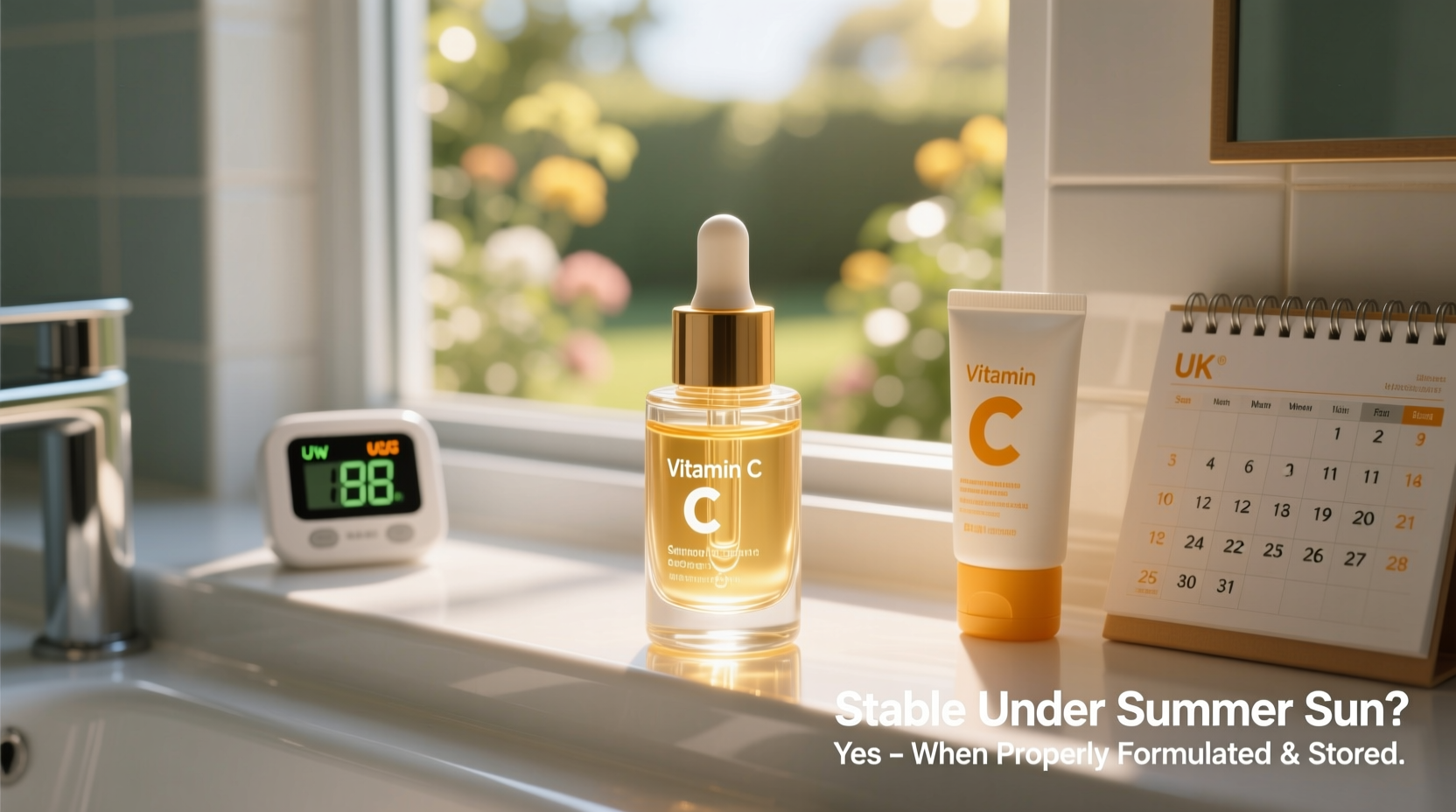
L-ascorbic acid is water-soluble and highly reactive, which allows it to donate electrons to unstable molecules (free radicals), thereby protecting skin cells. But this reactivity also means it readily oxidizes when exposed to environmental stressors. Oxidation turns the clear or pale-yellow serum into a brownish hue, signaling that the active ingredient has degraded into dehydroascorbic acid and eventually into inactive compounds like erythrulose, which offer no skincare benefit and may even irritate sensitive skin.
Stability hinges on three primary factors:
- Oxygen exposure: Once a bottle is opened, repeated air contact accelerates oxidation.
- Light exposure: UV and visible light trigger photochemical reactions that degrade L-ascorbic acid.
- Heat: High temperatures increase molecular motion, speeding up chemical degradation.
Summer amplifies all three. Leaving a serum on a sunny bathroom counter, storing it in a hot car, or using it after beach exposure without proper precautions can compromise its integrity within days.
Formulation Matters: Not All Serums Are Created Equal
Advances in cosmetic chemistry have led to more stable forms of vitamin C and improved delivery systems. While pure L-ascorbic acid remains the gold standard for efficacy, newer derivatives and encapsulated formulas offer enhanced resilience — especially valuable in summer.
| Form of Vitamin C | Stability in Heat/Light | Efficacy | Best For |
|---|---|---|---|
| L-Ascorbic Acid (pure) | Low – degrades quickly | High – proven penetration and activity | Those with controlled environments and consistent routines |
| Magnesium Ascorbyl Phosphate | High – resistant to oxidation | Moderate – slower conversion to active form | Sensitive skin; humid climates |
| Sodium Ascorbyl Phosphate | High – very stable | Moderate – effective against acne and oiliness | Oily/acne-prone skin in summer |
| Ascorbyl Glucoside | Medium-High – gradual release | Good – steady conversion over time | Daily maintenance, less irritation risk |
| Tetrahexyldecyl Ascorbate | Very High – oil-soluble, penetrates deeply | High – excellent stability and dermal delivery | Anti-aging focus, humid or hot conditions |
Experts recommend choosing serums with stabilizing ingredients such as ferulic acid and vitamin E (tocopherol), which not only enhance antioxidant effects but also slow down oxidation. The famous CE Ferulic formula from SkinCeuticals, for example, combines 15% L-ascorbic acid with 1% alpha-tocopherol and 0.5% ferulic acid, increasing photoprotection and extending shelf life.
“Even the most powerful antioxidants fail if they’re not delivered in a stable system. Look for opaque, air-restrictive packaging and supporting antioxidants like vitamin E.” — Dr. Leslie Baumann, Board-Certified Dermatologist and Skincare Researcher
How to Use Vitamin C Safely in Summer Sun
Contrary to outdated myths, vitamin C does not make skin more photosensitive. In fact, it enhances protection when paired with sunscreen. However, improper use during summer can lead to reduced benefits or adverse reactions. Follow these best practices to maintain effectiveness and safety.
1. Apply in the Morning — Before Sunscreen
Vitamin C works best as a daytime antioxidant shield. Apply 3–5 drops after cleansing and toning, but before moisturizer and SPF. This ensures free radical scavenging begins before UV exposure starts.
2. Pair With Broad-Spectrum SPF
Vitamin C complements — but never replaces — sunscreen. Studies show that combining topical vitamin C with SPF 30+ increases protection against UV-induced damage by up to 50%. The antioxidant reduces oxidative stress while sunscreen blocks penetration of harmful rays.
3. Store Properly to Prevent Degradation
Keep your serum in a cool, dark place — ideally refrigerated during summer. Avoid leaving it in direct sunlight, near windows, or in steamy bathrooms. Opaque, airless pump bottles or dropper vials with minimal headspace help limit oxygen exposure.
4. Monitor Color and Scent
Fresh L-ascorbic acid serums should be clear to slightly yellow. A noticeable browning or sharp, metallic odor indicates oxidation. Discard immediately — continued use offers no benefit and may trigger inflammation.
5. Consider Alternatives for Extreme Conditions
If you're traveling to tropical or desert climates, consider switching to a more stable derivative (like tetrahexyldecyl ascorbate) or using vitamin C only every other day to minimize risk of applying compromised product.
Mini Case Study: Sarah’s Summer Skincare Setback
Sarah, a 34-year-old marketing executive, religiously used her favorite L-ascorbic acid serum year-round. Each winter, her skin appeared brighter and smoother. But last summer, after a two-week beach vacation, she noticed increased redness and dullness — despite wearing SPF daily.
Upon inspection, she realized she had left her serum in a clear glass bottle on the hotel bathroom counter, directly exposed to midday sun through a skylight. The once-clear liquid had turned deep amber. Unaware of the oxidation, she applied it for nearly a week before developing mild irritation.
After consulting a dermatologist, Sarah learned that her serum had degraded, rendering it ineffective and mildly irritating. She switched to a stabilized formula in an opaque, airless container and began storing it in a small travel cooler. Within weeks, her glow returned — proving that formulation and storage are just as critical as consistency.
Step-by-Step Guide: Maximizing Vitamin C Efficacy in Summer
- Choose the right formula: Opt for serums with added stabilizers (vitamin E, ferulic acid) or use a more heat-stable derivative if prone to oxidation.
- Inspect packaging: Select products in dark glass or opaque plastic with airless pumps or droppers that minimize oxygen exposure.
- Store correctly: Keep the serum in a cool, dry place — preferably refrigerated during summer months.
- Apply at the right time: Use in the morning after cleansing, followed by moisturizer and broad-spectrum SPF 30 or higher.
- Check regularly: Examine color and scent weekly. Replace if discoloration or off-odor occurs.
- Don’t mix with incompatible actives: Avoid combining with benzoyl peroxide or exfoliating acids (like glycolic or salicylic acid) in the same routine, as they can destabilize vitamin C or increase irritation risk.
- Replace on schedule: Most open vitamin C serums last 3–6 months. Mark the opening date on the bottle to track freshness.
Checklist: Summer-Ready Vitamin C Routine
- ☑ Serum stored away from sunlight and heat
- ☑ Packaging is opaque and air-restricted
- ☑ Applied every morning before sunscreen
- ☑ No visible discoloration or odd smell
- ☑ Paired with SPF 30+ and reapplied as needed
- ☑ Not mixed with benzoyl peroxide or high-pH products
- ☑ Replacement date tracked (opened within past 3–6 months)
Frequently Asked Questions
Can I use vitamin C serum if I’m going to the beach?
Yes, but apply it at home in the morning before sun exposure — not at the beach. Reapplication isn’t feasible, and sand, saltwater, and sweat can interfere with absorption. Always follow with water-resistant SPF and reapply every two hours.
Does vitamin C increase sun sensitivity?
No. Unlike some acids (e.g., AHAs), vitamin C does not exfoliate or thin the skin. On the contrary, it helps protect against UV damage by neutralizing free radicals. However, always pair it with sunscreen for full protection.
Is refrigeration necessary for vitamin C serums?
While not mandatory, refrigeration significantly slows oxidation, especially for pure L-ascorbic acid formulas. It’s highly recommended during summer or in hot climates. Just allow the serum to reach room temperature before application to avoid thermal shock to the skin.
Conclusion: Smart Use Makes All the Difference
Vitamin C serum is not only safe to use in summer — it’s essential. The increased UV exposure and environmental stressors of warm months make antioxidant protection more crucial than ever. The key lies in selecting a stable formulation, storing it properly, and integrating it correctly into your daytime routine.
With rising temperatures and longer daylight hours, now is the time to audit your skincare habits. Check your serum’s color, verify its packaging, and ensure it’s stored out of harm’s way. By taking these simple steps, you’ll preserve the potency of your product and give your skin the defense it needs to stay radiant, even under the harshest sun.




 浙公网安备
33010002000092号
浙公网安备
33010002000092号 浙B2-20120091-4
Comments
No comments yet. Why don't you start the discussion?