
For decades, anime has captivated audiences worldwide, evolving from a niche Japanese entertainment form into a global cultural phenomenon. As streaming platforms expand access to thousands of titles, viewers face a long-standing debate: should they watch anime with subtitles or opt for dubbed versions? The answer isn’t universal—preferences vary based on language proficiency, viewing habits, emotional engagement, and personal values. Yet behind the surface-level choice lies a deeper discussion about authenticity, accessibility, and the future of anime consumption.
This article dives into real viewer insights, compares key advantages and drawbacks of both formats, and explores how cultural context, voice acting quality, and cognitive load influence the experience. Whether you're a longtime otaku or a newcomer drawn in by recent hits like *Demon Slayer* or *Jujutsu Kaisen*, understanding the nuances between subbed and dubbed anime can enhance your appreciation and enjoyment.
The Subtitle Experience: Staying True to the Original
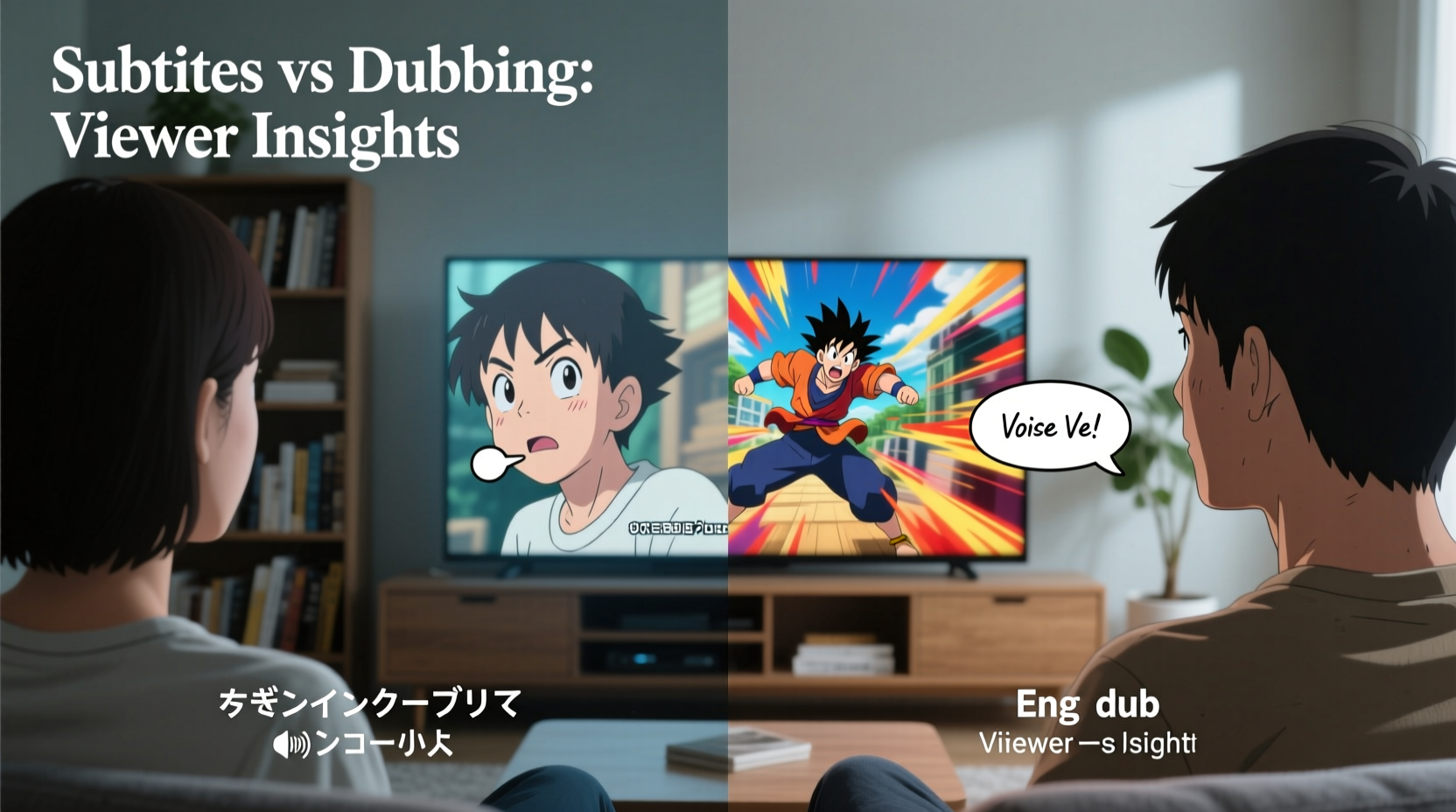
Watching anime with subtitles means experiencing the original Japanese audio track while reading translated dialogue at the bottom of the screen. For purists and language enthusiasts, this format offers an unfiltered connection to the source material. The vocal performances—the subtle intonations, emotional inflections, and culturally specific expressions—are preserved exactly as intended by the creators.
Subtitles allow viewers to hear authentic pronunciation of character names, honorifics like \"-san\" or \"-chan,\" and catch phrases that often lose meaning in translation. This fidelity extends beyond dialogue; background sounds, music cues, and even silence carry narrative weight in Japanese storytelling, and subbed versions maintain these auditory details without interference.
However, subbed anime demand more cognitive effort. Viewers must split attention between visual action and on-screen text, which can be challenging during fight sequences or emotionally intense moments. Some fans report missing facial expressions or background details because their eyes are fixed on the bottom of the screen. Over time, experienced viewers develop “subtitle fluency,” learning to anticipate timing and absorb dialogue quickly, but it remains a skill built through practice.
Dubbing Evolution: From Crude Adaptations to High-Quality Voice Acting
Dubbing was once criticized for poor lip-syncing, exaggerated voices, and heavy localization that altered plot points or removed cultural references. Early English dubs, such as those from the 1990s and early 2000s, often changed character names, replaced music, or censored content to fit Western broadcast standards. These practices alienated many fans who felt the soul of the series was compromised.
Today’s landscape is vastly different. Major studios like Crunchyroll, Funimation (now merged under Crunchyroll), and Bang Zoom! Entertainment invest heavily in professional voice actors, accurate scripts, and studio-quality production. Modern dubs of popular series like *My Hero Academia*, *Attack on Titan*, and *Frieren: Beyond Journey’s End* are praised for emotional depth, nuanced performances, and faithful adherence to the original tone.
Dubbing enhances accessibility. It allows viewers to fully engage with visuals without reading distractions, making it ideal for multitasking, shared viewing, or watching in low-light environments where subtitles strain the eyes. Parents often prefer dubs for younger audiences who may struggle with reading speed or complex vocabulary.
“Modern anime dubbing isn’t just translation—it’s reinterpretation with respect. We aim to preserve intent, emotion, and rhythm.” — Mary Elizabeth McGlynn, Voice Director and Veteran Anime Dub Actress
Comparative Breakdown: Subs vs. Dubs
| Aspect | Subtitles (Subbed) | Dubbing (Dubbed) |
|---|---|---|
| Authenticity | High – retains original voice acting, tone, and cultural nuances | Moderate – depends on script accuracy and vocal performance |
| Cognitive Load | Higher – requires simultaneous reading and viewing | Lower – full visual focus possible |
| Emotional Impact | Preserved through original vocal delivery | Can match or exceed originals with strong casting |
| Accessibility | Limited for non-readers or slow readers | Better for casual viewers, children, and multitaskers |
| Cultural Fidelity | High – keeps honorifics, wordplay, and context | Often reduced or adapted for clarity |
| Production Quality | Depends on subtitle accuracy and timing | Varies widely; top-tier dubs now rival originals |
Viewer Insights: Why Preferences Vary
A 2023 survey conducted by Anime News Network revealed that approximately 65% of North American anime fans still prefer subbed versions, citing authenticity and emotional resonance as primary reasons. However, among viewers aged 18–24, dubbed content consumption rose to nearly 45%, indicating a generational shift toward convenience and inclusivity.
One factor influencing preference is language exposure. Bilingual viewers or those studying Japanese often choose subs to improve listening comprehension. Meanwhile, neurodivergent audiences—including individuals with ADHD or dyslexia—may find dubs less overwhelming due to reduced visual clutter.
Another consideration is rewatch value. Many fans watch series multiple times, sometimes alternating between sub and dub on subsequent viewings. A common pattern is to first watch subbed to grasp the story authentically, then revisit via dub to appreciate alternative interpretations of characters.
Real Example: A Fan’s Dual Journey with *Steins;Gate*
Take Alex, a college student and longtime anime fan. When he first watched *Steins;Gate*, a sci-fi thriller rich with technical jargon and emotional complexity, he chose the subbed version. He wanted to experience the protagonist Rintarou Okabe’s manic energy exactly as voiced by Mamoru Miyano. The raw intensity of the original performance deepened his connection to the story.
Months later, after recommending the series to friends, he watched it again in English dub. To his surprise, he found J. Michael Tatum’s portrayal of Okabe equally compelling—though different. The dub emphasized sarcasm and theatrical flair slightly more, offering a fresh lens on the same narrative. “It wasn’t better or worse,” Alex said. “It was like seeing the same painting under two kinds of light.”
When to Choose Subs vs. Dubs: A Practical Checklist
- Choose Subs If:
- You prioritize authenticity and directorial intent
- You’re learning Japanese or enjoy linguistic details
- The series relies heavily on cultural context or wordplay
- You plan to analyze or discuss the anime critically
- You have prior experience with subtitled media
- Choose Dubs If:
- You watch in group settings or with family
- You want to focus entirely on animation and visuals
- You’re new to anime and find reading tiring
- The dub cast includes actors you admire
- You consume anime while doing other tasks (e.g., exercising, commuting)
Expert Perspectives on Language and Performance
Dr. Naomi Sato, a media linguist at Kyoto University, emphasizes that voice acting is an integral part of Japanese animation’s artistry. “In Japan, seiyuu (voice actors) are stars in their own right. Their performances are choreographed alongside animation timing, breathing patterns, and even silence. Removing that layer changes the rhythm of storytelling.”
Yet she acknowledges that dubbing, when done well, is not inferior—it’s a parallel art form. “A skilled dub doesn’t mimic; it translates feeling. The best dubs make you forget you’re hearing a different language.”
This sentiment echoes across industry professionals. Tony Oliver, veteran voice director known for *Cowboy Bebop* and *Code Geass*, argues that modern dubs are closing the gap: “We’re no longer just replacing voices—we’re preserving souls.”
Frequently Asked Questions
Is one format objectively better than the other?
No. Neither format is universally superior. Subs offer authenticity and cultural fidelity, while dubs provide accessibility and immersive viewing. The \"better\" option depends on individual goals, context, and personal taste.
Do dubs change the story or censor content?
Major licensed dubs today rarely alter plots, though minor dialogue adjustments occur for natural flow. Censorship is largely a relic of past eras. Streaming-era dubs typically maintain content integrity, though regional ratings may affect brief edits.
Can I switch between sub and dub while watching?
Absolutely. Many fans do this intentionally. Some start with subs to understand the original tone, then switch to dubs for relaxed rewatches. Platforms like Crunchyroll and Netflix allow easy toggling between audio and subtitle options.
How to Maximize Your Viewing Experience: A Step-by-Step Guide
- Assess your viewing environment. Are you alone or with others? In a quiet room or multitasking? Choose dubs for shared or distracted viewing.
- Check dub availability and cast. Research if the series has a well-reviewed dub. Familiar voice actors can enhance enjoyment.
- Start with subs for new series. Build initial emotional connection using the original audio.
- Revisit via dub later. Notice how different vocal choices shape character perception.
- Adjust subtitle settings. Increase size, contrast, or position if reading feels straining.
- Engage with community discussions. Compare interpretations across formats to deepen understanding.
Conclusion: Embrace Both Worlds
The debate over subtitles versus dubbing isn't about declaring a winner—it's about recognizing that both formats serve distinct needs and enrich the anime ecosystem. Subs honor the craft of the original creators, preserving linguistic and emotional authenticity. Dubs democratize access, inviting broader audiences into stories that might otherwise feel distant.
Rather than insisting on one approach, the most rewarding path is openness. Try a series both ways. Appreciate the seiyuu’s artistry in Japanese, then marvel at how a talented English cast reimagines it. Let your preferences evolve with experience.




 浙公网安备
33010002000092号
浙公网安备
33010002000092号 浙B2-20120091-4
Comments
No comments yet. Why don't you start the discussion?