
Allspice—named for its complex aroma that seems to combine clove, cinnamon, and nutmeg—is more than just a kitchen curiosity. It is a single spice derived from the dried berries of Pimenta dioica, a tree native to the Greater Antilles, southern Mexico, and Central America. Despite its misleading name, allspice contains no blend; rather, its unique chemical profile naturally mimics multiple spices. Understanding the biochemical components behind allspice reveals why it behaves so distinctively in cooking, how it interacts with other ingredients, and what makes it irreplaceable in certain cuisines. This deep dive into its molecular composition empowers cooks to use it with greater precision and creativity.
Definition & Overview
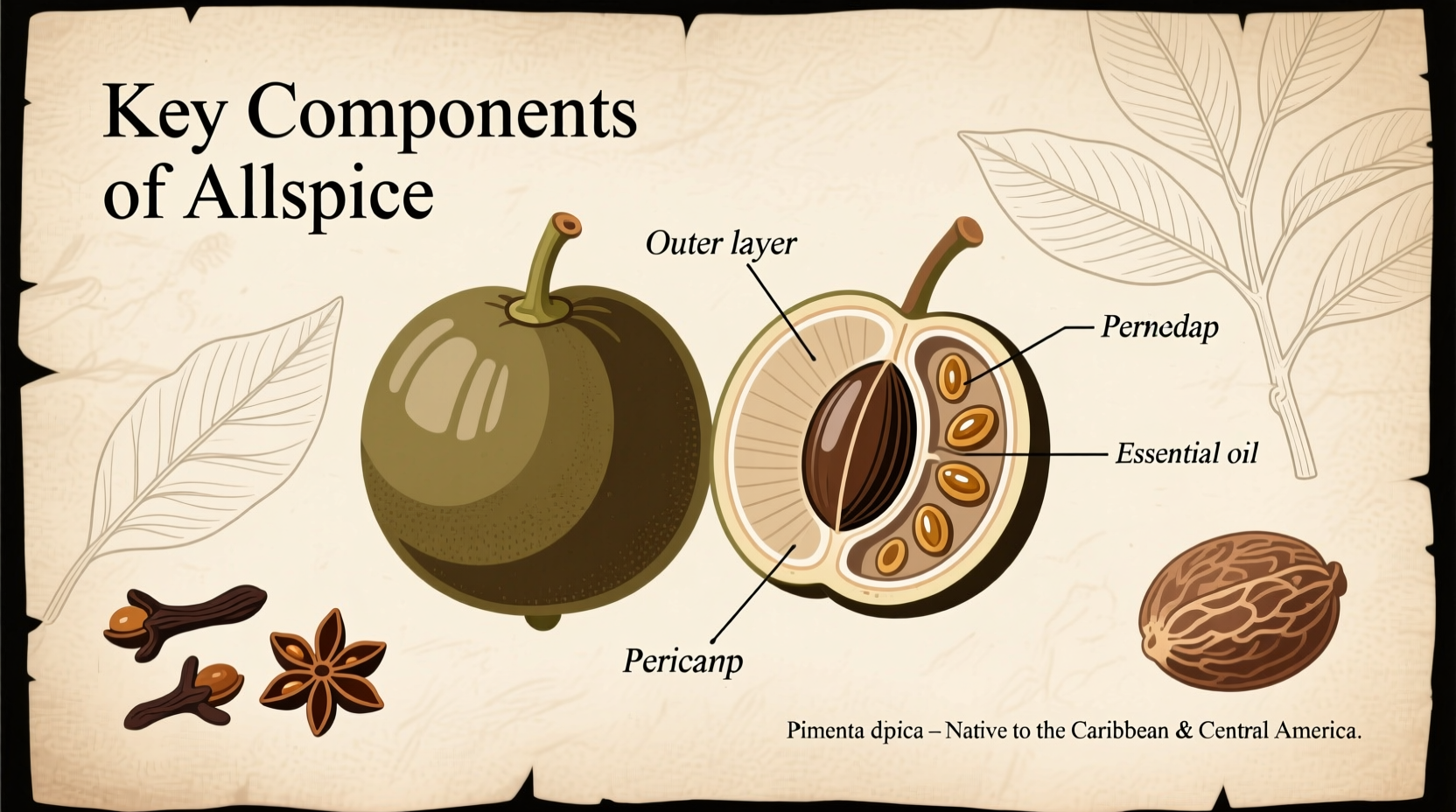
Allspice, botanically known as Pimenta dioica, is the unripe fruit of an evergreen tree in the myrtle family (Myrtaceae). Harvested while still green and sun-dried until dark brown, these small, peppercorn-sized berries develop their signature warm, sweet-pungent aroma. The name “allspice” was coined by 17th-century English explorers who noted its flavor resembled a combination of cloves, cinnamon, and nutmeg—though it is unrelated to any of them.
Native to Jamaica, where it remains a cornerstone of traditional cuisine, allspice plays a vital role in Caribbean jerk seasoning, Middle Eastern baharat, Latin American moles, and even Scandinavian pickling blends. Its versatility spans sweet and savory applications, making it one of the most chemically rich and functionally diverse spices in global gastronomy.
The complexity of allspice arises not from blending but from its essential oil composition. Over 40 volatile compounds contribute to its sensory profile, with several dominant molecules responsible for its characteristic warmth, sweetness, and slight peppery bite.
Key Characteristics
| Attribute | Description |
|---|---|
| Flavor Profile | Warm, sweet, slightly peppery, with notes of clove, cinnamon, nutmeg, and subtle smokiness. |
| Aroma | Intensely aromatic; dominated by clove-like eugenol, rounded out by woody and balsamic undertones. |
| Form | Whole dried berries or ground powder; whole form preserves flavor longer. |
| Color | Deep reddish-brown to almost black when whole; medium brown when ground. |
| Heat Level | Mild pungency (not spicy-hot); has a gentle warming sensation on the palate. |
| Culinary Function | Flavor enhancer, preservative (due to antimicrobial properties), aroma builder, marinade penetrator. |
| Shelf Life | Whole: up to 3–4 years; Ground: 6 months to 1 year (degrades faster due to surface exposure). |
Primary Chemical Components and Their Roles
The magic of allspice lies in its essential oils, which constitute 3–4.5% of the dried berry. These oils are responsible for both its flavor and functional benefits in food preservation and digestion. Below are the most significant compounds:
Eugenol (70–90%)
Eugenol is the dominant compound in allspice and accounts for its pronounced clove-like aroma and warmth. It contributes sharp, spicy-sweet top notes and possesses strong antiseptic and analgesic properties—historically used in dentistry and natural remedies. In cooking, eugenol enhances meat rubs by penetrating fat and protein matrices, allowing deeper flavor infusion. It pairs exceptionally well with garlic, onions, chilies, and citrus zest.
“Eugenol gives allspice its backbone. Without this molecule, you’d lose the defining warmth that makes it indispensable in jerk chicken and spiced stews.” — Dr. Lila Fernandez, Food Chemist, University of the West Indies
Caryophyllene (β-Caryophyllene) (10–25%)
This sesquiterpene adds depth with earthy, woody, and slightly peppery nuances. Notably, β-caryophyllene is a dietary cannabinoid that binds to CB2 receptors in the human body, associated with anti-inflammatory effects. In culinary terms, it provides structure to the aroma, balancing eugenol’s intensity and contributing to allspice’s ability to age well in long-cooked dishes like curries and braises.
Methyl Eugenol (Up to 8%)
Slightly sweeter and less aggressive than eugenol, methyl eugenol rounds out the profile with floral and balsamic tones. While present in smaller quantities, it enhances the perceived richness of sauces and desserts. Caution: high doses have been linked to carcinogenicity in animal studies, but typical culinary use (under 1/2 tsp per dish) poses no risk.
α-Humulene and α-Terpineol
These minor constituents add subtle pine-like freshness and light floral notes, preventing the spice from becoming cloying. They also aid in volatilizing other aromatics during cooking, helping distribute scent throughout a dish.
Pro Tip: Toasting whole allspice berries gently in a dry pan releases caryophyllene and humulene more effectively than grinding alone. This technique amplifies the woodsy base notes without overwhelming the clove character.
Practical Usage in Cooking
Allspice functions across culinary domains—from preserving meats to enhancing desserts. Its multifaceted chemistry allows it to bridge sweet and savory realms seamlessly.
Home Cooking Applications
- Marinades and Rubs: Combine crushed allspice with thyme, scallions, garlic, brown sugar, and Scotch bonnet peppers for authentic Jamaican jerk marinade. The eugenol helps break down proteins, tenderizing meat over time.
- Stews and Braises: Add 2–3 whole berries to pot roasts, bean soups, or lentil dishes. Remove before serving. The slow release of oils infuses the liquid evenly.
- Baking: Use ground allspice in pumpkin pie, gingerbread, or fruitcakes at 1/4 to 1/2 tsp per recipe. Complements cinnamon and nutmeg without duplicating them.
- Pickling: A staple in Indian-style mango pickle and German sauerkraut blends. Eugenol’s antimicrobial action extends shelf life while adding warmth.
Professional Techniques
- Infused Liquids: Simmer 1 tbsp crushed berries per cup in vinegar, stock, or cream to extract full spectrum of flavors. Strain through cheesecloth.
- Spice Blends: Essential in ras el hanout, baharat, and quatre épices. Use freshly ground for optimal potency.
- Smoke Infusion: Burn whole allspice berries alongside wood chips for cold-smoking cheeses or fish. Releases aromatic volatiles slowly.
- Emulsified Sauces: Whisk allspice-infused oil into vinaigrettes or hollandaise for a sophisticated twist.
Pairing Guidelines
Allspice harmonizes best with ingredients that either contrast or complement its warmth:
- Fruits: Apples, pears, plums, pineapple, and plantains benefit from its baking-spice quality.
- Proteins: Pork, duck, lamb, and dark-meat poultry absorb its oils readily.
- Vegetables: Winter squash, carrots, sweet potatoes, cabbage, and beets gain complexity.
- Liquids: Rum, red wine, apple cider, and coffee enhance its molasses-like depth.
- Spices: Cinnamon, black pepper, cloves, thyme, garlic, and chili flakes create layered profiles.
Avoid pairing with delicate herbs like parsley or dill, as allspice will overpower them. Similarly, use sparingly with already clove-heavy blends to prevent bitterness.
Variants & Types
Allspice comes in two primary forms, each suited to specific uses:
| Type | Characteristics | Best Uses |
|---|---|---|
| Whole Berries | Dense, glossy, dark brown spheres about 5 mm wide. Retain essential oils longer. | Long simmers (stews, stocks), pickling, grilling packets (bouquets garnis), toasting and grinding fresh. |
| Ground Allspice | Fine brown powder. More convenient but loses potency rapidly after 6–8 months. | Baking, quick sauces, spice mixes, rubs requiring even dispersion. |
Less common variants include:
- Allspice Leaves: Used in Jamaica for wrapping foods during cooking (similar to banana leaves). Contain lower concentrations of eugenol but impart a milder, herbal version of the spice’s essence.
- Liquid Extract: Alcohol-based tinctures used in commercial baking or cocktail formulation. Highly concentrated—use 1/4 tsp equivalent to 1/2 tsp ground.
Storage Tip: Store whole allspice in an airtight glass jar away from heat and light. For maximum longevity, keep in the freezer—this halts oxidative degradation of essential oils.
Comparison with Similar Ingredients
Allspice is often mistaken for a blend due to its multi-note profile. However, it differs significantly from actual mixtures or similar spices:
| Ingredient | How It Differs from Allspice |
|---|---|
| Pumpkin Pie Spice | A commercial blend typically containing cinnamon, ginger, nutmeg, and cloves. Lacks the structural backbone of eugenol and caryophyllene. Cannot replicate allspice’s singular balance. |
| Cloves | Higher in eugenol (up to 95%), resulting in sharper, more medicinal heat. Allspice offers a broader range of supporting notes and less bite. |
| Cinnamon | Sweeter and more aldehyde-driven (cinnamaldehyde). Provides top-end sweetness but lacks the peppery warmth and savory depth of allspice. |
| Nutmeg | Contains myristicin and elemicin, giving hallucinogenic potential in excess. Flavor is musky and oily versus allspice’s bright warmth. |
| Peppercorns (Black) | Derives heat from piperine, not eugenol. Allspice may resemble peppercorns visually, but its effect on the palate is far more aromatic than pungent. |
No substitute perfectly replicates true allspice. In emergencies, a mix of 3 parts cinnamon + 2 parts nutmeg + 1 part ground cloves can approximate the flavor—but lacks the nuanced progression of real allspice.
Practical Tips & FAQs
What is the ideal amount of allspice to use?
For savory dishes, start with 1/4 tsp ground per pound of meat or quart of liquid. Whole berries: 2–3 per quart. In baking, do not exceed 1/2 tsp per batch unless balanced by acidic or fatty ingredients.
Can I substitute ground for whole or vice versa?
Yes, but adjust timing. Ground disperses quickly and should be added mid-cook. Whole berries require prolonged simmering (minimum 20 minutes) to release oils. Never substitute 1:1 in long-cooked dishes—whole provides sustained release, while ground may fade.
Is allspice safe for daily consumption?
Yes, within culinary norms. Up to 1 tsp per day is considered safe. Avoid medicinal doses (e.g., supplements) without medical guidance due to methyl eugenol content.
Why does my allspice taste bitter?
Bitterness usually results from overuse, prolonged cooking of ground allspice, or using old, oxidized product. Always toast whole berries lightly and grind fresh when possible.
Does allspice contain actual pepper?
No. Though related to cloves and eucalyptus—not black pepper—it delivers mild warmth via eugenol, not capsaicin or piperine. It is not allergenic to those sensitive to chili or black pepper.
Can I grow my own allspice?
In tropical zones (USDA 10–11), yes. Pimenta dioica requires full sun, well-drained soil, and patience—trees take 5–7 years to bear fruit. Hermaphroditic varieties ensure reliable yields.
What are signs of high-quality allspice?
- Whole berries: Uniform size, strong clove aroma when cracked, no musty smell.
- Ground: Rich brown color (not grayish), fine texture, immediate fragrance upon opening.
- Origin matters: Authentic Jamaican allspice (often labeled \"Pimento\") is prized for higher oil content.
Summary & Key Takeaways
Allspice is a singular botanical wonder whose name belies its true nature—not a blend, but a complete flavor system encoded in chemistry. Its dominance by eugenol gives it clove-like fire, while caryophyllene and minor terpenes add earthy depth and longevity. These components work synergistically, making allspice uniquely capable of enriching both short-cooked and slow-simmered dishes.
Cooking with awareness of its molecular makeup leads to better decisions: using whole berries for gradual infusion, avoiding overcooking ground forms, and pairing strategically with fats, acids, and complementary spices. Whether crafting jerk chicken, spiced poached pears, or a robust beef stew, understanding the key components of allspice transforms it from a background note into a deliberate, powerful tool in your culinary arsenal.
Next time you reach for allspice, pause to consider what’s inside that tiny berry. Then toast it, crush it, and let its centuries-old chemistry elevate your cooking—one compound at a time.




 浙公网安备
33010002000092号
浙公网安备
33010002000092号 浙B2-20120091-4
Comments
No comments yet. Why don't you start the discussion?