
In an era where nearly every person carries a supercomputer in their pocket, the idea of checking the time on anything other than a smartphone seems almost archaic. Yet, despite the dominance of digital devices, physical clocks — from wristwatches to keychain timepieces — haven’t vanished. In fact, they’ve evolved into niche tools with dedicated users. The question isn’t just about functionality; it’s about intentionality, reliability, and even identity. So, are people still using standalone clocks in 2024? The answer is more nuanced than a simple yes or no.
The Smartphone Dominance: Why Most People Rely on Phones
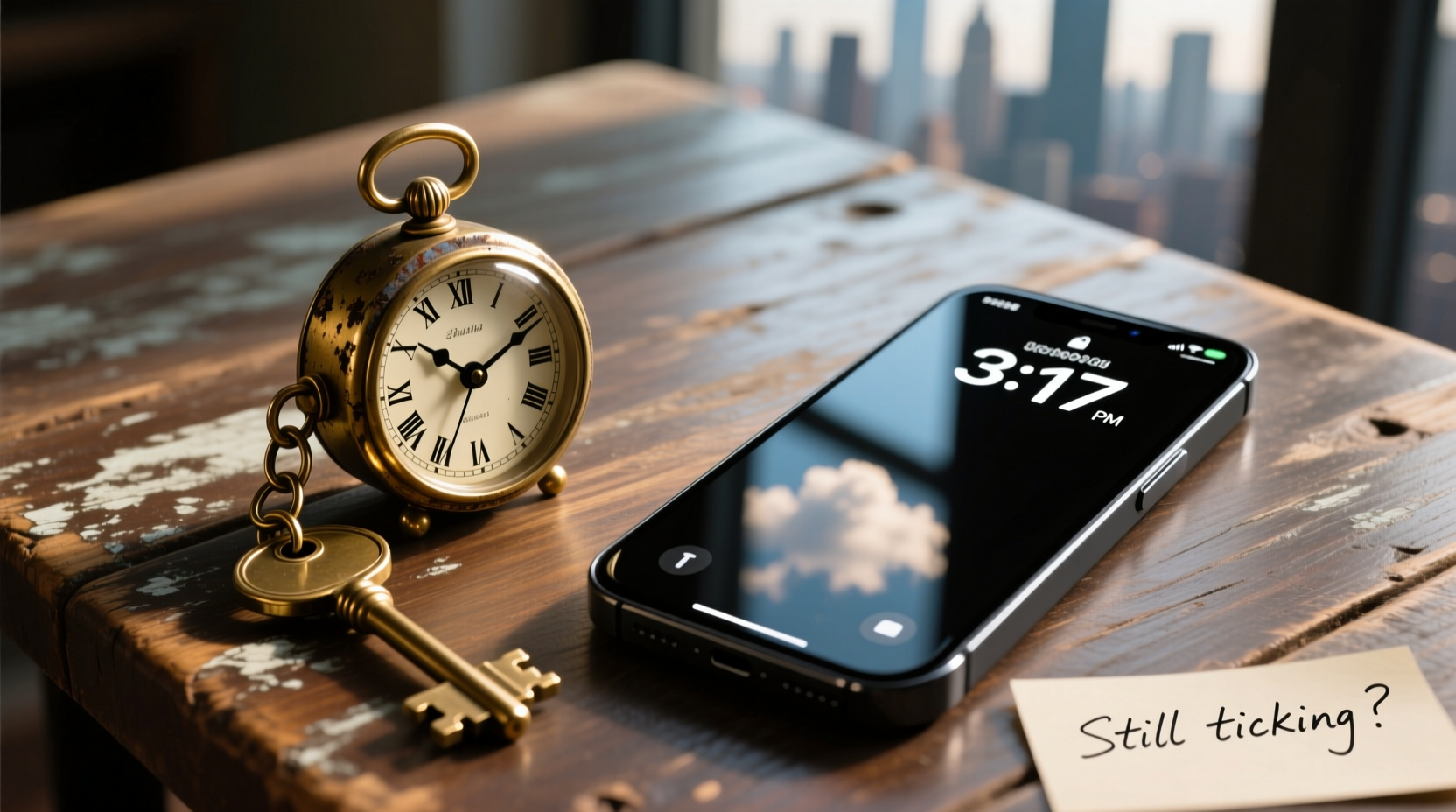
Smartphones have become the default timekeeping device for over 95% of adults in developed countries. With screens that light up at a tap, automatic time zone adjustments, alarms, calendars, and stopwatch functions, phones offer unparalleled convenience. There's no need to wind, charge separately, or replace batteries — your phone already does everything, including telling time.
This reliance has reshaped human behavior. Glancing at a wristwatch now feels like a deliberate act, while pulling out a phone is often unconscious. Notifications, social media, and messaging apps keep the screen active, making time-checking a byproduct of constant digital engagement. But this convenience comes at a cost: distraction, reduced attention span, and dependency on battery life.
The Resurgence of Analog: Who Still Uses Physical Clocks?
Despite smartphones, certain groups continue to use physical clocks — not out of necessity, but by choice. These include:
- Minimalists and digital detoxers who limit screen exposure to improve focus and mental clarity.
- Outdoor enthusiasts such as hikers, climbers, and campers who rely on durable, battery-independent timepieces.
- Professionals in high-stakes environments like pilots, surgeons, and military personnel, where split-second timing matters and phone use is restricted.
- Watch collectors and fashion-conscious individuals for whom timepieces are expressions of personal style.
- Older adults who may prefer tactile interfaces over touchscreens.
A 2023 survey by the Consumer Technology Association found that 38% of Americans still wear a wristwatch daily, and 12% own at least one decorative or functional keychain clock. While these numbers are down from two decades ago, they signal sustained relevance in specific contexts.
Keychain Clocks: A Forgotten Hybrid Timepiece
Keychain clocks occupy a curious middle ground between novelty and utility. Small, mechanical or quartz-powered, and attached to a set of keys, they were once common in the 1970s and 1980s. Today, they’re rare but not extinct. Some vintage models have gained collector status, while modern versions are marketed as retro-chic accessories or emergency tools.
Their appeal lies in simplicity. Unlike a phone, a keychain clock doesn’t require unlocking, won’t run out of battery mid-day, and can’t distract with notifications. It’s always visible when you reach for your keys — a subtle prompt of time awareness without digital intrusion.
Still, their limitations are clear: small dials are hard to read, accuracy varies, and they’re prone to damage from drops or moisture. For most, they’re more sentimental than practical.
“Time should serve us, not distract us. A keychain clock or a proper watch forces you to be present — you look, absorb, and move on.” — Dr. Alan Pierce, Cognitive Psychologist specializing in attention and technology
Comparative Analysis: Keychain Clock vs Cell Phone
| Feature | Keychain Clock | Cell Phone |
|---|---|---|
| Accuracy | Moderate (quartz models reliable) | High (syncs with atomic time servers) |
| Battery Dependency | Low (years between changes) | High (daily charging needed) |
| Distraction Level | Negligible | Very High (notifications, apps) |
| Durability | Variable (prone to damage if dropped) | Moderate (glass screens fragile) |
| Accessibility | Immediate (if on keys) | Delayed (unlock required) |
| Additional Functions | None | Alarms, timers, world clock, calendar |
| Lifestyle Fit | Niche: minimalists, collectors, analog lovers | Universal: default for most users |
Real-World Example: The Case of Sarah, the Digital Minimalist
Sarah Thompson, a 34-year-old graphic designer from Portland, removed all non-essential apps from her phone in early 2023. She now uses a basic flip phone for calls and texts and wears a vintage Seiko wristwatch. “I used to check my phone 80 times a day,” she says. “Now I check the time maybe five times. I’m more focused, less anxious.”
She also owns a brass keychain clock from the 1980s, inherited from her grandfather. “It doesn’t work anymore, but I keep it as a reminder — time shouldn’t control me.” For Sarah, timekeeping is part of a broader philosophy: reclaiming attention in a hyper-connected world.
When a Standalone Clock Makes Sense: A Practical Checklist
Consider using a physical clock — whether a wristwatch, wall clock, or keychain model — if:
- You frequently experience phone fatigue or digital overload.
- Your job or hobby requires quick, distraction-free time checks.
- You value aesthetics and craftsmanship in everyday objects.
- You live in areas with poor signal or limited electricity.
- You want to teach children how to read analog time.
- You’re building a backup system in case of tech failure.
Step-by-Step Guide to Reducing Phone Dependency for Time
- Assess your current habits: Track how many times you unlock your phone just to check the time.
- Choose a reliable alternative: Buy a durable watch or place a clock in a visible spot at home or work.
- Disable time widgets on your phone lock screen: Make it slightly harder to see the time instantly.
- Set intentional time-checking routines: Check the hour only during natural breaks (e.g., after meetings).
- Evaluate weekly: Note changes in focus, stress, and productivity.
- Adjust as needed: Reintroduce phone use if impractical, but maintain boundaries.
Frequently Asked Questions
Are keychain clocks accurate enough for daily use?
Modern quartz keychain clocks can be quite accurate, losing or gaining only a few seconds per month. However, their small size makes reading precise minutes difficult. They’re best suited for approximate time checks rather than scheduling.
Why would someone choose a keychain clock over a smartwatch?
For many, it’s about simplicity and disconnection. A keychain clock offers zero notifications, no software updates, and no tracking. It’s a statement against constant connectivity — a tool that serves one purpose well.
Is the analog clock trend coming back?
Not mainstream, but there’s a growing subculture embracing analog tools. From film cameras to typewriters, the “slow tech” movement values function over features. Analog clocks fit this ethos perfectly.
Conclusion: Time Is Personal — Choose What Serves You
In 2024, the debate between keychain clocks and cell phones isn’t really about which is better — it’s about what kind of relationship you want with time. Smartphones offer precision and integration, but at the cost of constant interruption. Physical clocks, whether on your wrist or your keys, offer clarity, calm, and continuity.
No single solution fits all. But for those seeking to slow down, focus better, or simply enjoy the quiet tick of a mechanical hand, standalone clocks are far from obsolete. They’re not relics — they’re resistance.




 浙公网安备
33010002000092号
浙公网安备
33010002000092号 浙B2-20120091-4
Comments
No comments yet. Why don't you start the discussion?