
When it comes to personal accessories that serve both functional and sentimental purposes, few items sit at the intersection quite like keychains and charm bracelets. One is traditionally tied to utility—keeping your keys secure and accessible—while the other leans toward self-expression and emotional value. But in practice, many people use both for overlapping reasons: memory-keeping, identity signaling, or even as emergency identifiers. So, which one actually offers greater usefulness? And more importantly, which is less likely to be misplaced?
The answer isn’t as simple as “one is better.” It depends on lifestyle, usage patterns, design choices, and how each item integrates into daily routines. Let’s break down the real-world performance of keychains versus charm bracelets across key criteria: utility, portability, risk of loss, durability, and emotional significance.
Functionality: What Each Item Is Designed to Do
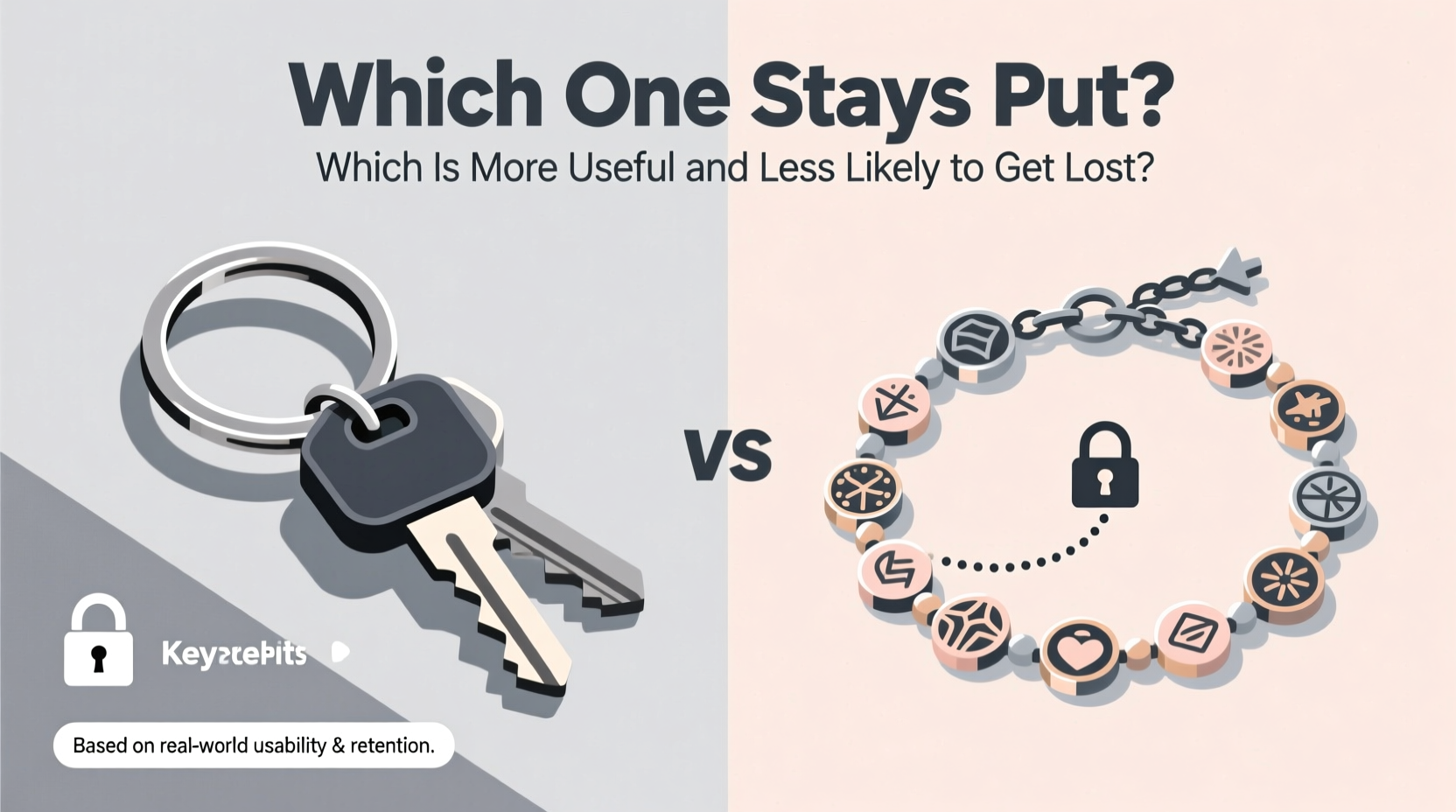
At their core, keychains are tools. They exist to keep keys together, prevent misplacement, and offer quick access when needed. Most come with sturdy metal rings, carabiners, or loops designed to withstand daily wear. Many modern versions include added features like bottle openers, flashlights, USB drives, or QR code tags linking to emergency contacts.
Charm bracelets, by contrast, are primarily decorative. Worn around the wrist, they often carry symbolic meaning—each charm representing a milestone, memory, or personal interest. While some charms can have minor utility (a tiny compass, a pill case), their primary role is aesthetic or emotional.
This fundamental difference shapes everything from where they’re kept to how often they’re used. A keychain is almost always attached to something essential: house keys, car fobs, office access cards. Because of this, it moves with you through your day. A charm bracelet, however, may be worn only occasionally—on special days, during social events, or when matching an outfit.
Durability and Wear Resistance
Keychains are built for ruggedness. Whether made of steel, aluminum, leather, or silicone, they’re expected to endure drops, friction, and exposure to weather. Even decorative keychains usually maintain structural integrity because losing keys has immediate consequences.
Charm bracelets, especially those made of delicate metals like sterling silver or gold-filled wire, are more prone to damage. The constant motion of the wrist causes charms to knock against surfaces, leading to scratches, dents, or broken jump rings. Over time, clasps can weaken, increasing the chance of the entire bracelet slipping off unnoticed.
That said, not all charm bracelets are fragile. Some modern designs use stronger alloys or magnetic closures, improving longevity. Still, statistically, charm bracelets suffer higher rates of component loss. A 2022 consumer report by Jewelry Care Review found that over 68% of charm bracelet owners reported losing at least one charm within two years of ownership.
“Charm bracelets require active maintenance. Without regular inspections, even high-quality pieces can fail unexpectedly.” — Lila Monroe, Jewelry Preservation Specialist
Risk of Loss: Where and How Items Go Missing
Likelihood of loss hinges on attachment and routine. Keychains win here—not because they’re inherently harder to lose, but because they’re tethered to essential objects. You don’t leave your house without your keys, so you rarely leave your keychain behind. It follows a predictable path: pocket, bag, hook by the door.
Charm bracelets, worn on the body, seem safer—but data suggests otherwise. According to a 2023 survey by the National Jewelry Registry, wristwear is among the most commonly lost accessories, particularly during physical activity, travel, or water-based recreation. Sweat, lotions, and swelling from heat can loosen fit, allowing bracelets to slip off silently.
Moreover, charm bracelets are often removed temporarily—during showers, workouts, or sleep—and then forgotten on countertops, gym bags, or nightstands. This intermittent use increases exposure to misplacement.
| Factor | Keychain | Charm Bracelet |
|---|---|---|
| Attachment | Tethered to keys (high necessity) | Worn on body (optional) |
| Average Daily Use | Near 100% | Variable (often <50%) |
| Common Loss Scenarios | Left in lock, dropped in dark area | Slipped off during activity, left behind after removal |
| Recovery Likelihood | Moderate to high (linked to essential item) | Low (easily overlooked) |
| Durability Under Stress | High (built for impact) | Low to moderate (prone to snagging) |
Practical Hybrid Solutions
Some users bridge the gap between function and sentiment by combining both concepts. Miniature photo locket keychains, engraved tags, or attaching small charms directly to keyrings allows emotional keepsakes to benefit from the keychain’s reliability.
One real-world example: Sarah, a nurse in Portland, lost her charm bracelet containing her late mother’s birthstone during a hospital shift change. After replacing it twice, she transferred the stone to a custom keychain attached to her ID badge lanyard. “Now I see it every time I clock in,” she says. “It’s safer, and I feel closer to it because I interact with it constantly.”
This hybrid approach leverages the best of both: the emotional resonance of a charm with the accountability of a tool. It’s especially effective for people who work in fast-paced environments, travel frequently, or simply want meaningful items to stay within reach.
Step-by-Step: Convert Sentimental Charms Into Secure Keepsakes
- Assess the charm: Ensure it’s detachable and in good condition.
- Select a base: Choose a durable keyring, split ring, or compact key organizer.
- Add security: Use a miniature locking clasp or epoxy glue for non-removable attachment.
- Pair with essentials: Attach to keys, wallet, or bag strap for consistent carrying.
- Label if needed: Engrave initials or add a QR tag for identification if lost.
Which Is More Useful? A Practical Verdict
Usefulness must be measured by both purpose and consistency. In raw utility, keychains are unmatched—they solve a daily problem and reduce friction in life. Losing your keys delays your entire schedule. A keychain prevents that cascade.
Charm bracelets, while emotionally valuable, don’t provide direct functional returns. Their usefulness is indirect: boosting confidence, preserving memories, or serving as conversation starters. However, these benefits diminish if the bracelet is frequently lost, damaged, or left unused.
If usefulness includes emotional well-being, then charm bracelets matter deeply—but only if they remain present. And here, keychains again have an edge: they’re more likely to stay with you, making them better vessels for meaningful items.
FAQ
Can a charm bracelet be as practical as a keychain?
Only in very specific cases—such as medical alert bracelets with engraved info. Otherwise, charm bracelets lack the consistent utility of a keychain. However, they can be made more practical by integrating functional charms like tiny flashlights or USB drives, though these are rare and often bulky.
What’s the safest way to carry a sentimental charm?
Attach it to a keychain or everyday carry item (wallet, backpack zipper). This ensures it stays with something you’re unlikely to leave behind. Alternatively, consider embedding the charm in a protective locket-style key fob.
Are smart keychains reducing the need for traditional ones?
Smart key finders (like Tile or AirTag) are enhancing traditional keychains, not replacing them. These devices rely on being attached to existing keyrings, proving that the core concept remains indispensable—even in the digital age.
Final Thoughts: Prioritize Presence Over Decoration
In the end, the most useful accessory is the one you actually have with you. A charm bracelet tucked in a drawer offers no benefit. A lost keychain creates immediate inconvenience. But a well-designed keychain—functional, personalized, and consistently carried—delivers both practicality and emotional value without compromise.
If your goal is to keep meaningful items close and minimize loss, the keychain is the superior choice. It aligns with human behavior: we protect what we need. By anchoring sentiment to necessity, you ensure that what matters most stays within reach.




 浙公网安备
33010002000092号
浙公网安备
33010002000092号 浙B2-20120091-4
Comments
No comments yet. Why don't you start the discussion?