
You reach for your coffee, stretch after sitting too long, or rotate your neck—and suddenly, a sharp pop echoes from your joint. For many, this is a familiar experience. Joint cracking, popping, or snapping is common and usually harmless. But when does it cross the line from normal to concerning? Understanding the science behind these sounds and recognizing red flags can help you maintain joint health and avoid complications.
The Science Behind Joint Cracking
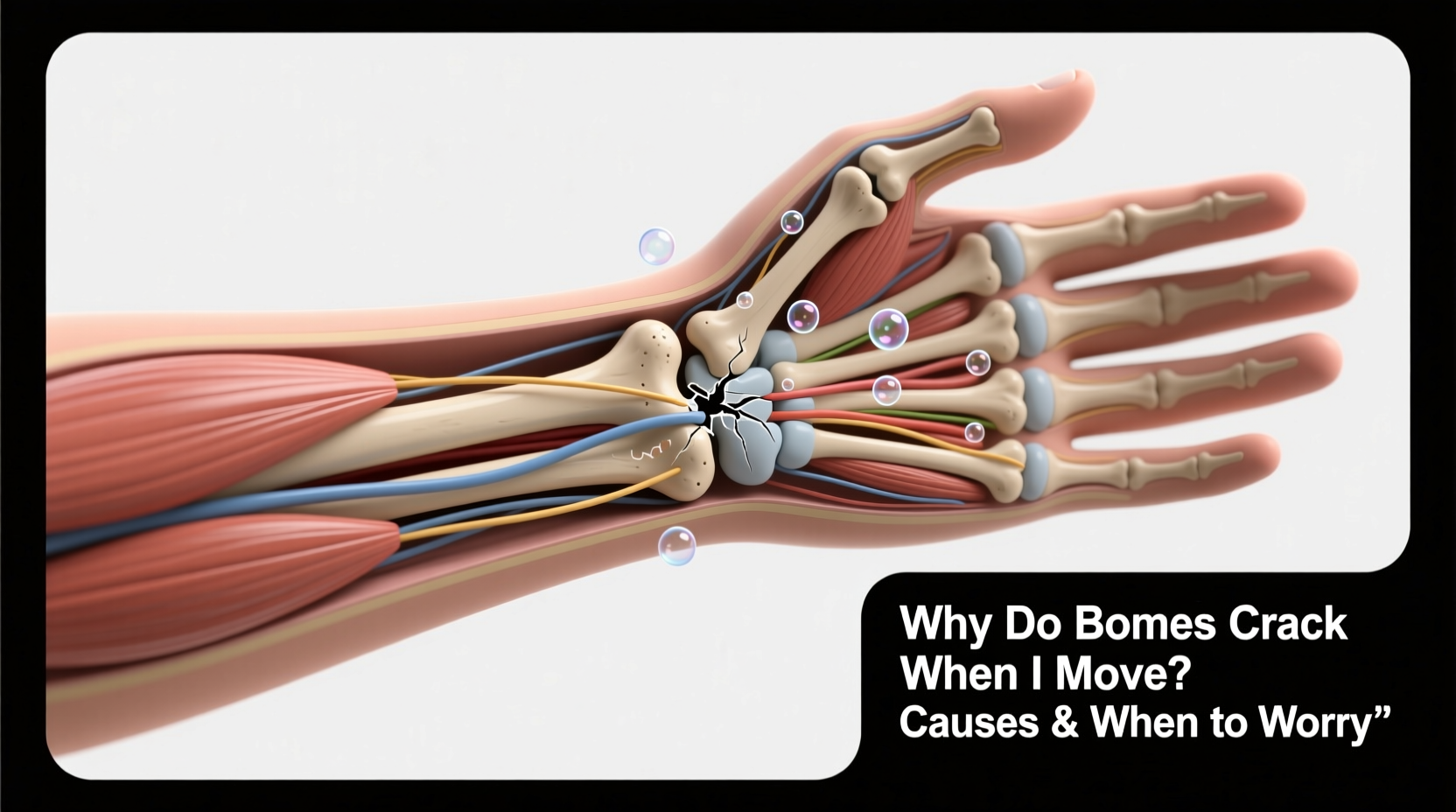
The technical term for joint noise is crepitus. It refers to any grating, cracking, or popping sensation that occurs during movement. The most widely accepted explanation for the classic “pop” sound is cavitation—the formation and collapse of gas bubbles in the synovial fluid within joints.
Synovial fluid lubricates your joints and contains dissolved gases like nitrogen and carbon dioxide. When you stretch or adjust a joint—like cracking your knuckles—the pressure inside the joint capsule drops rapidly. This causes dissolved gases to form tiny bubbles that then burst, producing the audible snap. It takes about 15–30 minutes for the gas to re-dissolve, which is why you can’t immediately crack the same joint twice.
“Crepitus without pain is almost always benign. The real concern arises when noise is accompanied by swelling, instability, or discomfort.” — Dr. Alan Kim, Rheumatologist at Boston Medical Center
Common Causes of Joint Popping
Most joint noises are mechanical and not a sign of damage. Here are the typical reasons your bones might crack when you move:
- Tendon or ligament movement: Tendons and ligaments can snap over bony structures as they shift during motion. This is especially common in shoulders, knees, and ankles.
- Cartilage wear: As we age, cartilage naturally degrades. Rougher surfaces in the joint may create grinding or crunching sounds, particularly in the knees.
- Joint hypermobility: People with looser ligaments (often women or those with conditions like Ehlers-Danlos) may experience more frequent popping due to increased joint mobility.
- Gas release: As explained by cavitation, the rapid formation and collapse of gas bubbles cause the familiar knuckle-cracking sound.
- Arthritis-related changes: Osteoarthritis can lead to irregular joint surfaces, causing persistent crepitus, often with stiffness and pain.
When to Worry: Red Flags You Shouldn’t Ignore
Occasional joint noise is normal. However, certain symptoms indicate underlying issues that warrant medical evaluation. Be alert for the following warning signs:
- Pain during or after popping: Discomfort accompanying the sound suggests inflammation, injury, or degeneration.
- Swelling or warmth: Inflammation around the joint may point to arthritis, bursitis, or infection.
- Loss of function: Difficulty moving the joint fully or feeling “locked” can indicate meniscus tears or loose cartilage fragments.
- Repetition without relief: Constant clicking that doesn’t resolve with rest may reflect tendinopathy or early joint disease.
- History of injury: Previous sprains, dislocations, or fractures increase the risk of chronic instability or post-traumatic arthritis.
Case Example: Knee Popping After a Sports Injury
Mark, a 32-year-old recreational soccer player, noticed a loud pop in his knee during a game. At first, he could walk it off. But over the next few days, swelling developed, and he felt instability when turning. His primary care doctor referred him to an orthopedic specialist, who diagnosed a torn meniscus via MRI. Arthroscopic surgery repaired the damage, and physical therapy restored full function. Mark’s case illustrates how a single painful pop—especially after trauma—can signal serious injury requiring prompt care.
Do’s and Don’ts of Joint Health
| Do’s | Don’ts |
|---|---|
| Maintain a healthy weight to reduce joint stress | Ignore persistent joint pain or swelling |
| Stay active with low-impact exercises like swimming or cycling | Engage in high-impact activities without proper warm-up |
| Strengthen muscles around joints (e.g., quadriceps for knees) | Overextend or force joints to crack repeatedly |
| Use proper posture and ergonomics daily | Assume all joint noises are harmless without evaluating symptoms |
| Seek evaluation if pain, swelling, or instability develops | Delay treatment for recurring mechanical catching or locking |
Step-by-Step Guide to Assessing Joint Noises
If you're unsure whether your joint popping is normal or problematic, follow this practical assessment process:
- Observe the context: Does the sound happen during specific movements (e.g., squatting, twisting)? Note when and where it occurs.
- Evaluate for pain: Is there discomfort before, during, or after the noise? Pain transforms a benign symptom into a potential issue.
- Check for swelling or warmth: Feel the joint area. Inflammation suggests an active problem.
- Test range of motion: Can you move the joint freely? Limitations may indicate structural problems.
- Monitor frequency and progression: Is the popping getting worse, more painful, or limiting your activity?
- Consult a professional: A physical therapist or orthopedic specialist can perform tests (like McMurray’s test for the knee) or order imaging if needed.
Frequently Asked Questions
Does cracking my knuckles cause arthritis?
No, multiple studies—including a well-known one by Dr. Donald Unger, who cracked the knuckles on one hand for over 60 years—have shown no link between knuckle cracking and arthritis. The myth persists, but science confirms it’s safe, provided it’s not painful.
Why does my knee crack when I squat?
Knee crepitus during squatting is common, especially as people age. It’s often due to patellar tracking issues—where the kneecap shifts slightly over the femur—or mild cartilage wear. If pain-free, it’s typically not a concern. But if you feel pain under the kneecap, consider seeing a physiotherapist to assess alignment and muscle balance.
Can joint popping be prevented?
You can't eliminate all joint noise—it's part of natural biomechanics—but you can reduce problematic popping. Strengthening supporting muscles, maintaining flexibility, and avoiding repetitive strain help keep joints stable and smooth. Proper technique during exercise is crucial.
Expert Advice: Listening to Your Body
While occasional joint sounds are normal, experts emphasize the importance of body awareness. Chronic or worsening crepitus—especially in weight-bearing joints like hips and knees—shouldn’t be dismissed.
“Your joints communicate through sensation. Pain, swelling, or mechanical catching aren’t random—they’re signals. Address them early to prevent long-term damage.” — Dr. Lena Patel, Physical Medicine and Rehabilitation Specialist
Conclusion: Know the Difference Between Normal and Notable
Joint cracking is a near-universal experience. Whether it’s your neck, knees, or fingers, most of the time, it’s simply the result of normal physiological processes. But when popping comes with pain, swelling, or reduced function, it’s time to take action. Early intervention can prevent minor issues from becoming chronic conditions.
Pay attention to your body’s cues. Stay active with joint-friendly exercises, maintain strength and flexibility, and don’t hesitate to seek professional guidance when something feels off. Your joints support your movement every day—listening to them is one of the best ways to ensure they continue doing so for years to come.




 浙公网安备
33010002000092号
浙公网安备
33010002000092号 浙B2-20120091-4
Comments
No comments yet. Why don't you start the discussion?