
In an era where personal security, minimalist design, and functional fashion converge, the debate between a keychain wallet and a wallet chain has gained renewed relevance. Both options promise convenience and theft prevention, but they serve different lifestyles and priorities. As we move into 2025, urban mobility, digital payment adoption, and evolving fashion trends are reshaping what “practical” really means. Understanding the strengths and limitations of each can help you make a smarter, more intentional choice.
Defining the Options
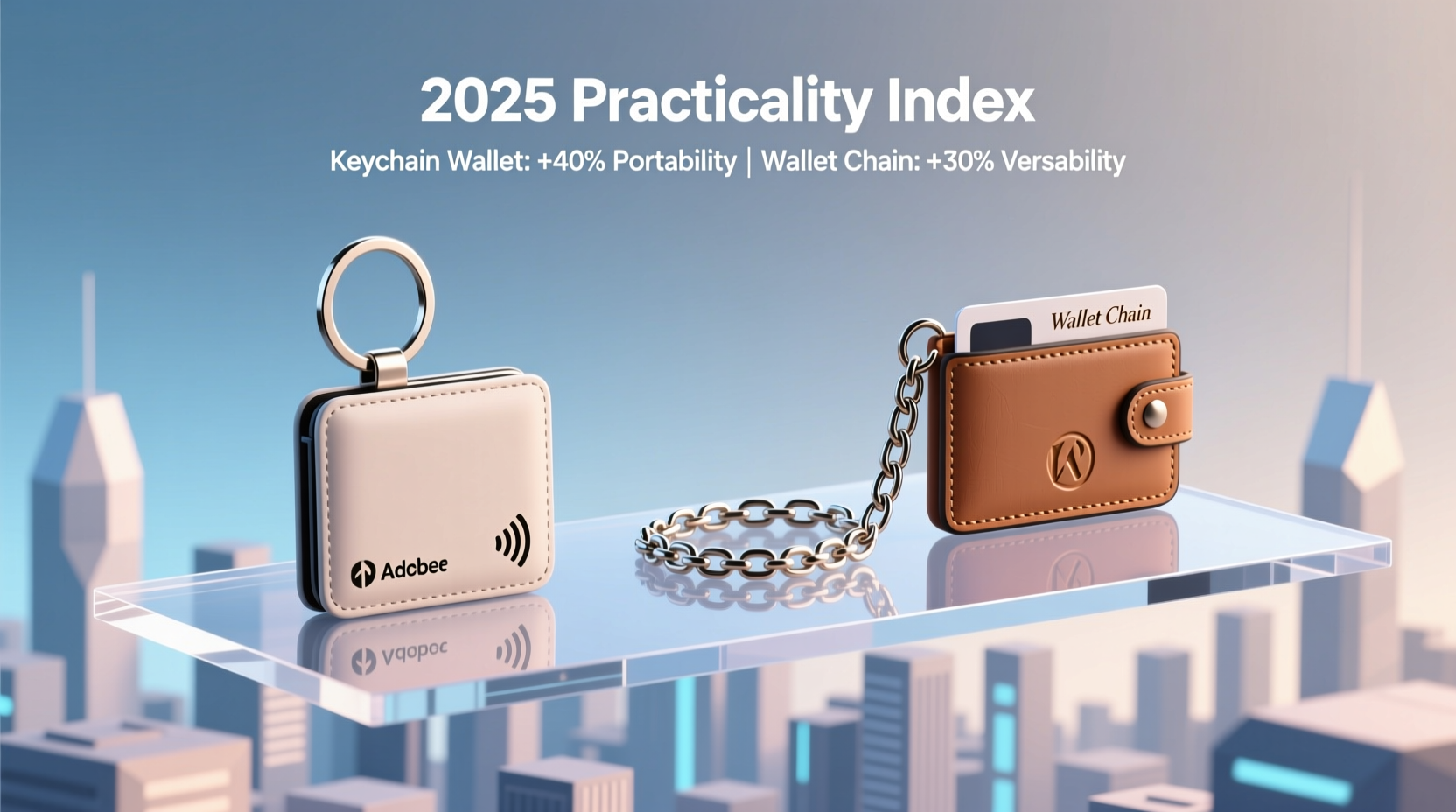
A keychain wallet is a compact, often minimalist wallet designed to attach directly to your keyring. It typically holds 3–6 cards and some folded cash, eliminating the need for a traditional bifold or trifold wallet. Its primary appeal lies in ultra-portability and seamless integration with items you already carry—keys.
A wallet chain, on the other hand, is a retractable or fixed metal chain that connects your full-sized wallet to your belt loop, pocket, or belt. Originally popularized in motorcycle and punk subcultures, it’s now embraced by urban professionals and travelers concerned about pickpocketing. The wallet itself remains conventional in size and capacity, but the chain adds a layer of physical security.
The core difference isn’t just form—it’s philosophy. One reduces your footprint; the other secures your existing one.
Practicality in 2025: Key Factors to Consider
Practicality today goes beyond durability. It includes ease of access, compatibility with modern habits (like contactless payments), theft resistance, comfort, and adaptability across environments—from commuting to travel to casual outings.
Security and Theft Prevention
Pickpocketing remains a concern in crowded cities and tourist areas. According to INTERPOL, over 2 million reported thefts involved wallets in public spaces in 2024 alone. Wallet chains offer tangible protection by physically tethering your wallet to your body. Even if someone snatches it from your back pocket, the chain creates resistance and alerts you immediately.
Keychain wallets reduce risk through obscurity. Because they’re small and attached to keys—a mundane item—thieves are less likely to target them. However, if the entire keyring is lost or stolen, both your keys and wallet disappear together.
“Tethered systems like wallet chains have proven effective in high-density urban environments. But minimalism—carrying less—is still the best anti-theft strategy.” — Marcus Lin, Urban Security Consultant
Capacity and Daily Use
Your lifestyle dictates how much you need to carry. Most keychain wallets support only essential cards: ID, driver’s license, one credit card, and perhaps transit pass. Cash space is limited to one or two folded bills. This suits digital-first users who rely on Apple Pay, Google Wallet, or contactless debit.
Wallet chains accommodate standard wallets, allowing you to carry multiple cards, receipts, loyalty cards, and bulkier cash. Ideal for those who work in cash-heavy industries, travel frequently, or prefer redundancy.
Mobility and Comfort
Keychain wallets add negligible weight and stay out of the way when clipped to a front pocket or belt. They don’t swing or drag, and they eliminate the bulk of a traditional wallet. For runners, cyclists, or commuters using public transit, this is a major advantage.
Wallet chains, while secure, can snag on objects, create noise, or pull awkwardly if not routed properly. Poorly positioned chains may cause discomfort during prolonged sitting or movement. High-quality models use spring-loaded retractors and low-profile clasps to minimize these issues.
Comparison Table: Keychain Wallet vs Wallet Chain
| Feature | Keychain Wallet | Wallet Chain |
|---|---|---|
| Portability | Excellent – ultra-light, no bulk | Fair – adds weight and potential snagging |
| Security | Moderate – small profile deters theft | High – physical tether prevents snatching |
| Capacity | Low – 3–6 cards, minimal cash | High – supports full wallet contents |
| Digital Lifestyle Fit | Excellent – aligns with mobile payments | Good – useful if carrying backups |
| Fashion Flexibility | High – discreet, blends with keys | Moderate – visible chain may clash with formal wear |
| Risk if Lost | High – lose keys and wallet simultaneously | Low – wallet secured, keys remain unless stolen |
Real-World Scenario: Two Commuters, Two Choices
Alex, a software developer in Berlin, uses a titanium keychain wallet clipped to his keyring. He carries only a debit card and transit pass. His phone handles all other payments. He values speed and simplicity—never emptying his pockets at airport security, never worrying about seat pressure on a bulky wallet. When he misplaced his keys last winter, he lost access to both home and payment methods for 48 hours.
Jamal, a tour guide in Bangkok, wears a leather bifold connected to his belt via a braided steel wallet chain. He carries local currency, multiple guest IDs, and backup cards. In crowded markets, the chain has stopped two attempted snatches. While he once caught the chain on a taxi door handle, he considers it a fair trade for peace of mind.
Their stories illustrate a fundamental truth: practicality is contextual. Neither solution is universally superior—each excels within specific parameters.
Actionable Checklist: Choosing What Works for You
- ✅ Assess how many cards and how much cash you use daily
- ✅ Evaluate your environment—do you commute in dense cities or travel often?
- ✅ Consider your reliance on digital payments versus physical cards/cash
- ✅ Think about loss scenarios—can you afford to lose keys and wallet together?
- ✅ Test comfort—try carrying a small pouch on a clip or chain for a week
- ✅ Match your choice to your wardrobe and daily activities
Expert Insight: The Future of Carry Solutions
As wearable tech and biometric authentication evolve, the very concept of a wallet is changing. Industry analysts predict that by 2026, over 70% of in-person transactions in developed nations will be contactless, reducing the need for physical cards altogether.
“The future isn’t about chains or clips—it’s about integration. Your ‘wallet’ might soon be embedded in your watch, ring, or even under your skin. But until then, minimizing what you carry is the smartest move.” — Dr. Lena Petrova, Wearable Technology Researcher, MIT Media Lab
This shift favors the philosophy behind the keychain wallet: carry less, move faster, stay agile. Even so, wallet chains will retain value in high-risk zones and among those who need physical redundancy.
FAQ: Common Questions Answered
Can I use a wallet chain with a keychain wallet?
Yes, but it’s rarely practical. Most keychain wallets are too small to justify a chain, and attaching one defeats the purpose of minimalism. If you're concerned about losing it, consider a key leash instead.
Are wallet chains legal everywhere?
Generally yes, but some private venues (concerts, clubs) may restrict chains for safety reasons. Always check venue policies, especially in North America and parts of Europe.
Do keychain wallets damage credit cards?
Poorly designed ones can. Thin metal wallets without RFID shielding may cause demagnetization or chip damage over time due to bending and electromagnetic interference. Opt for models with cushioned slots and protective linings.
Final Verdict: Which Is More Practical in 2025?
For the majority of users in 2025, the **keychain wallet** edges out the wallet chain in overall practicality. It aligns with the growing trend of digital minimalism, reduces physical burden, and integrates seamlessly into modern life. As mobile payments dominate and people prioritize light carry, the need for a tethered full wallet diminishes.
However, the **wallet chain** remains indispensable for specific use cases: travelers in high-theft regions, workers handling cash, or anyone who needs full wallet functionality without compromise. It’s a tool of necessity, not convenience.
Ultimately, the most practical choice is the one that matches your actual behavior—not an idealized version of it. If you regularly carry more than four cards and cash, a wallet chain offers justified security. If you’ve gone months without using half your wallet’s slots, it’s time to downsize.




 浙公网安备
33010002000092号
浙公网安备
33010002000092号 浙B2-20120091-4
Comments
No comments yet. Why don't you start the discussion?