
When relying on real-time weather information from sources like the KGVQ station—typically associated with NOAA’s National Weather Service (NWS) or aviation weather reporting—users may occasionally encounter issues where data fails to load, appears delayed, or shows as unavailable. This can affect pilots, meteorologists, outdoor planners, and emergency responders who depend on accurate atmospheric conditions. While frustrating, most disruptions have identifiable causes and practical fixes. Understanding the technical, environmental, and systemic factors behind KGVQ weather data failures enables faster diagnosis and resolution.
Understanding KGVQ and Its Data Sources
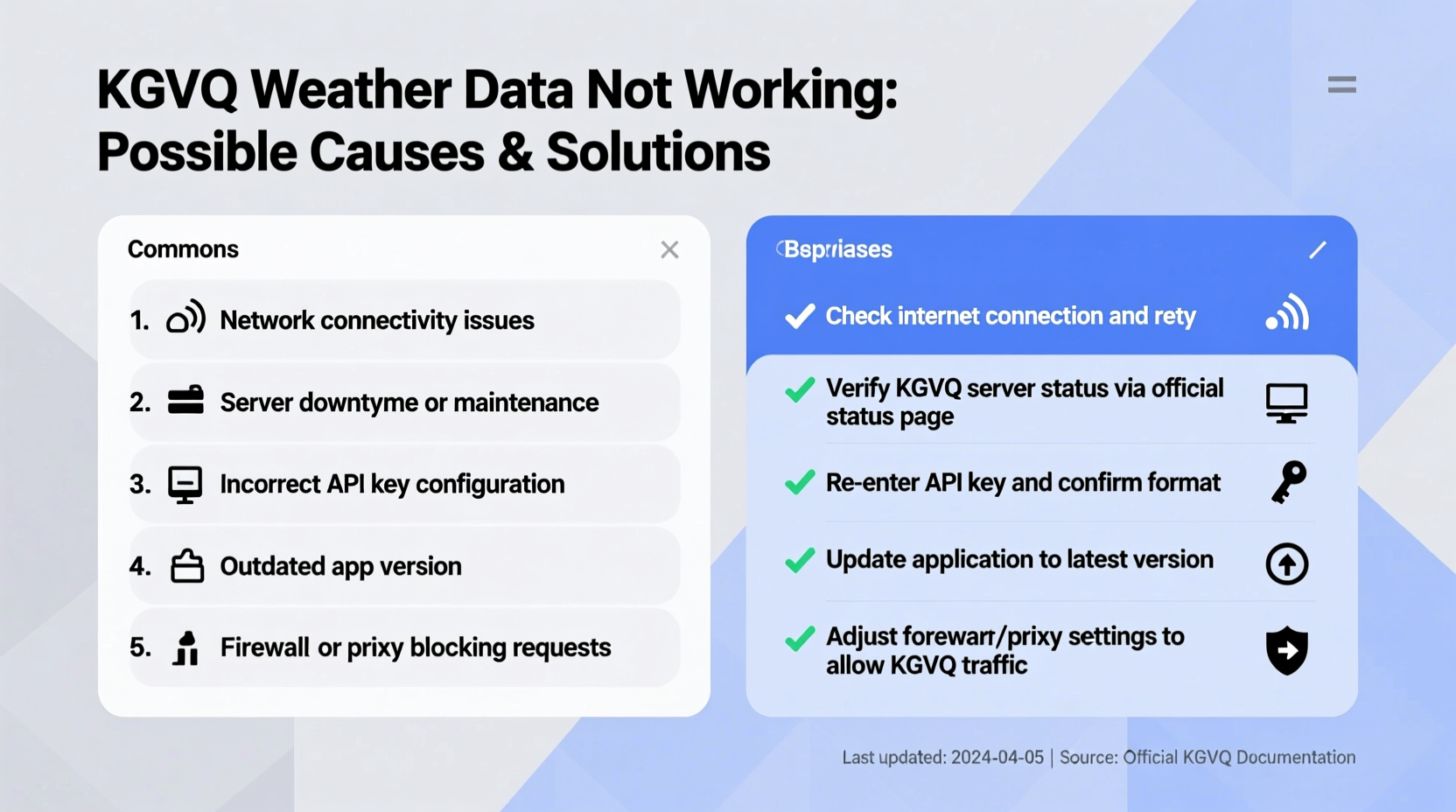
KGVQ refers to a specific Automated Surface Observing System (ASOS) station identifier used by the U.S. Federal Aviation Administration (FAA), National Weather Service (NWS), and other agencies to report continuous weather observations. These include temperature, humidity, wind speed and direction, barometric pressure, precipitation, visibility, and cloud cover. The data is transmitted via satellite, radio telemetry, or internet-connected networks to centralized databases such as MADIS (Meteorological Assimilation Data Ingest System) or directly into flight planning tools like ForeFlight or SkyVector.
Because KGVQ feeds into multiple downstream platforms, an outage may not always originate at the sensor level. Instead, it could stem from network routing problems, software parsing errors, or temporary maintenance protocols. Recognizing that KGVQ itself is just one node in a larger ecosystem helps narrow down where to look when data disappears.
“Reliable ASOS stations are the backbone of short-term forecasting and aviation safety. Even brief outages require prompt attention.” — Dr. Alan Reeves, Senior Meteorologist at NWS Operations Center
Common Causes of KGVQ Weather Data Failure
Data unavailability isn't always due to equipment failure. Several interdependent layers—from hardware to software—can interrupt the flow of information. Below are frequent culprits:
- Sensor Malfunction: Ice buildup, dust, mechanical wear, or electrical faults in instruments like anemometers or hygrometers can halt readings.
- Power Outage: Remote stations often rely on grid power with backup batteries. Extended blackouts without recharge capability disable transmission.
- Communication Link Disruption: Radio links, cellular modems, or satellite uplinks used to transmit data may fail due to interference, tower maintenance, or bandwidth congestion.
- Network Routing Issues: Firewalls, DNS misconfigurations, or ISP-level routing problems can block access even if the station is operational.
- Software Glitches: Parsing errors in client applications or outdated APIs might incorrectly display \"no data\" despite valid input streams.
- Maintenance Mode: Scheduled or unscheduled maintenance temporarily suspends data broadcasts for calibration or repairs.
- Data Aggregator Delays: Third-party services like aviation apps or weather portals may cache old data or experience internal delays unrelated to KGVQ itself.
Step-by-Step Troubleshooting Guide
To systematically diagnose and resolve KGVQ weather data issues, follow this structured approach:
- Confirm the Scope of the Problem
Check if only KGVQ is affected or if multiple stations show missing data. If widespread, the issue likely resides in your software or connection. - Access Official NWS Pages
Visit aviationweather.gov/metar and search for “KGVQ” under current METAR reports. If no report appears, the station may be offline. - Review Station Status Reports
Consult the NWS ASOS status dashboard or contact local forecast offices. Some stations post automated outage alerts online. - Test Network Connectivity
If using a private server or API, ping known endpoints (e.g., madis.ncep.noaa.gov) to ensure connectivity. Use tools like traceroute to detect packet loss. - Inspect Local Software Configuration
Ensure your application is set to pull from updated data feeds. Reset cache, update plugins, or reinstall software if corrupted. - Check for Time Synchronization Errors
Inaccurate timestamps on servers can cause data rejection. Sync all systems with an NTP time server. - Contact Support Channels
For enterprise users, reach out to FAA regional operations centers or NWS technical support with timestamps and error logs.
Do’s and Don’ts When Handling KGVQ Data Outages
| Do’s | Don’ts |
|---|---|
| Cross-verify with nearby stations (e.g., KGIF, KL39) | Assume the station is permanently broken |
| Use archived METAR data for trend analysis during downtime | Ignore firmware updates for receiving hardware |
| Monitor NOAA’s Twitter or RSS feeds for outage notices | Manually fabricate missing data without disclaimer |
| Log outage duration and frequency for reporting | Disregard environmental factors like storms or ice events |
Real-World Example: Winter Outage at KGVQ
In January 2023, users across several flight planning platforms reported missing KGVQ METAR data during a major cold snap in the Great Basin region. Initial suspicion pointed to software bugs in third-party apps. However, investigation revealed that freezing fog had coated the visibility sensor (forward scatter meter), triggering automatic shutdown to prevent damage. Additionally, the backup generator failed due to aged battery cells, cutting power to the entire ASOS unit.
The local NWS office issued a NOTAM (Notice to Airmen) within two hours, but many pilots relying solely on digital dashboards remained unaware. Once technicians arrived onsite after road clearance, they cleaned sensors, replaced batteries, and restored full functionality after 14 hours. This case underscores the importance of redundancy, proactive monitoring, and multi-source verification during critical operations.
Preventive Checklist for Reliable Access
Whether you're managing a fleet, operating a weather-dependent business, or flying recreationally, use this checklist to minimize disruption risks:
- ✅ Subscribe to NWS outage notifications via email or SMS
- ✅ Configure redundant data sources (e.g., adjacent ASOS stations)
- ✅ Maintain updated software and API integrations
- ✅ Perform quarterly tests of data retrieval and alert systems
- ✅ Document historical outage patterns near your area of operation
- ✅ Train staff to interpret raw METAR codes manually if needed
- ✅ Ensure GPS time synchronization across all connected devices
Frequently Asked Questions
How often is KGVQ data updated?
KGVQ typically transmits a new METAR observation hourly, with special reports (SPECI) issued when significant weather changes occur—such as sudden wind shifts, visibility drops below 3 miles, or thunderstorms. During active weather, updates can happen every 10–20 minutes.
Can I get historical KGVQ weather data if live feeds fail?
Yes. Historical METARs for KGVQ are archived by institutions like the Iowa State University Environmental Mesonet (mesonet.agron.iastate.edu) and NOAA’s National Centers for Environmental Information (NCEI). These records allow retrospective analysis even during live outages.
Is there a public status page for ASOS stations like KGVQ?
While there's no single public dashboard, the NWS Forecast Office responsible for the region (often Salt Lake City or Reno) publishes service advisories. Additionally, some aviation forums and enthusiast sites track real-time station availability using open data streams.
Conclusion: Stay Proactive, Not Reactive
Weather data from stations like KGVQ plays a vital role in decision-making across aviation, agriculture, and emergency management. When the feed stops, understanding the chain of transmission—from sensor to screen—is essential for rapid recovery. Most issues are temporary and resolvable through methodical checks and reliance on authoritative sources. By building redundancy, staying informed about station health, and preparing for inevitable outages, professionals can maintain operational continuity regardless of signal interruptions.




 浙公网安备
33010002000092号
浙公网安备
33010002000092号 浙B2-20120091-4
Comments
No comments yet. Why don't you start the discussion?