
When the weather turns unpredictable and dampness sets in, staying warm becomes less about layering and more about material intelligence. Two popular mid-layer options—knit sweaters and fleece pullovers—are staples in cold-weather wardrobes. But when soaked by rain, sweat, or snow, their performance diverges sharply. Understanding how each fabric behaves when wet isn’t just a matter of comfort—it can affect safety during outdoor activities. This article breaks down the thermal properties, moisture management, and real-world effectiveness of knit sweaters versus fleece pullovers when exposed to water.
Understanding Heat Retention and Moisture
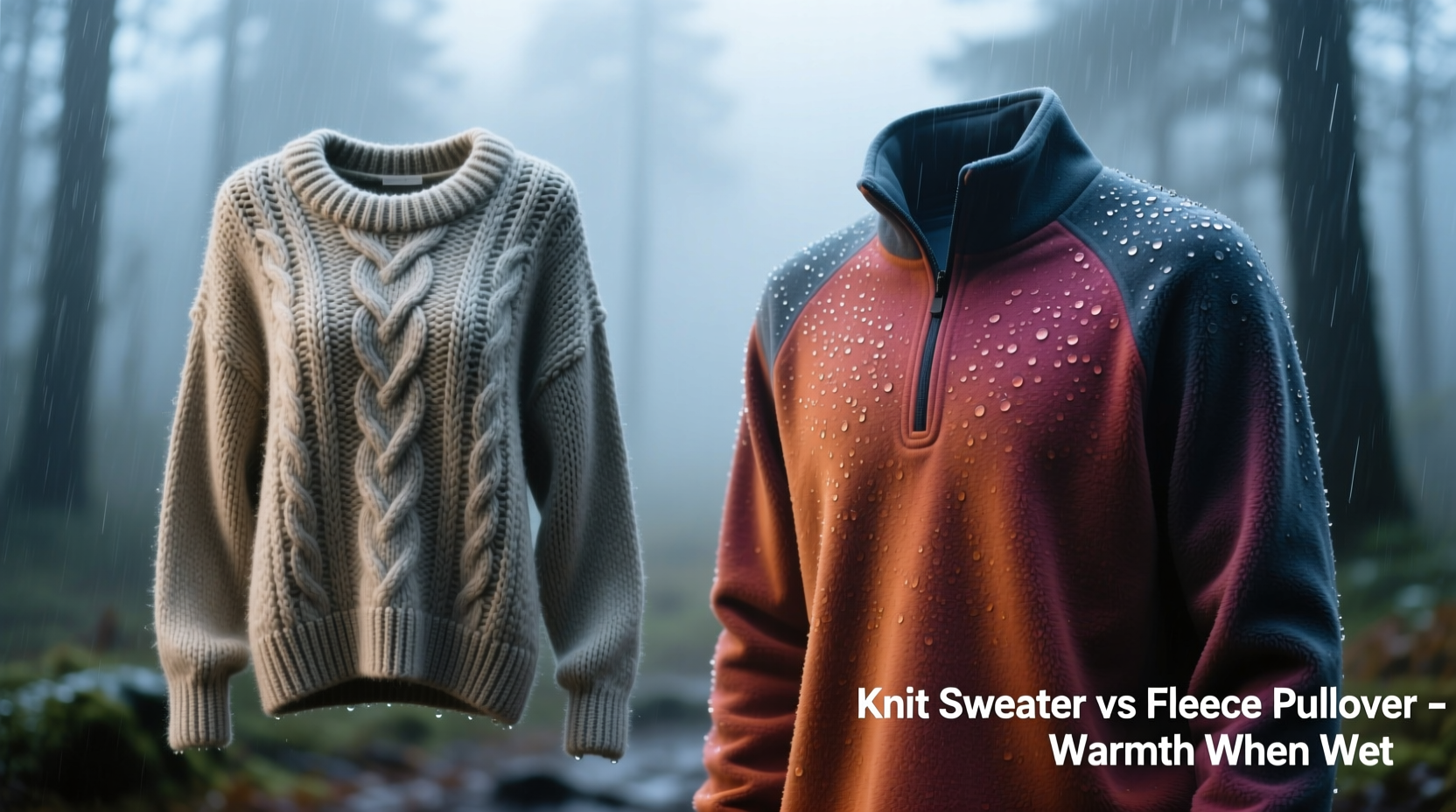
Warmth retention depends on a fabric’s ability to trap body heat within insulating air pockets. When moisture enters the equation, it disrupts this process. Water conducts heat away from the body 25 times faster than air, so any garment that becomes saturated with water loses its insulating capacity rapidly. The key difference between materials lies in how they interact with moisture: whether they absorb it, wick it away, or resist it altogether.
Natural fibers like wool (commonly used in knit sweaters) have a unique relationship with water. They can absorb significant amounts of moisture vapor without feeling wet, and even release heat during absorption—a process known as heat of sorption. In contrast, synthetic fleece is made from polyester, which resists liquid water but does not absorb moisture vapor well. Instead, it relies on rapid wicking and drying to maintain comfort.
How Knit Sweaters Perform When Wet
Knit sweaters are typically made from wool, cotton, or wool-blend yarns. Among these, wool—especially merino—is the standout performer in damp conditions. Wool fibers can absorb up to 30% of their weight in moisture before feeling wet, and they retain much of their insulating ability even when damp.
The crimped structure of wool traps air efficiently, maintaining loft and thermal resistance. Additionally, wool contains lanolin, a natural wax that provides mild water resistance. While a wool sweater will eventually soak through in heavy rain, it continues to provide warmth far longer than most other fabrics.
Cotton-based knits, however, perform poorly when wet. Cotton absorbs moisture readily and holds it, collapsing the air pockets that provide insulation. Once wet, cotton sweaters become cold, heavy, and slow to dry—earning the nickname “death sweater” among outdoor enthusiasts. For this reason, cotton knits should be avoided in high-moisture environments.
“Wool’s ability to insulate when wet is one of the reasons it’s been used by mountaineers and sailors for centuries.” — Dr. Lena Hartman, Textile Scientist, Alpine Institute of Material Research
Fleece Pullovers: Synthetic Insulation Under Pressure
Fleece is a 100% synthetic fabric, usually made from polyethylene terephthalate (PET), the same polymer used in plastic bottles. Its structure consists of fine filaments that form a dense network of air-trapping loops. This design makes fleece highly breathable and excellent at trapping heat relative to its weight.
Unlike wool, polyester does not absorb water. Instead, it repels liquid and moves moisture along the surface via capillary action—a feature known as wicking. This means that in light moisture or sweat, fleece performs exceptionally well. It dries quickly and maintains loft, preserving warmth.
However, when submerged or exposed to prolonged rain, fleece has a critical flaw: it absorbs water into the spaces between fibers. Although the fibers themselves stay dry, the trapped water fills the air gaps, eliminating insulation. A soaked fleece pullover loses up to 80–90% of its thermal efficiency and takes time to dry without direct heat or airflow.
Some modern fleece garments include Durable Water Repellent (DWR) coatings to shed light rain. While helpful in drizzle, these treatments wear off over time and offer no protection in sustained wet conditions.
Direct Comparison: Key Performance Factors
| Factor | Knit Sweater (Wool) | Fleece Pullover |
|---|---|---|
| Moisture Absorption Capacity | Up to 30% of weight | Less than 0.4% (fiber absorption) |
| Insulation When Damp | Retains 70–80% warmth | Retains 30–40% warmth |
| Drying Time (ambient conditions) | Moderate (4–6 hours) | Faster (3–5 hours) |
| Wind Resistance | Low (unless tightly knit) | Moderate (depends on density) |
| Breathability | High (especially merino) | Very High |
| Performance in Heavy Rain | Poor (needs outer shell) | Poor (needs outer shell) |
This table highlights a nuanced reality: while wool maintains warmth better when wet, fleece recovers faster once the moisture source is removed. For activities involving steady exertion—like hiking or trail running—fleece may feel more comfortable due to superior breathability. But in static or cold-wet scenarios—such as waiting out a storm or sitting around a campfire after rain—wool’s consistent warmth gives it the edge.
Real-World Scenario: A Hiker's Dilemma
Consider a hiker traversing the Pacific Northwest in late autumn. The trail begins clear, but by midday, a steady drizzle sets in. Temperatures hover around 45°F (7°C). She’s wearing a merino wool sweater under a breathable softshell. After two hours, her upper layer is damp from mist and sweat.
Despite the moisture, she feels warm. The wool absorbs vapor from her skin, releasing a small amount of heat, and still traps air effectively. She stops for a break, and even motionless in the damp air, she doesn’t shiver.
In contrast, another hiker wears a mid-weight fleece under the same softshell. Initially, he feels warm and dry. But during his break, he notices a chill creeping in. His fleece, though not fully soaked, has begun to hold moisture in its core structure. Without body heat generation from movement, the insulation fails faster than expected.
This scenario illustrates that warmth retention isn’t just about dry performance—it’s about how a fabric manages the transition from dry to damp. Wool’s gradual decline in efficiency offers more predictable protection, while fleece can fail suddenly once saturation begins.
Actionable Tips for Choosing the Right Layer
- Prioritize wool in cold, damp climates: If you’re in an environment where getting wet is likely—rainforest hikes, maritime regions, winter camping—choose a wool knit for superior wet-weather insulation.
- Use fleece for active warmth: During high-output activities like skiing, biking, or climbing, fleece excels due to breathability and quick-dry properties.
- Avoid cotton at all costs: Cotton knits lose all insulating value when wet and take too long to dry. Replace them with wool or synthetic alternatives.
- Look for wool blends: Some knit sweaters blend wool with nylon or acrylic for added durability while retaining moisture-handling benefits.
- Consider hybrid designs: Some modern fleeces incorporate wool-like fibers or wind-resistant panels to improve performance in mixed conditions.
Step-by-Step Guide: Optimizing Your Mid-Layer System
- Assess your activity type: Will you be moving constantly or stopping frequently? High-motion favors fleece; static exposure favors wool.
- Evaluate the weather forecast: If rain or snow is expected, lean toward wool or add a reliable shell regardless of mid-layer choice.
- Select your base layer: Use a synthetic or merino base to wick sweat and reduce moisture transfer to the mid-layer.
- Add the mid-layer: Choose wool for damp stability or fleece for breathability and quick drying.
- Top with an outer layer: A waterproof-breathable jacket (e.g., Gore-Tex) protects both wool and fleece from external moisture.
- Monitor your comfort: Adjust layers early. If you start sweating, remove a layer before moisture builds up.
- Care for your garments: Wash according to label instructions. Wool needs gentle detergent; fleece can degrade if dried at high heat.
Frequently Asked Questions
Can I wear a fleece pullover in the rain?
You can, but not effectively without protection. Fleece loses most of its insulating power when wet. Always pair it with a waterproof shell in rainy conditions. Even light rain can saturate fleece over time, leading to rapid heat loss.
Is merino wool worth the higher price compared to regular knit sweaters?
Yes, especially if you spend time outdoors. Merino wool resists odor, regulates temperature, and retains warmth when wet—qualities that cotton or acrylic knits lack. Its softness also eliminates itchiness associated with traditional wool.
What should I do if my mid-layer gets soaked?
If possible, remove the wet layer and replace it with a dry one. If that’s not feasible, seek shelter, minimize wind exposure, and generate body heat slowly (e.g., light movement). Avoid rapid cooling. Dry the garment near a heat source when safe, avoiding direct flame or high dryer heat, which can damage fibers.
Final Recommendations
The question isn’t which garment is universally better, but which suits your specific conditions. For sheer warmth retention when wet, **a wool knit sweater outperforms a fleece pullover**. Its ability to absorb moisture while maintaining insulation makes it more reliable in damp, cold environments. However, fleece remains a top choice for active use due to its breathability, lightweight feel, and fast drying time in controlled conditions.
Ultimately, the smartest approach is strategic layering. Pair a moisture-wicking base with a mid-layer suited to your activity, then protect it with a quality outer shell. Recognize that no mid-layer is waterproof—both wool and fleece need backup in wet weather.
“The best insulation is the one that matches your environment and activity. Misjudging that can turn a pleasant outing into a hypothermia risk.” — Ranger Marcus Daley, Mountain Safety Council
Take Action Today
Review your current cold-weather wardrobe. Are you relying on cotton knits or unprotected fleece in wet conditions? Replace them with merino wool or invest in a windproof fleece hybrid. Test your system in controlled damp environments before heading into remote areas. Your body’s ability to stay warm—and safe—depends on the choices you make before stepping outside.




 浙公网安备
33010002000092号
浙公网安备
33010002000092号 浙B2-20120091-4
Comments
No comments yet. Why don't you start the discussion?