
When the temperature climbs, choosing the right fabric can mean the difference between staying comfortable and feeling overheated. At first glance, a knitted pullover seems like the wrong choice for summer—after all, it’s associated with winter layers and cozy textures. Meanwhile, the linen top has long been hailed as the go-to summer staple, praised for its airy feel and natural cooling properties. But is that reputation always deserved? Could a lightweight knitted pullover, especially in modern blends, actually outperform a linen top in certain summer conditions?
The answer isn’t as straightforward as it might seem. While linen excels in breathability and moisture-wicking, not all knits are created equal. Advances in textile engineering have produced ultra-lightweight, open-weave knits that challenge traditional assumptions about what fabrics belong in the heat. To determine which garment truly keeps you cooler, we need to examine fiber composition, weave structure, airflow dynamics, and how each fabric interacts with your body’s natural cooling mechanisms.
Understanding Fabric Properties: Breathability and Moisture Management
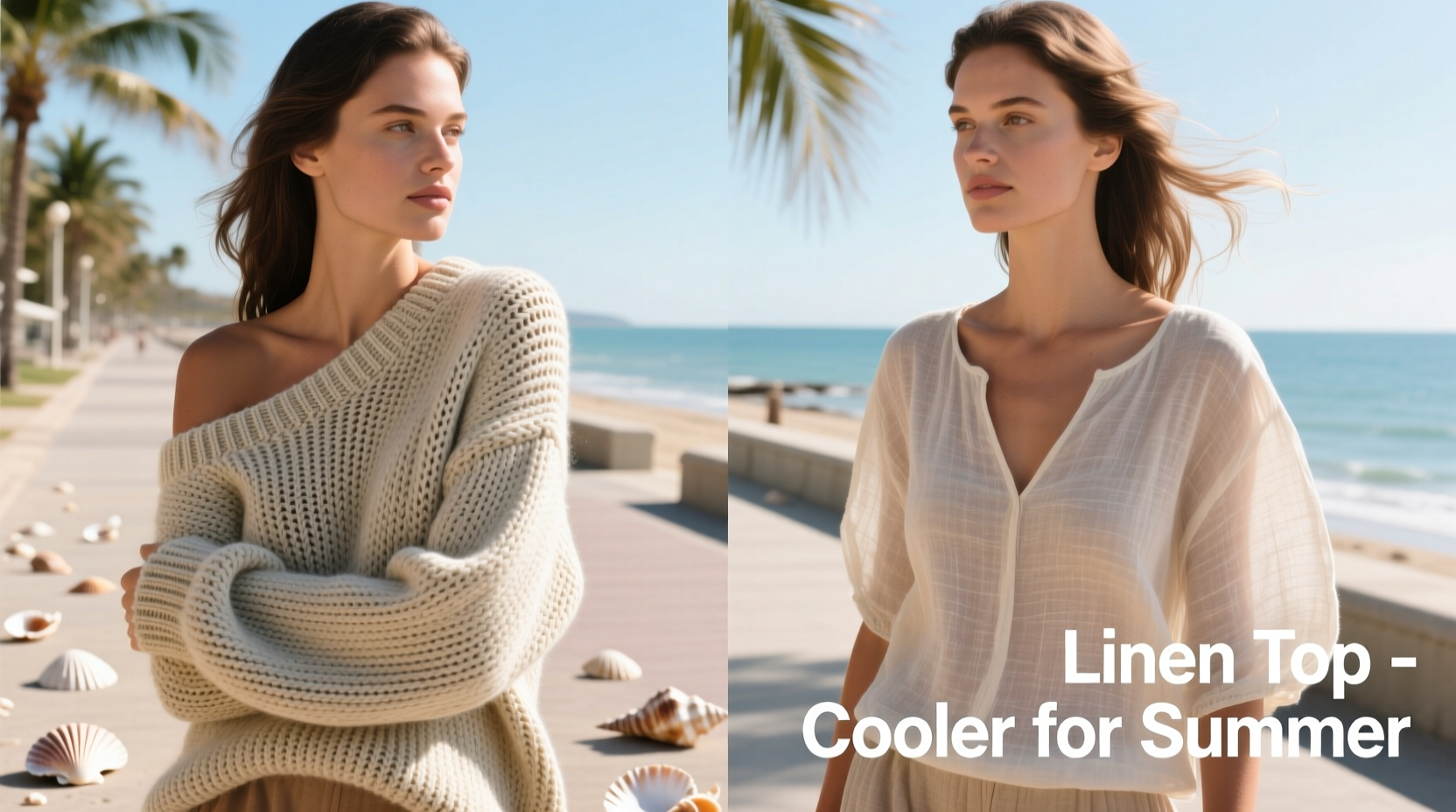
Coolness in clothing isn’t just about thickness—it’s about how well a fabric manages heat and sweat. Two key factors define thermal comfort: breathability (how easily air circulates through the fabric) and moisture wicking (the ability to pull sweat away from the skin).
Linen, derived from the flax plant, is naturally hollow-fibered, allowing for excellent airflow. It absorbs moisture quickly and dries faster than cotton, which helps regulate body temperature. When you sweat, linen pulls moisture to the surface where it evaporates, creating a slight cooling effect on the skin.
Knitted pullovers, traditionally made from wool or cotton, vary widely. A thick cable-knit sweater traps heat and is unsuitable for summer. However, modern versions use fine-gauge knitting techniques with breathable fibers like merino wool, bamboo, or even recycled polyester designed for performance. These lightweight knits feature loose stitches that allow air to pass through, mimicking some of the ventilation benefits of woven fabrics like linen.
Comparative Analysis: Linen Top vs. Lightweight Knit Pullover
| Feature | Linen Top | Lightweight Knitted Pullover |
|---|---|---|
| Fiber Source | Flax plant (natural) | Wool, cotton, synthetics, or blends |
| Breathability | Excellent – high air permeability | Good to excellent (depends on knit density) |
| Motion Flexibility | Moderate – stiffer fabric | High – stretchy due to knit structure |
| Moisture Wicking | Very good – absorbs up to 20% of weight in moisture | Varies – merino wool wicks well; cotton less so |
| Drying Speed | Fast | Slow (cotton), moderate (merino), fast (synthetic) |
| UV Protection | Naturally high UPF (up to 30+) | Low to moderate unless treated |
| Wrinkle Resistance | Poor – creases easily | Good – recovers shape better |
Real-World Performance: A Mini Case Study
Sophie, a travel blogger based in southern Spain, tested both garments during a week of 35°C (95°F) weather with high humidity. She wore a loose-fitting beige linen blouse on Monday, Thursday, and Saturday, and a fine-gauge cotton-modal knitted pullover on Tuesday, Wednesday, and Friday, all paired with light trousers.
Her notes revealed surprising insights. On dry, sunny days with sea breezes, the linen top kept her significantly cooler, especially when walking outdoors between 10 AM and 2 PM. The fabric fluttered slightly in the wind, enhancing airflow. However, on humid afternoons with little wind, the linen stayed damp longer after she sweated, leading to discomfort by mid-afternoon.
In contrast, the knitted pullover didn’t feel as airy initially but retained less moisture against her skin. On one particularly muggy day, she found the knit more tolerable because it didn’t cling as much once damp. “It wasn’t cool,” she wrote, “but it didn’t make me feel gross either.”
This illustrates an important nuance: in consistently hot and dry climates, linen dominates. In humid environments, moisture retention becomes a liability, and certain knits may perform better depending on fiber content.
“People assume ‘natural’ always means ‘cooler,’ but comfort is context-dependent. A loosely knitted merino piece can outperform linen in sticky conditions due to superior moisture management.” — Dr. Lena Torres, Textile Scientist at the Institute of Sustainable Fashion
Choosing the Right Option: Climate, Activity, and Style Needs
Your ideal summer top depends on three main variables: climate type, daily activity level, and personal style preferences.
Climate Considerations
- Dry heat (e.g., desert regions): Linen wins. Its breathability and rapid drying make it ideal.
- Humid heat (e.g., coastal cities): Lightweight knits with synthetic or merino blends may be more comfortable due to reduced cling and better moisture dispersion.
- Indoor AC environments: Knits offer better transitional comfort, preventing sudden chills when moving between sun and air-conditioned spaces.
Activity Level
If you’re mostly sedentary or working in an office, a linen top provides elegance and ventilation. For active lifestyles involving walking, commuting, or errands, a soft, stretchy knit may offer greater ease of movement and durability over repeated wear.
Style & Maintenance
Linen offers a relaxed, textured aesthetic prized in minimalist and resort wear. However, it wrinkles easily and often requires ironing or steaming. Knits generally hold their shape better, resist wrinkles, and can be packed without losing form—making them travel-friendly.
Checklist: How to Choose Your Summer Top Wisely
- Assess your local climate: Is it dry or humid?
- Check the fabric label: Prioritize linen, TENCEL™, or merino wool for natural cooling.
- Evaluate the knit structure: Open weaves allow more airflow.
- Test for weight: Hold the garment up to light—can you see through it? More translucency usually means better breathability.
- Consider care requirements: Do you mind frequent ironing (linen), or prefer low-maintenance knits?
- Think about layering: Will you need something to throw over shoulders in breezy evenings or cold offices?
- Try before you buy: Wear each option for at least 30 minutes in warm conditions to assess real comfort.
Frequently Asked Questions
Can a knitted pullover really be suitable for summer?
Yes—if it’s made from lightweight yarns (like fine merino, bamboo, or silk) and features a loose, open-knit design. These allow airflow and minimize heat retention, making them viable for summer evenings or air-conditioned settings.
Does linen get hotter in direct sunlight?
Linen itself doesn’t generate heat, but like any fabric, it absorbs solar radiation. However, its quick-drying nature and high UV resistance help offset this. Light-colored linen reflects more sunlight, reducing heat absorption.
Which fabric lasts longer: linen or knit?
Linen fibers are stronger than cotton and become softer with use without losing integrity. High-quality linen can last decades. Knits depend on fiber and construction—tighter knits from durable materials like merino or synthetic blends endure well, but looser knits may sag or stretch over time.
Conclusion: Coolness Is Contextual—Choose Smart
The debate between knitted pullovers and linen tops isn’t about declaring a single winner. It’s about matching fabric performance to your environment and lifestyle. Linen remains the gold standard for pure, unobstructed breathability in dry heat. But modern knits, especially those engineered for summer wear, offer compelling advantages in humidity, mobility, and practicality.
Rather than relying on seasonal stereotypes, consider what “cool” really means to you: Is it airflow? Dryness? Comfort in motion? Or simply feeling put-together without overheating? By understanding the science behind fabrics and testing options in real conditions, you can build a smarter, more adaptable summer wardrobe.




 浙公网安备
33010002000092号
浙公网安备
33010002000092号 浙B2-20120091-4
Comments
No comments yet. Why don't you start the discussion?