
In an age defined by rapid technological advancement, information overload, and constant change, the phrase “knowledge is power” resonates more deeply than ever. Coined centuries ago, this timeless maxim continues to shape education, leadership, innovation, and personal growth. But what does it truly mean? And why has it endured across cultures and generations as a guiding principle for success and influence?
At its core, knowledge is not just awareness—it’s understanding, context, and the ability to apply information effectively. When harnessed correctly, knowledge transforms individuals, organizations, and societies. It enables better decisions, fosters independence, and creates opportunities where none seemed possible. This article explores the origins, implications, and real-world applications of the idea that knowledge equips people with genuine power.
The Origin and Evolution of the Phrase
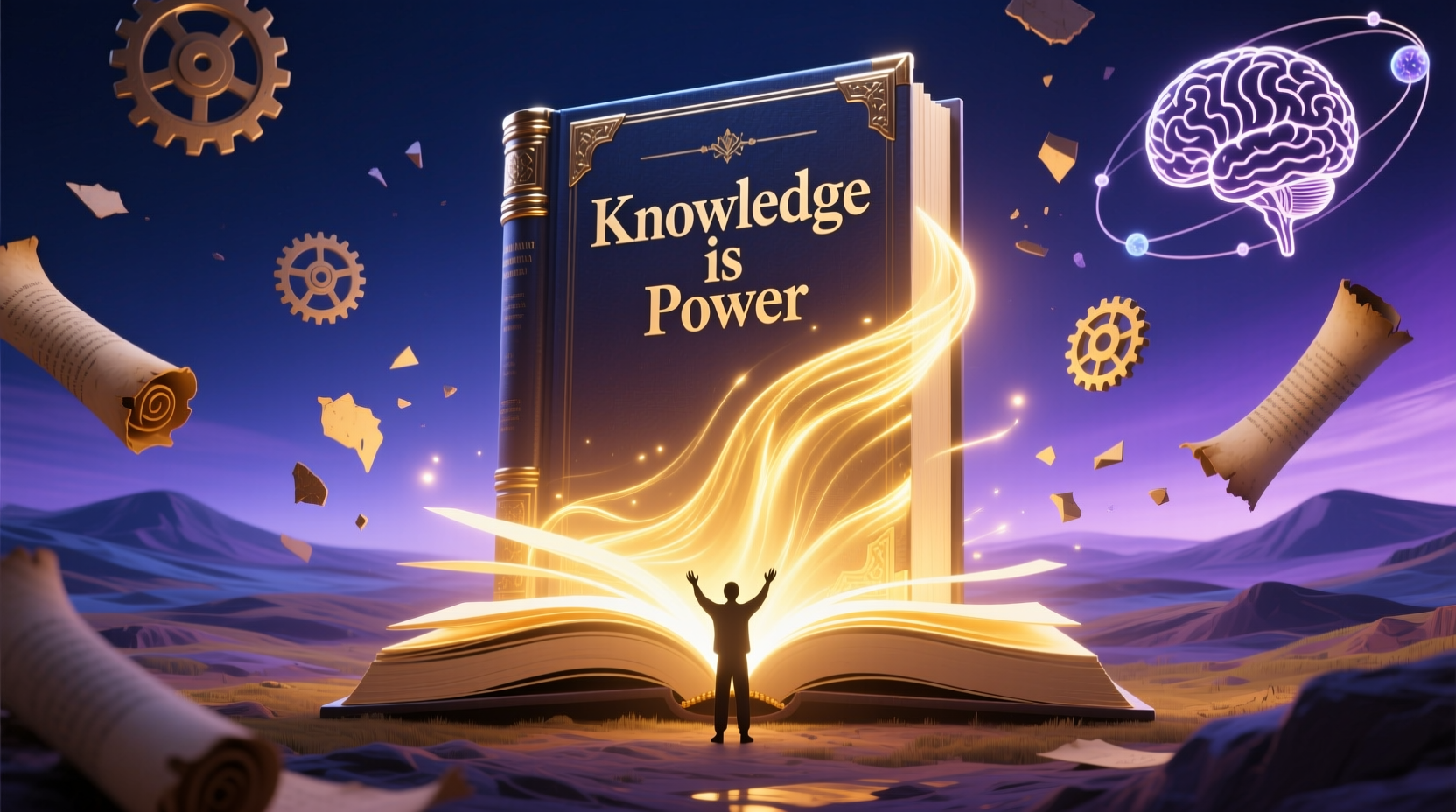
The expression “knowledge is power” is most commonly attributed to Sir Francis Bacon, a 16th-century English philosopher and scientist. In his work *Meditationes Sacrae* (1597), he wrote: “ipsa scientia potestas est”—Latin for “knowledge itself is power.” Bacon believed that through systematic observation and empirical study, humanity could gain control over nature and improve life.
This idea marked a turning point in Western thought. It shifted focus from divine revelation or inherited authority to evidence-based reasoning and inquiry. Over time, the concept evolved beyond science to include political, economic, and social domains. Thinkers like John Locke, Thomas Jefferson, and later, modern educators and technologists, embraced the belief that access to knowledge determines freedom and agency.
“Knowledge is power. Information is liberating. Education is the premise of progress, in every society, in every family.” — Kofi Annan, Former UN Secretary-General
Why Knowledge Equals Power in Practice
Power, in this context, doesn’t necessarily mean domination over others. Instead, it refers to empowerment—the capacity to act wisely, make informed choices, and influence outcomes. Here are several ways knowledge translates into tangible power:
- Decision-Making Authority: Leaders with deep industry knowledge command respect and make strategic choices that yield results.
- Economic Advantage: Skilled professionals earn higher wages because their knowledge adds measurable value.
- Social Mobility: Education opens doors to better jobs, networks, and opportunities regardless of background.
- Civic Engagement: Informed citizens participate more effectively in democratic processes and hold institutions accountable.
- Personal Autonomy: Understanding health, finance, and legal rights allows individuals to protect themselves and plan confidently.
Knowledge vs. Information: A Critical Distinction
In today’s digital world, we are flooded with information. Yet, having access to data doesn’t automatically grant power. The key lies in transforming raw information into actionable knowledge.
Consider this: anyone can look up symptoms online, but only a trained doctor can diagnose and treat illness. That difference—between scattered facts and contextual understanding—is what gives knowledge its power. True knowledge includes comprehension, analysis, judgment, and application.
| Aspect | Information | Knowledge |
|---|---|---|
| Nature | Facts, data points | Interpreted, structured understanding |
| Access | Widely available (e.g., internet) | Requires effort, experience, reflection |
| Application | Limited without context | Enables problem-solving and innovation |
| Value | Potential | Actualized through use |
How to Turn Knowledge Into Personal Power
Gaining knowledge is only half the battle. To unlock its full potential, you must integrate it into your life deliberately. Below is a step-by-step guide to converting learning into real-world influence.
- Identify Your Goals: Determine what areas of knowledge will serve your personal or professional ambitions—finance, communication, coding, public speaking, etc.
- Seek Credible Sources: Use academic journals, expert-led courses, books by recognized authorities, and verified platforms like Coursera or edX.
- Apply What You Learn: Practice new skills immediately. Write summaries, teach concepts to others, or implement strategies in your work.
- Reflect and Adapt: Regularly assess what’s working and refine your approach. Journaling helps solidify insights.
- Share and Influence: Present ideas in meetings, publish articles, mentor others. Teaching reinforces mastery and expands your impact.
Mini Case Study: From Factory Worker to Industry Consultant
Rajiv worked on an assembly line for ten years, earning a modest wage with limited advancement. Curious about automation, he began studying robotics and programming during evenings using free online resources. He applied basic automation scripts to simplify repetitive tasks at work, catching management’s attention.
Within two years, Rajiv transitioned into a technical support role, then earned certifications in industrial AI systems. Today, he consults for manufacturing firms on process optimization. His story illustrates how self-directed learning—fueled by curiosity and persistence—can shift someone from laborer to leader. Knowledge didn’t just inform Rajiv; it redefined his trajectory.
Barriers to Accessing Knowledge—and How to Overcome Them
Despite its transformative potential, knowledge remains unevenly distributed. Socioeconomic status, geography, language, and systemic inequality often limit access to quality education and information. However, several strategies help bridge the gap:
- Leverage Open Educational Resources (OER): Platforms like Khan Academy, MIT OpenCourseWare, and Project Gutenberg offer free high-quality materials.
- Join Learning Communities: Online forums, local libraries, and meetups provide peer support and shared motivation.
- Advocate for Equity: Support policies that expand broadband access, fund public education, and promote digital literacy.
“The function of education is to teach one to think intensively and to think critically. Intelligence plus character—that is the goal of true education.” — Martin Luther King Jr.
FAQ
Does all knowledge lead to power?
Not inherently. Knowledge becomes powerful when it is relevant, understood, and applied. Memorizing trivia without context offers little advantage. Strategic knowledge—aligned with goals and used effectively—is what generates real influence.
Can too much knowledge be dangerous?
In isolation, knowledge isn't harmful, but its misuse can be. For example, advanced technical knowledge in the hands of malicious actors poses risks. Ethical frameworks must accompany learning to ensure responsible application.
Is formal education the only path to gaining power through knowledge?
No. While formal education provides structure and credentials, self-directed learning, apprenticeships, and experiential knowledge are equally valid pathways. Many innovators and entrepreneurs have succeeded through independent study and practical experimentation.
Checklist: Building Your Knowledge-Power Framework
To consistently turn learning into leverage, follow this actionable checklist:
- ✅ Define 1–2 key skill areas to master in the next 12 months
- ✅ Dedicate weekly time blocks for focused learning (e.g., 3 x 1-hour sessions)
- ✅ Choose 1–2 trusted sources or courses to begin with
- ✅ Apply each new concept within 48 hours of learning it
- ✅ Share insights monthly—through writing, speaking, or mentoring
- ✅ Review progress quarterly and adjust your learning plan accordingly
Conclusion
The enduring truth behind “knowledge is power” lies not in memorization or accumulation, but in transformation. It’s about turning information into insight, insight into action, and action into impact. Whether you’re navigating career changes, advocating for justice, launching a business, or simply striving to live more intentionally, knowledge remains your most reliable ally.
In a world where algorithms shape opinions and misinformation spreads faster than facts, cultivating deep, critical understanding is an act of empowerment. Start small. Stay curious. Build competence. And remember: every book read, every question asked, every skill practiced adds to your reservoir of power.




 浙公网安备
33010002000092号
浙公网安备
33010002000092号 浙B2-20120091-4
Comments
No comments yet. Why don't you start the discussion?