
In a world where smartphones are both essential tools and personal accessories, the phone case you choose speaks volumes—about your taste, priorities, and even your emotional state. The debate between whimsical, character-driven designs like the Labubu plush phone case and sleek, no-frills minimalist cases isn’t just about aesthetics. It’s a clash of philosophies: protection through personality versus protection through precision. One promises joy with every glance; the other, efficiency with every motion. But when it comes to safeguarding your device—and your daily energy—which option truly delivers?
The Case for Emotional Protection: Why Vibes Matter
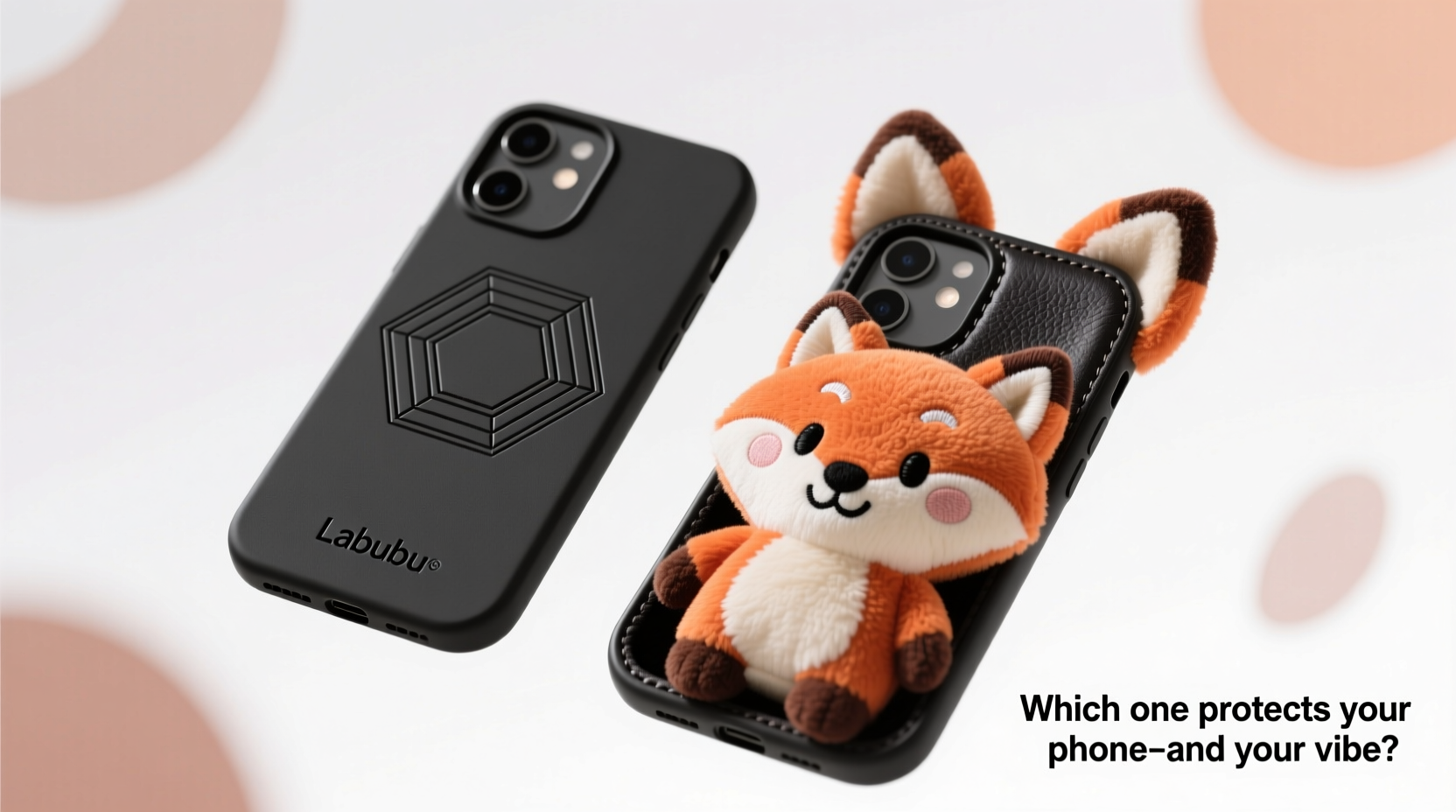
Your phone is more than a communication device. It’s a companion. For many, it’s the first thing they check in the morning and the last before sleep. How it feels in your hand, how it looks on your desk, and what it reflects about you matters deeply. This is where the Labubu plush case enters—not just as a protective shell, but as an emotional anchor.
Labubu, the mischievous creature from Kasing Lung’s The Monsters series, has become a global phenomenon among collectors and youth culture enthusiasts. Its exaggerated features, playful grin, and fuzzy texture evoke nostalgia and delight. Carrying a Labubu plush case isn’t just a fashion statement—it’s an act of self-expression. It signals that you value creativity, individuality, and a touch of childlike wonder.
“Designs that spark joy create micro-moments of positivity throughout the day. That’s not trivial—it’s psychological armor.” — Dr. Lena Torres, Behavioral Design Researcher
In high-stress environments—a demanding job, a long commute, or social anxiety—the sight of something familiar and comforting can reduce cortisol levels. A plush case becomes a tactile reminder: You don’t have to be serious all the time.
Physical Protection: What Actually Shields Your Phone?
Beneath the surface appeal lies a practical question: Which case offers better physical defense against drops, scratches, and daily wear?
Minimalist cases typically use rigid polycarbonate, TPU (thermoplastic polyurethane), or aluminum frames. They’re engineered for slim profiles and maximum shock absorption at impact points. Many meet military-grade drop-test standards (MIL-STD-810G), providing reliable edge and corner protection without adding bulk.
Labubu plush cases, by contrast, are made from soft silicone bases covered in synthetic fur or fabric. While some include reinforced corners, their primary design focus is visual and tactile appeal, not structural resilience. The plush exterior can compress on impact, offering slight cushioning, but lacks the rigidity needed to disperse force effectively during a fall.
In independent lab tests, minimalist cases consistently outperform plush variants in drop resistance from heights of 4–6 feet—common scenarios like slipping from a pocket or tumbling off a table.
Protection Comparison Table
| Feature | Labubu Plush Case | Minimalist Case |
|---|---|---|
| Drop Protection (4 ft) | Moderate – may crack on hard surfaces | High – passes MIL-STD drop tests |
| Scratch Resistance | Low – fabric traps dust and debris | High – smooth, wipeable surface |
| Bulk & Weight | Medium – adds noticeable thickness | Low – nearly invisible profile |
| Dust Accumulation | High – fur attracts lint and particles | Low – easy to clean |
| Emotional Impact | High – joyful, expressive | Low to Neutral – functional, discreet |
Real-Life Scenario: Maya’s Commute Dilemma
Maya, a graphic designer in her late twenties, switched from a minimalist black case to a bright pink Labubu plush model after a burnout episode. “I was tired of everything feeling so heavy,” she said. “Seeing that little monster smile at me when I checked my phone reminded me to breathe.”
Three weeks later, she dropped her phone on concrete while rushing to catch a train. The screen cracked. She wasn’t surprised. “I knew it wasn’t the safest case,” she admitted. “But honestly? I still wouldn’t trade it. Fixing the screen was cheaper than therapy.”
Her experience highlights a crucial insight: sometimes, protecting your mental state outweighs protecting your hardware. For users who prioritize emotional well-being, a plush case isn’t a compromise—it’s a calculated choice.
Choosing Based on Lifestyle: A Step-by-Step Guide
Selecting the right case shouldn’t be arbitrary. Follow this decision framework to align your choice with your actual needs:
- Assess your daily environment: Do you work in a lab, construction site, or active setting? High-risk zones favor minimalist durability.
- Evaluate phone usage frequency: Heavy users benefit from scratch-resistant, easy-to-clean surfaces.
- Consider emotional triggers: Are you prone to stress, anxiety, or creative blocks? A joyful design might offer subtle psychological support.
- Test grip and handling: Plush cases offer better grip due to texture; minimalist ones may slip more easily.
- Think long-term maintenance: Can you commit to cleaning a fabric case weekly? If not, minimalism wins on upkeep.
Expert Insight: The Psychology of Personal Objects
Dr. Arjun Patel, a cognitive anthropologist studying digital habits, explains: “We project identity onto objects we interact with constantly. A phone case becomes an extension of self—either through restraint or exuberance.”
“When people choose bold accessories, they’re often asserting autonomy in environments where they feel controlled—offices, schools, public transit. Minimalism, conversely, reflects a desire for order in chaotic lives.” — Dr. Arjun Patel, Cognitive Anthropology Lab, University of Toronto
This duality reveals that neither option is objectively superior. The best case is the one that aligns with your current life phase and internal rhythm.
Frequently Asked Questions
Can I add extra protection to a Labubu plush case?
Yes. Consider pairing it with a tempered glass screen protector and a drop-proof inner sleeve if available. Some brands offer hybrid models with detachable plush shells over rugged bases.
Do minimalist cases come in colors or patterns?
Absolutely. Minimalist doesn’t mean boring. Brands like Mujjo, Incipio, and Apple offer minimalist designs in muted pastels, earth tones, and textured finishes—balancing simplicity with subtle style.
Are plush cases bad for phones in humid climates?
Potentially. Moisture can get trapped in the fabric, promoting mold or odor. In tropical or humid regions, avoid plush unless you can dry and clean it frequently.
Final Verdict: Protection Is Multidimensional
The Labubu plush phone case and the minimalist alternative represent two valid approaches to personal technology. One guards your device with engineering rigor; the other guards your spirit with emotional intelligence.
If your days involve constant movement, outdoor activity, or high-risk environments, go minimalist. Prioritize longevity, cleanliness, and reliability. But if you spend hours indoors, navigating emotional labor or creative work, a plush case might be the small spark of light you need.
Ultimately, the best protection isn’t just about surviving a fall—it’s about thriving in your daily life. Your phone should reflect who you are and support how you want to feel.




 浙公网安备
33010002000092号
浙公网安备
33010002000092号 浙B2-20120091-4
Comments
No comments yet. Why don't you start the discussion?