
Every morning, millions of commuters make a quiet but consequential decision: what to carry their essentials in. The choice between a large shoulder bag and a backpack may seem minor, but over weeks and months, it can significantly impact spinal health, posture, and comfort. While both options offer convenience and style, they differ fundamentally in how weight is distributed across the body—especially critical when carrying laptops, notebooks, water bottles, or gym clothes.
This article dives deep into the biomechanics, real-world usage patterns, and long-term effects of each bag type. We’ll examine not just comfort, but also injury risk, load distribution, and practicality—all with one goal: helping you choose the option that’s least likely to \"kill your back.\"
Ergonomic Principles: How Weight Affects Your Spine
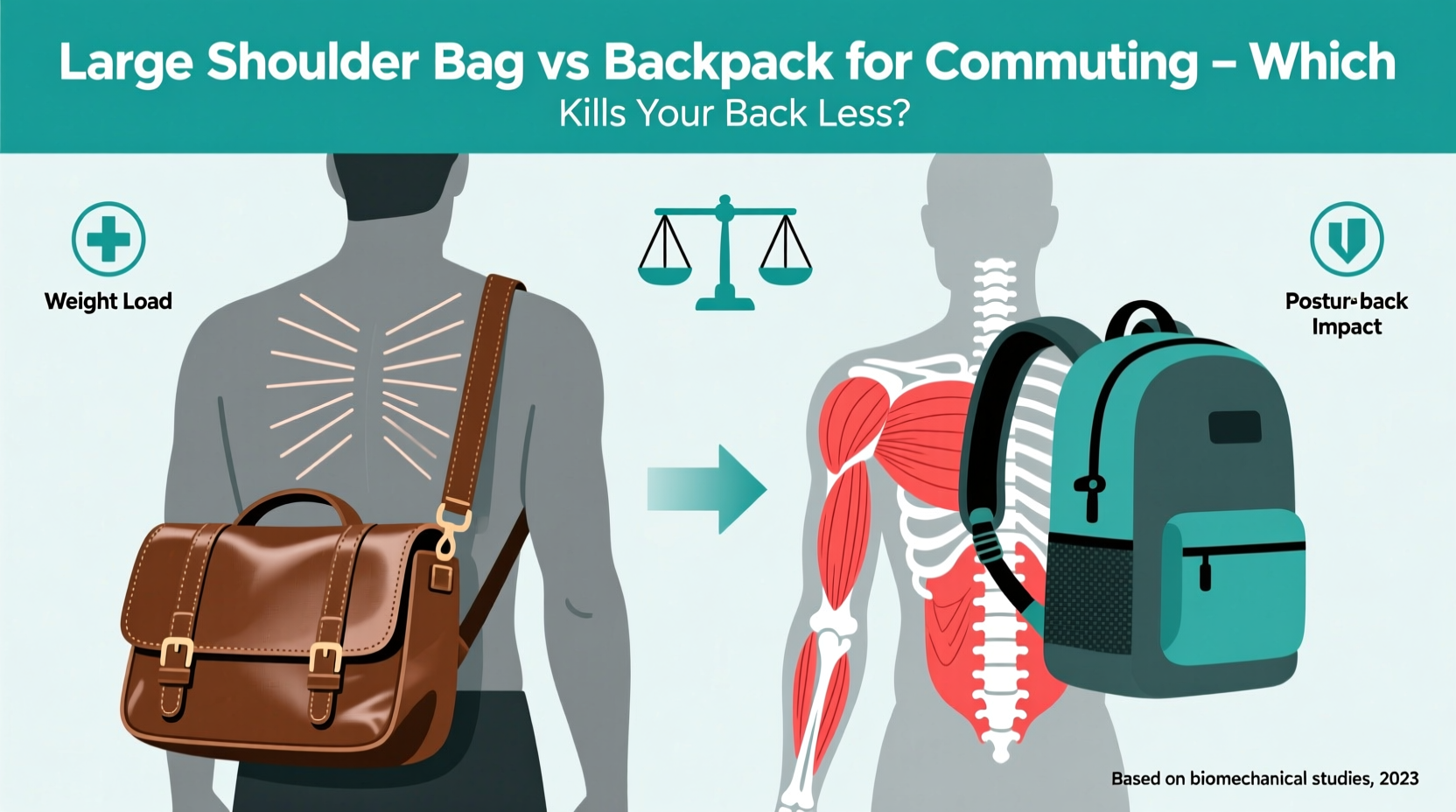
The human spine is designed to maintain balance and alignment through natural curves. When external loads are introduced asymmetrically—such as slung over one shoulder—they disrupt this equilibrium. Carrying weight unevenly forces muscles on one side of the body to work harder, leading to muscle imbalances, postural shifts, and eventual pain.
According to Dr. Lena Torres, a physical therapist specializing in workplace ergonomics:
“Even moderate loads carried on one shoulder can cause lateral flexion of the spine, where the torso leans toward the weighted side. Over time, this leads to chronic strain in the trapezius, paraspinal, and rotator cuff muscles.”
In contrast, symmetrical load distribution—like that provided by a well-fitted backpack—keeps the center of gravity close to the body’s midline, reducing torque on the spine and minimizing compensatory movements.
Shoulder Bag: Convenience at a Cost?
Large shoulder bags remain popular due to their quick access, professional appearance, and ease of use. However, their design inherently favors asymmetry. Whether worn across the chest or over one shoulder, they place all weight on a single point or strap, creating several risks:
- Uneven weight distribution: Forces the spine out of neutral alignment.
- Shoulder compression: Narrow straps dig into nerves and blood vessels, potentially causing numbness or tingling in the arm.
- Compensatory posture: Users often lean away from the loaded side, increasing lower back strain.
A 2021 study published in the Journal of Applied Ergonomics found that participants using shoulder bags reported significantly higher discomfort levels in the upper trapezius and cervical regions after just 30 minutes of walking with a 5kg (11 lb) load.
Backpacks: The Balanced Alternative
When properly used, backpacks are biomechanically superior for carrying daily loads. Two wide, padded straps allow weight to be shared across both shoulders, keeping the spine centered. High-quality models include additional features that enhance support:
- Chest and waist straps: Transfer some load to the torso and hips, reducing shoulder pressure.
- Contoured back panels: Promote airflow and maintain lumbar curvature.
- Compartments near the back: Keep heavy items (like laptops) close to the spine, minimizing forward pull.
However, not all backpacks are created equal. Poorly adjusted straps, overloading, or wearing only one strap defeats the purpose. The American Academy of Orthopaedic Surgeons recommends that backpack weight should not exceed 10–15% of body weight for adults.
Real-World Example: Commuter Case Study
Take Mark, a 34-year-old software developer who commutes 45 minutes each way via train and walk. For two years, he used a sleek leather shoulder bag to carry his laptop, charger, notebook, and lunch—a total of about 6.5 kg (14.3 lbs). Over time, he developed persistent right-sided neck pain and frequent headaches.
After a consultation with a physiotherapist, Mark switched to an ergonomic backpack with load-compression straps and a built-in laptop sleeve. Within three weeks, his pain decreased by 70%. His posture improved, and he reported feeling “lighter” even though the load was identical.
Head-to-Head Comparison: Shoulder Bag vs Backpack
| Feature | Large Shoulder Bag | Backpack |
|---|---|---|
| Weight Distribution | Asymmetrical – concentrated on one shoulder | Symmetrical – balanced across both shoulders |
| Spinal Alignment Risk | High – promotes lateral bending and hunching | Low – maintains neutral spine when properly fitted |
| Comfort Over Distance | Poor beyond short durations | Good, especially with padded straps and hip belt |
| Access to Items | Easy – open-top or flap designs | Moderate – depends on compartment layout |
| Fashion & Professional Appearance | High – often seen as stylish or business-appropriate | Variable – depends on model; some look casual |
| Risk of Nerve Compression | High – especially with narrow straps | Low – if straps are wide and padded |
How to Minimize Back Damage—Regardless of Bag Type
No bag is completely risk-free if used incorrectly. The following checklist helps mitigate strain no matter your choice:
✅ Commuter Bag Safety Checklist
- Keep total weight under 10–15% of your body weight.
- Use the thickest, widest straps available.
- Adjust straps so the bag sits snug against your back, not sagging low.
- Switch shoulders frequently if using a single-strap bag.
- Avoid overstuffing—only carry essentials.
- Choose bags with cross-body straps to stabilize weight.
- Take breaks during long walks; remove the bag periodically.
Step-by-Step: Choosing the Safest Commute Bag
- Assess your typical load: Weigh your usual contents (laptop, phone, water bottle, etc.). If over 5 kg (11 lbs), strongly consider a backpack.
- Try both styles with your actual load: Visit a store and wear each for 10–15 minutes while walking.
- Check fit and adjustability: Straps should be easy to modify; backpacks should have chest or hip stabilizers.
- Test accessibility needs: Do you need quick access to your phone or wallet? Shoulder bags win here.
- Consider your commute terrain: Crowded trains favor compact backpacks; walking-heavy routes need better weight support.
- Invest in quality: Look for breathable materials, reinforced stitching, and anatomical padding.
Frequently Asked Questions
Can a large shoulder bag cause permanent back damage?
While rare, chronic misuse of a heavy shoulder bag can lead to long-term musculoskeletal issues such as scoliosis-like postural deviations, disc compression, or rotator cuff strain. Early intervention—like switching bags or seeing a physical therapist—can reverse most damage.
Are messenger bags safer than regular shoulder bags?
Messenger bags, typically worn cross-body, distribute weight slightly better than standard shoulder bags because the strap crosses the chest, providing more stability. However, they still concentrate force along one diagonal line and can compress the collarbone and brachial plexus nerves over time.
What’s the best backpack feature for back protection?
A hip belt is arguably the most effective feature for reducing spinal load. It transfers up to 80% of the weight to the pelvis—the body’s natural weight-bearing structure—especially useful for loads over 5 kg. Look for padded, adjustable belts that clip securely.
Final Verdict: Which Kills Your Back Less?
The evidence is clear: for most commuters, a well-designed backpack is significantly less damaging to the back than a large shoulder bag. Its ability to evenly distribute weight, maintain spinal alignment, and reduce muscular strain makes it the superior choice for anyone carrying more than light essentials.
That said, personal preference, profession, and lifestyle matter. If your job requires a polished look and minimal tech load, a high-quality shoulder bag used mindfully—with frequent side-switching and strict weight limits—can still be viable.
The key isn’t just choosing the right bag—it’s using it wisely. Awareness, proper fit, and load management matter more than the bag type alone.




 浙公网安备
33010002000092号
浙公网安备
33010002000092号 浙B2-20120091-4
Comments
No comments yet. Why don't you start the discussion?