
Jewelry has long been a form of self-expression, and few pieces carry as much emotional or aesthetic weight as a necklace. Whether worn for sentiment, symbolism, or style, the right necklace can transform an outfit from ordinary to unforgettable. Among the most debated choices in modern jewelry styling is the decision between layered necklaces and a single pendant. Both offer unique advantages—layering creates depth and visual interest, while a solitary pendant exudes simplicity and focus. But when it comes to adding dimension without inviting tangles, which option truly wins?
The answer isn’t always straightforward. While layered necklaces inherently suggest complexity—and thus a higher risk of knotting—a well-curated stack can enhance dimension with grace. On the other hand, a single pendant may seem foolproof, but its impact depends heavily on design, length, and context. This article explores the nuances of both styles, offering practical guidance on how to achieve dimensional elegance without the frustration of tangled chains.
The Dimensional Power of Layered Necklaces
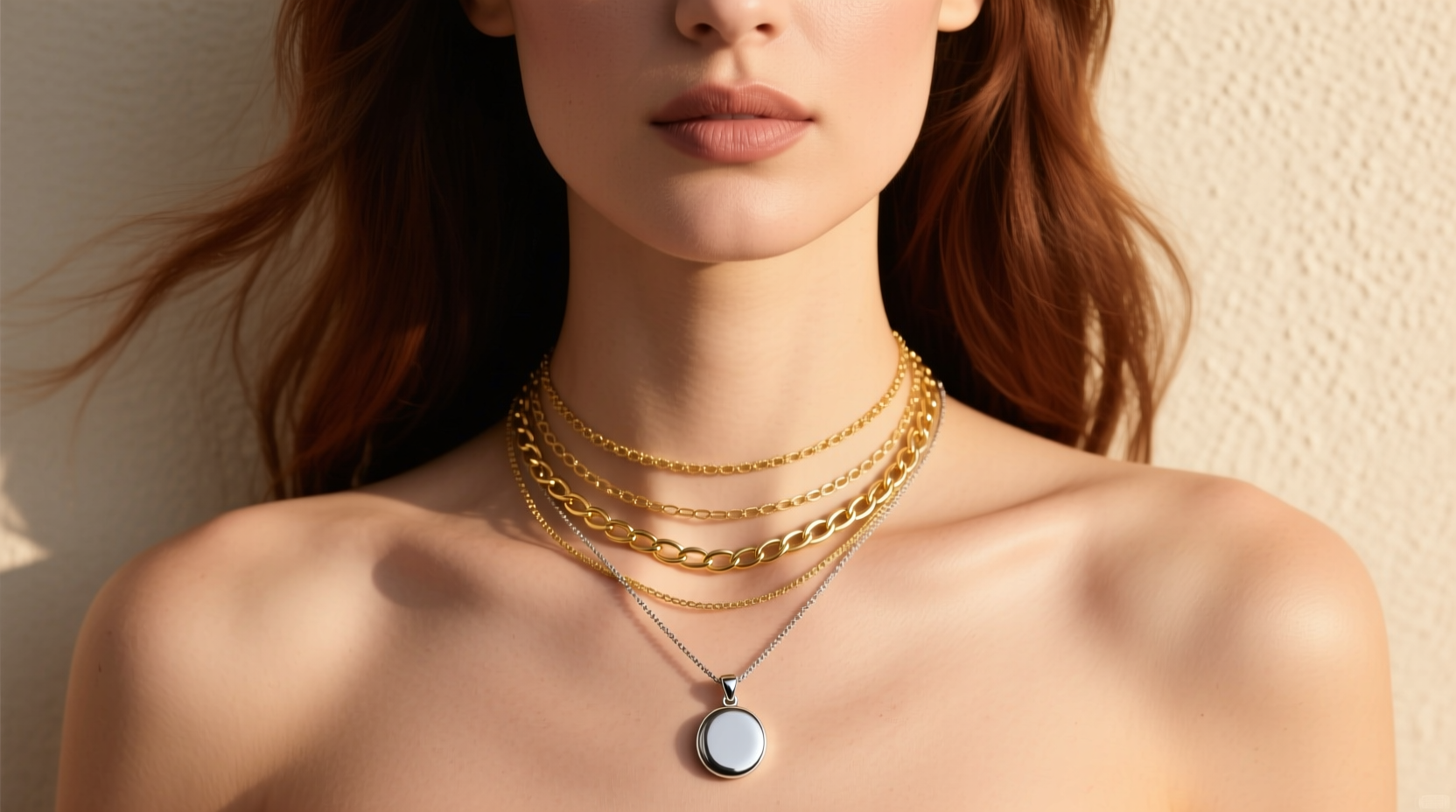
Layered necklaces have surged in popularity over the past decade, favored by fashion influencers and everyday wearers alike for their ability to add texture, rhythm, and personality to an ensemble. When done right, layering mimics architectural balance—each chain serving a purpose, whether it’s drawing the eye upward, framing the neckline, or introducing contrast through mixed metals or pendants.
Dimension in jewelry refers to the illusion of depth and movement. Layered necklaces excel at this by varying lengths, thicknesses, and focal points. A short choker paired with a mid-length locket and a longer delicate chain creates vertical lines that elongate the torso and catch light from multiple angles. This dynamic interplay is difficult to replicate with a single piece.
However, the very feature that gives layered necklaces their appeal—their multiplicity—also makes them prone to tangling. Chains of similar length or gauge often twist together during wear or storage, leading to frustrating knots that can weaken links or damage finishes.
The Elegance and Simplicity of a Single Pendant
In contrast, a single pendant necklace operates on the principle of intentionality. Rather than building complexity through accumulation, it relies on one strong visual statement. A well-chosen pendant—a solitaire gemstone, a meaningful charm, or an intricately carved medallion—can anchor an outfit with quiet confidence.
From a dimensional standpoint, a single pendant can still create depth, especially when thoughtfully designed. Consider a pendant with three-dimensional elements: a drop-shaped stone that catches light from within, a textured metal surface, or a kinetic design that moves subtly with the wearer. These features add volume and intrigue without requiring additional chains.
Moreover, the absence of multiple components eliminates the primary cause of tangling. A single chain, properly fastened and stored, remains tangle-free with minimal maintenance. This makes it ideal for daily wear, travel, or active lifestyles where convenience matters.
Yet, simplicity carries risks too. A poorly proportioned pendant or ill-fitting length can appear flat or awkward. A tiny charm on a long chain may get lost against a structured blazer, while an oversized pendant on a short chain might overwhelm a delicate frame. The key lies in alignment—between the wearer’s body type, neckline, and personal style.
“Dimension in jewelry isn’t about quantity—it’s about contrast, proportion, and motion. A single piece can be more dimensional than ten mismatched layers.” — Lena Moretti, Jewelry Designer & Stylist
Comparing Tangling Risks: Practical Insights
To determine which option truly offers dimension without tangling, it helps to compare real-world performance across several factors. The table below outlines key considerations for both layered necklaces and single pendants.
| Factor | Layered Necklaces | Single Pendant |
|---|---|---|
| Tangling Risk | High (especially with similar lengths or thin chains) | Low (one chain, easy to manage) |
| Dimensional Impact | High (multiple levels, textures, and focal points) | Moderate to High (depends on pendant design and chain length) |
| Styling Flexibility | High (can mix metals, styles, occasions) | Moderate (limited by single element) |
| Maintenance Needs | High (requires careful storage and untangling) | Low (simple cleaning and storage) |
| Best For | Evenings, layered looks, expressive styling | Daily wear, professional settings, minimalist aesthetics |
The data suggests a clear trade-off: layered necklaces deliver superior dimensional richness but come with higher maintenance and tangling risks. Single pendants offer reliability and elegance with less hassle, though they demand stronger individual design to achieve comparable visual impact.
How to Layer Without Tangles: A Step-by-Step Guide
For those committed to the layered look, avoiding tangles is not impossible—it requires strategy. Follow this timeline to build a layered stack that stays smooth and stylish.
- Start with a base length: Choose a foundational chain between 16–18 inches (choker to princess length). This sits close to the collarbone and anchors the look.
- Add a mid-layer: Select a second chain 2–3 inches longer (19–21 inches). Opt for a different thickness—slightly heavier or more textured—to create contrast.
- Introduce a long layer: Add a third chain at 24 inches or more (opera or rope length). Let it drape lower, ideally ending above the bust, to avoid crowding.
- Vary pendants: Use only one or two pendants total. Place them on different chains to prevent clashing. For example, a small charm on the shortest chain and a larger centerpiece on the longest.
- Secure before wearing: Fasten each chain individually and let them settle before adjusting. Avoid pulling or twisting during dressing.
- Store properly: Hang chains on a jewelry stand or lay them flat in separate compartments. Never toss them loose into a drawer.
Real Example: Emma’s Work-to-Weekend Transition
Emma, a 32-year-old marketing consultant, wanted jewelry that transitioned seamlessly from office meetings to evening events. She initially wore three delicate gold chains of nearly identical length—17\", 18\", and 19\"—and found herself spending minutes each morning untangling them.
After consulting a stylist, she revised her approach. She kept the 17\" choker with a tiny initial charm, replaced the middle chain with a bolder 20\" cable link (no pendant), and added a 24\" chain with a teardrop moonstone pendant. The varied lengths and weights prevented tangling, while the moonstone introduced subtle dimension that caught attention during presentations and dinners alike.
Now, her layered set remains knot-free, even after travel, and she receives frequent compliments. “It’s not just about looking good,” she says. “It’s about feeling put together without the stress.”
Checklist: Choosing Your Ideal Necklace Style
- ☐ Assess your daily routine—do you need low-maintenance jewelry?
- ☐ Determine your preferred neckline—does it suit layering or a focal pendant?
- ☐ Evaluate your existing collection—can you mix pieces safely?
- ☐ Consider your lifestyle—do you travel, exercise, or work in high-motion environments?
- ☐ Prioritize quality—opt for secure clasps and durable chains regardless of style.
- ☐ Test combinations at home before wearing out.
- ☐ Plan storage solutions—dedicated hooks or padded boxes prevent tangles.
Frequently Asked Questions
Can I wear layered necklaces every day without tangling?
Yes, but only if you follow best practices: space lengths appropriately, vary chain thickness, limit pendants, and store them properly. Daily wear increases friction, so durability and organization are key.
Does a single pendant look boring compared to layers?
Not if it’s well-designed. A pendant with depth—such as a faceted gem, engraved back, or moving element—can be visually rich. Pair it with complementary earrings or bracelets to maintain balance.
What length works best for a single pendant to add dimension?
A 20–22 inch chain (matinee length) often provides optimal dimension. It sits below the collarbone, allowing the pendant to move freely and catch light, enhancing its three-dimensionality without overwhelming the frame.
Conclusion: Balance Beauty With Practicality
The choice between layered necklaces and a single pendant ultimately hinges on personal priorities. If your goal is maximum dimension with expressive flair, and you’re willing to invest time in care, layering can deliver stunning results. But if you value elegance, ease, and reliability—especially in fast-paced or active environments—a single pendant may be the smarter, more sustainable choice.
Modern jewelry design has blurred the line between the two. Some pendants now incorporate layered elements within a single chain—think double-drop designs or cascading motifs—that offer depth without entanglement. Others use magnetic connectors that align chains automatically, reducing tangle risk.
Regardless of your preference, the guiding principle remains: intentional design beats accidental accumulation. Whether you choose one statement piece or a curated stack, prioritize craftsmanship, fit, and function. Dimension should enhance, not complicate.




 浙公网安备
33010002000092号
浙公网安备
33010002000092号 浙B2-20120091-4
Comments
No comments yet. Why don't you start the discussion?