
In neighborhoods across Cincinnati, residents have begun noticing small, agile lizards darting along brick walls, sunning themselves on sidewalks, or hiding behind gutters. These aren’t native species escaping zoos or backyard enclosures—they’re Hemidactylus frenatus, commonly known as the common house gecko or more colorfully, the \"Lazarus lizard.\" Despite their tropical origins, these reptiles have not only survived but flourished in one of the most unlikely places: the humid summers and freezing winters of southwestern Ohio. How did they get here, and why are they thriving?
The Origin Story: From Southeast Asia to Cincinnati Sidewalks
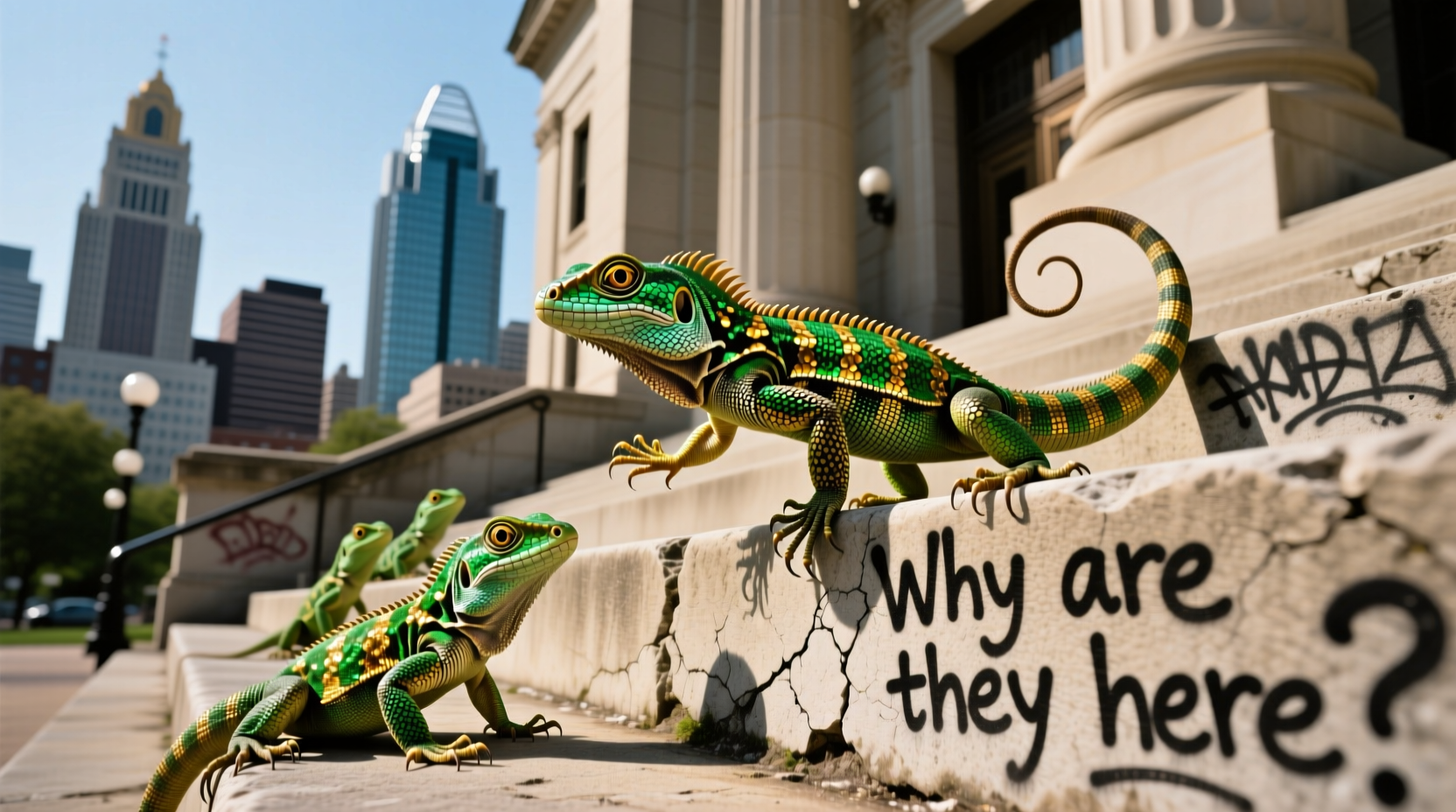
The Lazarus lizard is native to tropical and subtropical regions of South and Southeast Asia. It’s a nocturnal, insect-eating gecko that typically inhabits human structures—walls, eaves, porches—where it hunts moths and flies drawn to outdoor lighting. Its scientific nickname, “Lazarus,” stems from its near-miraculous ability to survive extreme conditions and reappear where once thought extinct or incapable of surviving.
These lizards first appeared in the United States through accidental introduction, primarily via international shipping. They likely hitched rides in crates, potted plants, or construction materials arriving at Gulf Coast ports. Over time, populations established in warm southern cities like Houston, New Orleans, and Miami. But Cincinnati? That’s nearly 1,000 miles north of their expected range.
The first documented sightings in Cincinnati date back to the early 2000s, concentrated around older urban neighborhoods with dense brick architecture—Over-the-Rhine, Northside, and parts of Hyde Park. The lizards weren’t released pets; they were stowaways who found an unexpected refuge.
How Did They Survive the Cold? The Science Behind Their Resilience
Cincinnati experiences cold winters, with average January temperatures hovering around 30°F (–1°C) and occasional dips below 0°F (–18°C). Most reptiles cannot survive prolonged freezing conditions. Yet Lazarus lizards have adapted in ways that defy traditional biological expectations.
Research conducted by Dr. Richard Walton, a herpetologist at the University of Cincinnati, has shown that these geckos enter a state of brumation—a hibernation-like dormancy—during winter months. They retreat into microhabitats such as wall cavities, behind bricks, under roof tiles, and within heated building foundations where temperatures remain stable above freezing.
“These lizards are exploiting the urban heat island effect. Buildings retain warmth, and interior heating seeps into exterior walls. For a small ectotherm, just a few degrees can mean the difference between life and death.” — Dr. Richard Walton, UC Department of Biological Sciences
Additionally, genetic studies suggest natural selection may be favoring individuals with higher cold tolerance. A 2021 study published in *Urban Ecosystems* found that Cincinnati’s population exhibits slight physiological differences from their southern counterparts, including slower metabolic rates during cold exposure and improved freeze avoidance behaviors.
The Role of Urban Infrastructure in Their Spread
Cincinnati’s architectural landscape has played a crucial role in enabling this species’ survival. The city is rich in older brick buildings with porous masonry, crevices, and interconnected wall spaces—ideal for geckos seeking shelter. Unlike rural areas with open fields and predators, urban zones offer vertical terrain, reduced predation, and abundant insect prey attracted to streetlights and porch lamps.
Moreover, the proliferation of central heating systems means even unoccupied buildings maintain enough residual warmth to support overwintering lizards. This network of thermally buffered refuges acts like a connected archipelago, allowing geckos to disperse gradually from one block to the next.
| Factor | How It Helps Lazarus Lizards |
|---|---|
| Brick & Masonry Buildings | Provide cracks and cavities for nesting and insulation |
| Outdoor Lighting | Attracts insects, creating reliable food sources |
| Urban Heat Islands | Maintains warmer ambient temperatures than surrounding countryside |
| Heated Building Foundations | Offers thermal refuge during winter months |
| Low Predator Density | Fewer snakes, birds, and mammals that prey on small reptiles |
A Real Example: The Vine Street Colony
In 2015, a resident of a historic apartment building on Vine Street in Over-the-Rhine reported seeing dozens of small lizards crawling along interior basement walls during spring cleanup. Initially dismissed as isolated escapees, follow-up inspections revealed a breeding colony living within the shared cavity walls between units.
Building maintenance staff installed sealant around foundation vents and recommended tenants keep basement doors closed. However, the geckos persisted—not because of negligence, but due to the interconnected nature of the structure. Over two years, biologists monitored the group and documented successful reproduction each summer, with juveniles emerging in late July.
This case became a model for understanding urban colonization patterns. It demonstrated that once established, Lazarus lizards can maintain self-sustaining populations without new introductions. The Vine Street site remains active today, though numbers fluctuate seasonally.
Are They Harmful? Ecological Impact and Public Concerns
One of the most common questions from residents is whether these lizards pose a danger to local ecosystems or human health. Current evidence suggests minimal risk.
- No Toxicity: Lazarus lizards are non-venomous and do not carry diseases transmissible to humans.
- Pest Control Benefit: They consume mosquitoes, moths, and other nuisance insects.
- Low Invasive Threat: Unlike some invasive reptiles, they reproduce slowly and remain highly dependent on human structures.
- Limited Competition: Few native lizard species inhabit Cincinnati, reducing ecological overlap.
However, scientists remain cautious. If populations expand into adjacent green spaces or begin outcompeting native invertebrates, monitoring will become critical. For now, they are considered a benign example of urban adaptation.
What You Can Do: Coexisting with Urban Geckos
While eradication isn't necessary or practical, responsible coexistence helps manage their presence. Here’s a checklist for homeowners and renters:
📋 **Gecko Coexistence Checklist**- Inspect and seal gaps around windows, doors, and utility lines.
- Use yellow or motion-sensor outdoor lights to reduce insect attraction.
- Keep basements and crawl spaces dry and well-ventilated.
- Report large colonies or unusual behavior to local wildlife authorities.
- Avoid using chemical pesticides that could harm beneficial reptiles.
FAQ: Common Questions About Lazarus Lizards in Cincinnati
Can Lazarus lizards survive Cincinnati winters?
Yes—by retreating into insulated wall spaces and building foundations where temperatures stay above freezing. They enter a dormant state until spring.
Are these lizards spreading to other Ohio cities?
There have been isolated sightings in Dayton and Columbus, but no established populations yet. Cincinnati remains the northernmost known stronghold due to its unique combination of old infrastructure and urban density.
Should I remove a gecko if I find one inside my home?
Not necessarily. If indoors, gently guide it outside using a container and release it near a wall or shrub. Repeated indoor appearances may indicate entry points needing sealing.
Conclusion: A Symbol of Urban Adaptability
The presence of Lazarus lizards in Cincinnati is more than a biological curiosity—it’s a testament to nature’s resilience in the face of human-altered environments. These small reptiles have turned an industrial Midwestern city into an unexpected sanctuary, exploiting the very structures we built to keep the elements out.
As climate patterns shift and urban heat islands intensify, species like the Lazarus lizard may become increasingly common in regions once deemed inhospitable. Rather than viewing them as invaders, we might consider them indicators of evolving ecosystems—one clue among many that our cities are becoming new frontiers for wildlife adaptation.




 浙公网安备
33010002000092号
浙公网安备
33010002000092号 浙B2-20120091-4
Comments
No comments yet. Why don't you start the discussion?