
Every day on campus tells a story—rain-soaked walks between lectures, crowded lecture halls, late-night library sessions, and the constant jostle of student life. Your backpack isn’t just a container for textbooks and laptops; it’s a companion through four years of growth, stress, and achievement. But when it comes to choosing between leather and nylon, one question stands out: which material truly ages better under relentless daily use?
The answer isn’t as simple as “one is better than the other.” Instead, it depends on how each material responds to wear, weather, care habits, and personal expectations. Leather develops character over time, while nylon resists damage but may fade or fray. This article breaks down both materials in real-world campus conditions, helping you decide not just what looks good today—but what will still look good four years from now.
Durability in Daily Use: Wear and Tear Analysis
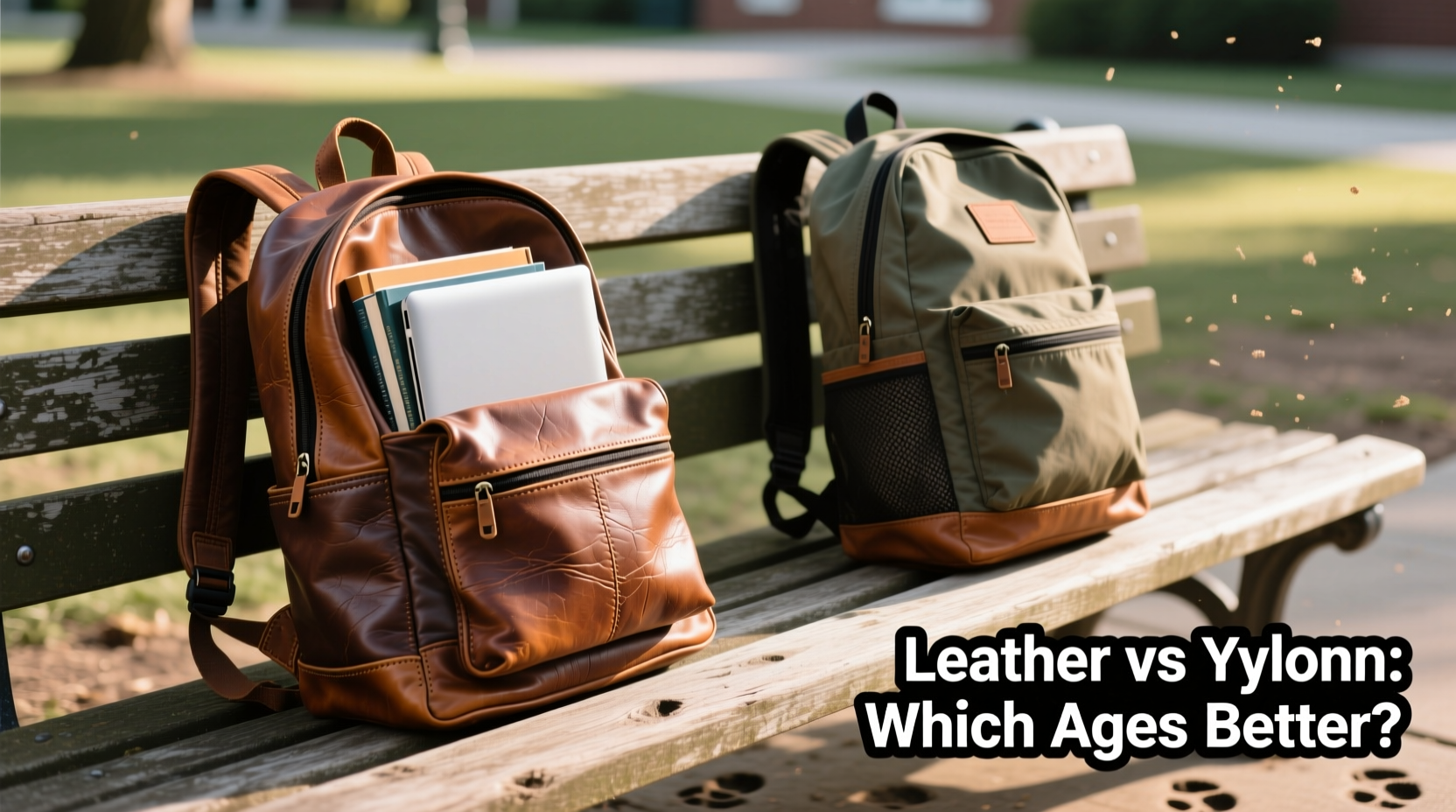
Campus life is tough on gear. Backpacks are dropped, stuffed into lockers, crammed onto crowded buses, exposed to rain, sweat, and coffee spills. Both leather and nylon handle this differently.
Leather, particularly full-grain or top-grain varieties, starts stiff but softens with use. Over time, it molds to your back and builds a unique patina—a natural sheen developed from oils, sunlight, and handling. Scratches and scuffs don’t disappear; instead, they blend into the surface, adding depth and history. High-quality leather can last decades if maintained, but lower grades may crack or peel under harsh conditions.
Nylon, especially high-denier fabrics like 600D or 1000D, excels in abrasion resistance. It’s lightweight, water-resistant (often treated with DWR coatings), and doesn’t absorb moisture like leather. However, repeated friction—from seat belts, rough surfaces, or heavy zippers—can cause fraying at stress points. Fading from UV exposure is also common, especially in dark-colored packs left in sunny classrooms.
Real-World Stress Points Compared
| Stress Factor | Leather Response | Nylon Response |
|---|---|---|
| Rain & Moisture | Absorbs water; requires drying and conditioning to prevent stiffness or mildew | Resists water well; dries quickly unless lining absorbs moisture |
| Scratches/Scuffs | Develops patina; minor marks integrate over time | May show permanent abrasions or thread pulls |
| Sun Exposure | Fades slowly; UV can dry leather without conditioning | Fades faster, especially black/dark colors; fabric weakens over time |
| Weight Load | Handles heavy loads well; straps mold comfortably | Strong when new; stitching may fail under prolonged strain |
| Odor Retention | Less prone if cleaned; leather naturally resists bacteria | Can trap sweat odors in lining unless washed |
Maintenance Requirements: Effort Over Time
No backpack maintains itself. But the kind of upkeep required differs dramatically between materials—and that effort shapes how well they age.
Leather demands periodic attention. Every 2–3 months, a quality conditioner restores natural oils lost to dry air and friction. After rain, it should be wiped dry and allowed to air out away from direct heat. Without this routine, leather becomes brittle, cracks, or develops unsightly white blooms (mold). However, those who follow a basic regimen often find their bags improve with age, gaining richness and comfort.
Nylon, by contrast, is low-maintenance in the short term. Most spills wipe off, and machine washing is sometimes possible (check manufacturer guidelines). But long-term neglect shows in different ways: stains set in, zippers jam from grit buildup, and seams weaken. Unlike leather, nylon doesn’t “improve” with age—it either holds up or degrades visibly.
“People think leather is high-maintenance, but five minutes every few months beats replacing a synthetic pack every two years.” — Marcus Tran, Bag Designer & Material Consultant
Step-by-Step Care Timeline for Each Material
For Leather Backpacks (Monthly Routine)
- Week 1: Wipe exterior with a slightly damp cloth to remove dust and fingerprints.
- Week 2: Check for dryness—press fingernail gently; if no indentation remains, it’s too dry.
- Week 3: Apply leather conditioner with a soft cloth, focusing on straps and corners.
- Week 4: Buff lightly with a dry cloth; store in a breathable cotton bag if unused.
For Nylon Backpacks (Quarterly Deep Maintenance)
- Month 1: Empty contents, shake out debris, wipe exterior with mild soapy water.
- Month 2: Inspect stitching at handles and base; reinforce loose threads immediately.
- Month 3: Reapply DWR spray if water no longer beads on fabric.
- Month 4: Wash lining (if removable) or spot-clean interior with enzyme cleaner.
Appearance Over Time: Patina vs. Performance Fatigue
How a backpack looks after a year matters—especially for students who value style alongside function.
Leather evolves beautifully. A brand-new full-grain backpack might look formal or stiff, but within six months, it softens and gains subtle color variation. Light scratches become part of its narrative. With proper care, it never looks “worn out”—only “well-used.” This aging process is celebrated in heritage fashion and often increases perceived value.
Nylon, however, tends to peak early. It looks crisp and technical when new, but signs of fatigue appear subtly: micro-tears near zippers, faded logos, or a dull, matted texture on high-contact areas. While some brands design for this (e.g., military-inspired gear), most students notice when their backpack starts looking “cheap” despite being structurally sound.
A mini case study illustrates this difference:
Mini Case Study: Two Students, Two Materials
Jamal, a third-year engineering major, uses a waxed canvas and bridle leather backpack. He wipes it monthly and applies conditioner twice a year. After three semesters, his bag has scuff marks on the corners and a warm honey tone where his hands grip the straps. Classmates compliment its “vintage scholar” look. The bag functions perfectly—zippers glide, compartments stay secure.
Sophie, a communications student, chose a sleek black 1000D nylon backpack for its laptop compartment and water resistance. She rarely cleans it. By semester two, the bottom panel shows gray scuffing, the logo has faded, and a small hole has formed near the side pocket from rubbing against her bike frame. Though still usable, she feels embarrassed using it in professional settings.
Both bags were similarly priced. Yet Jamal’s appears more valuable over time; Sophie’s appears disposable.
Environmental and Practical Considerations
Campus environments vary—urban campuses with subways and rain, rural ones with dusty paths and wide temperature swings. These affect material longevity.
- Humid Climates: Leather risks mold without ventilation. Store with silica gel packs and avoid plastic bags.
- Dry or Cold Climates: Leather dries out faster; condition more frequently (every 6–8 weeks).
- Wet Campuses: Nylon wins for immediate water resistance. But prolonged dampness leads to mildew inside linings.
- Heavy Load Carriers: Leather distributes weight more comfortably over time due to strap molding.
Additionally, sustainability plays a role. Leather, when sourced responsibly, is biodegradable and long-lasting—aligning with slow fashion principles. Poorly tanned leather or exotic skins carry ethical concerns. Nylon is petroleum-based, non-biodegradable, and sheds microplastics when washed. However, recycled nylon (like ECONYL®) is improving eco-footprints.
Checklist: Choosing Based on Your Campus Lifestyle
Answer these to guide your decision:
- Do you walk or bike in rain often? → Lean toward nylon or waxed leather.
- Do you care about developing a personalized, aged look? → Choose full-grain leather.
- Are you likely to forget maintenance? → Nylon requires less diligence.
- Do you carry heavy loads (15+ lbs)? → Leather’s structure supports better long-term.
- Is sustainability important to you? → Prioritize vegetable-tanned leather or recycled nylon.
- Do you want one bag for all four years? → Invest in leather with proven craftsmanship.
Expert Verdict: Which Ages Better?
After evaluating durability, maintenance, aesthetics, and real-world usage, the conclusion favors leather—for aging gracefully.
Nylon performs reliably in the short term and handles abuse well, but it doesn’t improve. Its lifespan is typically 2–4 years under heavy use before fatigue becomes visually apparent. Replacement is expected.
Leather, especially from reputable makers using full-grain hides and sturdy hardware, improves over time. The initial break-in period pays dividends in comfort and appearance. With minimal care, a leather backpack can remain functional and stylish for a decade or more. It doesn’t just survive daily campus life—it matures with it.
As designer Marcus Tran notes: “Aged leather tells a story. A frayed nylon strap just tells you it’s time to buy another.”
FAQ: Common Questions About Backpack Aging
Does genuine leather always age well?
No—only high-quality, full-grain or top-grain leather develops a desirable patina. Bonded leather or corrected grain with thick coatings will crack and peel rather than age gracefully.
Can I speed up the patina on leather?
You can encourage it by regular handling and occasional exposure to sunlight, but forcing it with oils or heat risks uneven coloring or damage. Patience yields the best results.
Is nylon backpack repairable when it starts fraying?
Minor fraying can be sealed with fabric glue or clear nail polish. Major seam failure is harder to fix permanently. Unlike leather, which can be re-stitched and re-dyed, nylon repairs are often temporary.
Final Thoughts: Invest in What You Want to Keep
Choosing between leather and nylon isn’t just about price or preference—it’s about values. If you want a backpack that fades into the background, does its job, and gets replaced when worn, nylon is practical and affordable. But if you seek something that grows with you, reflects your journey, and becomes more distinctive with time, leather is unmatched.
On a campus filled with transient trends, a well-cared-for leather backpack stands out not for being flashy, but for lasting. It becomes an extension of your identity—scuffed from adventures, softened by use, richer with every semester. That kind of aging isn’t decline; it’s evolution.




 浙公网安备
33010002000092号
浙公网安备
33010002000092号 浙B2-20120091-4
Comments
No comments yet. Why don't you start the discussion?