
In an era where smartphones are both essential tools and high-value targets for theft or accidental loss, accessories that keep them close to the body have surged in popularity. Among these, leather phone straps and wristlets have become go-to choices for style-conscious users who also prioritize security. But as we move into 2025, with increasingly larger phones, busier lifestyles, and evolving urban environments, a critical question arises: which option offers better protection? While both serve similar purposes—tethering your phone to your person—their design, attachment method, and usage scenarios lead to meaningful differences in actual security.
Understanding the Basics: What’s the Difference?
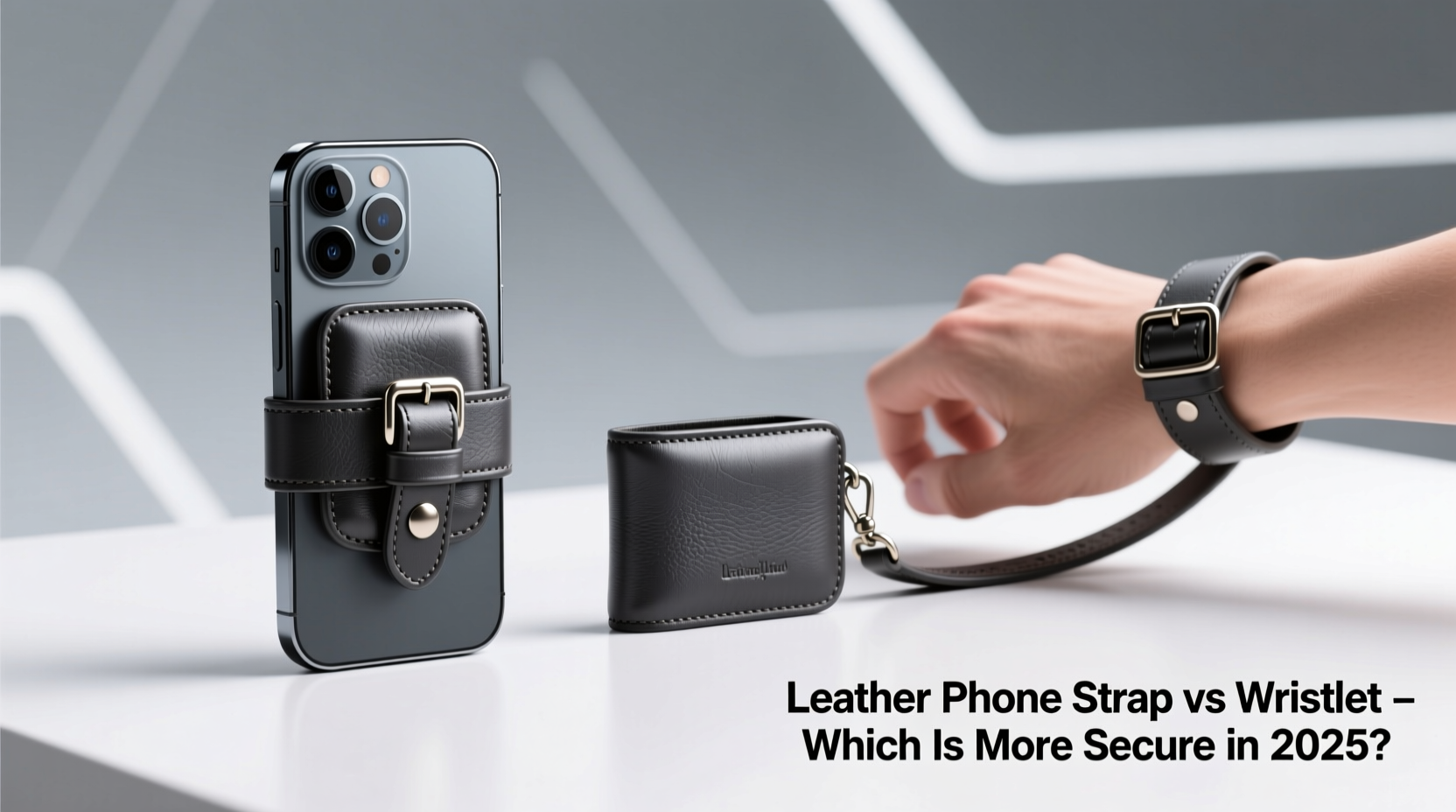
A leather phone strap typically attaches to the back of a phone case or through a lanyard hole, hanging loosely around the neck or over the shoulder. It functions much like a camera strap, distributing weight across the upper body. In contrast, a leather wristlet is a compact band designed to wrap securely around the wrist, often doubling as a cardholder or minimalist wallet. It keeps the phone within immediate reach but restricts mobility due to its fixed position on the hand.
The distinction may seem minor, but it impacts how effectively each accessory prevents loss or theft. Security isn’t just about physical attachment—it’s also about accessibility, situational awareness, and resistance to tampering.
Design and Attachment Mechanisms
Phone straps rely on durable stitching and reinforced anchor points (usually metal D-rings or snap buttons) connected to a case or adhesive plate. Many modern versions use detachable carabiners for quick release. Wristlets, meanwhile, feature adjustable bands with secure closures—often magnetic clasps or buckle systems—and attach directly to cases with integrated loops or slide-in pockets.
While both can be made from full-grain or top-grain leather for durability, their structural integrity under stress varies. Straps distribute tension across a broader area, reducing strain on any single point. Wristlets concentrate force on the wrist joint and closure mechanism, making them more vulnerable during sudden pulls.
Real-World Security: Theft, Drop Risk, and Situational Use
In crowded spaces like subways, festivals, or tourist hubs, pickpocketing remains a persistent threat. Here, wristlets offer a tactical advantage: they’re harder to snatch without direct contact with the wearer’s arm, providing tactile feedback if someone attempts removal. However, this same feature can become a liability—if the phone is grabbed forcefully, the user risks wrist injury or being pulled off balance.
Phone straps, when worn crossbody, allow quicker disengagement. If someone tries to yank the device, the strap can be released or slipped off the shoulder faster than unwrapping a secured wristlet. This makes them safer in volatile situations, though less effective at preventing unnoticed snatching.
“In urban environments, perceived security matters as much as actual tether strength. A wristlet creates psychological ownership—people feel more connected to their device.” — Daniel Reyes, Urban Safety Consultant & Former Law Enforcement Officer
Drop Protection: How They Perform
Drops remain the leading cause of smartphone damage. Both accessories reduce fall risk by keeping the phone physically attached, but their performance differs:
- Wristlets prevent drops almost entirely when properly fastened. Even during vigorous activity, the phone stays within inches of the hand.
- Straps, especially longer ones, allow more swing and movement. A sudden motion—like reaching into a bag or turning quickly—can cause the phone to whip outward and strike surfaces.
That said, shorter strap configurations (e.g., waist-level clips or chest harnesses) minimize swing radius and improve control, particularly for active users.
Comparative Analysis: Leather Phone Strap vs Wristlet in 2025
| Feature | Leather Phone Strap | Wristlet |
|---|---|---|
| Theft Resistance | Moderate – Easy to cut or unclip; visible but not always noticeable | High – Requires direct access to wrist; harder to remove silently |
| Drop Prevention | Good (shorter styles), Fair (longer styles) | Excellent – Immediate hand proximity |
| Comfort Over Time | High – Weight distributed across shoulders | Low to Moderate – Can cause wrist fatigue |
| Quick Access | High – Hangs freely; easy to grab | Moderate – Must unwrap or adjust band |
| Versatility | High – Can double as bag charm or lanyard | Moderate – Often doubles as cardholder |
| Style Flexibility | High – Works with jackets, bags, casual wear | Moderate – Best suited for minimal outfits |
Mini Case Study: Commuter in Tokyo vs Festival-Goer in Barcelona
Consider two realistic scenarios in 2025:
Tokyo Commuter (Aya, 32): Riding packed trains daily, Aya uses a slim leather wristlet with her phone and transit card. She values the constant tactile presence of her device and appreciates that no one can slip her phone out of a pocket. During rush hour, she keeps her hand closed around the phone, minimizing exposure. The wristlet has prevented two attempted grabs in the past year, confirmed by station surveillance footage reviewed after alerts.
Barcelona Festival Attendee (Mateo, 28): At a crowded music festival, Mateo wears a crossbody leather phone strap. He dances frequently and needs freedom of movement. When jostled near the stage, his phone swings but doesn’t fall. Later, when someone reaches for it, he feels the tug immediately and turns—deterrence succeeds. Unlike a wristlet, the strap allows him to release the phone quickly if needed, avoiding potential injury.
Both users stay secure, but their priorities differ: Aya prioritizes retention and anti-theft assurance; Mateo values mobility and situational adaptability.
Expert Recommendations for Maximum Security
Security isn't solely determined by the accessory type—it's amplified by how you use it. Industry experts agree on several best practices for 2025:
- Combine physical tethers with digital safeguards: Enable Find My iPhone or Google’s Find My Device, and set up remote lock/wipe features.
- Choose accessories with breakaway mechanisms: Some premium straps now include shear-release clips that detach under excessive force, preventing injury or theft escalation.
- Use RFID-blocking wristlets: Many modern wristlets include shielded compartments for cards, protecting against wireless skimming in dense crowds.
- Regularly inspect hardware: Check stitching, clasp function, and anchor points monthly for signs of wear.
- Match the accessory to your environment: Opt for wristlets in high-theft zones, straps in dynamic or outdoor settings.
Frequently Asked Questions
Can a leather phone strap really stop theft?
It acts as a deterrent rather than a foolproof barrier. While it won’t stop a determined thief with scissors or brute force, it increases the effort required and draws attention, reducing opportunistic grabs. In most real-world cases, the visibility of a tether discourages quick-pull thefts.
Are wristlets safe for large phones?
Yes, but with caveats. Heavy devices (over 200g) can strain the wrist over time, especially when held at arm’s length. Look for wristlets with padded interiors and wide bands to distribute pressure. Avoid using them during prolonged typing or navigation sessions.
Do these accessories work with all phone cases?
Not universally. Most require either a compatible case with built-in loops or a universal adapter plate. Magnetic wristlets need metal plates or MagSafe-compatible backs. Always confirm compatibility before purchase, especially for rugged or ultra-slim cases.
Final Verdict: Which Is More Secure in 2025?
There is no one-size-fits-all answer, but based on current trends and behavioral data, **wristlets offer superior passive security**—they’re harder to remove without detection and provide constant physical feedback. However, **leather phone straps win in adaptive security**, offering greater flexibility, comfort, and escape potential in dangerous situations.
The future of mobile security lies not in choosing between the two, but in intelligent integration. Hybrid models are already emerging: convertible straps that transform into wristlets, smart leather bands with proximity alarms, and biometric-locked wrist carriers. As we advance deeper into 2025, expect accessories to blend material durability with digital intelligence.
Ultimately, the most secure setup combines a well-chosen leather tether—whether strap or wristlet—with proactive habits: vigilance in crowds, regular maintenance, and layered digital protection.




 浙公网安备
33010002000092号
浙公网安备
33010002000092号 浙B2-20120091-4
Comments
No comments yet. Why don't you start the discussion?