
In a well-curated living space, every object serves a purpose — or at least should. The rise of minimalist design and intentional living has prompted many homeowners to question the necessity of seemingly redundant items. One such debate centers on the leather tissue box cover versus the napkin holder. Both are often crafted from similar materials, styled with comparable elegance, and placed in overlapping spaces like coffee tables, dining areas, or guest rooms. So, do you actually need both? Or is one simply an aesthetic duplication masking functional redundancy?
The answer isn't as straightforward as it might seem. While they may appear interchangeable at first glance, their roles diverge significantly in practice. Understanding when to use each — and whether you can consolidate them — depends on lifestyle, household size, decor philosophy, and usage patterns.
Understanding the Functional Differences
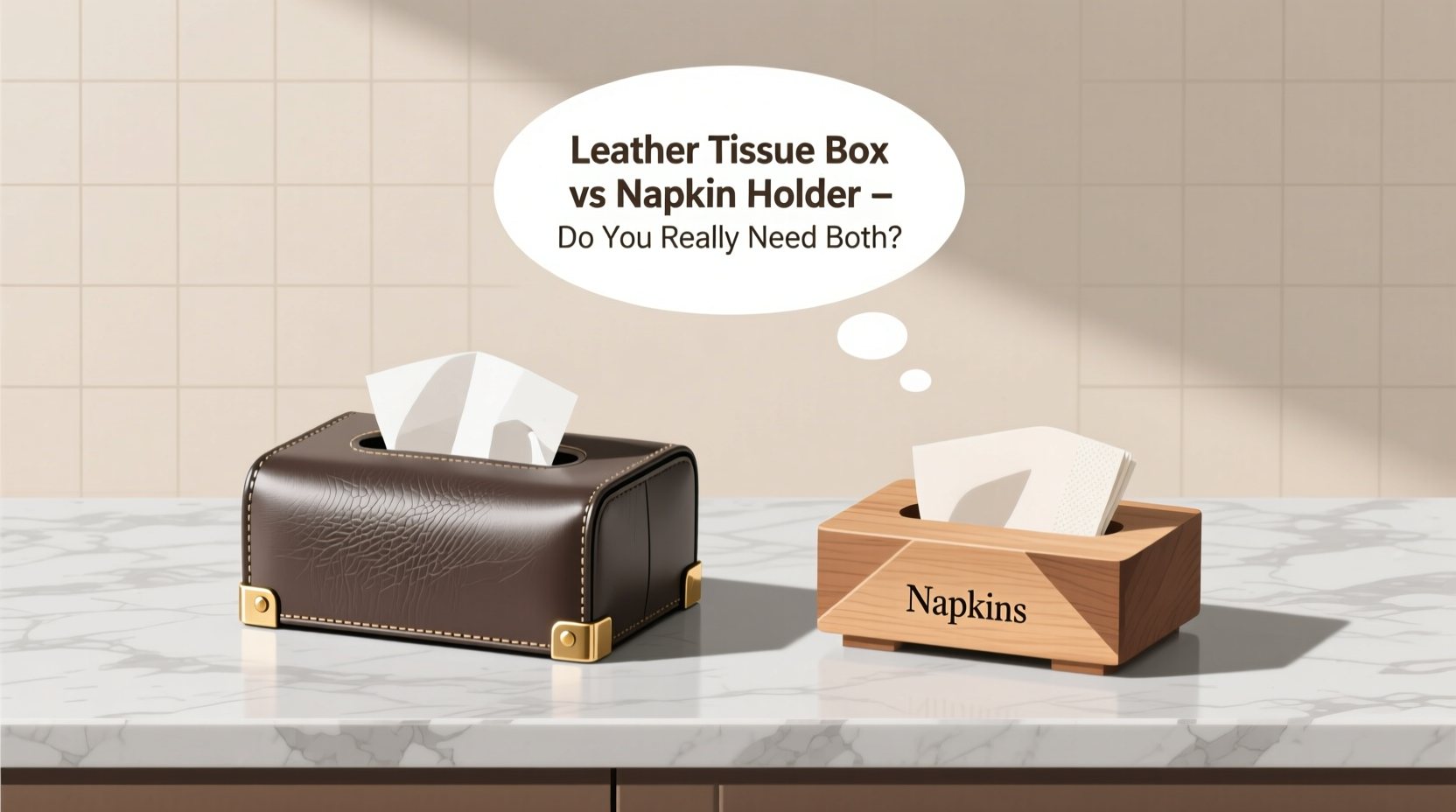
A leather tissue box cover is designed primarily for dispensing facial tissues. It protects the box from dust, conceals its often utilitarian packaging, and elevates the look of a side table or nightstand. These covers typically feature a top slit or open face that allows easy access while maintaining structure and neatness.
In contrast, a napkin holder’s purpose is to store and present cloth or paper napkins in a dining or entertaining context. Napkin holders come in various forms — from vertical slots to open trays — and are commonly used during meals to keep napkins clean, folded, and within reach.
Despite their shared material (often genuine or faux leather) and decorative appeal, these items serve different moments in daily life: one supports hygiene and comfort in lounging or resting areas; the other facilitates dining etiquette and table presentation.
“Functionality should never be sacrificed for aesthetics — but when done right, both coexist seamlessly.” — Clara Nguyen, Interior Stylist & Sustainable Living Advocate
When You Might Need Both
There are specific scenarios where owning both a leather tissue box and a napkin holder makes perfect sense:
- Entertaining frequently: Hosts who regularly invite guests benefit from having napkins readily available in the dining area and tissues accessible in lounge zones.
- Multi-room households: Larger homes may have separate seating and dining areas, making dual placement logical rather than repetitive.
- Family homes with children: Kids generate higher demand for both tissues and napkins, increasing the utility of dedicated storage in multiple locations.
- Different materials in use: If you use cloth napkins for meals but prefer disposable tissues for cold season, separate holders prevent cross-contamination and maintain order.
When One Can Replace the Other
For smaller apartments, minimalist interiors, or low-traffic homes, consolidating into a single multi-use item is not only possible — it’s advisable. Many modern designs now blur the line between tissue box covers and napkin dispensers, offering hybrid functionality.
Some leather-covered boxes are sized to accommodate standard dinner napkins folded in thirds. Others feature removable inserts or adjustable flaps that allow switching between uses depending on the occasion.
If you rarely host formal meals, or if your household uses paper towels instead of napkins, then a napkin holder may be superfluous. Conversely, if everyone carries pocket tissues and illness is managed privately, a decorative tissue box might be more symbolic than useful.
Hybrid Use Tips
- Fold larger napkins to fit a standard tissue box opening without jamming.
- Label the box subtly (e.g., with a small engraved tag) to avoid confusion.
- Rotate contents seasonally — tissues in winter, napkins in summer during BBQ months.
- Choose neutral-toned leather that complements both casual and formal settings.
Comparison Table: Tissue Box vs Napkin Holder
| Feature | Leather Tissue Box Cover | Napkin Holder |
|---|---|---|
| Primary Use | Dispense facial tissues | Store and present napkins |
| Ideal Location | Living room, bedroom, office | Dining table, kitchen counter |
| Typical Size | Fits standard 100–130 ct tissue box | Holds 12–24 folded napkins |
| Material Flexibility | Usually rigid structure | Can be open, flexible, or collapsible |
| Aesthetic Role | Discreet elegance, hides packaging | Table accent, part of place setting |
Real-Life Example: The Minimalist Apartment Dilemma
Sophie, a graphic designer living in a 500-square-foot studio in Portland, initially purchased both a cognac leather tissue box for her sofa nook and a matching napkin holder for her breakfast bar. After six months, she realized neither was being used consistently. The tissue box sat empty most weeks because she kept travel packs in her bag, and the napkin holder gathered dust — she usually ate standing up or used reusable towels stored in a drawer.
She replaced both with a single medium-sized leather box that could hold either folded cloth napkins or a spare tissue pack. By rotating its contents monthly, she maintained flexibility without clutter. “It felt silly to own two nearly identical items just because they had different labels,” she said. “Once I stopped thinking about them as sacred categories, combining them made total sense.”
Checklist: Do You Really Need Both?
Before purchasing or keeping both items, ask yourself the following:
- ✅ Do I entertain guests often enough to justify dedicated napkin presentation?
- ✅ Is there visible clutter when tissues or napkins are left out in their original packaging?
- ✅ Are my living and dining areas physically separated enough to warrant duplicate organizers?
- ✅ Am I using both items daily, or are one or both sitting unused?
- ✅ Can a single high-quality piece fulfill both roles seasonally or situationally?
If three or more answers are “no,” consolidation is likely the smarter choice.
FAQ
Can I put napkins in a leather tissue box?
Yes, provided the napkins are folded to fit through the dispensing slot. Standard dinner napkins (typically 16”–20”) folded into thirds usually work well in most tissue box openings.
Are leather napkin holders practical for everyday use?
They can be, especially if you use cloth napkins regularly. However, frequent washing may wear down leather over time unless properly conditioned. Consider wipeable linings or removable fabric liners for easier maintenance.
What’s more hygienic — a covered tissue box or loose napkins?
A covered tissue box reduces airborne dust and contaminants. For napkins, a closed holder keeps them cleaner than leaving them exposed. In high-traffic areas, enclosed storage wins for hygiene.
Conclusion: Prioritize Purpose Over Possession
The decision to keep both a leather tissue box and a napkin holder shouldn’t be driven by tradition or matching sets. It should stem from actual usage, spatial logic, and lifestyle needs. In many cases, one well-chosen piece can gracefully serve both functions — reducing visual noise and promoting mindful consumption.
Home organization isn’t about filling every container; it’s about eliminating the unnecessary so the essential can shine. Whether you choose duality or unity, let intention guide your choices.




 浙公网安备
33010002000092号
浙公网安备
33010002000092号 浙B2-20120091-4
Comments
No comments yet. Why don't you start the discussion?