
In a world where everyday accessories double as self-expression, keychains have evolved far beyond simple metal rings. The rise of novelty designs—like the whimsical light bulb buckle and the utilitarian carabiner—has sparked debate: are these trendy options genuinely useful, or just playful distractions? While both styles stand out in design and function, their real value lies in how well they serve daily needs. This article dives deep into the practicality of light bulb buckles versus carabiner keychains, comparing durability, utility, portability, and user experience to help you decide which—if either—is worth adding to your pocket or bag.
Understanding the Designs: Form Meets Function
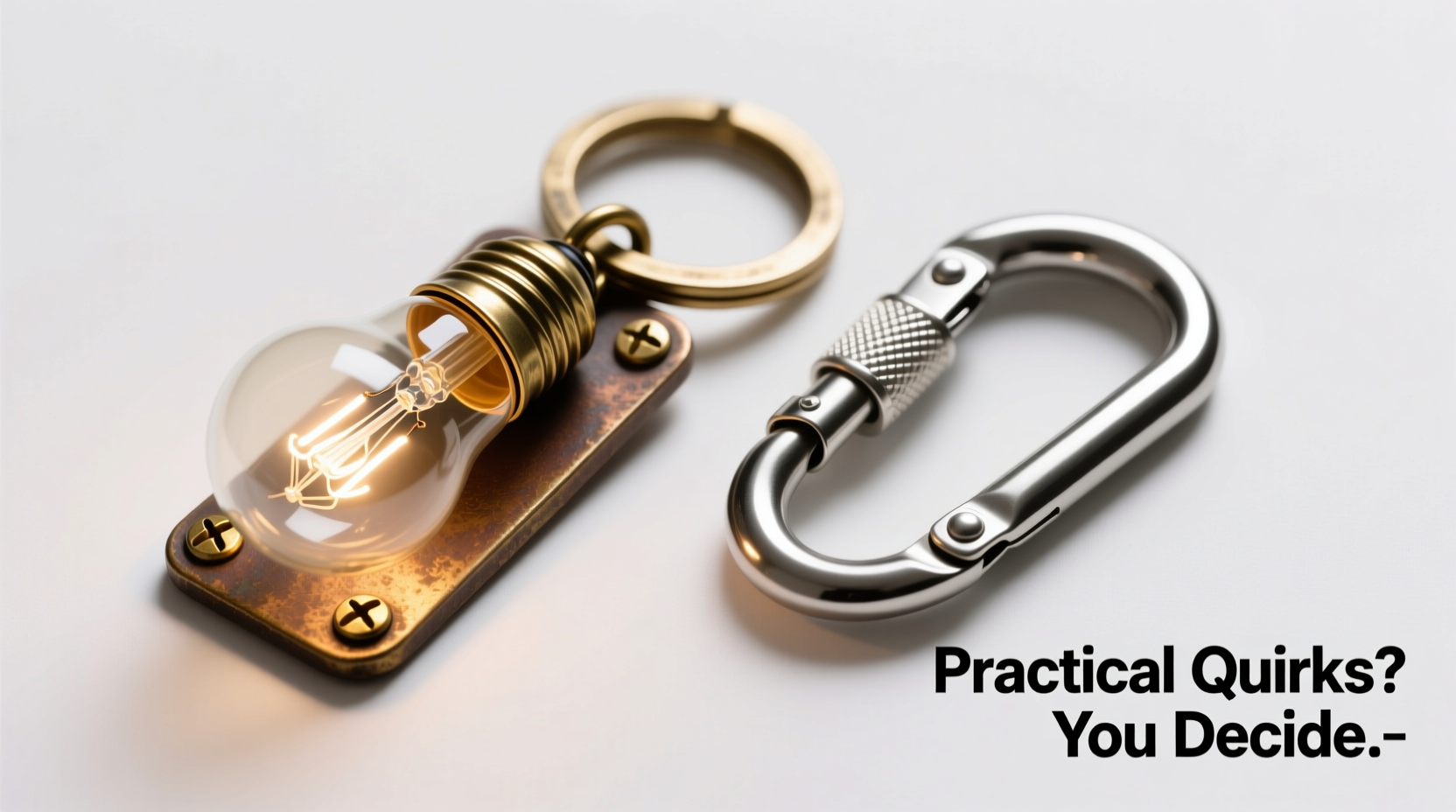
The light bulb buckle keychain is a recent favorite among fashion-forward accessory lovers. Shaped like a vintage-style light bulb with a threaded metal base, it often features a small clasp or loop at the bottom for attaching keys. Its charm lies in its visual appeal—evoking creativity, innovation, or nostalgia—and it's commonly found on leather straps, minimalist wallets, or as standalone decorative pieces.
On the other hand, the carabiner keychain borrows directly from outdoor gear. Originally designed for climbers to connect ropes and harnesses, the compact version used for keys retains the same spring-loaded gate mechanism. It’s typically made from lightweight aluminum or stainless steel and excels in quick attachment and detachment from belts, bags, or loops.
At first glance, one feels like art; the other, engineering. But how do they perform when subjected to real-life demands?
Practicality Face-Off: A Side-by-Side Comparison
| Feature | Light Bulb Buckle Keychain | Carabiner Keychain |
|---|---|---|
| Durability | Varies by material; cheaper versions may chip or tarnish. Glass-like finishes are fragile. | High—especially aluminum or steel models. Built to withstand stress and repeated use. |
| Attachment Ease | Moderate—often requires threading keys onto a fixed loop. Can be awkward with multiple keys. | Excellent—snap-open gate allows instant key loading and unloading. |
| Portability | Bulky due to shape; may snag or roll in pockets. | Compact and flat profile; slides easily into pockets or clips securely to gear. |
| Security | Low to moderate—no locking mechanism; keys can slip off if the loop loosens. | High—gate locks shut automatically; some models include screw-lock gates for added safety. |
| Aesthetic Appeal | High—unique, conversation-starting design. Popular in streetwear and minimalist fashion. | Functional but stylish in a rugged, outdoor-inspired way. Favored by urban commuters and hikers. |
| Multipurpose Use | Limited—primarily decorative or symbolic. | High—can clip water bottles, tools, flashlights, or gear to backpacks, belts, or bikes. |
When Quirky Becomes Useful: Real-World Scenarios
The true test of any accessory is how it performs under routine use. Consider Alex, a graphic designer who commutes daily via bike and public transit. They initially chose a light bulb buckle keychain because it matched their creative persona. However, after two weeks, the enamel finish chipped from rubbing against their phone in a crowded train. Worse, retrieving keys required fumbling with the small loop while wearing gloves.
Switching to a titanium carabiner keychain transformed their routine. Not only could they attach keys instantly, but they also began clipping their house key to their belt loop during work hours—keeping it secure and accessible. On weekends, the same carabiner held a mini flashlight during trail runs. For Alex, functionality outweighed flair.
Expert Insight: What Designers and Engineers Say
“Form without function leads to frustration. A keychain should disappear into your life—not demand attention every time you use it.” — Lena Patel, Industrial Designer at Urban Gear Labs
“Carabiners are engineered for load-bearing reliability. Even miniaturized versions inherit that DNA. Light bulb designs? They’re about storytelling, not strength.” — Marcus Reed, Outdoor Equipment Engineer
These perspectives highlight a fundamental divide: emotional resonance versus mechanical reliability. While the light bulb buckle speaks to identity and individuality, the carabiner answers to efficiency and resilience.
Maximizing Practicality: A Step-by-Step Guide to Choosing the Right Keychain
Selecting between these two styles isn’t just about preference—it’s about aligning with your lifestyle. Follow this decision-making process:
- Assess Your Daily Routine: Do you hike, cycle, or carry multiple items? Opt for the carabiner. If you prioritize aesthetics for office or social settings, the light bulb may suffice.
- Evaluate Key Load: Heavy keysets strain delicate buckles. Carabiners handle weight better, especially those rated above 5 kN (kilonewtons).
- Test Accessibility Needs: Frequent key access? A carabiner’s quick-release gate wins. Occasional use? A decorative piece might be acceptable.
- Consider Longevity: Will you replace it yearly (go decorative), or want a decade-long companion (choose durable metal)?
- Match to Carry Method: Clipping to a belt or bag favors carabiners. Tucking into a pocket or wallet suits smaller, smoother designs—even if less flashy.
Tips for Getting the Best of Both Worlds
You don’t have to choose one over the other. Many users combine style and function by pairing a carabiner with a small light bulb charm attached to a secondary ring. This hybrid approach maintains ease of use while preserving visual interest.
- Use a slim carabiner as the primary connector and add the light bulb as a dangling accent.
- Choose a light bulb buckle made with reinforced zinc alloy instead of hollow brass to improve durability.
- Look for carabiners with engraved or colored finishes to add personality without sacrificing strength.
Frequently Asked Questions
Can a light bulb buckle keychain be repaired if damaged?
Possible in some cases. Minor scratches on metal can be buffed, but chipped paint or broken glass-like coatings are usually irreversible. Due to their niche design, replacement parts are rarely available.
Are carabiner keychains safe for everyday carry?
Yes, especially those labeled “keychain-rated” or “non-climbing grade.” Full-strength climbing carabiners are over-engineered for keys, but even lightweight models undergo stress testing. Avoid cheap, unbranded versions that may have weak gates.
Do light bulb buckles have any functional advantage?
Not mechanically. Their benefit is psychological or symbolic—many associate them with ideas, inspiration, or innovation. Some users report feeling more confident or creative carrying one, which counts in personal branding or client meetings.
Final Verdict: Style Versus Substance
The light bulb buckle keychain thrives in contexts where expression matters most. It’s ideal for gifting, fashion statements, or complementing curated lifestyles. However, its fragility and limited utility make it a poor choice for high-use scenarios.
The carabiner, meanwhile, proves its worth through relentless practicality. It’s faster, stronger, and more adaptable. Whether clipping keys to a backpack strap during travel or securing a tool mid-task, it reduces friction in daily logistics.
Ultimately, practicality depends on your priorities. If being seen matters more than efficiency, go quirky. If getting things done does, go rugged.




 浙公网安备
33010002000092号
浙公网安备
33010002000092号 浙B2-20120091-4
Comments
No comments yet. Why don't you start the discussion?