
Every day, millions of people reach for a handbag before heading out the door. Whether it’s a sleek crossbody, a structured tote, or an elegant clutch, the choice often comes down to convenience, occasion, and aesthetics. But few consider one critical factor: weight. Is carrying a heavy handbag worth the toll on your body? And can a lightweight alternative still reflect your personal style? The answer isn’t just about comfort—it’s about long-term health, functionality, and fashion intelligence.
As handbags grow in size and contents—laptops, tablets, makeup kits, water bottles—the average load has increased dramatically. What once carried keys and lipstick now resembles a mobile office. This shift raises important questions: Does the weight of your handbag affect your spine and posture? Can you stay stylish without sacrificing ergonomics? Let’s explore the real impact of lightweight versus heavy handbags on both your back and your look.
The Physical Cost of Carrying a Heavy Handbag
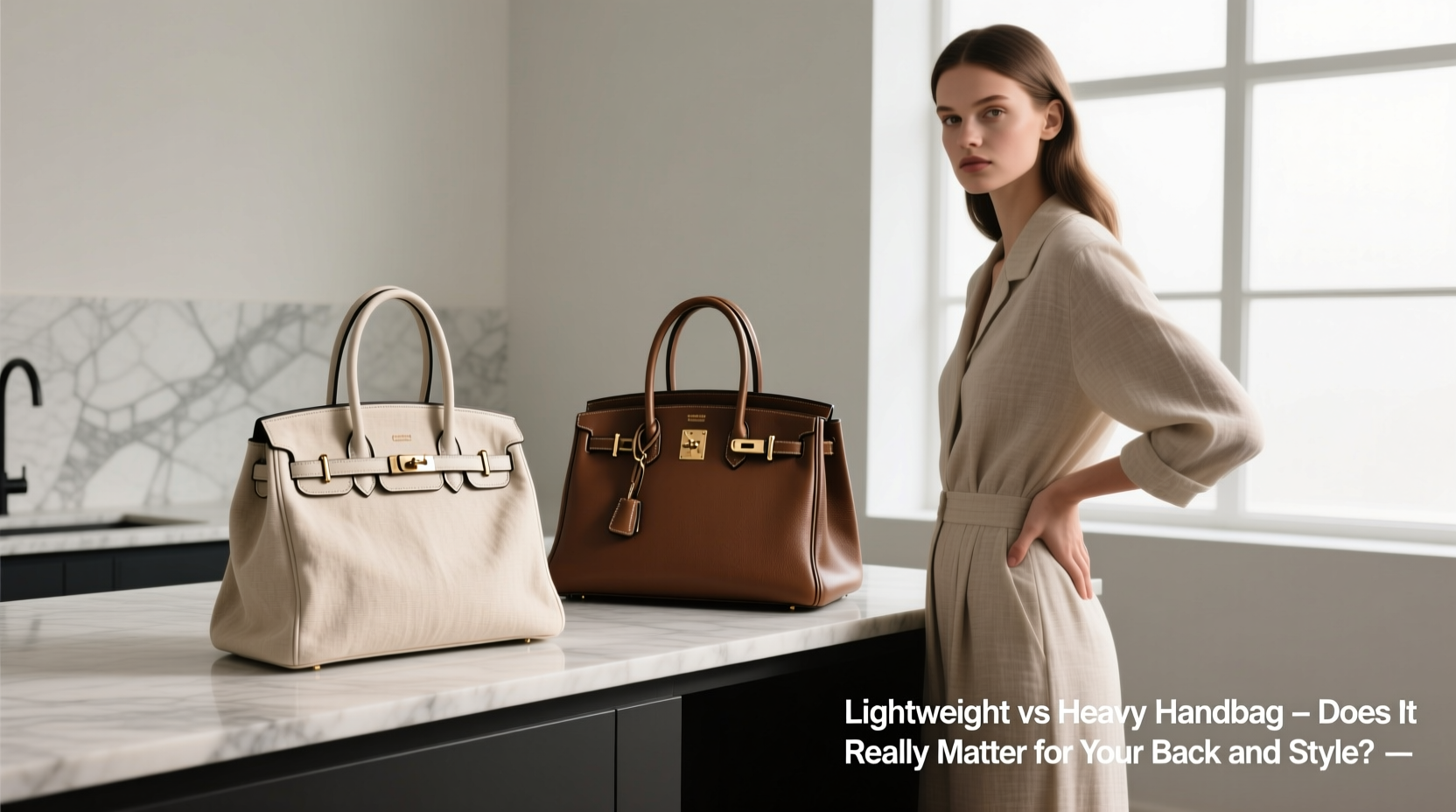
Carrying a heavy bag, especially on one shoulder, creates muscular imbalances. When weight is unevenly distributed, the body compensates by shifting posture, often leading to tension in the neck, shoulders, and upper back. Over time, this strain can contribute to chronic pain, spinal misalignment, and even nerve compression.
A 2020 study published in the Journal of Physical Therapy Science found that women who regularly carried bags weighing more than 4.4 pounds (2 kg)—roughly the weight of a large hardcover book—reported significantly higher rates of shoulder pain and postural deviation. The risk increases when the same side is used consistently, as many do with shoulder or messenger bags.
“Carrying excessive weight on one side of the body forces muscles to work asymmetrically. This imbalance can lead to scoliosis-like symptoms over time.” — Dr. Lena Torres, Orthopedic Specialist
The spine is designed to maintain a neutral alignment. When disrupted by constant lateral pull from a heavy bag, the natural curvature adjusts, potentially causing disc pressure, reduced mobility, and long-term discomfort.
How Lightweight Bags Improve Posture and Comfort
Lightweight handbags aren’t just trendy—they’re biomechanically smarter. Constructed from materials like nylon, microfiber, or ultra-thin leather, these bags reduce overall load while maintaining durability. Their design often encourages minimalism, prompting users to carry only essentials.
Crossbody and backpack-style light bags distribute weight across both shoulders or the chest and back, reducing strain on any single area. This balanced support helps preserve spinal alignment and reduces fatigue during extended wear.
Additionally, lightweight bags are easier to switch between sides or hands, allowing for natural movement variation throughout the day. This dynamic use prevents muscle overuse and supports better circulation.
Real Example: A Week in Two Bags
Sophia, a 34-year-old marketing executive, switched from her 7-pound leather tote to a 1.8-pound nylon crossbody for one week. Her usual tote held her laptop, planner, lunch container, and multiple cosmetics. After switching, she reported less shoulder stiffness, improved energy levels, and even noticed standing taller. “I didn’t realize how much I was hunching until I stopped,” she said. “Now I feel lighter—literally and mentally.”
Style vs. Substance: Can Light Bags Be Fashionable?
Historically, luxury and structure equated to heavier materials. Thick leather, metal hardware, and reinforced stitching added prestige but also pounds. Today, fashion is evolving. Designers like Stella McCartney, Matt & Nat, and even mainstream brands such as Longchamp and Tumi now prioritize lightweight innovation without compromising elegance.
Modern minimalist silhouettes, soft curves, and ergonomic shapes prove that style doesn’t require heft. Neutral tones, clean lines, and thoughtful detailing allow lightweight bags to transition seamlessly from office to evening outings.
Moreover, the rise of “quiet luxury” emphasizes understated sophistication—where quality craftsmanship speaks louder than bulk. A well-designed, featherlight satchel in buttery vegan leather can make a stronger impression than an overstuffed, sagging tote.
| Feature | Heavy Handbag | Lightweight Handbag |
|---|---|---|
| Weight Range | 5–10+ lbs | 0.5–3 lbs |
| Material Density | Thick leather, metal accents | Nylon, microfiber, thin leather |
| Ease of Movement | Limited; causes strain | High; promotes agility |
| Postural Impact | High risk of imbalance | Low risk; balanced wear |
| Fashion Perception | Traditional, professional | Modern, minimalist, eco-conscious |
| Lifespan | Long if maintained | Varies; newer materials may degrade faster |
Choosing the Right Bag: A Practical Guide
Selecting between lightweight and heavy depends on your lifestyle, needs, and physical sensitivity. Here’s a step-by-step approach to making the best choice:
- Assess Your Daily Load: List what you truly need to carry. Eliminate duplicates (e.g., two lipsticks, extra chargers).
- Weigh Your Current Bag: Use a kitchen scale. If it exceeds 10% of your body weight, consider downsizing.
- Evaluate Carry Style: Shoulder bags strain one side. Opt for crossbody, backpack, or wheeled styles when possible.
- Test Ergonomics: Try the bag loaded with your usual items. Walk for five minutes. Notice any pulling, slipping, or discomfort.
- Prioritize Function First: Match bag size to purpose. A weekend getaway needs more space than a dinner date.
Checklist: Picking a Back-Friendly, Stylish Bag
- ✅ Weight under 3 pounds when fully loaded
- ✅ Adjustable, padded straps for comfort
- ✅ Balanced design (symmetrical weight distribution)
- ✅ Enough compartments to avoid overstuffing
- ✅ Material suited to your climate and usage (water-resistant if needed)
- ✅ Reflects your personal aesthetic—don’t sacrifice style for function alone
Expert Insight: The Future of Functional Fashion
Fashion is catching up with wellness. As consumers demand healthier accessories, designers are responding with smart integration of form and function.
“The next wave of luxury isn’t just about how a bag looks—it’s about how it feels after eight hours of wear. Lightweight, sustainable, and supportive designs are no longer niche; they’re essential.” — Marcus Lin, Fashion Innovation Consultant
Brands are investing in advanced textiles—like recycled ripstop nylon and bio-based leathers—that offer strength without excess weight. Magnetic closures, modular interiors, and convertible straps enhance usability while reducing bulk.
Frequently Asked Questions
Can a heavy handbag cause permanent back damage?
While occasional use is unlikely to cause lasting harm, chronic carriage of heavy bags—especially on one shoulder—can lead to muscular imbalances, disc strain, and postural changes. Over years, this may contribute to degenerative conditions. Prevention through mindful loading and proper bag selection is key.
Are backpacks better than handbags for back health?
In most cases, yes. Backpacks distribute weight evenly across both shoulders and align closely with the spine’s center of gravity. However, poorly fitted or overloaded backpacks can still cause issues. Look for models with chest and waist straps for added stability.
Do lightweight bags last as long as heavy ones?
It depends on materials and construction. Some lightweight synthetics may wear faster than full-grain leather, but high-end technical fabrics are engineered for durability. Regular care—cleaning, storing properly, avoiding overloading—extends any bag’s lifespan regardless of weight.
Conclusion: Make the Smart Choice for Body and Style
The debate between lightweight and heavy handbags isn’t just about preference—it’s about long-term well-being and intelligent design. While a substantial tote might project professionalism, a thoughtfully chosen lightweight bag can offer equal sophistication with far less physical cost.
You don’t have to choose between looking good and feeling good. Modern fashion empowers you to have both. By prioritizing ergonomics, minimizing unnecessary load, and selecting designs that support your body, you invest not only in your wardrobe but in your health.




 浙公网安备
33010002000092号
浙公网安备
33010002000092号 浙B2-20120091-4
Comments
No comments yet. Why don't you start the discussion?