
Cropped trousers have become a staple in modern professional wardrobes—offering a clean, contemporary silhouette that bridges smart casual and formal dressing. Paired correctly, they project confidence and attention to detail. But when it comes to footwear, the choice between loafers and Oxfords can dramatically alter the impression you make. Both are classics, both are versatile, but only one may deliver the sharper, more polished look depending on context, cut, and corporate culture.
This article breaks down the nuances of pairing loafers and Oxfords with cropped trousers in a work setting. From construction and formality to color coordination and sock strategy, we’ll explore what makes each shoe shine—and where each falls short.
The Anatomy of a Sharp Look: Fit, Proportion, and Formality
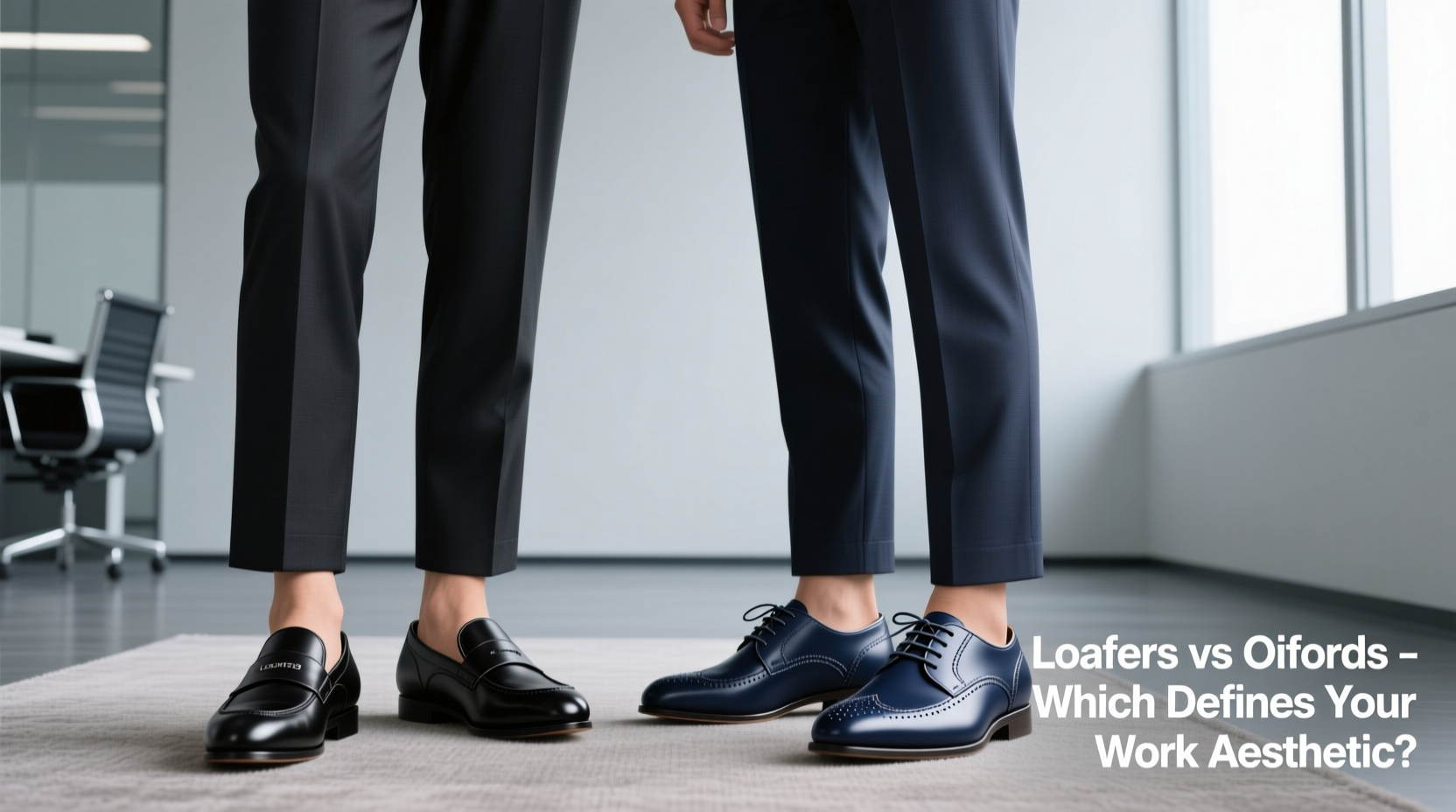
A sharp appearance isn’t just about individual pieces—it’s how they interact. Cropped trousers typically end at or just above the ankle, exposing more of the shoe and sock than full-length pants. This increased visibility means every element of your footwear becomes part of the visual narrative.
Formality is dictated not just by occasion, but by structure. Oxfords are traditionally considered the most formal men’s shoes due to their closed lacing system, sleek lines, and minimal ornamentation. Loafers, while elegant, sit in a slightly more relaxed zone—ideal for business-casual or creative environments.
When evaluating which looks sharper, consider three key factors:
- Shoe construction: Blake-stitched vs Goodyear-welted, leather quality, toe shape.
- Trouser break (or lack thereof): No break emphasizes the shoe; even a slight gap must be intentional.
- Overall ensemble cohesion: Does the shoe complement the fabric weight, color tone, and jacket style?
Oxfords: The Benchmark of Professional Polish
Oxfords are defined by their closed lacing system—where the vamp and quarters are stitched beneath the eyelets. This creates a smooth, low-profile front that exudes precision. In classic black or dark brown calf leather, an Oxford is the default choice for boardrooms, client meetings, and formal office settings.
When paired with cropped trousers, Oxfords offer several advantages:
- Visual continuity: Their elongated toe and structured last stretch the line of the leg, enhancing height and proportion.
- Dress code alignment: They meet or exceed most corporate dress standards without appearing outdated.
- Versatility in styling: Can be worn with or without socks (though no-show socks are recommended for hygiene).
A well-polished pair of cap-toe Oxfords in black calfskin with navy cropped wool trousers and a crisp white shirt forms one of the sharpest combinations available. The contrast between the deep black shoe and light ankle exposure keeps the look grounded yet modern.
“Oxfords remain the gold standard for executive presence. When paired with cropped trousers, they emphasize intentionality—every detail has been considered.” — Marcus Langley, Menswear Stylist & Consultant
Best Practices for Wearing Oxfords with Cropped Trousers
- Choose a slim, modern last (e.g., Dainite or chiseled toe) to avoid bulkiness.
- Ensure trousers are hemmed to sit flush with the top of the shoe when standing.
- Opt for plain-toe or cap-toe styles; broguing adds character but reduces formality.
- Match leather tone to belt; avoid mismatched finishes (e.g., patent shoes with matte belt).
- Use invisible no-show socks in neutral tones to maintain a bare-foot illusion without odor risk.
Loafers: Effortless Sophistication with Caveats
Loafers represent a different kind of elegance—one rooted in ease, heritage, and subtle confidence. From penny loafers to tassel variants and minimalist slip-ons, they eliminate laces for a streamlined effect. While inherently less formal than Oxfords, high-quality loafers in rich leathers can still command respect in many workplaces.
Their strength lies in versatility. A dark burgundy horsebit loafer with charcoal cropped trousers and a textured blazer reads as intelligent, fashion-aware, and approachable—perfect for tech startups, design firms, or agencies where creativity is valued.
However, loafers demand more careful curation when worn with cropped trousers. Because they expose more of the heel and collar, any sign of wear—creases, scuffs, or poor polish—becomes immediately visible. Additionally, their lower profile can sometimes shorten the leg line if the trouser hem isn’t perfectly aligned.
In conservative industries like law or finance, even the finest loafers may be perceived as too informal unless strictly limited to “casual Fridays” or off-site meetings.
Types of Loafers and Their Workplace Suitability
| Type | Formality Level | Best With | Avoid If |
|---|---|---|---|
| Penny Loafer | Moderate | Cotton chinos, summer suits | Dress code requires lace-ups |
| Bit Loafer (Horsebit) | High-Moderate | Wool trousers, tailored jackets | Company culture is traditional |
| Tassel Loafer | Moderate | Creative offices, evening events | Seeking understated authority |
| Beefroll Loafer | Low-Moderate | Casual Fridays, weekend errands | Attending formal presentations |
| Minimalist Leather Slip-On | Moderate | Modern cropped tailoring | Wool socks create bulk |
Real-World Scenario: Two Professionals, Two Choices
Consider two colleagues attending the same quarterly presentation at a mid-sized financial advisory firm.
James wears navy cropped wool trousers, a light blue pinpoint cotton shirt, a navy tie, and black cap-toe Oxfords with no-show socks. His look is crisp, authoritative, and aligns with decades of corporate tradition. Clients perceive him as reliable and detail-oriented. He receives nods of approval from senior partners.
David, equally competent, opts for dark brown suede tassel loafers with the same outfit. While stylish, the texture contrast between suede and wool draws unintended attention. The lack of lacing softens his silhouette, and one client later remarks he “seemed more like a guest than a lead advisor.”
Neither look is objectively wrong—but James’s choice of Oxfords communicated seriousness more effectively in that environment. David’s loafers would have excelled in a creative agency or startup pitch, where originality is prized over protocol.
This illustrates a core truth: sharpness isn’t just about aesthetics—it’s about alignment with expectations.
Which Looks Sharper? A Contextual Verdict
If judged purely on visual precision, structural integrity, and sartorial hierarchy, Oxfords win in most traditional work environments. Their closed lacing, higher vamp, and consistent polish create a longer, leaner line that complements cropped trousers beautifully. They also carry centuries of institutional trust.
However, in progressive, design-forward, or hybrid-casual workplaces, **well-chosen loafers** can appear just as sharp—if not more so—because they signal confidence in personal style. A black leather bit loafer with a mirror shine, paired with charcoal cropped flannel and a midnight blue knit tie, projects modern authority.
The deciding factor isn't the shoe itself, but how it's styled and where it's worn.
Checklist: Choosing Between Loafers and Oxfords for Cropped Trousers
- ✅ Assess your workplace dress code: Is it traditional, business-casual, or creative?
- ✅ Evaluate the formality of the event: Presentation, meeting, or daily wear?
- ✅ Match leather finish: Patent or high-shine for Oxfords; matte or semi-gloss for loafers.
- ✅ Coordinate sock length: Invisible socks for both, but ensure no ankle skin shows unintentionally.
- ✅ Prioritize fit: Shoes should feel snug but not tight; avoid slouching loafers.
- ✅ Consider color harmony: Black Oxfords with cool-toned trousers; brown loafers with warm tones.
- ✅ Inspect condition: Scuffed loafers look sloppy; scratched Oxfords look neglected.
Frequently Asked Questions
Can I wear loafers to a job interview with cropped trousers?
It depends on the company. In tech, media, or creative roles, a sleek leather loafer can demonstrate style awareness. In law, banking, or government, stick with Oxfords. When in doubt, choose the more formal option.
Do I need socks with cropped trousers and Oxfords?
You don’t *need* visible socks, but going completely barefoot risks sweat, odor, and friction damage. Use breathable no-show socks in a color matching your skin or trousers to maintain the bare-ankle illusion safely.
Are monk strap shoes a better alternative?
Single or double monk straps offer a middle ground—more formal than loafers, less conventional than Oxfords. In a fashion-conscious office, a black double monk can outshine both, especially with cropped tailored pants. Just ensure the buckle is polished and centered.
Final Thoughts: Precision Over Preference
The debate between loafers and Oxfords with cropped trousers ultimately hinges on intent. If your goal is to project unambiguous professionalism—especially in hierarchical or conservative fields—Oxfords are the superior choice. Their structure, history, and visual continuity with tailored clothing make them the benchmark of sharpness.
Loafers, meanwhile, thrive where individuality is welcomed. They offer comfort, speed, and a touch of continental flair. But they require higher curation: impeccable condition, thoughtful pairing, and cultural awareness.
Regardless of your pick, remember this: sharpness comes not from the shoe alone, but from the totality of execution—the fit of the trousers, the polish of the leather, the coordination of colors, and the confidence with which you wear them.




 浙公网安备
33010002000092号
浙公网安备
33010002000092号 浙B2-20120091-4
Comments
No comments yet. Why don't you start the discussion?