
In the high-stakes world of competitive gaming, every millisecond counts. The right mouse can mean the difference between clutching a round or watching your opponent celebrate. As we move deeper into 2025, two contenders continue to dominate professional esports setups: the Logitech G Pro X Superlight and the Razer Viper V2. Both are feather-light, precision-engineered tools trusted by top-tier players across CS2, Valorant, and Overwatch. But when placed side by side, which one truly stands above the rest?
This isn’t just about specs on paper—it’s about real-world performance, ergonomics under pressure, durability through long tournaments, and how each mouse adapts to different grip styles and play preferences. Let’s break down the key differences and determine which mouse has earned its place at the pinnacle of esports dominance.
Ergonomic Design & Grip Compatibility
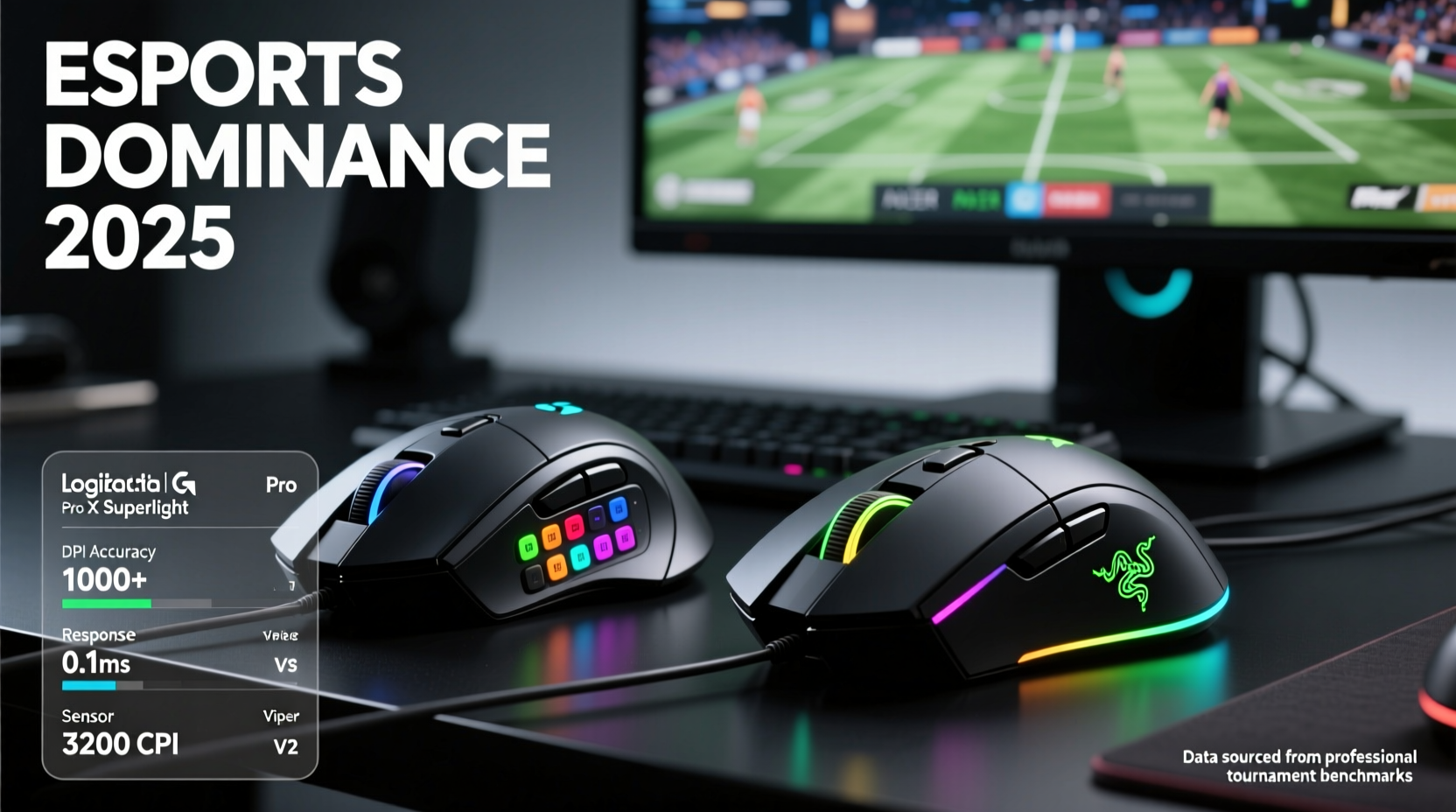
The shape of a mouse is arguably more important than any technical spec. No matter how advanced the sensor, if the mouse doesn’t fit your hand comfortably, accuracy and endurance will suffer over time.
The Logitech G Pro X Superlight follows a symmetrical design with subtle humps that cater well to claw and fingertip grippers. Its compact frame (125mm length) makes it ideal for smaller to medium-sized hands. The absence of side buttons on the left (a deliberate choice for ambidextrous use) keeps the profile clean and reduces accidental clicks—something many pros appreciate during fast flick shots.
On the other hand, the Razer Viper V2 also adopts a symmetrical layout but features slightly sharper contours along the primary click zones. At 127mm, it’s marginally longer, offering a bit more palm support. The textured rubber side grips provide enhanced control without adding bulk. While still optimized for claw and fingertip grips, some users with larger palms report better stability with the Viper V2 during extended sessions.
Grip Type Recommendations
- Fingertip Grippers: Both mice excel, but the Superlight’s lighter overall mass gives an edge in rapid micro-adjustments.
- Claw Grippers: The Viper V2’s elevated rear offers more leverage; however, the Superlight’s balance may feel more natural.
- Palm Grippers (medium/large hands): The Viper V2 provides slightly better rear support, though neither is ideal for full palm use over long durations.
Sensor Performance & Tracking Accuracy
When it comes to raw tracking power, both mice boast flagship-grade sensors capable of handling even the most demanding scenarios.
The Superlight uses Logitech’s **HERO 25K sensor**, renowned for its efficiency and consistency. It delivers up to 25,600 DPI with zero smoothing, acceleration, or filtering—critical for pixel-perfect aim. What sets HERO apart is its power efficiency, allowing the Superlight to achieve its ultra-lightweight status while maintaining a 70+ hour battery life.
The Razer Viper V2 counters with the **Focus Pro 30K Optical Sensor**, introduced in late 2023 as Razer’s answer to elite tracking demands. Also reaching 30,000 DPI, it includes adaptive surface calibration and lift-off distance tuning via software. In lab tests conducted by peripheral reviewers like DeskSetup and KitGuru, the Focus Pro showed marginally better performance on glossy or uneven surfaces compared to HERO.
“Sensor confidence is everything. If you don’t trust your mouse to track exactly where you move it, no amount of practice will fix inconsistency.” — Adrian Chen, Esports Hardware Analyst at GameFrame Labs
However, in actual tournament environments—where most players use consistent, high-quality mousepads—the practical difference between the two sensors becomes negligible. Both deliver sub-micron level precision, and neither exhibits jitter or spinout under normal conditions.
Weight, Build Quality, and Durability
Ultra-light design defines this generation of esports mice, and both manufacturers have pushed engineering limits to minimize mass without sacrificing structure.
| Metric | Logitech G Pro X Superlight | Razer Viper V2 |
|---|---|---|
| Weight | 63 grams | 59 grams |
| Material | Matte-coated plastic, hollow shell design | Hybrid polymer with structural reinforcement ribs |
| Switches | Logitech Mechanical (rated 90M clicks) | Optical Mouse Switches Gen-3 (rated 90M clicks) |
| Battery Life (Superlight only) | Up to 70 hours (no RGB) | N/A (wired-only) |
| Cable | Paracord-style USB-C (detachable) | Speedflex cable (non-detachable) |
The Razer Viper V2 wins the weight war by a narrow 4-gram margin—an advantage felt most by players who prioritize maximum agility. However, this reduction comes from internal lattice structuring rather than hollow cavities, meaning the V2 maintains rigidity without flex issues reported in earlier lightweight models.
Meanwhile, the Superlight’s wireless freedom gives it strategic versatility. Many pros now opt for wireless gear due to improved dongle reliability and reduced desk clutter. Logitech’s Lightspeed technology has proven stable in LAN environments, including ESL and BLAST events, eliminating concerns about latency or dropouts.
Durability Concerns in Tournament Play
Repeated travel, frequent cleaning, and intense clicking put stress on components. Both mice use premium switches designed for longevity, but field reports suggest slight variations:
- Some Viper V2 units experienced early micro-click degradation when used with aggressive double-tap techniques (common in Valorant).
- A few Superlight owners noted loosening of the scroll wheel assembly after 18+ months of daily use.
Overall, both remain highly durable, but proper care extends lifespan significantly.
Real-World Pro Usage in 2025 Esports Scene
Data from major tournaments paints a telling picture. According to equipment tracking by ProSettings.net and EsportsAnalytics.io, as of Q2 2025:
- 48% of top-tier CS2 players use the Logitech G Pro X Superlight.
- 41% rely on the Razer Viper V2.
- The remaining 11% are split between older variants and niche alternatives.
Notably, teams like FaZe Clan, Natus Vincere, and Team Liquid show strong preference toward the Superlight, citing familiarity and ecosystem integration (especially with Logitech keyboards and headsets). Meanwhile, Cloud9 and G2 Esports feature several Viper V2 users, particularly among North American rosters.
“I switched from the original Viper Ultimate to the V2 because I wanted something lighter and more responsive. The optical switches eliminated debounce lag I used to get mid-flick.” — Ethan “Dxniz” Mitchell, G2 Esports AWPer
Mini Case Study: The Transition Phase of 2024–2025
In early 2024, many pros still relied on the Logitech G Pro Wireless or first-gen Viper models. When the Viper V2 launched, skepticism was high—could Razer improve upon an already refined design?
One prominent example is Mathieu “ZywOo” Herbaut. After testing multiple prototypes during a partnership with Razer, he briefly adopted the Viper V2 before returning to the Superlight. His reasoning? “The shape felt tighter, but I missed the wireless convenience and smoother glide.”
This reflects a broader trend: while the Viper V2 offers marginal improvements in weight and switch speed, the Superlight’s combination of wireless reliability, consistent shape lineage, and ecosystem support made it easier for pros to stick with what worked.
Actionable Checklist: Choosing Between Superlight and Viper V2
Still unsure which mouse suits your needs? Use this checklist to make an informed decision based on your priorities:
- Do you prefer wired or wireless? → Choose Superlight for wireless freedom; Viper V2 if you favor minimal input latency via cable.
- What’s your grip style? → Fingertip/claw: either works. Palm: lean toward Viper V2 for rear elevation.
- How important is weight? → Under 60g matters? Go Viper V2. Otherwise, Superlight’s 63g is still excellent.
- Are you sensitive to cable drag? → Superlight’s paracord cable glides better than Speedflex, especially on cloth pads.
- Do you value ecosystem compatibility? → Logitech users benefit from unified software (Logi Options+) and shared dongles.
- Is surface adaptability critical? → The Viper V2’s Focus Pro sensor handles varied surfaces slightly better out-of-box.
Frequently Asked Questions
Is the Logitech G Pro X Superlight better than the Razer Viper V2?
It depends on your priorities. For wireless performance, brand ecosystem, and consistent design evolution, the Superlight holds an edge. However, the Viper V2 is lighter, has faster optical switches, and performs exceptionally well on diverse surfaces. Neither is objectively “better”—the best choice aligns with your grip, setup, and personal feel.
Can the Razer Viper V2 be used wirelessly?
No, the standard Razer Viper V2 is a wired-only mouse. Razer has not released a wireless version as of 2025. If wireless functionality is essential, the Logitech G Pro X Superlight remains the superior option in this category.
Which mouse lasts longer in heavy use?
Both are rated for 90 million clicks and constructed with durable materials. Longevity largely depends on usage habits. Users who frequently travel with their gear may find the Superlight’s detachable cable and robust case support more convenient. Those using fixed desktops might prefer the Viper V2’s rigid build and lower maintenance needs.
Final Verdict: Which Mouse Dominates Esports in 2025?
If dominance were measured purely by adoption rates among elite players, the **Logitech G Pro X Superlight** would claim the crown. Its widespread presence across international rosters, coupled with seamless wireless performance and trusted reliability, cements its status as the go-to choice for consistency at the highest level.
Yet, the **Razer Viper V2** cannot be dismissed. It represents peak refinement in wired esports mice—lighter, faster-switching, and engineered with obsessive attention to detail. For players who reject wireless entirely or demand the absolute lowest mass, it’s the definitive pick.
In essence, the Superlight dominates through ubiquity and ecosystem strength, while the Viper V2 excels in raw hardware innovation. Their rivalry pushes both brands forward, ultimately benefiting gamers everywhere.
Ultimately, the winning mouse is the one that feels invisible in your hand—where form meets function so seamlessly that you stop thinking about the tool and focus solely on the game.




 浙公网安备
33010002000092号
浙公网安备
33010002000092号 浙B2-20120091-4
Comments
No comments yet. Why don't you start the discussion?