
In an era where automatic transmissions dominate showrooms and rental fleets, the manual gearbox has become something of a rarity. Once standard across nearly every vehicle, stick shifts now occupy niche corners of the automotive world—favored by driving enthusiasts, rural drivers, or those with mechanical curiosity. Yet the question remains: is learning to drive a manual transmission still a useful life skill?
The answer isn't simply yes or no. It depends on lifestyle, geography, career needs, and personal values. While modern conveniences have made automatics more accessible and efficient, the ability to operate a manual offers tangible benefits that extend beyond nostalgia or mechanical flair.
Understanding the Core Differences
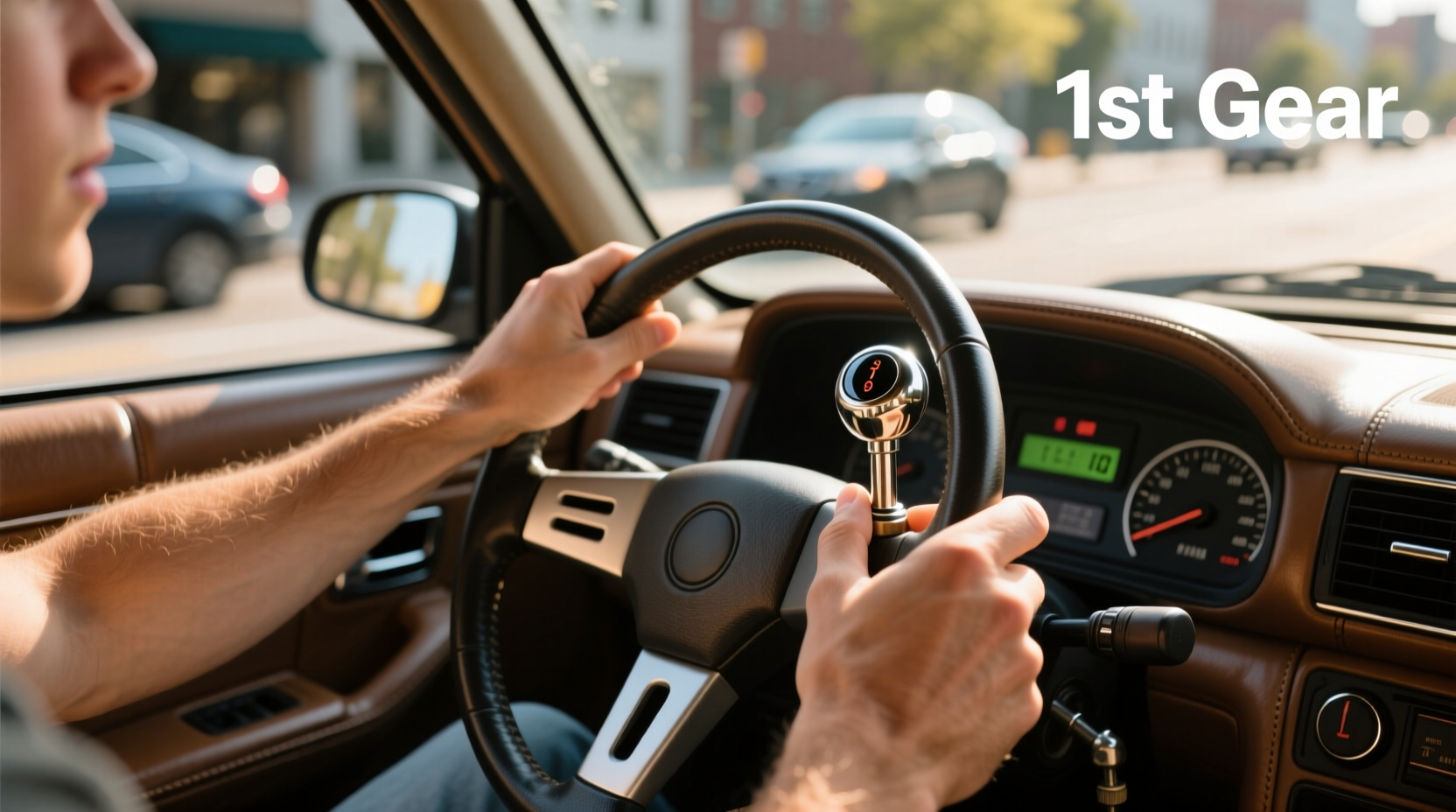
Before evaluating whether stick shift proficiency matters today, it's essential to understand how manual and automatic transmissions differ in function and driver engagement.
A **manual transmission** requires the driver to manually select gears using a clutch pedal and gear lever. This gives direct control over engine power delivery, fuel efficiency, and vehicle behavior—especially under load or in challenging terrain. In contrast, an **automatic transmission** handles gear changes internally, using sensors and hydraulic systems to determine optimal shift points without driver input.
While automatics have evolved dramatically—with dual-clutch systems, paddle shifters, and adaptive programming—manuals remain simpler mechanically and often lighter in weight. This simplicity can be an advantage when repairs are needed far from service centers or in regions with limited technical infrastructure.
Practical Advantages of Knowing How to Drive Stick
Despite declining availability, the ability to drive a manual still unlocks real-world utility in several scenarios:
- Greater vehicle access: In many developing countries, manuals dominate the market. Rental agencies may offer only one automatic per fleet, making stick-shift knowledge essential for independent travel.
- Lower purchase and insurance costs: Manual cars typically cost less upfront and often come with lower insurance premiums due to statistically safer driving patterns among manual drivers.
- Better fuel economy (in some cases): Although modern automatics frequently outperform manuals in efficiency, older or performance-oriented models often achieve superior mileage with skilled shifting.
- Enhanced mechanical awareness: Learning stick shift fosters a deeper understanding of engine dynamics, torque bands, and drivetrain response—skills transferable to off-roading, towing, or emergency handling.
- Survival in emergencies: If your only option during a breakdown, evacuation, or overseas trip is a manual car, knowing how to drive one could mean mobility instead of helplessness.
“Drivers who learn manual transmission tend to develop sharper situational awareness. They’re more connected to the vehicle’s behavior.” — Carlos Mendez, Automotive Instructor at Rocky Mountain Driving Academy
Where Manual Transmissions Still Thrive
Certain environments and professions still rely heavily on manual vehicles. Recognizing these contexts reveals where stick-shift competence remains not just useful—but necessary.
| Region/Use Case | Manual Prevalence | Why Manuals Dominate |
|---|---|---|
| Europe (especially Eastern & Southern) | 30–50% of new sales | Fuel efficiency priorities, urban maneuverability, cultural preference |
| India, Southeast Asia, Africa | 70–90% of fleet | Cost-effectiveness, durability, ease of repair |
| Rural North America | Niche but present | Towing, farming, snow plowing, rugged terrain navigation |
| Commercial Transport (trucks, tractors) | High in non-automated fleets | Control over load management and engine braking |
| Sports and Performance Driving | Declining but loyal following | Precision control, track driving engagement, enthusiast demand |
This table illustrates that while North American consumers may rarely encounter manuals, global travelers, tradespeople, and outdoor adventurers cannot afford to ignore them.
Step-by-Step Guide to Learning Stick Shift
For those determined to acquire this fading skill, here’s a structured approach to mastering manual driving safely and efficiently.
- Understand the components: Familiarize yourself with the clutch pedal (far left), gear shifter layout (often diagrammed on top), and tachometer readings.
- Start on flat ground: Choose an empty parking lot or quiet street with minimal incline to avoid rollback stress.
- Practice clutch control: With the car in first gear and foot on the brake, slowly release the clutch until the engine note drops slightly and the car begins to move (the “bite point”). Re-engage the brake and repeat.
- Move forward smoothly: Release the clutch to the bite point, gently apply throttle, then fully release the clutch as the car gains momentum.
- Shift up through gears: At around 2,500–3,000 RPM, lift off the throttle, press the clutch, shift to the next gear, then re-engage smoothly.
- Downshift appropriately: Before slowing below 15 mph or approaching corners, downshift sequentially to maintain engine readiness and avoid stalling.
- Handle hills confidently: Use the handbrake method—hold the car with the brake, find the bite point, add slight throttle, then release the brake to prevent rollback.
- Practice daily for one week: Even 20 minutes a day builds muscle memory. Focus on smoothness, not speed.
Real-World Example: A Traveler’s Dilemma in Greece
Consider Sarah, a solo traveler renting a car on a Greek island. She reserved an automatic, but upon arrival, the agency had none available. The only option was a 2018 diesel hatchback with a five-speed manual.
Having learned stick shift briefly in college but never practiced consistently, she hesitated. After paying extra for a crash tutorial from the rental agent, she spent her first hour navigating narrow mountain roads with frequent stalls and jerky starts. By day two, however, she adapted—and discovered unexpected advantages.
The manual car achieved 58 mpg on winding coastal routes, compared to the advertised 45 for the automatic version. More importantly, she could downshift on sharp descents to reduce brake wear—a critical safety benefit on steep, unguarded cliffs. What began as inconvenience turned into empowerment.
Her experience underscores a broader truth: adaptability with different vehicle types enhances both independence and confidence, especially in unfamiliar environments.
Common Misconceptions About Manual Driving
Several myths persist about stick shifts, discouraging would-be learners. Addressing them clears the path for informed decisions.
- Myth: Manuals are harder to drive than they used to be.
Reality: Modern clutches are lighter, synchros are smoother, and engines idle steadily—making learning easier than in past decades. - Myth: You’ll ruin the clutch within months.
Reality: With proper technique, clutches last 80,000+ miles. Abuse—not lack of skill—is the primary cause of premature failure. - Myth: Automatics are always faster and more efficient.
Reality: In high-performance applications like motorsports, skilled manual drivers can outpace early-generation automatics. And in older or base-model vehicles, manuals often edge out autos in fuel economy. - Myth: No one sells manuals anymore.
Reality: As of 2024, several popular models—including the Mazda MX-5 Miata, Subaru WRX, Chevrolet Corvette, and Jeep Wrangler—still offer manual options due to customer demand.
Checklist: Is Learning Stick Shift Right for You?
Use this checklist to assess whether investing time in manual driving makes sense for your life:
- ✅ Do you plan to travel internationally, particularly to Europe, Asia, or Latin America?
- ✅ Are you considering careers in transportation, agriculture, or emergency services?
- ✅ Do you value mechanical self-reliance and hands-on vehicle knowledge?
- ✅ Are you interested in classic cars, motorsports, or off-roading?
- ✅ Do you frequently drive in hilly, snowy, or unpaved conditions?
- ✅ Would you benefit financially from lower insurance rates or cheaper car purchases?
If three or more apply, learning manual transmission is likely a worthwhile investment.
FAQ: Common Questions About Manual Transmissions
Can I damage the car if I stall frequently while learning?
Occasional stalling won’t harm the engine or transmission. However, riding the clutch (holding it partially engaged) generates excessive heat and accelerates wear. Focus on clean releases and avoid \"feathering\" unless necessary on steep hills.
Are manual cars becoming obsolete?
In mass-market passenger vehicles, especially in the U.S., their numbers are shrinking. But they remain prevalent globally and in specific niches like sports cars, trucks, and commercial fleets. Complete obsolescence is unlikely before 2040, if ever.
Is it worth buying a used manual car today?
Yes—if you know how to drive one. Used manuals often depreciate slower, sell faster among enthusiasts, and attract buyers seeking engagement over convenience. Just ensure the clutch hasn’t been abused.
Conclusion: A Skill Worth Keeping Alive
Learning to drive a manual transmission is no longer a universal necessity, but it remains a powerful form of practical literacy. It bridges gaps between cultures, expands mobility options, and cultivates a deeper relationship with machinery. In a world increasingly defined by automation, mastering a manual car is a deliberate act of engagement—an assertion of control, awareness, and preparedness.
Whether you're planning an international road trip, aiming for a career in fields where manuals prevail, or simply seeking to broaden your capabilities, the effort pays dividends. The coordination, patience, and focus required to master the clutch translate into sharper reflexes and greater confidence behind any wheel.




 浙公网安备
33010002000092号
浙公网安备
33010002000092号 浙B2-20120091-4
Comments
No comments yet. Why don't you start the discussion?