
The release of the Marvel vs. Capcom Collection reignited excitement among long-time fans of the legendary crossover fighting series. Bringing together classic entries like Marvel vs. Capcom 2: New Age of Heroes and Marvel Super Heroes vs. Street Fighter, the collection offers nostalgic gameplay, updated visuals, and online matchmaking—on paper. Yet one glaring omission has sparked widespread frustration: cross-platform play. In an era where crossplay is increasingly standard across multiplayer titles, its absence in this highly anticipated release raises legitimate questions. Why isn’t it included, and more importantly, does that make it a dealbreaker?
The Growing Expectation for Crossplay
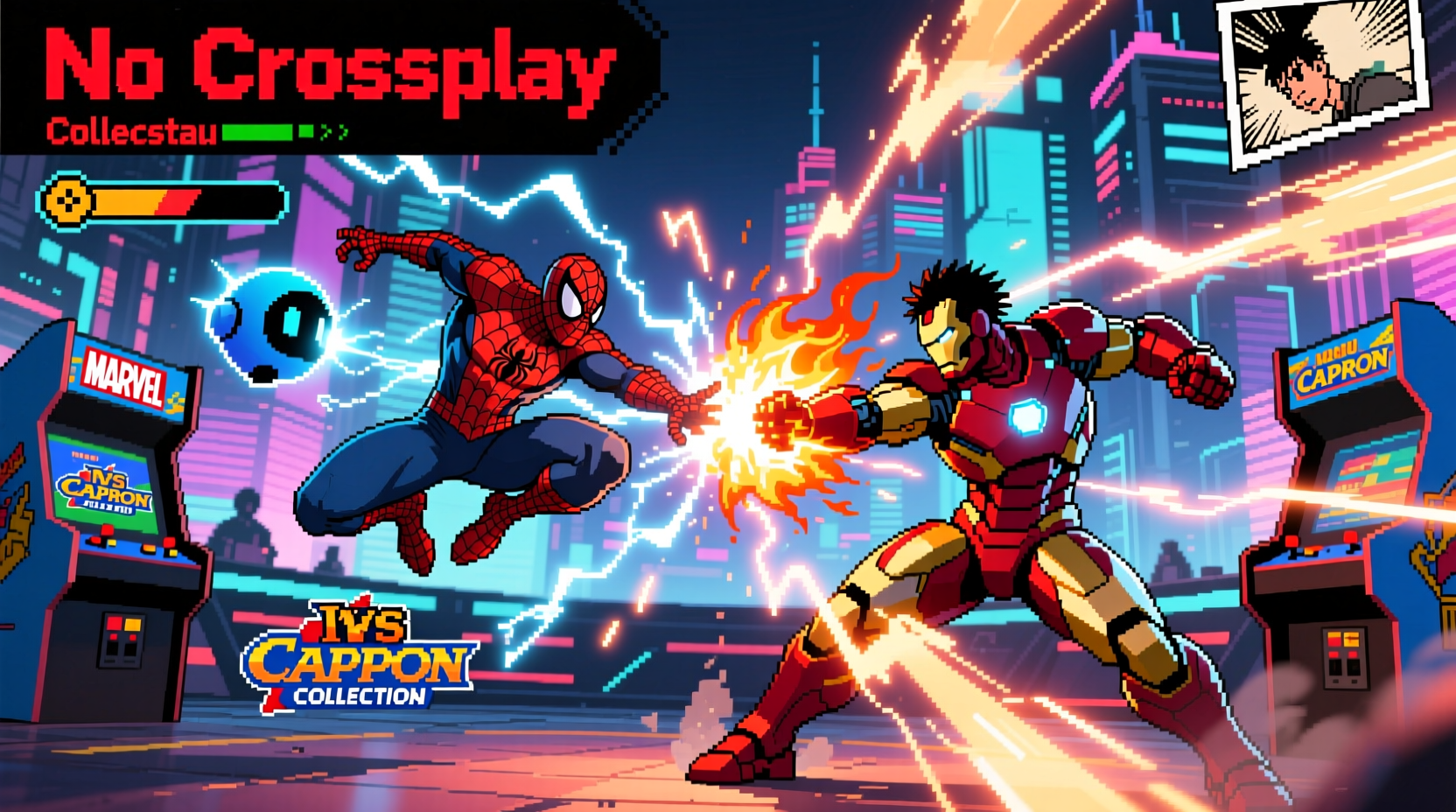
In recent years, crossplay has evolved from a niche feature to an expected norm. Games like Fortnite, Street Fighter 6, and even retro re-releases such as Super Smash Bros. Ultimate (via rollback netcode on Switch) have demonstrated that seamless multiplayer experiences across PlayStation, Xbox, Nintendo, and PC are not only possible but beneficial. Larger player pools mean shorter matchmaking times, better competition, and longer game longevity.
Fighting games, in particular, rely heavily on active communities. A healthy online ecosystem ensures players can find matches quickly and compete against a diverse skill range. Without crossplay, each platform becomes an isolated island, fragmenting the community and increasing the risk of server decay over time—especially for older or niche titles.
“Crossplay isn’t just a convenience—it’s essential for preserving the lifespan of competitive games.” — Alex Chen, Senior Community Manager at Revival Studios
Why Isn’t Crossplay Included in the Collection?
Despite fan demand, the Marvel vs. Capcom Collection launched without any form of cross-platform functionality. Several technical and business-related factors explain this decision:
- Licensing Complexity: The collection involves intellectual property from both Marvel Entertainment and Capcom. While Capcom holds development rights, platform-specific publishing agreements may restrict how features like crossplay are implemented.
- Technical Limitations: The original games were built for arcade and console hardware from the late '90s and early 2000s. Porting them with modern netcode—even without crossplay—was already a significant undertaking. Adding secure, stable crossplay would require additional backend infrastructure and synchronization across different network ecosystems (PSN, Xbox Live, etc.).
- Platform Holder Policies: Historically, Sony has been cautious about crossplay, especially in earlier generations. Although policies have relaxed, legacy agreements or internal resistance might still influence decisions on third-party collections.
- Prioritization of Core Features: Capcom likely focused on getting the core emulation, input lag, and rollback netcode right before tackling crossplay—a feature that, while desirable, may have been deemed lower priority during development.
Is the Lack of Crossplay a Dealbreaker?
For casual players revisiting the classics for nostalgia, the absence of crossplay may be a minor inconvenience rather than a dealbreaker. However, for competitive enthusiasts and tournament organizers, the impact is far more significant.
Smaller, siloed player bases lead to longer queue times, inconsistent netcode performance, and fewer ranked opponents. This fragmentation undermines the very purpose of including online modes in a retro collection. Consider this real-world example:
Mini Case Study: The Decline of Regional Matchmaking
Within three months of launch, players in regions like Australia and parts of Europe reported average wait times exceeding five minutes for ranked matches on Xbox. Meanwhile, PlayStation users in the same regions saw sub-two-minute queues due to higher adoption rates. Without crossplay, Xbox and Switch players faced a noticeably inferior experience—not because of the port quality, but due to population imbalance. Tournament communities attempting to host cross-platform lobbies had to rely on third-party tools, creating friction and reducing accessibility.
| Factor | With Crossplay | Without Crossplay |
|---|---|---|
| Matchmaking Speed | Fast (under 1 min) | Slow (3–5+ mins) |
| Player Pool Size | Combined across platforms | Siloed by platform |
| Tournament Viability | High (easy bracket setup) | Low (platform restrictions) |
| Long-Term Engagement | Stronger retention | Risk of server decay |
What Can Be Done? A Step-by-Step Guide for Players and Developers
While the current state lacks crossplay, there are actionable steps players and developers can take to improve the situation:
- Provide Feedback to Capcom: Use official social media channels and surveys to express demand for crossplay. Developer teams monitor community sentiment when prioritizing post-launch updates.
- Support Crossplay-Friendly Titles: Vote with your wallet. Purchase fighting games that offer full cross-platform support to signal market preference.
- Join Community Hubs: Engage with Discord servers and Reddit communities to organize cross-platform events using external tools like Parsec or Radmin VPN until native support arrives.
- Petition for Updates: Organize or sign petitions calling for a patch that enables crossplay, especially if future collections are planned.
- Advocate Through Influencers: Encourage streamers and esports commentators to highlight the issue during broadcasts, increasing visibility.
Checklist: Should You Buy the Collection?
Before purchasing, consider these key points:
- ✅ Are you primarily playing for nostalgia or single-player content?
- ✅ Do you own the same platform as your friends?
- ✅ Is your region known for strong online activity on your chosen platform?
- ❌ Will you be frustrated by limited online matchmaking?
- ❌ Do you plan to compete in tournaments requiring cross-platform access?
If most of your answers are “yes” to the first three and “no” to the last two, the collection remains a worthwhile purchase despite the missing feature.
FAQ
Will crossplay be added in a future update?
As of now, Capcom has not announced plans to add crossplay. Given the complexity of retro ports and licensing, it's unlikely—but not impossible. Continued fan demand could influence a future patch.
Can I play with friends on different consoles?
No. The collection does not support any form of crossplay. You can only match with players on the same platform.
Is the online mode still worth using without crossplay?
It depends on your platform and region. On PlayStation and PC, the player base is generally active enough for decent matchmaking. On Switch and Xbox, particularly in off-peak hours, finding matches may be challenging.
Conclusion: Balancing Nostalgia and Modern Expectations
The Marvel vs. Capcom Collection delivers a faithful recreation of beloved classics, but its lack of crossplay highlights a growing disconnect between retro preservation and modern multiplayer standards. While not an outright dealbreaker for everyone, it undeniably limits the game’s competitive potential and long-term viability. For developers, this serves as a lesson: in today’s interconnected gaming landscape, even legacy titles benefit from unified player ecosystems.
For fans, the message is clear: voice your expectations. Support transparency and innovation in re-releases. The preservation of gaming history shouldn’t come at the cost of progress.




 浙公网安备
33010002000092号
浙公网安备
33010002000092号 浙B2-20120091-4
Comments
No comments yet. Why don't you start the discussion?