Earning an S rank in competitive games isn’t a matter of luck or raw talent alone. It’s the result of deliberate practice, refined decision-making, and consistent execution under pressure. Whether you're climbing leaderboards in fighting games, dominating objective-based shooters, or mastering rhythm challenges, the path to S-rank consistency is built on repeatable systems—not sporadic bursts of performance. The difference between top-tier players and the rest often comes down to structured habits, deep game knowledge, and psychological resilience. This guide breaks down the core principles that elite players use to perform at their peak—every time.
Develop Mastery Through Deliberate Practice
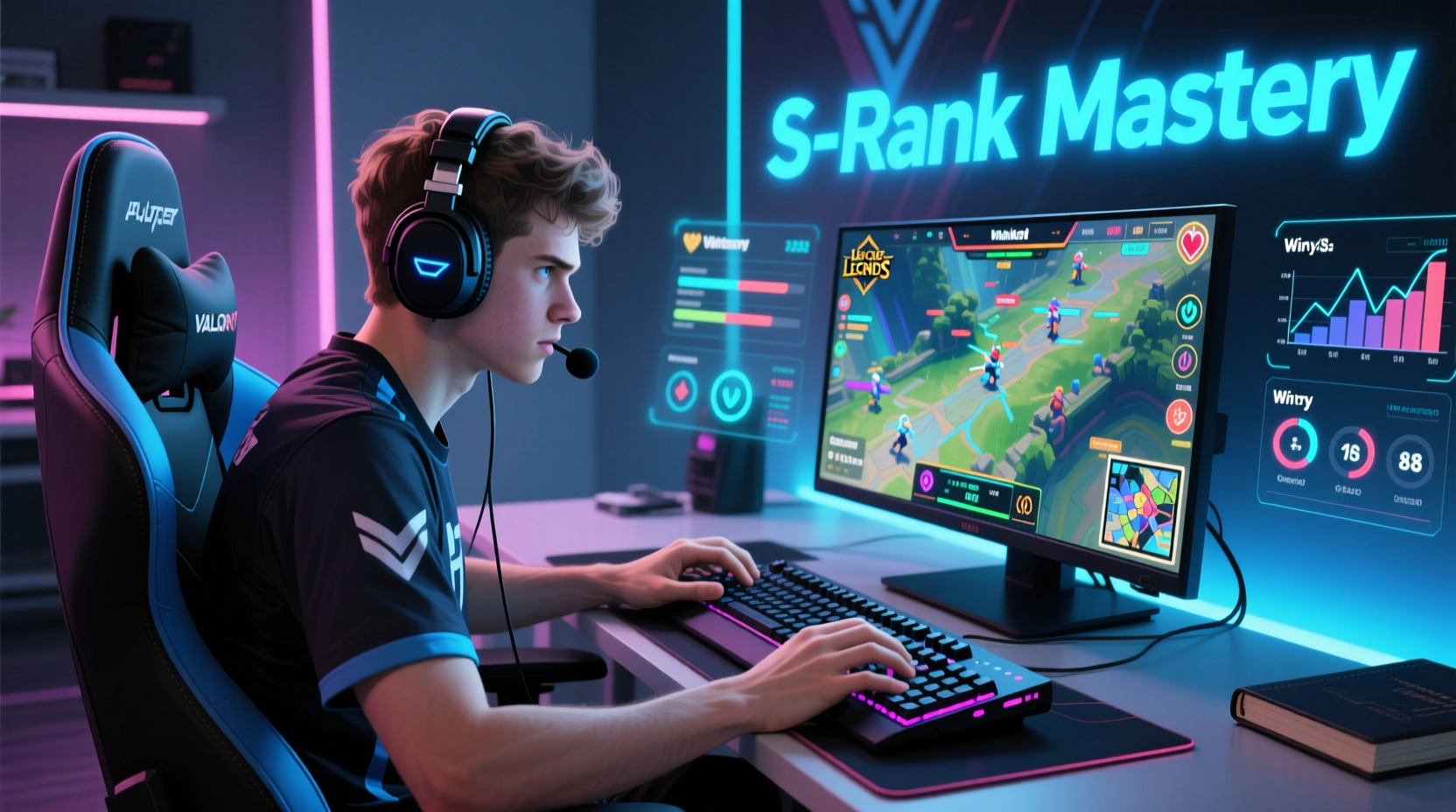
Most players practice by playing matches repeatedly, hoping improvement will come with volume. But true mastery requires focused, intentional training. Deliberate practice involves isolating specific skills, setting measurable goals, and receiving immediate feedback. In fighting games like Street Fighter or Guilty Gear, this means drilling combos until they’re muscle memory. In shooters like Valorant or Overwatch, it’s about honing flick shots, crosshair placement, and movement patterns in aim trainers or deathmatch lobbies.
Top performers don’t just play; they analyze. They record gameplay, review mistakes, and simulate high-pressure scenarios. For example, practicing last-hit scenarios in MOBAs or executing clutch defuses in CS2 under timed conditions builds both competence and confidence.
Optimize Your In-Game Decision-Making
Mechanics get you into the arena, but decisions win the match. Consistently earning S ranks demands more than reflexes—it requires superior game sense. This includes map awareness, resource management, timing windows, and predictive thinking.
Consider a player in Apex Legends who consistently earns S ranks. They don’t just aim well—they know when to rotate, how to bait enemy ultimates, and which zones to avoid based on squad composition. Their decisions are informed by experience, not impulse.
| Skill Type | Practice Method | Expected Outcome |
|---|---|---|
| Map Knowledge | Play without combat; focus on rotation paths and loot spawns | Faster positioning, better callouts |
| Resource Management | Track ammo, abilities, and cooldowns per round | Higher efficiency in engagements |
| Predictive Play | Review opponent replays to identify patterns | Anticipate flanks and setups |
Improving decision speed starts with reducing cognitive load. Create mental shortcuts—like default rotations or priority targets—so your brain can focus on adaptation rather than basic choices.
Build a Pre-Performance Routine
Elite athletes warm up before competition. Gamers should too. A pre-game routine primes your mind and body for peak performance. This isn’t superstition—it’s neuroscience. Rituals signal to your brain that it’s time to focus.
- 5 minutes of light stretching or hand exercises to prevent strain.
- 3–5 minutes of breathing exercises (e.g., box breathing) to lower heart rate.
- Warm-up in a low-stakes environment (aim trainer, tutorial, bot match).
- Review one key intention: “Today, I will track enemy ability usage.”
This sequence reduces tilt, sharpens attention, and establishes emotional control before entering ranked play.
“Top players don’t rely on motivation. They rely on routines that make excellence inevitable.” — Dr. Sarah Lin, Cognitive Performance Coach for Esports Athletes
Case Study: From B-Rank to S-Rank in 8 Weeks
Jared, a 24-year-old Rainbow Six Siege player, was stuck at Gold tier for over a year. He played 10–15 matches weekly but saw no progress. After adopting a structured approach, he reached Diamond with multiple S-rank rounds within two months.
His transformation began with tracking every loss cause: 42% were due to poor utility usage, 30% from bad entry decisions, and 28% from communication gaps. He then designed a plan:
- Practiced smoke and stun grenade throws daily in custom lobbies.
- Watched pro POV videos to study entry sequences.
- Joined a voice chat-only team for coordinated play.
By week six, his utility success rate improved by 68%, and his post-round reviews showed fewer impulsive plays. The S ranks followed naturally—not because he got “better overnight,” but because he fixed systemic flaws.
Common Pitfalls That Block S-Rank Progression
Many skilled players plateau because they ignore behavioral traps. Recognizing these is half the battle.
Here are the most frequent roadblocks:
- Tilt-driven play: Chasing wins after a loss leads to rushed decisions and repeated errors.
- Over-reliance on mechanics: Flashy plays impress, but consistency wins S ranks.
- Neglecting meta shifts: Not adapting to balance patches or popular strategies leaves you outdated.
- Playing fatigued: Long sessions degrade reaction time and judgment.
The solution? Set hard limits—both in time and emotion. Stop after three losses in a row. Take a 15-minute break. Return only when calm.
Action Checklist for S-Rank Consistency
To turn theory into results, follow this weekly checklist:
- ✅ Train one mechanical skill daily (15–20 mins)
- Use training modes or aim trainers to refine precision.
- ✅ Review one full match per week
- Focus on decision points: Why did you engage? Was the timing right?
- ✅ Update your strategy for current meta
- Follow patch notes and top-tier streamers to stay relevant.
- ✅ Execute pre-game routine before ranked
- Warm up physically and mentally to reduce errors.
- ✅ Log performance metrics
- Track accuracy, K/D, objective time, or combo success rate.
Frequently Asked Questions
How many hours do I need to practice to earn S ranks consistently?
There’s no magic number. Two hours of focused, goal-oriented practice is more effective than eight hours of passive grinding. Quality trumps quantity. Most players see significant gains with 5–7 hours of deliberate practice per week.
Should I stick to one character/agent/class?
Early on, specialization accelerates mastery. Focus on one role until you can perform it flawlessly across different scenarios. Once you’ve earned consistent S ranks with one, expand strategically to broaden adaptability.
What if I keep failing the same way?
Pattern failure indicates a knowledge or habit gap. Break down the moment: What cues did you miss? What alternative action exists? Then simulate that scenario repeatedly until the new response becomes automatic.
Conclusion: Make Excellence a Habit
Earning an S rank isn’t about being perfect in a single match. It’s about building a system where high-level performance becomes your default state. Mechanics, mindset, preparation, and continuous learning form the foundation of sustained excellence. The best players aren’t always the most talented—they’re the most disciplined. They treat every session as a step toward refinement, not just a chance to win.




 浙公网安备
33010002000092号
浙公网安备
33010002000092号 浙B2-20120091-4
Comments
No comments yet. Why don't you start the discussion?