
Most people tie their shoes without thinking—looping, tugging, and going about their day. But if you’ve ever experienced slippage, pressure points, or constant re-tying, your knot might be the culprit. A poorly tied shoelace doesn’t just inconvenience; it can affect posture, gait, and foot comfort over time. The good news? Mastering the perfect shoe knot is simpler than you think. With a few proven techniques, you can achieve a secure, comfortable fit that holds strong through long walks, runs, or busy workdays.
Why Your Shoelace Knot Matters More Than You Think
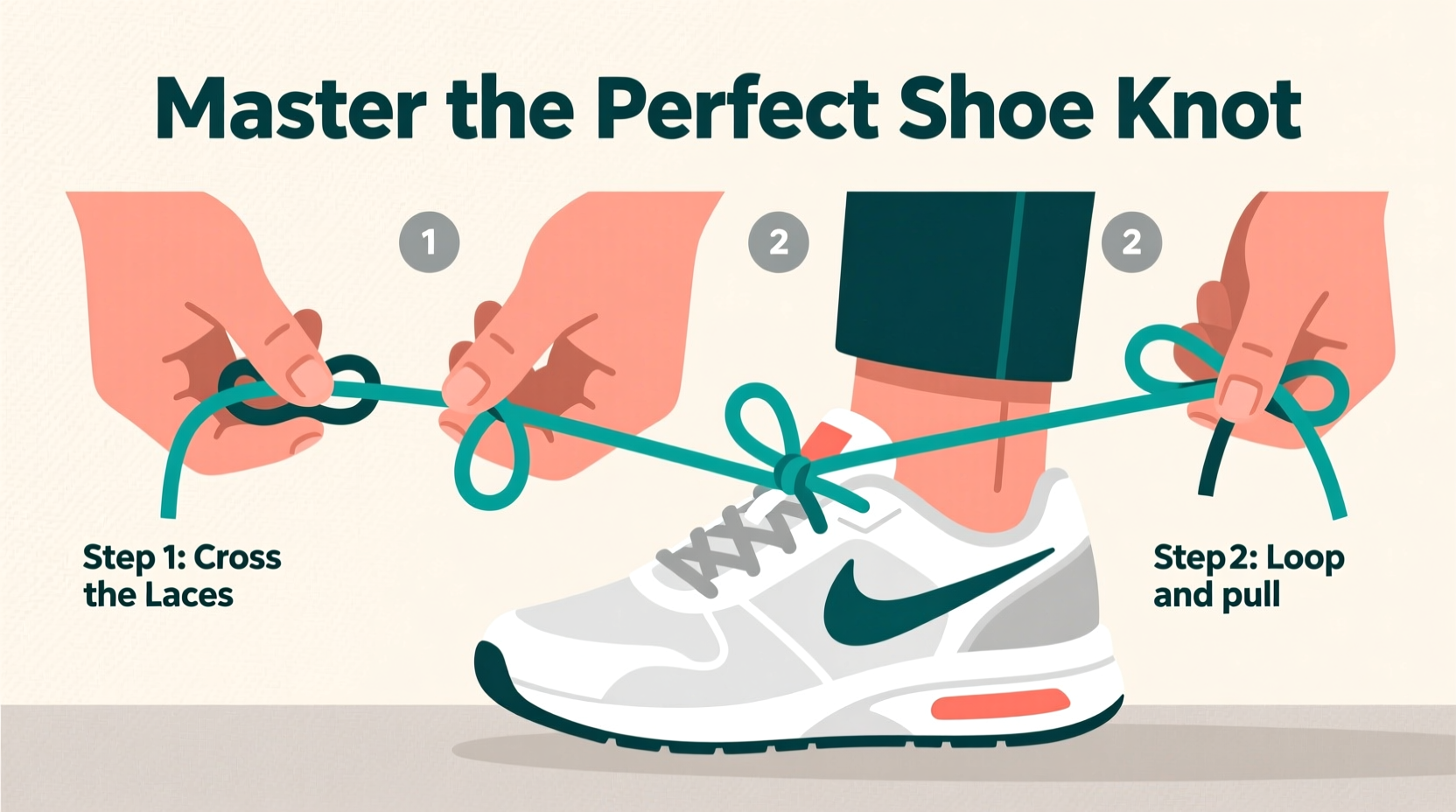
The way you tie your shoes impacts more than just appearance. An unstable knot can loosen mid-stride, increasing tripping risk and altering how your foot lands in the shoe. Podiatrists note that inconsistent tension from poor lacing can contribute to blisters, numbness, or even tendon strain. Conversely, a well-tied knot distributes pressure evenly, stabilizes the heel, and enhances overall shoe performance.
Research from the University of California, Berkeley revealed that most standard \"bunny ear\" knots fail due to an imbalance between loop symmetry and lace tension. This insight has led to the development of more reliable alternatives—techniques that are not only stronger but also easier on the hands and faster to execute.
“Proper shoelace technique is part of biomechanical efficiency. It’s not trivial—it supports better movement.” — Dr. Lena Patel, Sports Podiatrist
Step-by-Step: How to Tie the Perfect Shoe Knot
Forget guesswork. Follow this precise sequence to lock in a knot that stays put:
- Cross the laces over each other from the bottom eyelets, forming an “X.” Pull both ends tight to create a base knot.
- Loop one lace into a bunny ear (a firm loop held between thumb and forefinger).
- Wrap the free lace around the base of the loop, moving from back to front.
- Pull the second lace through the gap behind the loop to form a second bunny ear.
- Pull both loops tight simultaneously, ensuring even tension.
This method creates what’s known as a square knot when done correctly—evident when the loops sit perpendicular to the shoe’s center line. If the loops lie parallel, you’ve tied a weaker “granny knot,” which unravels easily.
Advanced Techniques for Different Needs
Not all feet or activities require the same knot. Here are three specialized methods tailored to common issues:
1. Surgeon’s Shoelace Knot (Extra Security)
Ideal for runners or those with high arches, this variation adds an extra twist for increased stability:
- After step 1 (the base cross), make a double twist when forming the first loop.
- Proceed with the wrap and second loop as usual.
- The added twist increases friction, preventing slippage without making the knot harder to untie.
2. Ian’s Secure Shoelace Knot (Balanced & Fast)
Developed by knot expert Ian Fieggen, this method ensures a true square knot every time:
- Start with a simple cross and pull tight.
- Instead of a regular loop, use your right hand to form a loop while holding the end of the left lace.
- Use the loose right lace to wrap around the base of the left loop and pull through from behind.
- Finish by pulling both loops apart gently to lock the knot.
This technique eliminates the common mistake of creating a granny knot and is favored by athletes and hikers alike.
3. Heel-Lock Lacing (Prevent Slippage)
Perfect for boots or running shoes where heel lift is an issue:
- Lace normally up to the second-to-last eyelet.
- Create a loop with each side, like small bunny ears.
- Pass the free ends through the opposite loops before pulling tight.
- This “lace lock” cinches the ankle area, securing the heel without tightening the entire shoe.
| Technique | Best For | Security Level | Time to Tie |
|---|---|---|---|
| Standard Bunny Ear | Casual wear | Low | 5–7 seconds |
| Surgeon’s Knot | Running, sports | High | 8–10 seconds |
| Ian’s Secure Knot | All-day wear, hiking | Very High | 7–9 seconds |
| Heel-Lock Method | Boots, trail shoes | Very High | 10–12 seconds |
Common Mistakes and How to Avoid Them
Even with the right technique, small errors undermine effectiveness. Watch out for these pitfalls:
- Inconsistent tension: Pulling one side tighter than the other distorts the fit and stresses the knot.
- Using worn laces: Frayed or overly smooth laces reduce grip. Replace them every 6–12 months.
- Tying too loosely at the top: This allows heel slippage, especially in athletic shoes.
- Ignoring shoe shape: Wide shoes may need a loop-based knot; narrow ones benefit from flatter ties.
Real-Life Example: From Frustrated Runner to Confident Finisher
Mark, a recreational runner from Portland, struggled with his left shoe coming undone during every 5K race. He tried double-knotting, but it made his feet feel tight and caused numbness. After learning about the surgeon’s knot from a running coach, he practiced it daily for a week. During his next race, his laces stayed secure for the full distance—without discomfort. “It felt like I’d upgraded my shoes without spending a dime,” he said. His finishing time improved by nearly two minutes, partly due to uninterrupted stride rhythm.
Quick Checklist: Achieve the Perfect Fit in 5 Steps
- Inspect laces for wear and replace if frayed.
- Lace shoes evenly from toe to top eyelet.
- Choose a knot based on activity (e.g., Surgeon’s for running).
- Tie with balanced tension on both sides.
- Test by walking or jogging in place—adjust if slipping occurs.
Frequently Asked Questions
Why does my shoe knot always come undone?
Most likely, you’re tying a granny knot instead of a square knot. The granny knot is inherently unstable. Switching to a symmetric tying method—like Ian’s Secure Knot—will solve the problem.
Is double-knotting bad for my shoes?
Occasional double-knotting isn’t harmful, but frequent use can stress the eyelets and make untying difficult. It’s better to learn a more secure single knot than rely on doubling up.
Can lacing technique help with foot pain?
Absolutely. Improper lacing can create pressure on the top of the foot or allow heel movement, leading to hot spots and discomfort. Adjusting tension and using lock techniques can relieve pinching and improve support.
Final Thoughts: Tie Smart, Walk Better
The perfect shoe knot isn’t about complexity—it’s about consistency, balance, and understanding how small details impact daily comfort. Whether you're walking to work, hiking a mountain trail, or standing for hours on your feet, a secure fit starts with how you tie your laces. These techniques take minutes to learn but offer lasting benefits in safety, performance, and foot health.




 浙公网安备
33010002000092号
浙公网安备
33010002000092号 浙B2-20120091-4
Comments
No comments yet. Why don't you start the discussion?