
Arc welding remains one of the most widely used welding processes in construction, manufacturing, and DIY metalwork. While it’s accessible to beginners, mastering it requires a solid understanding of equipment, technique, and safety. Whether you're repairing farm equipment, building custom furniture, or starting a career in fabrication, learning arc welding properly sets the foundation for clean, strong joints and long-term success. This guide covers everything from gear selection to real-world practice strategies—designed to help new welders avoid common mistakes and build confidence quickly.
Understanding Arc Welding Basics
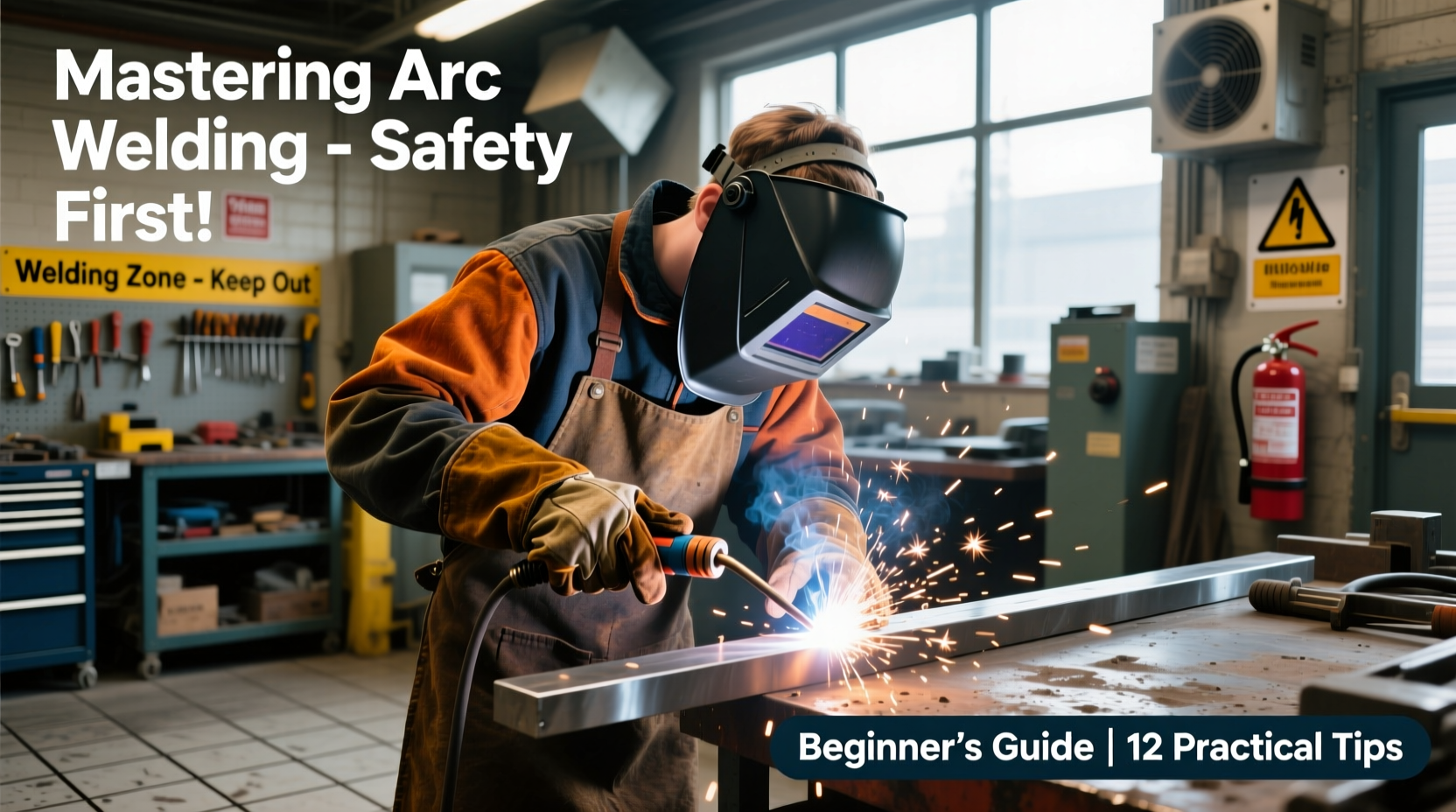
Arc welding uses an electric current to create an intense arc between a consumable electrode and the base metal. The heat melts both materials, forming a molten pool that fuses them together upon cooling. Shielded Metal Arc Welding (SMAW), commonly known as \"stick welding,\" is the most beginner-friendly form due to its simplicity and versatility in outdoor or dirty conditions.
The process relies on three core components: a power source (welder), electrode holder, and ground clamp. When the electrode touches the workpiece and is pulled slightly away, the arc ignites. Flux coating on the electrode vaporizes to shield the weld from atmospheric contamination, preventing porosity and weak spots.
“Many beginners focus only on striking the arc but forget that control comes after ignition—steady hand movement and correct angle are what separate good welds from bad.” — Carlos Mendez, Certified Welding Inspector
Essential Safety Practices Every Beginner Must Follow
Safety isn’t optional in arc welding—it’s non-negotiable. Exposure to UV radiation, flying slag, intense heat, and hazardous fumes demands strict protective measures.
- Wear full coverage clothing: Flame-resistant cotton or leather apparel protects against sparks and burns. Avoid synthetic fabrics that melt under heat.
- Use proper eye and face protection: A welding helmet with auto-darkening lens (shade #10–#13) shields eyes from UV/IR rays and flash burn.
- Work in ventilated areas: Fumes from burning flux may contain toxic elements like manganese. Use natural airflow or exhaust systems when indoors.
- Secure your workspace: Keep flammable materials at least 35 feet away and have a fire extinguisher nearby.
- Never look at an open arc without protection: Even brief exposure causes “arc eye,” a painful corneal inflammation.
Personal Protective Equipment (PPE) Checklist
- Auto-darkening welding helmet
- Heat-resistant gloves (gauntlet style)
- Long-sleeve cotton or leather jacket
- Steel-toed boots
- Welding cap or balaclava
- Safety glasses (under helmet)
- Respirator (if ventilation is poor)
Selecting the Right Electrode for Your Project
Choosing the correct electrode affects weld quality, penetration, and ease of use. Common electrodes include E6010, E6011, E6013, and E7018—each suited to different positions and materials.
| Electrode | Best For | Penetration | Difficulty Level |
|---|---|---|---|
| E6010 | Deep penetration on dirty or rusty steel; vertical & overhead | Deep | Intermediate |
| E6013 | Clean, thin metals; flat & horizontal positions | Moderate | Beginner |
| E7018 | Structural steel; high strength joints | Medium-Deep | Intermediate+ |
For beginners, E6013 is often recommended because it strikes easily, produces minimal spatter, and creates a smooth, stable arc. It works well on clean, thin mild steel—ideal for practice and light fabrication.
Step-by-Step Guide to Striking Your First Arc
Striking a consistent arc is the first milestone in learning to weld. Follow this sequence to develop muscle memory and control:
- Set up your machine: Adjust amperage based on electrode diameter (e.g., 90–110A for 1/8” E6013).
- Prepare the workpiece: Clean rust and paint from the surface using a wire brush or grinder.
- Clamp the ground: Attach the work clamp directly to bare metal near your welding zone.
- Hold the electrode at 10–15° angle: Tilt slightly in the direction you’ll travel.
- Strike like a match: Quickly tap the electrode against the metal and pull back about 1/8 inch to initiate the arc.
- Maintain arc length: Keep distance roughly equal to the electrode core diameter—too close causes sticking; too far breaks the arc.
- Move steadily: Travel at a speed that allows even bead formation without excessive buildup or undercutting.
Common Mistakes and How to Fix Them
Even experienced welders encounter defects, but recognizing issues early prevents wasted time and rework.
- Sticking electrode: Caused by low amperage or holding arc too short. Increase voltage slightly and practice lifting technique.
- Excessive spatter: Often due to incorrect settings or dragging the electrode. Ensure proper travel speed and angle.
- Undercutting: Grooves along weld edges weaken the joint. Reduce arc length and slow travel speed.
- Poor fusion: Happens when heat input is too low or surface isn’t cleaned. Pre-clean thoroughly and verify adequate amperage.
Do’s and Don’ts of Arc Welding
| Do’s | Don’ts |
|---|---|
| Keep a steady hand and consistent travel speed | Rush through welds without visual feedback |
| Inspect welds for cracks, porosity, or gaps | Ignore slag removal between passes |
| Store electrodes in a dry, heated container if humid | Leave rods exposed to moisture (especially E7018) |
Real Example: Learning from a Farm Repair Job
Jamie, a hobbyist welder in rural Iowa, needed to repair a broken tractor hitch. Using an old transformer-style stick welder and E6013 rods, he initially struggled with inconsistent arcs and weak beads. After researching proper grounding techniques, he realized his clamp was attached to a painted frame section—causing erratic performance. Once he cleaned a spot and secured the ground, his arc stabilized immediately. He practiced stringer beads on scrap first, then completed the repair with overlapping passes. Though not perfect, the fix held through two planting seasons, proving that attention to fundamentals yields reliable results.
Frequently Asked Questions
Can I weld outdoors with a stick welder?
Yes, stick welding performs well outdoors, even in wind or light rain, because the flux provides self-shielding. However, avoid wet conditions and ensure your machine is protected from moisture.
Why does my electrode keep sticking?
Low amperage is the most common cause. Check your welder setting and increase it gradually. Also, ensure you’re pulling the rod back quickly after striking.
How do I know if a weld is strong enough?
A sound weld has uniform ripples, full fusion at edges, and no visible cracks or holes. For critical applications, consider third-party inspection or destructive testing on sample joints.
Final Thoughts and Next Steps
Mastering arc welding takes patience, repetition, and respect for safety. Start small—with clean metal, simple joints, and consistent practice. Track your progress by saving sample welds weekly to observe improvement. As skills grow, experiment with different electrodes and positions. Remember, every expert welder once burned their first glove and dropped their first rod. What matters is persistence and attention to detail.




 浙公网安备
33010002000092号
浙公网安备
33010002000092号 浙B2-20120091-4
Comments
No comments yet. Why don't you start the discussion?