
Selecting the right backpack isn’t just about style or brand preference—it’s about function. The volume of a backpack determines how much you can carry, but too many people rely solely on manufacturer labels without verifying actual usable space. Whether you're preparing for a weekend hike, an international trip, or navigating urban commutes, understanding how to measure and interpret backpack capacity ensures comfort, efficiency, and preparedness.
Backpacks are often labeled with volume in liters—20L, 45L, 70L—but these numbers can be misleading if not contextualized. A 30-liter pack from one brand may hold significantly less than another due to shape, compartment layout, or frame structure. True mastery comes from knowing how to assess real-world capacity and match it precisely to your needs.
Understanding Backpack Volume: What Does “Liters” Really Mean?
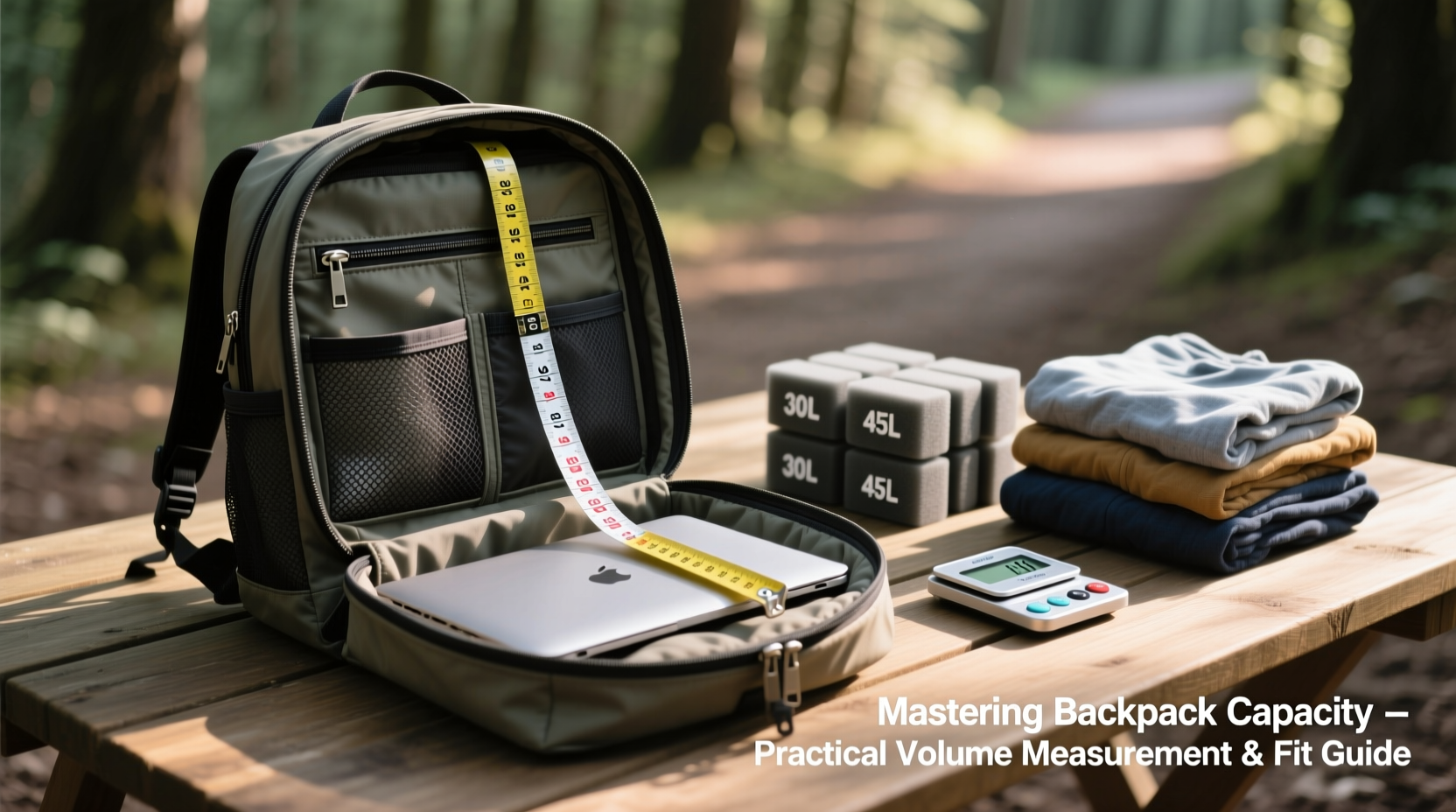
Backpack volume is measured in liters and refers to the total internal storage capacity. One liter equals 1,000 cubic centimeters, so a 30L backpack holds 30,000 cm³ of space. However, this number typically includes all compartments—even small front pockets that don't contribute meaningfully to bulk storage.
Manufacturers use standardized testing methods, such as filling packs with small plastic balls or beans and measuring displacement. But because each brand defines \"usable space\" differently, discrepancies arise. For example, some include hydration sleeve volume; others do not.
“Volume ratings are useful starting points, but they’re not gospel. Real capacity depends on how the space is shaped and accessed.” — Daniel Reyes, Outdoor Gear Designer at AlpinePath Designs
A narrow, tall pack might technically be 40L but struggle to fit a sleeping bag, while a shorter, wider 40L pack accommodates the same item easily. This is why physical dimensions and internal organization matter as much as the listed volume.
How to Measure Backpack Capacity Yourself
If you're skeptical of manufacturer claims—or evaluating a secondhand pack—you can measure its volume manually using simple household items. This method gives you confidence in what the pack can actually hold.
Step-by-Step Guide: Measuring Volume at Home
- Gather packing cubes or soft, crushable objects like rice, beans, or crumpled paper (avoid hard items that won’t conform).
- Close all zippers and adjust straps to neutral position.
- Fill the main compartment completely, pressing gently to eliminate air gaps but not compressing contents unnaturally.
- Measure the volume of filler used:
- If using rice or beans, transfer to a calibrated container (e.g., 1-liter measuring jug).
- If using packing cubes, sum their labeled volumes.
- Repeat for side pockets, hip belt pockets, and lid compartments if included in your intended use case.
- Add totals to determine effective capacity.
This hands-on approach reveals inconsistencies in advertised specs. You might discover that a “50L” hiking pack only holds 42L of functional gear when packed realistically.
Finding the Right Fit: Matching Capacity to Your Activities
The ideal backpack size depends entirely on duration, purpose, and personal packing habits. Overpacking leads to strain; under-packing wastes potential. Here’s a breakdown by common use cases:
| Use Case | Recommended Capacity | Typical Contents |
|---|---|---|
| Daily Commute / School | 15–25L | Laptop, notebook, lunch, water bottle, jacket |
| Day Hiking / Outdoor Excursions | 20–35L | Water, snacks, first aid kit, rain shell, map, camera |
| Weekend Trips (2–3 days) | 35–50L | Clothing, toiletries, sleeping bag (if camping), food |
| Extended Backpacking (4+ days) | 50–70L | Full camping gear, cooking supplies, extra clothing, fuel |
| Travel (Carry-On Friendly) | 35–45L | Mix of clothing, electronics, essentials; fits airline limits |
Note that minimalist packers may use smaller volumes, while those prioritizing comfort or carrying shared group gear often need larger capacities. Always consider whether your activities require external attachment points (for tents, trekking poles) or specialized sleeves (laptop protection, hydration reservoirs).
Real-World Example: Choosing Between Two Packs
Sophie was planning a 5-day solo trek through the Cascade Mountains. She narrowed her choices to two models: Pack A (55L, sleek profile) and Pack B (60L, boxier design). Both claimed similar features, but when she tested them with her gear, differences emerged.
Pack A compressed well but couldn’t fit her down sleeping bag without forcing it. The hip belt pockets were too small for her phone and trail mix. Pack B, though slightly heavier, had a more accessible U-shaped zipper and stretchy side pockets that held water bottles securely. Despite being only 5L larger, Pack B offered noticeably better organization and loading flexibility.
She chose Pack B—not because of the liter rating, but because of how efficiently it used its space. Her decision highlights a crucial truth: capacity isn’t just about volume. It’s about usability.
Common Mistakes When Assessing Backpack Size
- Trusting labels blindly: Not all 40L packs are equal. Always test with real gear.
- Ignoring torso fit: A large-capacity pack poorly fitted to your back causes discomfort regardless of volume.
- Overlooking compression: Some packs lose stability when underfilled; look for adjustable volume systems.
- Forgetting external load capacity: Trekking poles, ice axes, or wet gear may need outside attachment.
- Optimizing for max capacity instead of modularity: Multiple access points improve usability more than raw volume.
Checklist: Selecting the Right Backpack Capacity
- Determine primary use (commute, hiking, travel).
- List essential items you’ll carry regularly.
- Estimate combined volume of those items using packing cubes or measurements.
- Choose a base capacity range based on activity type (see table above).
- Test-pack your gear into shortlisted models.
- Evaluate ease of access, weight distribution, and empty space.
- Confirm airline compliance if traveling (under 45L for most carry-ons).
- Adjust selection based on seasonal needs (winter gear takes more space).
FAQ
Can I use a 20L backpack for overnight trips?
Only if you're a ultralight camper with compact gear. Most overnight setups—including sleeping bag, pad, shelter, and food—require at least 35L. A 20L pack works for bivouacs or emergency overnights, but not full comfort stays.
Why does my 50L pack feel smaller than expected?
This often happens due to rigid internal frames, thick padding, or poor compartment geometry. Also, manufacturers sometimes include unusable spaces like thin zippered panels in the total volume. Always test with your own gear.
Does a higher liter count mean a heavier backpack?
Generally yes—more volume requires more fabric, structure, and support. But advanced materials (like Dyneema or ultra-high-density nylon) allow high-capacity, low-weight designs. Compare weight-to-volume ratios when choosing.
Conclusion: Make Informed Choices Based on Real Needs
Mastering backpack capacity goes beyond reading a label. It means understanding how volume translates into usable space, how your lifestyle dictates size requirements, and how to verify claims through practical testing. Whether you're navigating city streets or remote trails, the right backpack enhances mobility, reduces fatigue, and supports your goals.




 浙公网安备
33010002000092号
浙公网安备
33010002000092号 浙B2-20120091-4
Comments
No comments yet. Why don't you start the discussion?